10 Tips to Hide Washer and Dryer in Your Kitchen
A washer and dryer can take up valuable kitchen space and disrupt the look you’re going for. If you’re trying to keep laundry appliances out of sight without making them hard to…

A washer and dryer can take up valuable kitchen space and disrupt the look you’re going for. If you’re trying to keep laundry appliances out of sight without making them hard to use, you’re not alone. These 10 tips to hide a washer and dryer in your kitchen can help you find a practical solution.
You can hide a washer and dryer in your kitchen by choosing a spot that stays out of the main workflow but remains easy to reach. Build a cabinet or enclosure, and make sure ventilation, hoses, and service panels stay accessible.
Add matching doors, sliding panels, or a folding counter to make the setup feel built-in. Use finishes that blend with your cabinets, or conceal the area with curtains or a screen, and there’s more to investigate.
Key Takeaways
- Choose a kitchen spot that avoids blocking work zones, with enough clearance for doors, vents, hoses, and maintenance access.
- Build a cabinet or enclosure using moisture-resistant materials, flush edges, and consistent heights for a seamless built-in look.
- Hide the units with matching cabinet fronts, hinged doors, bifolds, or sliding/pocket doors that preserve kitchen flow.
- Add a folding counter above the washer and dryer for sorting and folding without taking extra floor space.
- Match finishes, hardware, and panel lines to surrounding cabinetry so the laundry zone reads as one clean wall.
Choose the Best Kitchen Spot
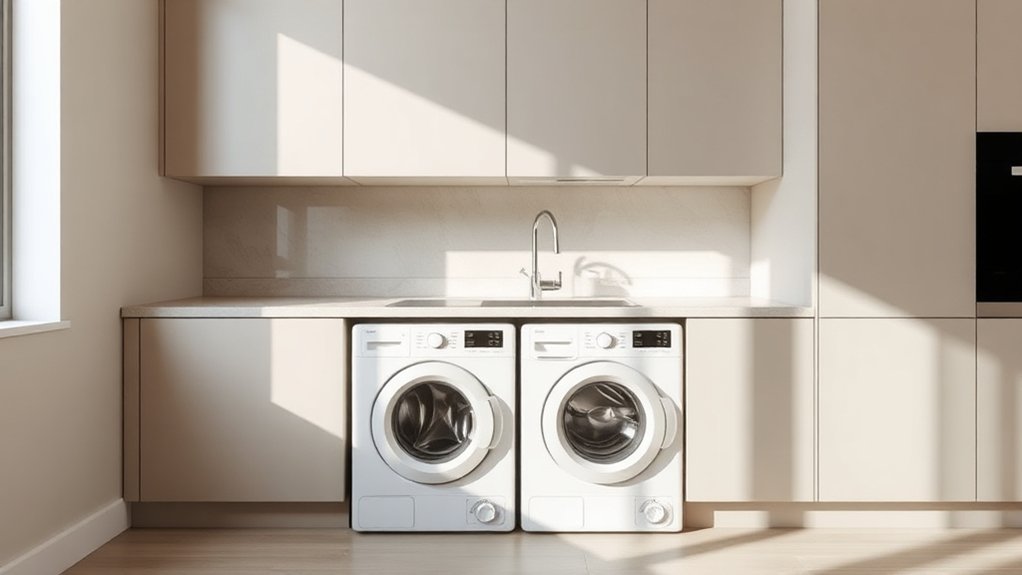
Start by picking a spot that keeps your washer and dryer out of the way but still easy to reach. You can tuck them beside a pantry, under a counter run, or inside a tall cabinet zone, depending on your kitchen layout.
Focus on space planning first so you don’t interrupt work zones or block storage. Measure the footprint carefully, then check how the units fit with nearby cabinets, drawers, and walkways.
Good appliance alignment helps the setup look intentional, so keep edges flush and heights consistent when possible. If your kitchen has an awkward nook, use it to your advantage instead of forcing the machines into a central spot.
You’ll get a cleaner look and a smoother flow when you choose a location that blends with the room’s structure. Keep the placement practical, balanced, and visually quiet.
Plan for Ventilation and Access
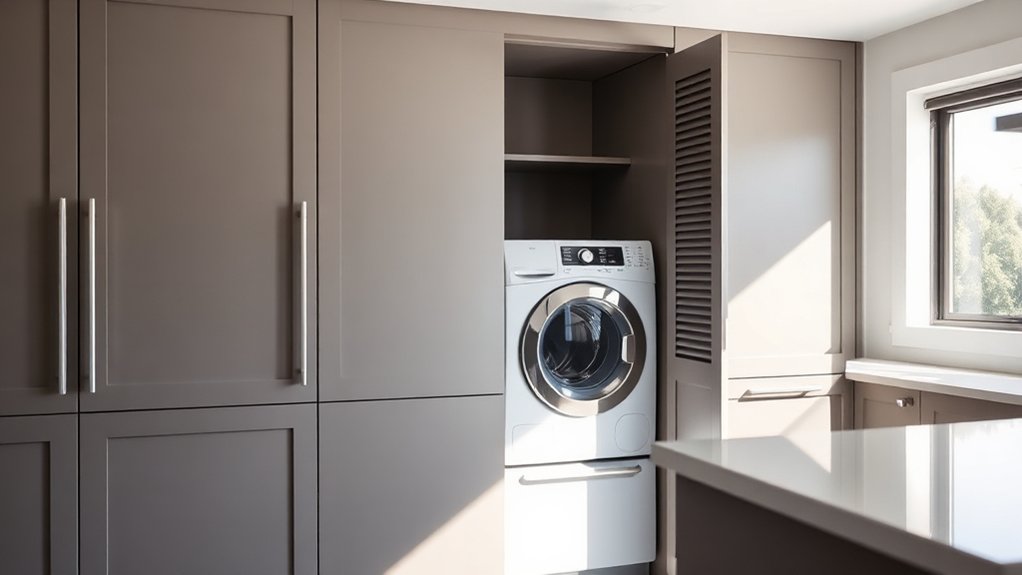
Even when your washer and dryer disappear into the kitchen, they still need room to breathe and a clear path for service. Check manufacturer clearances first, then build your ventilation planning around airflow, duct routing, and heat release. Don’t block vents with trim, doors, or appliances that sit too close. If your dryer vents outside, keep the run short and straight so lint doesn’t collect and airflow stays strong. If you use a ventless model, leave space for the condenser access panel and regular cleaning.
You also need an access strategy before you commit to any layout. Make sure you can open doors fully, reach shutoff valves, and remove filters without moving other kitchen items. Leave enough front clearance for maintenance and repairs, and avoid fixed installations that trap the machines. When you plan both airflow and service access now, you’ll save headaches later and keep your hidden laundry setup working safely and efficiently.
Build a Washer-Dryer Cabinet
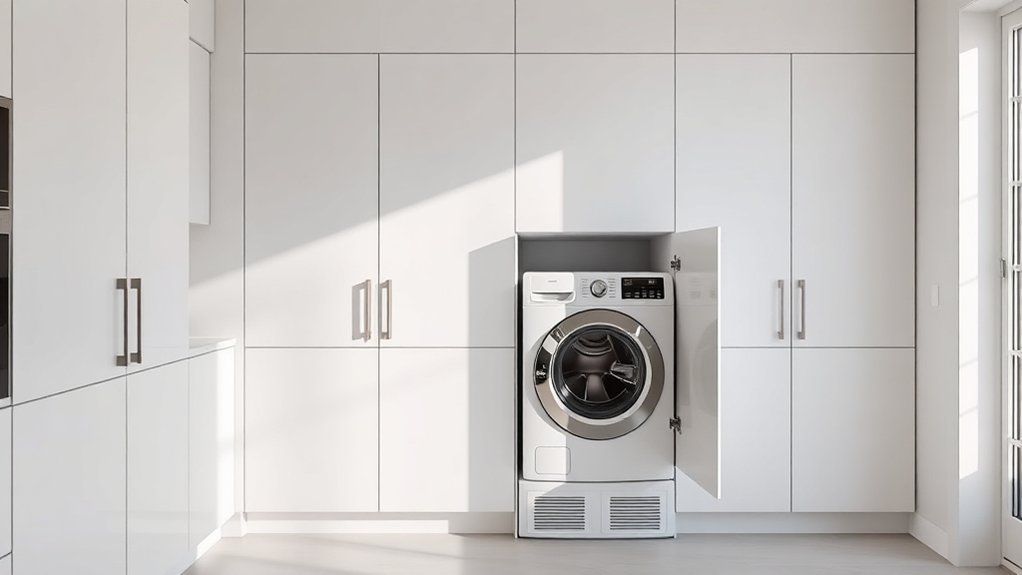
A well-built washer-dryer cabinet can make your laundry setup blend right into the kitchen while still keeping the machines easy to use. You can frame the appliances with sturdy panels, then size the opening so they fit snugly without crowding nearby cabinets.
Keep compact wiring tucked behind a service panel, and plan for moisture control with durable, wipeable materials that resist swelling.
- Measure the washer and dryer carefully
- Choose moisture-resistant plywood or MDF
- Leave space for hoses and airflow
- Route compact wiring neatly and safely
- Add a finished countertop above the unit
You should match the cabinet finish to your kitchen so the whole zone feels intentional. Include a strong base, level the frame, and make sure you can slide the machines in and out for maintenance.
If you build it well, the cabinet won’t just hide the appliances. It’ll help your kitchen look polished and organized.
Add Doors to Hide the Unit
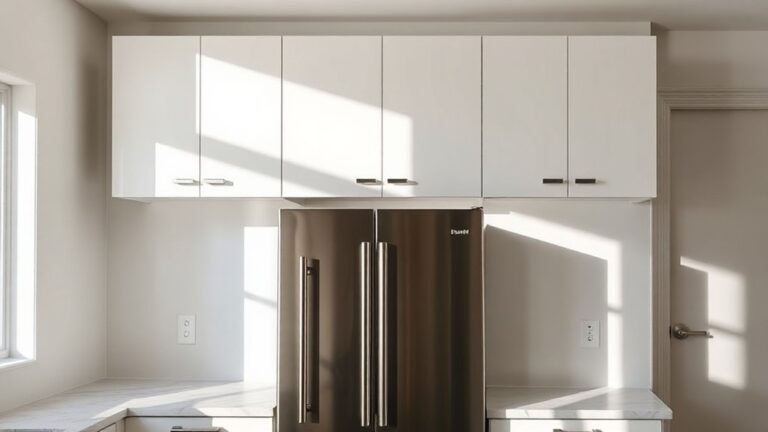
Doors can make the washer and dryer disappear into the kitchen while still keeping them easy to reach. You can install matching cabinet fronts, paneled bifolds, or simple hinged doors that blend with your cabinetry, so the laundry zone reads as one clean wall.
Choose finishes that match your kitchen, then add handles or edge pulls that feel intentional, not bulky. If you want a seamless look, paint the doors the same color as nearby cabinets and keep trim lines straight.
Hidden doors also help reduce visual clutter, so your appliances stay out of sight when guests arrive. Measure carefully before you buy, because concealed machines need enough clearance for doors to open fully and for vents, hoses, and controls to stay accessible.
Use sturdy hinges and magnetic catches so the panels close tightly, operate smoothly, and hold up to daily use.
Use a Sliding or Pocket Door
Choose a sliding door that matches your kitchen, or go with a pocket door for an even cleaner look. Either option hides the washer and dryer without a door swinging into the room, leaving you with more usable space. With the right setup, the door will glide smoothly and keep your appliances out of sight.
Sliding Door Styles
Want a cleaner, more seamless way to conceal your washer and dryer? Choose a sliding style that matches your cabinets and keeps the area easy to access. Another option is a barn-style panel that glides smoothly, while a pocket door disappears into the wall for a sleeker look. Prioritize Design compatibility so the finish, trim, and hardware feel intentional.
- Matte wood doors soften a busy kitchen.
- Frosted glass adds light without full exposure.
- Flat panels blend with modern cabinetry.
- Black metal tracks create a bold contrast.
- Slatted fronts hint at the appliances behind them.
To reduce Acoustic vibration, pick sturdy panels and quality rollers, then align the track carefully. You’ll get a hidden laundry zone that feels polished, practical, and part of the kitchen design.
Pocket Door Benefits
If you’re after an even cleaner look, a pocket door can hide the washer and dryer almost completely by sliding into the wall instead of sitting in front of the opening. You gain a streamlined kitchen and keep appliances out of sight when guests arrive.
Hidden doors also make the layout feel calmer and more intentional. A soft close mechanism helps the door glide shut quietly, so you won’t hear a harsh slam.
| Benefit | Why it matters |
|---|---|
| Concealment | Your laundry area blends into cabinetry |
| Quiet use | Soft close reduces noise and wear |
| Easy access | You still open it quickly when needed |
With the right finish, the door looks built in and polished.
Space-Saving Installation
For a tighter kitchen layout, a sliding or pocket door lets you hide the washer and dryer without stealing floor space. You’ll keep walkways open and give the room a cleaner look with a compact redesign that feels intentional.
A track-mounted slider suits existing openings, while a pocket door works best during a larger remodel. Think through budget considerations before you choose, because framing changes can raise costs.
- Slide the door aside for easy loading
- Match cabinet finishes for a seamless look
- Add soft-close hardware to reduce noise
- Measure clearance for hoses and vents
- Use sturdy handles for daily access
With the right installation, you’ll gain privacy, function, and a kitchen that still feels spacious.
Match the Washer-Dryer to Your Cabinets
Matching your washer and dryer to your cabinets helps them disappear into the kitchen instead of standing out. You can choose panels that echo your Matching cabinetry so the appliances blend with doors, drawers, and trim.
Strong Appliance coordination works best when you repeat the same finish, handle style, and line alignment across the room. If your cabinets are painted, match the closest tone; if they’re wood, use a similar grain or stain. Keep the design calm and consistent.
| Design choice | Effect |
|---|---|
| Matching doors | Creates a seamless front |
| Similar hardware | Ties appliances to cabinets |
| Repeated color | Reduces visual clutter |
| Flush alignment | Makes the setup feel built-in |
You don’t need perfect sameness; you need a deliberate match that feels intentional. When your washer-dryer shares the kitchen’s language, the whole space looks cleaner, larger, and more polished.
Add a Folding Counter Above
You can add a folding counter above your washer and dryer to create a space-saving surface for sorting and folding clothes. When you’re not using it, the counter gives you a hidden laundry workstation that blends into your kitchen. With the right finish, it can look like a natural part of your cabinetry.
Space-Saving Folding Surface
A folding counter above your washer and dryer gives you a practical work surface without eating up extra floor space. You can choose a slim, hinged top that folds down when you need room and lifts when you’re done. This folding surface supports sorting, stacking, and quick repairs, while smart space planning keeps the area feeling open.
- Use a durable wood or laminate top
- Match the finish to nearby cabinets
- Leave clearance for lids and vents
- Add sturdy brackets for support
- Keep detergent bins within easy reach
When you plan the setup carefully, you turn a tight kitchen corner into a tidy, efficient zone. The counter blends in, works hard, and helps your laundry stay organized without crowding your kitchen.
Hidden Laundry Workstation
Build on that folding surface by turning the area into a hidden laundry workstation. You can tuck detergent, stain remover, and clothespins in slim bins, then keep the counter clear for sorting and folding. A pullout shelf or butcher-block top gives you a sturdy place to stack clothes without crowding your kitchen.
This compact workstation works best when you label storage and use matching containers for a clean look.
| Item | Placement | Benefit |
|---|---|---|
| Detergent | Upper cabinet | Easy reach |
| Baskets | Under counter | Fast sorting |
| Iron | Wall hook | Saves space |
| Hamper | Side nook | Keeps loads hidden |
With closed doors, your hidden laundry setup disappears fast.
Use Finishes That Blend In
Choose finishes that echo the rest of your kitchen so the washer and dryer recede into the background. You can create a seamless look with careful color choices and smart appliance integration.
Match cabinet fronts, trim, and hardware to the machines’ panels, then keep surrounding surfaces visually quiet. If your kitchen leans warm, pick soft cream, oak, or brushed brass details; if it feels modern, use matte white, charcoal, or stainless accents. Small decisions add up fast.
- Paint nearby cabinetry the same tone
- Select panel-ready or flat-front units
- Repeat your cabinet hardware finish
- Use neutral countertops beside the machines
- Keep visible gaps tight and tidy
When the finishes align, your laundry area feels intentional instead of tacked on. You’ll notice the space looks calmer, cleaner, and more cohesive every day.
Hide the Appliances With Curtains or a Screen
If you want an even softer way to disguise a washer and dryer, hang curtains or set up a screen to keep them out of sight. You can use hide curtains in a fabric that matches your kitchen style, then pull them closed when you’re not doing laundry.
Hang curtains or a screen to softly hide your washer and dryer, then close them when not in use.
Choose a rod, tension wire, or ceiling track so the fabric moves easily and doesn’t crowd the room. If you prefer a firmer look, screen panels can create a neat divider that still feels light.
Pick foldable hide panels if you need access often, since they open fast and tuck away cleanly. Fabric screens also work well in small kitchens because they add texture without making the space feel closed in.
Keep the colors simple, measure carefully, and make sure your choice doesn’t block airflow, outlets, or the path to your appliances.
Try a Stackable Washer-Dryer Layout
A stackable washer-dryer layout can free up valuable floor space in a kitchen and make the setup look more streamlined. You’ll want to measure your nook carefully, then choose units that fit snugly without crowding cabinets or walkways.
A stackable layout works best when you plan for easy door clearance, strong support, and proper ventilation access behind or above the machines.
- Tuck the pair into a tall cabinet bay
- Add matching panels for a built-in look
- Leave room for hoses, plugs, and airflow
- Use shelves above for detergent and linens
- Install a slim door to hide the setup
You can also soften the area with a coordinated finish so it blends into your kitchen. If you keep the stack centered and accessible, you’ll get a cleaner look while still making laundry day simple.
Frequently Asked Questions
How Much Noise Does a Hidden Washer-Dryer Usually Make?
A hidden washer-dryer usually makes about the same noise as a standard unit: a hum, spin, and occasional vibration, often around 50 to 70 decibels. You’ll notice more sound during spin cycles, but cabinet panels can soften it.
Good noise levels depend on insulation, leveling, and airflow optimization, which helps prevent rattles and overheating. If you choose a quiet model, you can keep the kitchen calmer and more comfortable.
What Flooring Works Best Under a Kitchen Washer-Dryer?
You’ll want moisture-resistant, stable flooring like tile, luxury vinyl plank, or sealed concrete under your kitchen washer-dryer. These flooring options handle spills and vibration well. Avoid soft wood or thick carpet, since they can shift or trap moisture. For installation considerations, make sure the subfloor is level, add a drip tray if possible, and use anti-vibration pads so your machine stays steady and your floor stays protected over time.
Can I Hide a Washer-Dryer in a Small Apartment Kitchen?
Yes, you can hide a washer-dryer in your small apartment kitchen, a bit like tucking a typewriter into a smartphone era. You’ll want compact storage around it, such as slim cabinets or a pull-out panel, so it blends into your layout. Match finishes and hardware to your existing design aesthetics, and you’ll keep the appliance discreet. With smart planning, you won’t sacrifice function, and your kitchen can still feel open.
Are There Special Electrical Requirements for Kitchen Laundry Units?
Yes—your kitchen laundry unit often needs special outlet requirements, and you should plan for humidity protection too. You’ll usually need a dedicated grounded circuit that matches the washer or combo unit’s voltage and amperage, plus a nearby shutoff valve. Don’t overload existing kitchen circuits. If you’re installing near sinks or counters, you should add moisture-resistant materials and proper ventilation. Always check local codes and an electrician’s guidance before you buy.
How Do I Prevent Odors From Spreading Into the Kitchen?
You can stop odors by sealing the laundry nook, running a vented dryer, and using a tight door or curtain. I once smelled a full basket of damp towels from across a room, like a storm cloud rolling in; good odor control strategies keep that cloud contained.
Clean the lint trap, wipe seals, and use ventilation options like an exhaust fan or open window to move stale air out fast.
Conclusion
When you tuck your washer and dryer into the kitchen, they can fade into the background like stagehands behind the curtain. With the right spot, smart ventilation, and a cabinet or door that blends in, your appliances can work quietly without stealing the spotlight.
Add finishes, a folding counter, or a screen, and your kitchen stays polished and calm, like a well-kept secret hiding in plain sight. These tips to hide a washer and dryer in your kitchen can help you create a space that works beautifully.