How Deep Are Upper Kitchen Cabinets?
Choosing upper kitchen cabinets can be tricky: too shallow, and everyday dishes may not fit; too deep, and items can be hard to reach. You’re not alone—many people struggle to find the…

Choosing upper kitchen cabinets can be tricky: too shallow, and everyday dishes may not fit; too deep, and items can be hard to reach. You’re not alone—many people struggle to find the right balance. So, how deep are upper kitchen cabinets, and which options work best for your space?
Upper kitchen cabinets are usually 12 inches deep, and that’s the standard size in most homes. If you want more storage, you can find deeper uppers at 15 or 18 inches, and custom options can range from about 12 to 24 inches. Deeper cabinets hold more plates, mugs, and bulk items, but they can feel bulkier and harder to reach. The right depth depends on your space, comfort, and layout, and there’s more to compare.
Key Takeaways
- Standard upper kitchen cabinets are typically 12 inches deep, which suits most homes and keeps reach easy.
- Some upper cabinets are deeper, commonly 15 or 18 inches, with custom options often ranging from 12 to 24 inches.
- Deeper cabinets provide more storage for plates, mugs, and bulk items, but they reduce visibility and easy access.
- Shallower cabinets create a lighter look, better clearance, and more open workspace above counters.
- Depth choice affects kitchen flow, visual balance, installation planning, and overall comfort when reaching items.
What Is the Standard Upper Cabinet Depth?
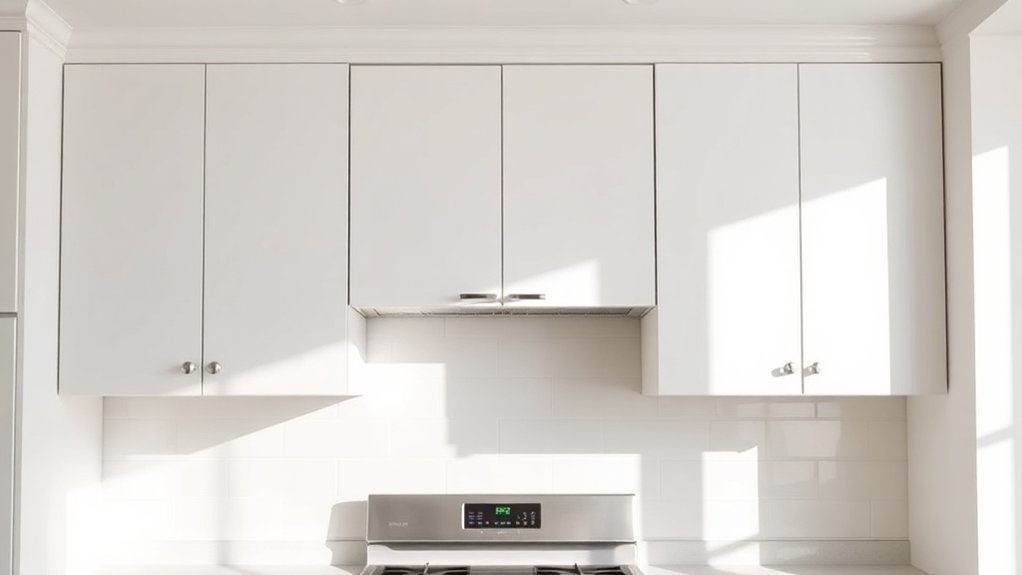
The standard upper kitchen cabinet depth is typically 12 inches, though some models go deeper to 15 or 18 inches for added storage. You’ll usually see 12-inch uppers in most kitchens because they align well with common wall layouts and leave enough room for counters and backsplashes.
If you’re planning your own space, measure from the wall carefully so your cabinets don’t feel too bulky. You can also use this dimension to guide design choices like color palettes and lighting placement, since cabinet depth affects how surfaces read in the room.
Deeper uppers can look more substantial, while standard ones often feel lighter and more open. When you compare cabinet styles, focus on what fits your kitchen’s proportions and your daily routine. That way, you’ll choose a depth that supports your layout without overwhelming the space.
How Upper Cabinet Depth Affects Storage and Comfort

Cabinet depth shapes both how much you can store and how easy the cabinets are to use day to day. When you choose a deeper upper cabinet, you gain room for plates, mugs, and bulk items, but you may also push contents farther back, making them harder to see and reach.
Shallower cabinets keep everything closer to the edge, so you can grab items quickly and avoid cluttered stacking. You’ll also notice comfort changes: if cabinets project too far, they can feel bulky over counters and make meal prep tighter.
Shallower cabinets keep items within easy reach and help maintain a more open, comfortable workspace.
With the right depth, you get a better balance between storage capacity and open workspace. Think about your reach, your tallest items, and how often you use each shelf. That’s where smart sizing matters.
two word discussion ideas, two word discussion ideas help you compare convenience, access, and overall kitchen flow before you decide.
How Deep Are Upper Cabinets in Real Kitchens?

In real kitchens, upper cabinets are usually 12 to 24 inches deep, with 12 or 15 inches being the most common for standard setups. You’ll usually see 12-inch-deep cabinets in most homes because they keep the wall line lighter and leave room for backsplashes, outlets, and easy reach.
If you want a more custom look, deeper uppers can work well in larger kitchens, but they often need extra planning so the room doesn’t feel crowded. Design aesthetics matter here, since cabinet depth changes how balanced your walls look and how much visual weight they carry.
Budget considerations also come into play, because deeper cabinets can cost more in materials, hardware, and installation. You should match the depth to your layout, storage needs, and style goals, not just follow a rule.
In many kitchens, the best choice is the one that looks clean, fits your routine, and stays within budget.
How Standard and Deep Upper Cabinets Compare
Standard upper cabinets are usually about 12 inches deep, making dishes easy to reach. Deeper cabinets can provide extra storage and fit bulkier items. However, they take up more wall space and may feel more intrusive. The right depth depends on how much storage you need and how comfortable you want your kitchen layout to feel.
Standard Cabinet Depth
How deep are upper kitchen cabinets, and what makes one option feel more practical than another? When you choose a standard depth, you usually get about 12 inches, which keeps your wall cabinets balanced and easy to reach. A custom depth can shift that measurement, but standard sizing often works best for everyday kitchens.
| Depth type | Typical use |
|---|---|
| Standard depth | Plates, glasses, pantry items |
| Shallow option | Tight spaces, lighter storage |
| Custom depth | Fit-specific layouts |
| Deeper profile | Larger items, if planned carefully |
You’ll notice standard cabinets leave enough room for appliances and backsplashes without crowding the counter. If you want a straightforward layout, this depth gives you familiar proportions and simpler installation.
Deep Cabinet Benefits
Deeper upper cabinets can give you extra storage without adding more wall space, which makes them useful in kitchens that need room for bulkier dishes, small appliances, or less-frequently used items.
You can use that added depth to create deep storage that keeps serving bowls, mixers, and pantry extras tucked away but still within reach. This setup can also improve cabinet organization by letting you group items by type and reduce clutter on your counters.
When you choose deeper uppers, you gain more usable space for varied cookware and supplies, so your kitchen feels more efficient. If you often struggle to fit everything into standard cabinets, deeper options can help you stay organized and make daily cooking feel easier.
Depth Size Comparison
When you compare upper cabinet depths, standard models usually measure about 12 inches deep, while deep upper cabinets often extend to 15 or even 18 inches. You’ll notice the extra inches change how much you can store and how far the cabinets project into your kitchen.
A standard depth works well above counters because it keeps dishes within easy reach and leaves room to work below. A deeper cabinet gives you more space for bulky items, but it can feel heavier visually and make access trickier.
As you review subtopic ideas, think about your ceiling height, wall space, and daily use. This depth comparison helps you choose cabinets that balance storage, comfort, and overall kitchen flow.
Choosing the Best Depth for Storage Needs
To choose the best depth for your storage needs, start by thinking about what you’ll keep in the cabinet most often. If you store plates, mugs, and pantry items, a standard depth usually fits well and supports storage organization.
Deeper cabinets can hold bulky items, but they may hide things in back. Shallower cabinets make it easier to grab everyday dishes fast and improve kitchen lighting by reducing shadowy corners.
| Depth | Best For | Tradeoff |
|---|---|---|
| 10 in. | Glasses, spices | Less capacity |
| 12 in. | Everyday dishes | Moderate reach |
| 15 in. | Bulk goods | Harder visibility |
| 18 in. | Oversized items | Can feel heavy |
| Custom | Specific needs | Higher cost |
Pick the depth that matches your routine, reach, and the items you use daily.
How Much Space Should Upper Cabinets Leave Above Counters?
Once you’ve picked the right cabinet depth, the next key measurement is the vertical gap above your counters. You’ll usually want 18 inches between the countertop and the bottom of the upper cabinets. That space gives you room for small appliances, prep work, and easy access without making the wall feel crowded.
If you’re taller than average, you may prefer a little more height, but don’t go so high that you strain to reach shelves. When you’re learning How to measure countertops, measure from the finished counter surface, not the base cabinet or flooring. This keeps your layout accurate.
Also, think about light fixtures, backsplashes, and outlets before you lock in the height. Choosing cabinet finishes can help the wall feel lighter or more grounded, but finish won’t change the needed clearance. Keep the measurement consistent across the run, and you’ll get a cleaner, more comfortable kitchen overall.
How Cabinet Depth Affects Kitchen Movement
Cabinet depth affects how easily you can reach items and move around the kitchen. If upper cabinets stick out too far, they can crowd your workspace and get in the way. Aim for enough clearance to keep the kitchen easy to navigate without giving up too much storage.
Clearance And Reach
When upper cabinets sit too deep, they can crowd your workspace and make everyday movement feel tight. You’ll notice this most when you reach for dishes, seasonings, or glassware near the counter edge.
A slimmer profile leaves more clearance for your shoulders and hands, so you can cook without bumping doors or stretching awkwardly. It also helps with tasks like clearing moisture after washing up and adjusting lighting under the cabinets.
| Depth | Clearance | Reach |
|---|---|---|
| 12 in | Easy | Natural |
| 14 in | Comfortable | Slight stretch |
| 15 in | Tight | Frequent lean |
| 16 in | Crowded | Awkward reach |
| 18 in | Restricted | Limited access |
Choose depth that matches your height, counter use, and daily habits.
Traffic Flow Impact
Upper cabinet depth doesn’t just affect reach; it also changes how smoothly you move through the kitchen. If your cabinets stick out too far, you’ll feel cramped near the counter, sink, and stove.
Shallower boxes can open the path and make cooking feel easier, especially in tight layouts. Deeper cabinets may boost storage, but they can crowd your line of sight and interrupt natural movement.
You should balance function with room aesthetics so the space feels open, not boxed in. Smart budget planning also matters, since changing depth can affect labor and materials.
- A narrow aisle beside the island
- A shoulder brushing past a cabinet edge
- An open walkway between prep zones
- A cleaner, lighter visual field
How to Measure Upper Cabinets Before Buying
Before you buy new upper cabinets, measure the wall space carefully so you know exactly what will fit. Start by checking width, height, and depth at several points, since walls aren’t always level. Then note window trim, vents, outlets, and soffits that can change your layout. If you’re matching current design trends or updating color palettes, keep those details in mind so the cabinets look balanced once installed.
| Measurement | What to Check | Why It Matters |
|---|---|---|
| Wall width | Corner to corner | Fits cabinet run |
| Ceiling height | Floor to ceiling | Sets vertical clearance |
| Existing depth | Wall to front edge | Confirms reach |
| Obstructions | Windows, vents, trim | Prevents conflicts |
| Marked lines | Stud locations | Supports secure mounting |
After that, compare your numbers to cabinet specs and leave a little room for easy installation. This helps you choose cabinets that feel intentional, fit neatly, and work well in your kitchen every day.
What Custom Upper Cabinet Depth Options Are Available?
Custom upper cabinet depth options usually range from about 12 to 24 inches, so you can choose a size that fits both your storage needs and your kitchen layout. You can go shallower for a light, airy look, or deeper for extra shelf room and bulkier items.
Many makers also offer intermediate sizes, which give you more flexibility without crowding the wall. If you’re exploring two word discussion ideas or alternative topics, depth choices often become the starting point for custom planning.
- Slim 12-inch cabinets above a bright backsplash
- Mid-depth 15-inch boxes holding plates and bowls
- 18-inch units creating a balanced, built-in feel
- Deep 24-inch cabinets for oversized cookware and pantry goods
You can also mix depths across a run to add visual rhythm and make your storage feel intentional. Matching doors and consistent lines keep the final look polished and cohesive throughout your kitchen.
How to Choose the Right Depth for Your Kitchen?
To choose the right upper cabinet depth, start by looking at how you use your kitchen every day: shallow cabinets work well in tight spaces and keep the room feeling open, while deeper ones give you more storage for larger dishes, small appliances, and pantry items.
Measure your wall space, countertop clearance, and reach so you don’t pick a depth that feels awkward or blocks sightlines. If you cook often and need easy access, choose a size that lets you see and grab items without stacking them too far back.
If you want a lighter look, stay shallower; if storage matters most, go deeper. Also, don’t let an unrelated topic or random discussion distract you from function, traffic flow, and the items you actually store.
The right depth should match your routine, your room, and your comfort every day.
Frequently Asked Questions
Can Upper Cabinets Have Glass Doors?
Yes, you can choose upper cabinets with glass doors, and they can add style while letting you display dishes or glassware. You’ll want to think about what you store inside, since everything shows through. If you want extra impact, add built in lighting to highlight the contents and make the kitchen feel brighter. You can also use frosted or textured glass for a softer look and a little more privacy.
What Materials Are Upper Cabinets Usually Made From?
Upper cabinets usually use plywood, MDF, or solid wood, and you’ll often find laminate or thermofoil finishes too. Think of them as the skeleton and skin of your kitchen.
You can choose plywood for strength, MDF for a smooth painted look, or solid wood for durability. If you add glass doors or built in lighting, these materials still work well and help your cabinets look polished and last longer.
How Much Do Upper Cabinets Typically Cost?
Upper cabinets typically cost you anywhere from $100 to $1,200 each, depending on size, material, and finish. You’ll pay less for stock units and more for custom designs with cabinet pricing driven by upgrades like soft-close hardware or glass doors. Installation can add a few hundred dollars per cabinet.
If you’re budgeting a full kitchen, compare quotes closely so you can balance quality, style, and your overall project costs.
Are Upper Cabinets Installed Before Countertops?
Yes, you usually install upper cabinets before countertops, like setting the sky before the horizon. You’ll want the cabinets hung first so you can confirm ceiling height, check layout planning, and ensure everything lines up cleanly.
Then you can install the countertops with proper measurements and clearances. If you reverse the order, you may box yourself in and create fit problems that’ll cost you time and money.
Can Upper Cabinets Include Built-In Lighting?
Yes, you can include built-in lighting in upper cabinets, and it can make your kitchen brighter and more stylish. You’ll often see it paired with glass doors, which let the light show off dishes or decor.
You can choose puck lights, LED strips, or under-shelf fixtures to fit your design. Make sure you plan for wiring early, so installation stays clean, safe, and efficient for you.
Conclusion
So, how deep are upper kitchen cabinets? Most standard upper cabinets are 12 inches deep, but you can choose shallower or deeper options depending on your storage needs and kitchen layout. When you measure carefully and think about comfort, movement, and access, you can make a better choice for your space.
After all, why settle for a cabinet depth that doesn’t fit the way you cook, reach, and live every day? The right depth for your upper kitchen cabinets can make your kitchen more comfortable and practical.