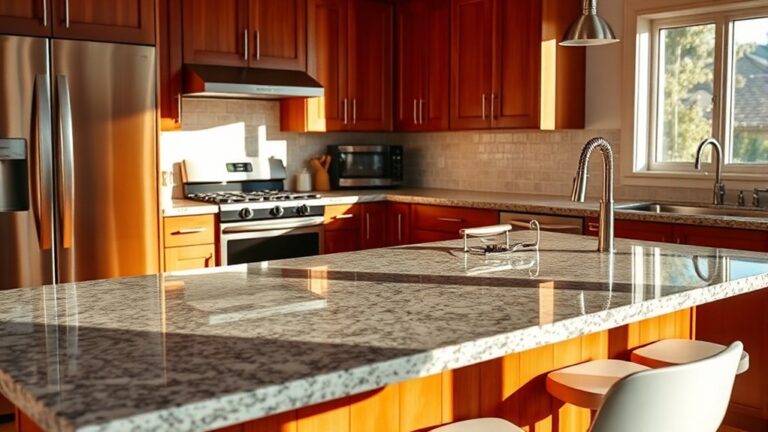
5 Key Factors That Affect How Much a Kitchen Renovation Does Cost
Planning a kitchen renovation can be exciting, but figuring out what it will cost can quickly feel overwhelming. You’re not alone: many homeowners struggle to know which choices will affect their budget…

Planning a kitchen renovation can be exciting, but figuring out what it will cost can quickly feel overwhelming. You’re not alone: many homeowners struggle to know which choices will affect their budget most. These five key factors that affect how much a kitchen renovation does cost can help you plan with more confidence.
A kitchen renovation’s cost usually depends on five things: your kitchen’s size, the materials you pick, layout changes, labor rates, and hidden plumbing or electrical issues. Bigger kitchens need more cabinets, counters, lighting, and flooring, while premium finishes raise both material and installation costs.
Moving sinks or appliances adds plumbing and wiring work, and contractor fees can vary a lot. Older homes can also hide surprise repairs, so there’s more to watch for than you might expect.
Key Takeaways
- Kitchen size and square footage directly increase materials, labor, and installation time.
- Material and finish choices, like stone counters or custom cabinets, raise the total cost.
- Layout changes and moving plumbing, wiring, or gas lines add significant behind-the-walls expenses.
- Labor rates and contractor fees vary widely by region, scope, and installation complexity.
- Hidden plumbing, electrical, or code issues can create unexpected repair and permit costs.
How Kitchen Size Affects Renovation Costs

When you look at kitchen renovation costs, size plays a big role because a larger kitchen usually needs more materials, labor, and time. You’ll pay more when your layout covers extra square footage, because installers must move farther, cut more surfaces, and complete more tasks.
If your kitchen is compact, you can often finish faster and keep labor bills lower. In a bigger space, you may also need more cabinetry, counters, lighting, and flooring, which quickly pushes the budget up.
Even simple storage upgrades can cost more when you have to outfit more wall and base space. Your appliance selections can also affect the total, since larger kitchens often invite bigger or additional units.
Why Material Choices Change the Price
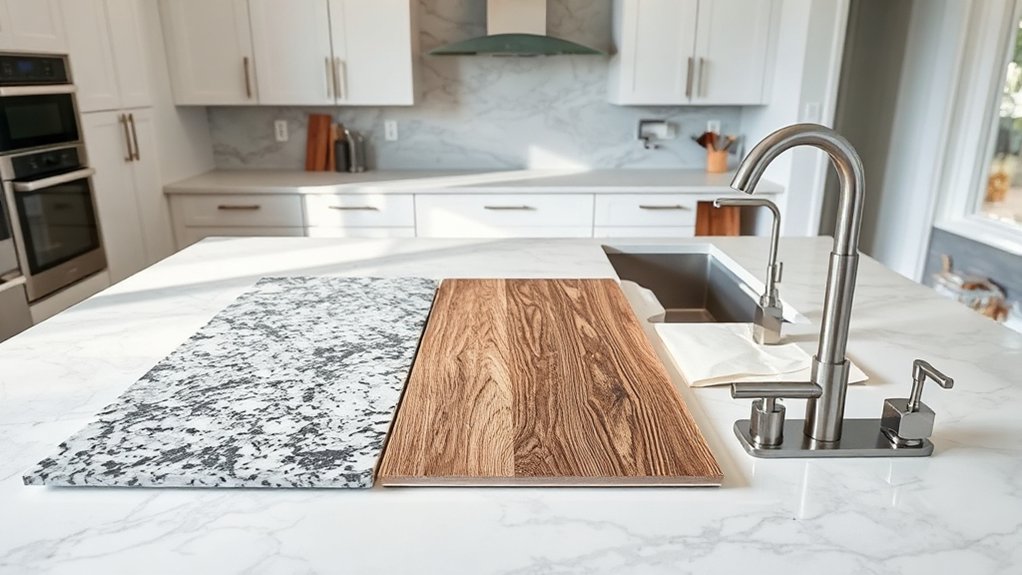
Material choices can shift your kitchen renovation budget fast because every surface, fixture, and finish comes with its own price range. You’ll pay more for stone countertops, hardwood cabinets, and premium tile than for laminate or stock options.
Material choices can swing your kitchen budget quickly, with stone, hardwood, and premium tile costing far more than stock options.
Material durability matters too: longer-lasting products often cost more upfront, but they can save you money on repairs and replacements later. Finish quality also changes the total, since painted, stained, brushed, or polished surfaces require different levels of labor and craftsmanship.
Even small upgrades, like soft-close hinges or designer hardware, can raise the bill when you choose higher-end brands. If you want to control costs, compare samples, check warranties, and decide where splurges make sense.
Choosing smart materials lets you balance style, performance, and budget without sacrificing the look you want.
How Layout Changes Increase Costs
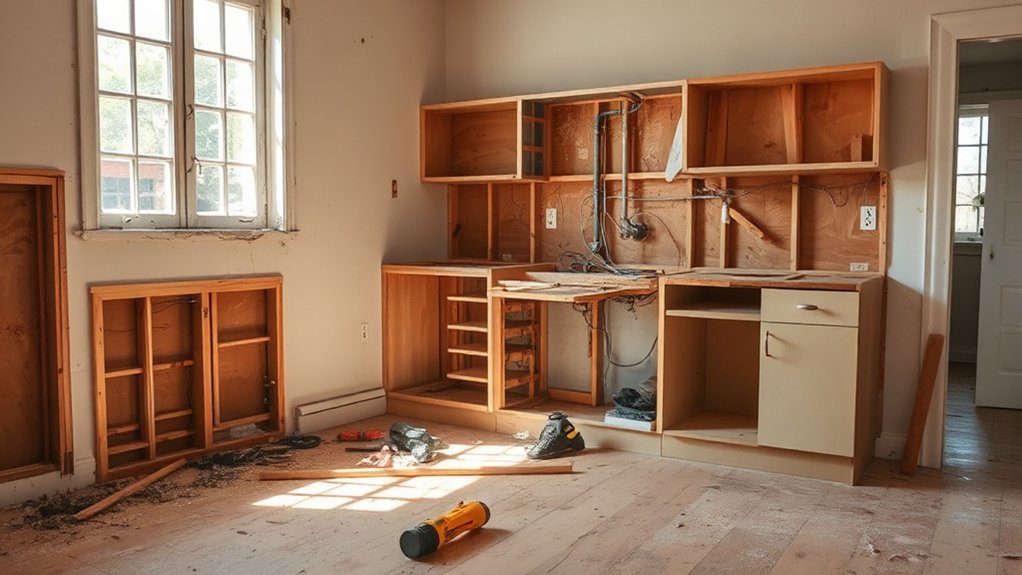
Changing your kitchen’s layout usually costs more because it affects the work behind the walls, not just the visible finishes. When you move appliances, sinks, or islands, you may need new plumbing, wiring, gas lines, and venting.
Those changes can trigger permits and inspections, which add time and expense. You can also run into surprises once walls or floors open up, especially in older homes.
Even small layout changes can force you to replace cabinets, countertops, and flooring so everything fits correctly. That means your material choices may shift too, since custom pieces often cost more than standard ones.
If you keep the current footprint, you can usually control spending better and avoid major structural adjustments.
Before you redesign the space, think through how you cook, store, and move around the room. A smarter plan can still improve function without pushing your kitchen renovation budget too high.
Labor Costs and Contractor Fees
Labor often takes up a large share of a kitchen renovation budget, and contractor fees can vary widely based on the scope of the job. You’ll usually pay more when labor rates rise in your area or when your project needs specialized trades.
If you’re making kitchen layout changes, expect a contractor to spend extra time coordinating crews and scheduling work efficiently. Material choices also affect labor, since custom cabinets, stone counters, or complex tile patterns take longer to install.
| Factor | Cost Impact | What You Control |
|---|---|---|
| Labor rates | Medium to high | Timing |
| Contractor fees | High | Bids |
| Material choices | Medium | Selection |
| Scope complexity | High | Planning |
Ask for detailed estimates so you can compare contractor fees clearly. That way, you’ll see where your money goes and avoid surprises.
Minor plumbing issues or electrical upgrades can add time, but clear planning helps keep costs predictable.
Hidden Plumbing and Electrical Issues
Hidden plumbing and electrical issues can raise your kitchen renovation cost fast, especially when your crew opens walls and finds outdated pipes, faulty wiring, or code violations. You might budget for cabinets and counters, then get hit with surprise repairs that add days and dollars.
Hidden plumbing and electrical surprises can quickly drive up your kitchen renovation cost once the walls come down.
Hidden plumbing can mean rerouting supply lines, fixing leaks, or replacing corroded drains. Electrical issues often require new circuits, grounded outlets, or a panel upgrade to handle modern appliances safely.
- Inspect before demo so you can spot risks early.
- Set aside contingency money for hidden plumbing and electrical issues.
- Hire licensed pros to meet code and avoid rework.
If you skip these checks, you could delay inspections, fail permits, or pay twice for the same fix. A careful walkthrough helps you protect your timeline and keep your renovation cost under control.
Frequently Asked Questions
How Long Does a Typical Kitchen Renovation Take?
A typical kitchen renovation takes about 6 to 12 weeks, but your exact timeframe depends on size, scope, and surprises behind the walls. You’ll also need to plan for timeframe considerations like material delays and inspections.
Good project sequencing helps keep your remodel moving, from demolition to plumbing, electrical, cabinets, countertops, and finishes. If you’re changing the layout, you may need extra time for permits and custom work.
Can I Renovate My Kitchen in Stages?
Yes, you can renovate your kitchen in stages, and that can help you keep the ball rolling without overwhelming your budget. With renovation phasing, you can tackle cabinets, counters, flooring, and appliances one step at a time.
Staged remodeling lets you stay functional while you upgrade. You’ll need a clear plan, though, so each phase fits together smoothly and doesn’t create extra work or delays later on.
Do Permits Add Significantly to Renovation Costs?
Yes, permits can add to your renovation bill, but they usually don’t dominate it. You’ll pay for required approvals, inspections, and paperwork, and those fees vary by location and project scope.
Bigger changes like plumbing, electrical, or structural work can increase permit costs. If you skip permits, you might face fines or rework, which can cost you much more later, so budget for them upfront.
How Much Should I Budget for Appliance Upgrades?
You should budget about $2,000 to $10,000 for appliance upgrades, though your tastes can nudge that higher. If you want a few tasteful replacements, midrange models often fit the bill. If you’re aiming for the crème de la crème, costs can climb fast.
Consider appliance longevity and energy efficiency, since they can lower long-term expenses. You’ll usually get the best value by mixing one splurge with several sensible choices.
Will a Kitchen Renovation Increase My Home’s Value?
Yes, a kitchen renovation can increase your home’s value, especially if you update worn finishes and improve function. You’ll usually see the strongest return with a smart design and quality materials.
The value impact depends on your neighborhood and project scope, so don’t overbuild. Also consider timing; if you plan to sell soon, focus on broad appeal and practical upgrades that buyers notice right away.
Conclusion
When you start planning your kitchen renovation, you’ll quickly see the price can shift in unexpected ways. Your kitchen’s size, the materials you choose, layout changes, and contractor fees all shape the final bill.
But the biggest surprise often hides behind the walls. Once plumbing or electrical problems surface, costs can climb fast.
So before you commit, ask the tough questions now. The last detail you uncover could change everything about how much a kitchen renovation costs.