How to Get Rid of Kitchen Ants Step by Step
Kitchen ants can turn a clean, comfortable space into a frustrating one, and you’re not alone—many people struggle to keep them out. The right ant bait and prevention products can help you…

Kitchen ants can turn a clean, comfortable space into a frustrating one, and you’re not alone—many people struggle to keep them out. The right ant bait and prevention products can help you tackle the problem step by step.
Start by tracking the ants to where they’re entering, then clean the trail with warm soapy water so they can’t follow it back. Next, remove food and water sources: wipe crumbs, store food in sealed containers, and fix leaks. Place ant bait near trails, not spray, so workers carry it to the nest. Then seal cracks with caulk and add weatherstripping. If ants keep returning, identify the species and you’ll know which fix works best.
Key Takeaways
- Track ants to their entry point by following the busiest trail to cracks, baseboards, pipes, windows, or under appliances.
- Remove attractants by wiping crumbs, spills, pet food, and dirty dishes, and fix any leaks or moisture sources.
- Clean ant trails with warm soapy water or vinegar to erase scent marks and stop follow-back.
- Place ant bait near trails and entry points, and avoid spraying insecticide near bait so workers carry it to the nest.
- Seal cracks and gaps with caulk, weatherstripping, or door sweeps, and use diatomaceous earth in dry travel areas.
Find Where the Kitchen Ants Are Coming From
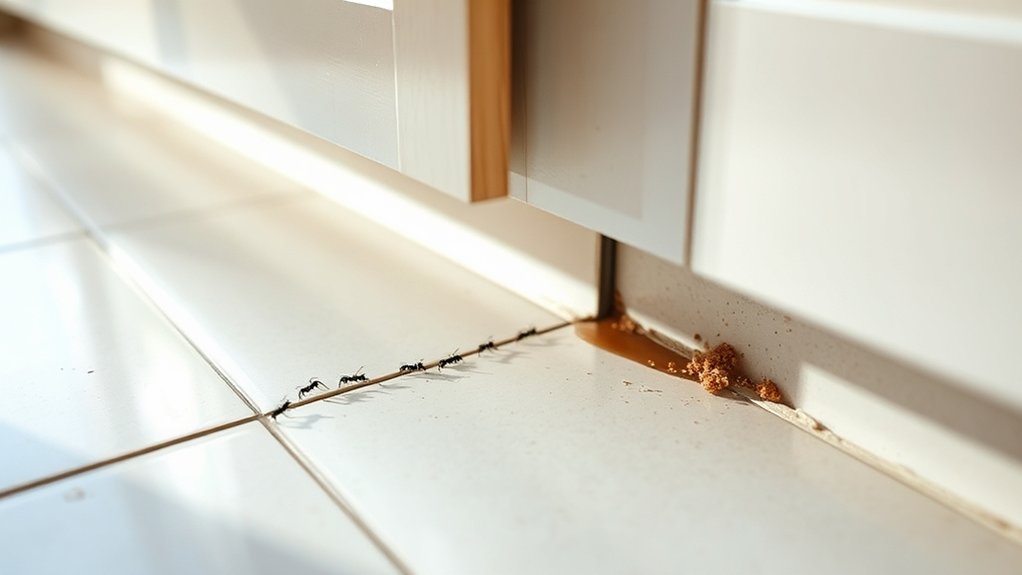
Start by tracking the ants to their entry point so you can deal with the source, not just the trail. Watch their line closely and note where they disappear behind baseboards, under appliances, or into cracks around windows, pipes, and cabinets.
Use a flashlight and inspect slowly, since tiny gaps can hide a steady stream. If you see several trails, focus on the busiest one first, because that usually leads to the nest or a sheltered route inside.
Pay attention to ant size, color, and behavior too; distinguishing ant species helps you judge whether you’re dealing with pavement ants, carpenter ants, or another invader. Take a quick photo if needed so you can compare details later.
Once you’ve mapped the route, you’ll know which openings need attention and can move on with a targeted plan.
Remove Food Sources That Attract Ants

Once you know where the ants are getting in, cut off the reason they’re coming inside by removing anything edible they can reach. Put away pet food after meals, wipe crumbs from counters, and don’t leave dirty dishes in the sink overnight.
Keep fruit in the refrigerator or sealed containers, and store sweets securely in airtight jars or bins. If you spill sugar, honey, syrup, or juice, clean it up right away so ants can’t keep feeding there.
Empty trash cans often, use tight-fitting lids, and rinse recycling containers before setting them out. Check your pantry for open packages, and transfer cereals, flour, and snacks into sealed storage.
Fix and remove water leaks under sinks, behind appliances, and around pipes, because ants also need moisture to survive. You should also dry sponges, dishcloths, and cutting boards after use.
When you remove these attractants, you make your kitchen far less appealing and force ants to look elsewhere.
Clean Ant Trails and Scent Marks
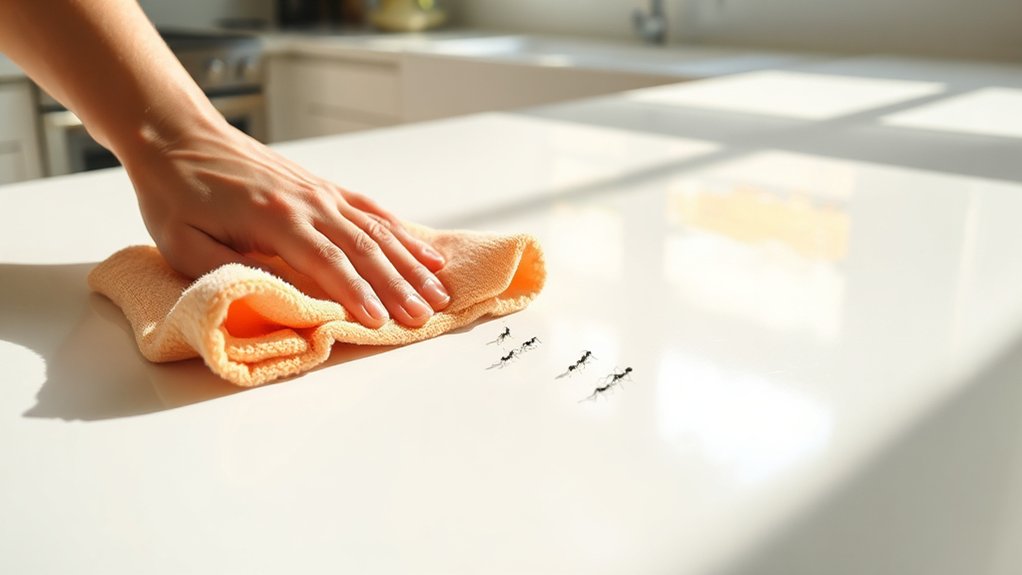
Wipe up ant trails as soon as you spot them so other ants can’t follow the scent back inside. Clean the trail and nearby surfaces to remove the markers that may keep drawing ants into your kitchen. A vinegar solution can help remove those scents and make the area less inviting.
Wipe Ant Trails
Ants leave invisible scent trails that guide the rest of the colony straight to your food, so wiping them away is a crucial first step. Start your kitchen cleanup by tracing the ant trail from the counter to baseboards, then use warm soapy water on a cloth or sponge to scrub every path you see.
Pay attention to corners, edges, and spots near sinks, crumbs, and pet bowls. Rinse the cloth often so you don’t spread residue around. Dry surfaces with a clean towel to finish the job.
Repeat this quick wipe-down after meals or spills, because fresh trails can appear fast. By clearing these paths promptly, you make it harder for ants to follow the same route back into your kitchen again.
Remove Scent Markers
After wiping up the visible ant path, clean the surrounding area to erase the scent marks they leave behind. Use a damp cloth and a little dish soap to scrub counters, baseboards, and the floor where ants traveled.
Pay close attention to cracks, corners, and the edges of appliances, since ants often leave scent markers there. If you can, identify ants by following their route back to entry points, then clean those spots too.
Rinse the cloth often so you don’t spread the trail. Dry surfaces completely, because moisture can attract more activity. Repeat this process daily until you stop seeing new ants.
Use Vinegar Solution
Mix equal parts white vinegar and water in a spray bottle, then spray the solution directly on ant trails, countertops, baseboards, and other areas where you’ve seen activity. Wipe the surface with a clean cloth to remove scent marks that guide other ants back inside.
Reapply after each cleaning, especially near sinks, trash bins, and food prep zones. Vinegar won’t kill a hidden colony, but it disrupts the chemical trails ants use to navigate, so it supports ant baiting by making your kitchen less inviting while bait works.
Keep up strong kitchen sanitation by storing food in sealed containers, rinsing dishes promptly, and sweeping crumbs from floors and corners. When you pair vinegar cleaning with consistent bait placement, you cut off access, reduce foraging, and make it harder for ants to return.
Use Ant Bait to Kill the Nest
Choose the right ant bait so worker ants carry it back to the nest, where it can eliminate the colony at its source. Place the bait near ant trails, entry points, and other spots where you’ve seen ants. Keep it out of reach of children and pets.
Avoid spraying insecticide nearby, since it may scare the ants away before they can take the bait back to the nest.
Choose The Right Bait
To wipe out kitchen ants at the source, you need bait that worker ants can carry back to the nest and share with the colony. When choosing bait, match it to the ants you see: sweet gels often attract sugar ants, while protein or grease baits can work better for other species.
Read the label and pick a product made for indoor use, so you can safely handle ant problems near food areas. Avoid sprays that kill workers too fast, because they stop the bait chain.
You should also check for bait stations or gel formulations that stay fresh longer. At kitchen entry points, look for trails and test a small amount first. If ants ignore it after a day or two, switch bait types until they feed.
Place Bait Strategically
Now that you’ve chosen the right bait, place it where the ants actually travel. Follow their trails to walls, baseboards, under appliances, and along sink edges, then set ant bait nearby, not on top of the line. Good bait placement keeps the ants moving and sharing the poison with the nest.
| Spot | Why it works |
|---|---|
| Sink cabinet edge | Hidden traffic route |
| Behind trash can | Frequent foraging path |
| Along baseboards | Easy access point |
Don’t spray cleaners near the bait, or you’ll scare ants away. Keep food sealed, wipe crumbs, and let the bait stay untouched for a few days. If activity drops, refresh the stations and move them only if ants stop using the route. Patience helps the colony take the bait back home and die.
Seal Cracks and Entry Points
Start by tracing where the ants are getting in, then seal every crack, gap, and opening you find around baseboards, windows, doors, pipes, and countertops. Use caulk for small cracks and gaps, and add weatherstripping where frames don’t meet tightly.
Check under the sink, behind appliances, and along the backsplash, since ants often travel through hidden routes. If you spot damaged trim or loose grout, repair it right away so you’re not constantly reopening an easy path.
For larger openings around plumbing or cords, fill them with the right patching material, then finish with a smooth seal. Install door sweeps on exterior doors to block the thin spaces ants use to slip inside.
As you work, keep your focus on sealing gaps thoroughly so you don’t leave even a tiny entry point. Once you’ve closed these access routes, you’ll make your kitchen far less inviting and help stop future ant invasions.
Try Natural Ant Killers Like Vinegar or Diatomaceous Earth
Spray a vinegar-and-water mix on ant trails to erase their scent and discourage more ants from following. You can also lightly dust dry areas ants cross with diatomaceous earth, which dries them out. Use either option carefully near food-prep areas, and keep kids and pets away from treated spots.
Vinegar Spray Benefits
Vinegar spray can help disrupt the scent trails ants use to find food, making it harder for them to keep marching back into your kitchen. You can mix equal parts white vinegar and water in a spray bottle, then target counters, baseboards, and entry points.
This simple method offers solid vinegar benefits because it masks odors ants follow and helps you clean sticky residue at the same time. For better spray effectiveness, apply it directly where you spot activity and wipe the area after a few minutes.
Reapply daily, especially after meal prep or spills, so you keep those trails broken. While vinegar won’t kill every ant on contact, it gives you a fast, safe, low-cost way to reduce visits and support your larger ant-control routine.
Using Diatomaceous Earth
Diatomaceous earth gives you another natural way to tackle kitchen ants by drying out their outer bodies as they crawl across it. You can dust a thin line where ants travel, and they’ll pick it up while searching for food.
This powder works best in dry areas, so focus on paths near baseboards, pantry edges, and cracks they use to move in and out. It also helps interrupt colonies that keep returning to your kitchen because nearby moisture sources make the space attractive.
Keep checking for fresh trails, since ants often follow the same route. When you pair this method with cleaning up spills and crumbs, you make your kitchen far less inviting. Use it as part of a simple, natural approach that supports long-term control.
Safe Application Tips
For safer results, start with small, targeted applications and keep natural ant killers out of reach of kids and pets. You’ll get better control if you spray vinegar along entry points, then let it dry before reapplying.
With diatomaceous earth, dust a thin line in cracks, behind appliances, and under baseboards, not in open food areas. Watch ant behavior so you can place treatments where they travel, not where they gather by chance.
Vacuum any excess powder and wipe counters before preparing meals. If you use bait stations too, check bait safety first and avoid mixing baits with strong repellents, since ants may stop feeding.
Reapply only as needed, and store products in labeled containers.
Use Ant Sprays and Traps Without Spreading the Colony
When you use ant sprays and traps, place them with care so you don’t drive the colony deeper into your kitchen. First, confirm ant identification so you choose the right product for the species you’re seeing.
Then focus on bait effectiveness: pick bait that ants will carry back to the nest instead of a spray that only kills the workers you see. Put traps along trails, behind appliances, and near entry points, but don’t spray over the bait, or you’ll interrupt feeding and send scouts elsewhere.
Use a light hand with perimeter sprays only where ants travel, not across every surface. Check traps daily and replace them as directed.
If you notice more ants after treatment, you may have disturbed their route, so pause and reset the placement. Keep your goal simple: let ants share the bait, then let the colony collapse without forcing a new path through your kitchen.
Prevent Kitchen Ants From Coming Back
Once the bait has done its job, keep ants from returning by cutting off what attracted them in the first place. Wipe counters after every meal, sweep floors, and rinse sticky jars or cans right away. Store sugar, cereal, pet food, and snacks in sealed containers, and don’t leave fruit out overnight. Empty trash often, clean recycling bins, and scrub under appliances where crumbs hide. Fix leaky faucets and dry sinks before bed, since ants love moisture.
Practice steady ant prevention by checking for small spills near sinks, cabinets, and pantry shelves. Good kitchen hygiene means you remove food, water, and scent trails before ants can find them again. If you see a trail, clean it with soap and water, then keep that area spotless for a few days. You can also caulk gaps around windows, baseboards, and pipes to block easy entry. Consistent habits matter more than one big cleanup, so stay alert and make prevention routine.
Figure Out What Kind of Ants You Have
Before you choose a treatment, figure out what kind of ants are marching through your kitchen. Different ant species leave different clues, and those clues help you act faster. Look at size, color, and trail behavior, then compare what you see with common household types. Pay attention to where they appear, since nesting habits often point you toward the source.
| Clue | What it may mean |
|---|---|
| Tiny brown ants | Often seek sugar and crumbs |
| Black ants in lines | May nest outdoors and forage inside |
| Large ants | Can signal wood or moisture issues |
Watch the ants closely for a few minutes. If they keep heading to one wall crack, cabinet seam, or sink area, you’re narrowing the search. Take a photo if you need to compare later. When you know the type, you can choose a better, more targeted response and avoid wasting time on the wrong fix.
Call a Pest Control Pro if Ants Keep Returning
If you’ve identified the ants and they still keep coming back, it may be time to call a pest control pro. You’ve already handled the basics of ant identification and kitchen cleanup, so recurring ants can signal a hidden nest, a larger colony, or entry points you can’t find.
A licensed expert can inspect your kitchen, trace trails, and pinpoint where the infestation starts. They’ll also choose targeted treatments that work better than store-bought sprays, which often just scatter the ants.
When you call, explain where you see ants, what food they target, and what steps you’ve taken. Keep up your cleanup routine, store food in sealed containers, and fix leaks while you wait.
With professional help, you can stop the cycle faster and protect your kitchen from another invasion.
Frequently Asked Questions
How Quickly Do Kitchen Ant Infestations Spread?
Kitchen ant infestations can spread fast, sometimes within days, because you’re dealing with rapid spread and colony growth. If you leave food, water, or crumbs out, worker ants scout, recruit others, and build trails quickly. You might see a few ants at first, then a steady stream by the next day. Act quickly, and you can stop the problem before it expands into nearby rooms or hidden nesting spots.
Are Kitchen Ants Dangerous to Pets or Children?
Usually, kitchen ants aren’t dangerous, but you should still treat them seriously. Like a tiny parade crossing your counter, they can signal bigger problems. You’ll want to know if treatments are pet safe and child safe before you use them. Most common ants won’t bite much, yet some can contaminate food or sting. Keep crumbs sealed, clean spills fast, and choose baits or sprays labeled safe for your family.
Can Ants Contaminate Stored Dry Pantry Goods?
Yes, ants can contaminate stored dry pantry goods by carrying dirt, germs, and pheromones into food packages. You should check flour, cereal, sugar, and pet food for signs of ant contamination, then discard anything exposed.
Protect pantry safety by sealing dry goods in airtight containers, wiping spills quickly, and cleaning shelves often. If ants keep returning, you’ll need to trace their entry points and stop the trail fast.
Do Ants Come Back After a Deep Kitchen Cleaning?
Yes, ants can come back after a deep kitchen cleaning. You’ve only tidied the stage; ant behavior can still guide them back if scent trails, crumbs, or moisture remain.
Don’t buy into cleaning myths that say one scrub ends the issue. You’ll need to wipe trails, seal food, and watch entry points.
If the colony’s nearby, they may return until you tackle the source, not just the surface.
What Season Do Kitchen Ants Appear Most Often?
Kitchen ants usually appear most often in spring and summer, when warmth, moisture, and food sources peak. You’ll notice seasonal patterns that drive them indoors, especially after rain or during heat waves.
Their habitat preferences make your kitchen an ideal target because it offers crumbs, water, and shelter. If you spot them then, you should act fast, seal entry points, and remove attractants before the colony grows.
Conclusion
Getting rid of kitchen ants takes a few smart steps, but it’s worth the effort. Find where they’re coming from, clean up food and trails, and use bait to wipe out the nest.
Then seal cracks, set traps, and keep your kitchen tidy so they don’t come back. Remember, an ounce of prevention is worth a pound of cure. If kitchen ants keep returning, call a pest control pro before the problem grows.