10 Ways to Save on How Much a Small Kitchen Remodel Costs
A small kitchen remodel can make your space feel fresh and functional, but costs can add up fast. If you’re trying to improve your kitchen without stretching your budget, you’re not alone….

A small kitchen remodel can make your space feel fresh and functional, but costs can add up fast. If you’re trying to improve your kitchen without stretching your budget, you’re not alone. These 10 ways to save on how much a small kitchen remodel costs can help you plan a makeover that works for your home and your wallet.
You can save on a small kitchen remodel by setting a clear budget, getting multiple contractor quotes, and keeping your existing layout so you don’t move plumbing or walls. Choose stock cabinets, reuse sturdy shelves and hardware, and refresh cabinets with paint instead of replacing them.
Pick affordable countertops like laminate or butcher block, and watch for appliance sales and floor models. Mix a few high-end finishes with budget-friendly materials, and you’ll find more smart ways to cut costs.
Key Takeaways
- Set a firm budget upfront and compare multiple contractor quotes to keep the remodel within your target total.
- Keep the existing kitchen layout to avoid costly plumbing, electrical, and structural changes.
- Reuse sturdy cabinets, shelves, hardware, and open shelving instead of replacing everything.
- Paint existing cabinets and choose budget countertops like laminate, butcher block, or quartz remnants.
- Save on appliances and fixtures by shopping sales, floor models, clearance items, and bundled discounts.
Set Your Small Kitchen Remodel Budget

Before you pick finishes or hire a contractor, set a clear budget for your small kitchen remodel so you know what you can afford from the start. List every likely expense, including cabinets, counters, labor, permits, delivery, and a cushion for surprises.
Set a clear budget first, and include cabinets, labor, permits, delivery, and a cushion for surprises.
Good budget planning helps you decide where to spend more and where to cut back without losing function. Rank your must-haves, then separate them from nice-to-have upgrades so you don’t overspend on style alone.
Get multiple quotes early, and compare them against your target total to spot gaps fast. If you’re flexible, adjust finishes, fixtures, or appliance choices to match your limit.
Smart material sourcing also matters: shop sales, look for remnant slabs, and ask suppliers about discounted overstock. Track every estimate in one spreadsheet so you can monitor changes and make quick decisions.
A disciplined budget keeps your remodel realistic, controlled, and far less stressful.
Keep the Existing Layout
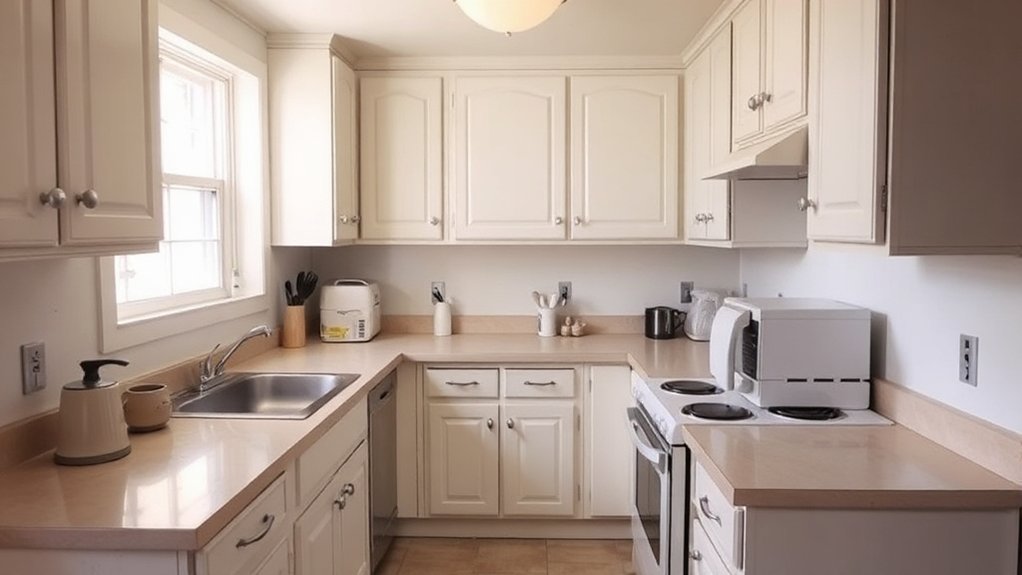
Keeping your existing kitchen layout can cut costs quickly, since you won’t need to move plumbing or electrical lines. You can save even more by keeping the walls where they are, which means less demolition and rebuilding. With fewer structural changes, your remodel stays simpler and your budget is easier to manage.
Preserve Current Plumbing
One of the easiest ways to lower a small kitchen remodel cost is to preserve the current plumbing and keep the existing layout. When you move your sink, dishwasher, or refrigerator water line, you’ll add labor, materials, and permit headaches fast.
By choosing fixtures that fit your present setup, you can preserve current plumbing and avoid costly rerouting. You should also review plumbing considerations early, so you know where drains, shutoff valves, and supply lines already sit.
That planning helps you pick a cabinet and appliance arrangement that works with what’s there instead of fighting it. If you want a fresh look without major expense, swap finishes, hardware, and fixtures while leaving the pipes in place.
This approach keeps your remodel simpler, faster, and more affordable.
Retain Wall Placement
Another smart way to control how much a small kitchen remodel costs is to keep the existing layout and retain wall placement. When you leave the retain wall in place, you avoid demolition, redesign delays, and extra labor charges.
You can still refresh the room with new cabinets, countertops, lighting, and paint without needing to modify structure. This approach helps you spend more on visible upgrades that improve style and function.
It also reduces the risk of surprises behind the walls, which can quickly inflate your budget. If your current layout already works, focus on better storage, updated finishes, and improved workflow.
Reduce Structural Changes
Reducing structural changes is one of the easiest ways to keep your small kitchen remodel affordable. You can save a lot by keeping plumbing, electrical, and appliance locations where they already are. That means you won’t need costly permits, demolition, or hidden repairs behind walls and floors.
Focus your budget planning on finishes, fixtures, and storage upgrades instead of moving load-bearing walls or rerouting systems. When you keep the existing layout, you also simplify material sourcing because you can match cabinet sizes, countertops, and flooring to the current footprint more easily.
If your kitchen functions well now, make targeted improvements that boost style and efficiency without changing the room’s bones. This approach helps you control costs and finish faster.
Reuse Cabinets, Shelves, and Hardware

If your existing cabinets, shelves, and hardware are still in good shape, keep them and let them do the heavy lifting for your remodel budget. You can save a lot by reusing cabinets instead of replacing them, especially if the boxes are solid and the layout still works.
A fresh coat of paint, new doors, or updated trim can make old storage feel custom without the price tag. Open shelves can often stay in place too, and you might only need to sand, stain, or repaint them.
Don’t overlook repurposing hardware either. Swapping pulls, knobs, and hinges can give your kitchen a cleaner, more current look while avoiding the cost of new built-ins.
If pieces feel dated but function well, mix and match them strategically so you only replace what’s worn out. This approach keeps your remodel focused on visible impact, not unnecessary demolition.
Compare Contractor Quotes First
Get at least three contractor bids so you can compare prices and quickly spot outliers. Before choosing, check that each quote covers the same scope, materials, and labor. Then ask what’s included and see if you can negotiate any fees.
Compare Multiple Bids
How do you know you’re getting a fair price for your small kitchen remodel? You compare multiple bids and look past the bottom line. Ask at least three contractors for detailed quotes, then line them up side by side.
Use budget tracking to note labor, materials, and allowances, so you can spot where one bid runs high or low. A careful bid comparison helps you see whether a contractor is padding estimates or leaving out essentials.
If one price seems much lower, ask why before you decide. You’ll often save money by choosing the quote that balances value, quality, and timing, not just the cheapest number.
When you review several bids, you make smarter choices, negotiate better, and keep your remodel aligned with your financial goals.
Check Scope Details
Before you compare contractor quotes, check the scope details line by line. Your scope assessment should match each quote exactly, so you can spot gaps, extras, and vague language before you choose.
Review what each contractor will handle, from demolition to cleanup, and confirm that materials, labor, and permits are all listed. Also verify contractor qualifications, because a lower price won’t help if the crew can’t deliver the same work.
| Item | Check |
|---|---|
| Demo | Included? |
| Cabinets | Same grade? |
| Countertops | Same material? |
| Labor | Clearly defined? |
| Permits | Listed? |
When the scope matches, you can compare quotes fairly and avoid paying for missing details later.
Negotiate Included Costs
Once you’ve lined up matching quotes, you can use them to negotiate included costs and trim your small kitchen remodel budget. Ask each contractor to explain exactly what’s covered, then compare allowances, labor, cleanup, and haul-away fees.
When you spot gaps, request a revised bid that folds in more work upfront so you can avoid hidden costs later. You can also negotiate included upgrades, like standard fixtures or basic trim, if another bid already offers them.
Keep the conversation professional and specific, and use competing quotes as leverage, not pressure.
- Review line items side by side
- Flag vague labor or material charges
- Ask for price matching on key extras
- Confirm changes in writing
Choose Stock Cabinets to Cut Costs
Stock cabinets can trim a big chunk off your small kitchen remodel budget without sacrificing style. You’ll find stock cabinets in standard sizes, finishes, and layouts, which means you avoid custom design fees and long lead times. That makes them a smart cost cutting choice when you want to refresh your kitchen fast and keep spending under control.
To get the most value, measure your space carefully and choose a layout that fits common cabinet widths. You can mix sizes to fill most small kitchens cleanly, then use fillers only where needed.
Pick simple door styles and durable materials so you save money upfront and still get a polished look. If you shop at home centers or cabinet outlets, you may spot ready-to-ship options at lower prices.
Paint Cabinets Instead of Replacing Them
If your cabinets are still sturdy, painting them instead of replacing them can save you a lot of money. Just be prepared to spend some time on prep—cleaning, sanding, and priming—to help the paint stick. Choose a durable finish that can stand up to daily wear and keep your kitchen looking fresh for longer.
Cabinet Paint Prep
Before you replace your cabinets, consider whether a fresh coat of paint can give them a whole new look for far less. Good cabinet prep makes the difference between a quick fix and a polished update.
You’ll save money by cleaning, sanding, and removing hardware before you paint, since these steps help the coating stick and look smooth. Choose a paint finish that suits your kitchen’s traffic and sheen preference, then work in thin, even coats for the best result.
- Empty the cabinets completely
- Wash away grease and grime
- Lightly sand each surface
- Label doors and hinges for easy reassembly
Durable Finish Choices
Which finish should you choose for painted cabinets? You’ll save more when you pick a durable finish that stands up to daily use instead of replacing cabinets. For strong finish durability, choose a bonding primer plus cabinet-grade enamel or waterborne alkyd paint. These coatings resist chips, wipe clean easily, and keep your kitchen looking fresh longer.
| Finish type | Best use |
|---|---|
| Satin enamel | Easy cleanup |
| Semi-gloss enamel | Higher wear resistance |
| Waterborne alkyd | Smooth, tough coat |
| Conversion varnish | Maximum finish durability |
If you’re painting yourself, buy quality brushes, sand lightly between coats, and let each layer cure fully. That extra patience helps you avoid premature peeling and protects your remodel budget.
Pick Affordable Countertop Materials
How can you keep countertop costs down without sacrificing style? You can start by comparing countertop materials that fit your budget and your daily cooking habits. Laminate gives you lots of looks for less, while butcher block adds warmth without a premium price tag.
Compare countertop materials by budget and daily use; laminate and butcher block deliver style without the splurge.
Quartz remnants can also work well for smaller runs, and tile offers flexibility if you don’t mind grout lines. Ask suppliers about budget friendly options from overstock, discontinued colors, or remnant slabs, since these often cost less than standard stock.
- Choose laminate for fast savings.
- Use butcher block for a cozy, natural look.
- Check stone yards for remnant pieces.
- Consider tile for custom color and shape.
You’ll stretch your remodel dollars further when you match the material to the space, not just the style. Save the splurges for areas where durability matters most, and keep the rest simple.
Blend Splurge and Save Finishes
Want a polished look without overspending? You can mix high-end accents with budget-friendly choices to create a kitchen that feels custom. Put your money where it shows most: maybe a statement faucet, a showpiece pendant, or a striking cabinet pull. Then balance those touches with simpler, durable selections elsewhere. This approach blends finishes so your kitchen looks cohesive instead of mismatched.
Choose one or two standout materials, like brushed brass hardware or a glossy tile backsplash, and pair them with painted cabinets, basic trim, or stock shelving. Keep the palette consistent so the different price points feel intentional. You’ll get splurge savings without sacrificing style, and your remodel budget won’t stretch as far.
Focus on visible areas first, because that’s where finishes make the biggest impression. By mixing premium and practical elements, you can create a kitchen that feels elevated, personal, and cost-conscious.
Buy Appliances and Fixtures on Sale
Keep an eye out for sales before you buy appliances and fixtures, because timing can trim a big chunk off your kitchen remodel cost. You can stretch your budget by tracking appliance timing around holiday weekends, model clearances, and retailer refreshes.
Watch for holiday sales and clearance timing to trim your kitchen remodel costs without sacrificing style.
Compare prices across stores, then wait for sale shopping opportunities instead of paying full price on the spot. Small savings add up fast when you’re buying a range, sink, faucet, or dishwasher.
- Sign up for store alerts and price-drop emails.
- Watch for floor models and last-season finishes.
- Ask about bundle discounts on matching items.
- Check scratch-and-dent sections for hidden value.
You’ll often find that a slightly older style works just as well as the newest release, especially when the discount is steep. If you stay patient and organized, you can cut hundreds from your remodel without sacrificing the look or function you want.
DIY the Easier Remodel Tasks
If you’re comfortable with a drill, paintbrush, or tape measure, tackling some of the simpler remodel jobs yourself can lower labor costs fast. You can save by removing old hardware, painting cabinets, installing shelves, or handling demo before the pros arrive.
These tasks don’t usually require specialized licenses, but you still need careful DIY project planning so you don’t create delays or extra repairs. Measure twice, buy the right tools, and choose budget friendly materials that are easy to cut, clean, and install.
Keep your work limited to jobs you truly understand, and leave plumbing, electrical, and structural changes to licensed contractors. When you take on the right tasks, you reduce hourly labor charges without sacrificing quality.
A little sweat equity can stretch your remodel budget further and give you more control over the final look.
Frequently Asked Questions
How Long Does a Small Kitchen Remodel Usually Take?
A small kitchen remodel usually takes 4 to 8 weeks, though permits, custom orders, and inspections can stretch that timeline. You’ll hear timelines myths that promise faster results, but delays happen when planning slips or crews uncover issues.
Avoid budget pitfalls by ordering materials early, confirming the scope, and keeping choices simple. If you stay organized and flexible, you can finish sooner and keep stress low.
What Permits Are Needed for a Small Kitchen Remodel?
You’ll usually need building permits, and sometimes electrical, plumbing, or mechanical permits, depending on your project. A permits overview from your local building department will tell you what applies, and you should check license requirements before hiring anyone.
If you’re moving walls, altering gas lines, or changing wiring, expect approval. You can often start with a simple application, plans, and fees, then schedule inspections as the work moves forward.
How Can I Finance a Small Kitchen Remodel?
You can finance a small kitchen remodel with financing options like personal loans, home equity lines, credit cards, or contractor payment plans—because apparently cabinets don’t pay for themselves.
First, check your loan eligibility so you know what rates and terms you can actually get. Then compare offers, estimate monthly payments, and choose the option that fits your budget.
If you’ve got equity, a HELOC may offer lower interest.
Does Remodeling Increase My Home’s Resale Value?
Yes, remodeling can increase your home’s resale value, but you’ll see the biggest gains when you match local market trends and choose smart upgrades. You’ll boost appeal with fresh finishes, better layout flow, and updated appliances.
ROI factors like neighborhood comps, materials, and project size all matter. A kitchen remodel can also improve appraisal impact, helping buyers and appraisers see more value in your home.
When Is the Best Season to Start a Kitchen Remodel?
You’ll usually want to start your kitchen remodel in late winter or early spring, when contractors’ schedules often open up and weather supports smoother deliveries. Think of it like planting seeds before the busy bloom: good seasonal planning lets your project grow with less friction. You can also align budget timing with tax refunds or year-end bonuses, helping you lock in materials, compare bids, and keep your remodel moving without costly delays.
Conclusion
A small kitchen remodel doesn’t have to drain your wallet. If you set a clear budget, keep your layout, and reuse what you can, you’ll already be ahead. Then, by comparing quotes, choosing stock cabinets, and shopping smart for finishes and appliances, you can stretch every dollar further. Tackle a few easy DIY tasks too, and you’ll keep costs in check. With the right plan, you can save on how much a small kitchen remodel costs and still create a kitchen that shines without breaking the bank.