How to Replace Kitchen Cabinets in 3 Easy Steps
Replacing kitchen cabinets can feel overwhelming, especially when you’re trying to find options that fit your space, style, and budget. You’re not alone—many homeowners struggle to know where to start. This guide…
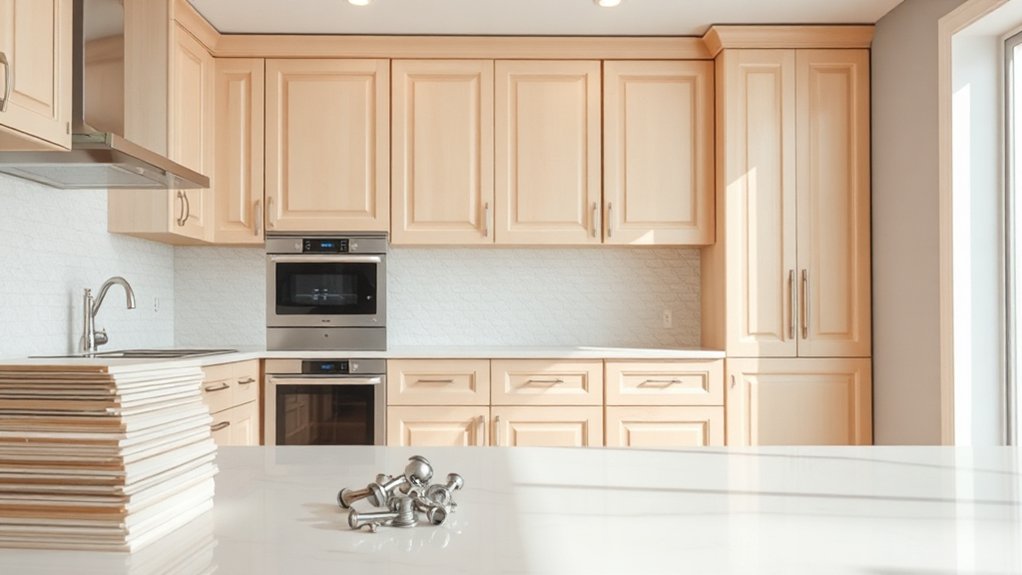
Replacing kitchen cabinets can feel overwhelming, especially when you’re trying to find options that fit your space, style, and budget. You’re not alone—many homeowners struggle to know where to start. This guide to how to replace kitchen cabinets in 3 easy steps will help you plan the project and make the process more manageable.
To replace kitchen cabinets in 3 easy steps, first measure your kitchen carefully, plan the layout, and compare cabinet sizes so everything fits. Next, empty the old cabinets, label doors and hardware, remove them one section at a time, and clean the wall while marking studs. Finally, hang the new cabinets on a ledger board, shim them level, clamp adjoining boxes, and tighten everything once the run looks straight, solid, and ready for daily use.
Key Takeaways
- Measure the kitchen carefully, including walls, ceiling height, clearances, and cabinet sizes, to plan fit and avoid costly mistakes.
- Empty and label old cabinets, then remove hardware and sections carefully to protect nearby counters, walls, and finishes.
- Clean the wall, scrape off caulk or debris, and locate studs before installing anything new.
- Hang the first new cabinet on a ledger board, then level it with shims and check plumb before tightening screws.
- Clamp adjoining cabinets, verify seam alignment and stability, and install hardware like soft-close hinges for better function.
Measure the Space and Remove Old Cabinets

Before you remove anything, measure the full kitchen space carefully so you know exactly what will fit. Record wall lengths, ceiling height, appliance clearances, and doorway widths, then compare them with the cabinet sizes you want.
Measure the full kitchen space carefully first, so every cabinet fits exactly and costly mistakes are avoided.
This step supports storage organization because you can plan shelf placement, drawer depth, and corner access before you buy. It also helps with budget planning, since accurate dimensions prevent costly returns, extra fillers, or rushed replacement purchases.
Once you’ve confirmed your layout, empty the cabinets and clear nearby counters so you can work efficiently. Label each door, drawer, and frame piece as you take them off, and keep hardware in separate bags.
Remove the old cabinets carefully, one section at a time, so you don’t damage surrounding finishes. If you find hidden screws or stubborn caulk, cut them free before lifting the cabinet away. Keep the area tidy, and you’ll be ready for the next installation step.
Prep the Wall and Locate Studs

With the old cabinets gone, clean the wall surface and scrape away any leftover caulk, glue, or debris so the new cabinets can sit flat. Wipe the area with a damp cloth, then let it dry completely.
Next, find every stud with a reliable stud finder and mark each center clearly in pencil. If your walls feel uneven, check for loose drywall and tighten anything that wiggles before you move on.
This step protects your planning budget because you’ll avoid mistakes, damage, and extra repairs later. It also rewards careful choosing tools, since a good level, tape measure, and stud finder make the job smoother and less stressful.
- You’ll feel relieved when the wall looks clean and ready.
- You’ll feel confident when each stud mark lines up.
- You’ll feel calmer knowing you’re preventing costly errors.
- You’ll feel proud when the space finally seems prepared.
Install and Level the New Cabinets

Now that the wall is clean and your studs are marked, you can hang the first cabinet and start leveling it in place. Lift it onto the ledger board, drive one screw loosely, then check for plumb with a level.
Adjust shims behind the cabinet until the face frame sits straight and the top edge aligns with your layout line. Keep tightening only after you confirm the fit.
| Check | What to do | Why it matters |
|---|---|---|
| First cabinet | Secure loosely | Lets you adjust |
| Level | Test side to side | Prevents crooked doors |
| Shims | Add behind low spots | Fills wall gaps |
| Screws | Drive into studs | Locks cabinets firmly |
| Doors | Install soft close hinges | Improves daily use |
Work from the center or corner, depending on cabinet delivery order, and clamp adjoining boxes before screwing them together. Continue across the wall, checking every seam.
When you finish, the run should look even and feel solid.
Frequently Asked Questions
How Much Do Replacement Kitchen Cabinets Typically Cost?
Replacement kitchen cabinets typically cost you $3,000 to $15,000, with custom setups running higher. Your cabinet materials, finish quality, and hardware choices drive most of the price, while labor can add a lot too.
You’ll also want to factor in replacement timelines, since delays can increase costs. Watch for installation pitfalls like uneven walls, hidden plumbing, and poor measurements, because they can quickly push your budget beyond the initial estimate.
What Cabinet Style Works Best for a Small Kitchen?
For a small kitchen, you’ll usually do best with simple Shaker or slab cabinets because they feel clean and uncluttered. Coincidentally, those styles also make tight spaces seem brighter and bigger. You can boost the effect with small trust considerations, like choosing durable hardware and easy-clean finishes, and explore color contrast options such as light uppers with darker lowers to add depth without crowding the room.
Should I Hire a Professional or Do It Myself?
You should hire a professional if you want faster results and less risk, but you can do it yourself if you’ve got the tools, time, and patience.
In the professional vs DIY choice, consider your skill level, budget, and tolerance for mistakes. Contractor vs self installation often comes down to precision, plumbing, and wall leveling.
If your cabinets need custom fitting, bring in a pro; otherwise, DIY can save money.
How Long Does a Full Cabinet Replacement Usually Take?
A full cabinet replacement usually takes you one to three weeks, depending on kitchen size, cabinet type, and surprises behind the walls. You’ll spend a day or two removing old cabinets, then a few days on prep, leveling, and install.
If you’re Replacing countertops or adding Lighting integration, expect extra time for coordination, electrical work, and finishing. Custom cabinets can stretch the timeline further, especially if deliveries run late.
Do I Need Permits to Replace Kitchen Cabinets?
Usually, you don’t need permits to replace kitchen cabinets, and that’s true in many areas. In fact, homeowners complete permit-free cabinet swaps in roughly 80% of minor kitchen updates.
Still, you should do a permits overview and check your local rules before you start. Your jurisdiction check matters if you move plumbing, electrical, or walls, because those changes often trigger permit requirements. Always confirm with your building department first.
Conclusion
Replacing your kitchen cabinets doesn’t have to feel overwhelming. If you measure carefully, remove the old cabinets, prep the wall, and install the new ones level, you’ll set yourself up for a smooth upgrade. For example, if your upper cabinet is even a quarter-inch off, the doors might not line up later.
Take your time, double-check each step, and you’ll end up with a kitchen that looks polished and works better every day. Following these steps can make replacing kitchen cabinets easier.