How Can I Unclog My Kitchen Sink in 3 Easy Steps?
A clogged kitchen sink can quickly disrupt your day, especially when dirty water won’t drain. If you’re wondering how to unclog your kitchen sink, you’re not alone—many people struggle with stubborn blockages….

A clogged kitchen sink can quickly disrupt your day, especially when dirty water won’t drain. If you’re wondering how to unclog your kitchen sink, you’re not alone—many people struggle with stubborn blockages. This roundup covers a few simple steps and useful tools to help get things flowing again.
To unclog your kitchen sink in 3 easy steps, first gather a plunger, bucket, and wrench, and place the bucket under the cabinet. Next, pour boiling water down the drain, add about half a cup of baking soda, and let it sit a few minutes. If it’s still slow, use the plunger firmly for 20 seconds. If that doesn’t work, check the P-trap and clear any debris. There’s more you can do if needed.
Key Takeaways
- Gather a plunger, bucket, wrench, and towel, then place the bucket under the sink to catch water.
- Pour boiling water down the drain, then add half a cup of baking soda and wait a few minutes.
- If the clog remains, use the plunger with enough water to seal it, then plunge for 20 seconds.
- Test the drain flow. If it is still blocked, place a bucket under the P-trap and loosen the slip nuts.
- Remove, clean, rinse, and reattach the P-trap, then run water to confirm the sink drains freely.
Gather a Plunger, Bucket, and Wrench
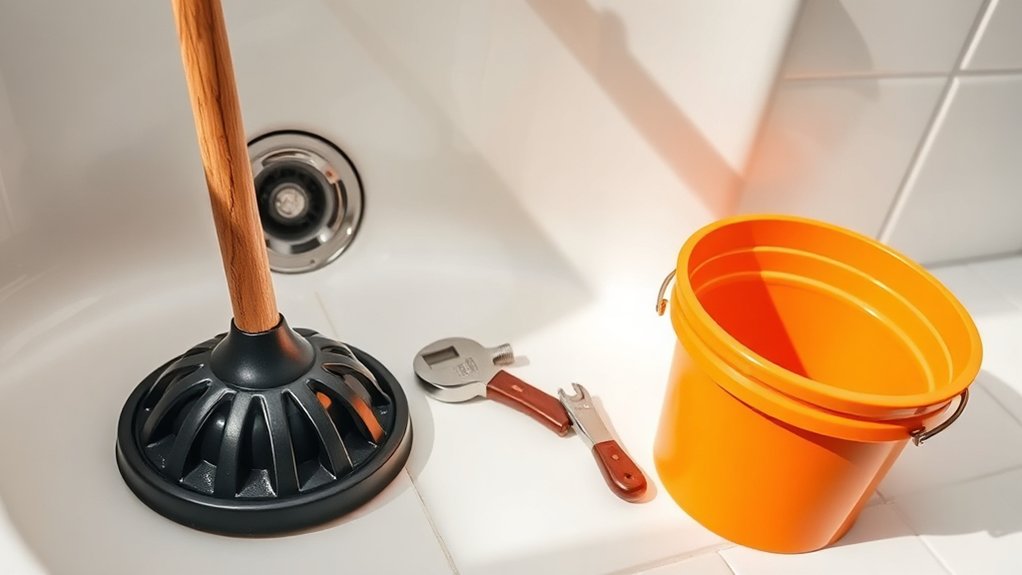
Before you start, gather a sturdy plunger, a bucket, and a wrench so you have everything within reach. You’ll use the plunger to create pressure, the bucket to catch leftover water, and the wrench to loosen the trap if you need a closer look.
Keep a towel nearby, too, so you can wipe up drips fast. When you prepare these tools first, you save time and avoid scrambling once the sink starts moving.
This simple setup supports your ideaOne brainstorm because you can plan each step clearly before you act. It also helps ideaTwo planning goals by keeping you organized and focused on the task.
Place the bucket under the cabinet, check that the plunger fits the drain, and make sure the wrench turns easily. With everything ready, you can tackle the clog calmly and work efficiently without extra mess or stress.
Start With Boiling Water and Baking Soda
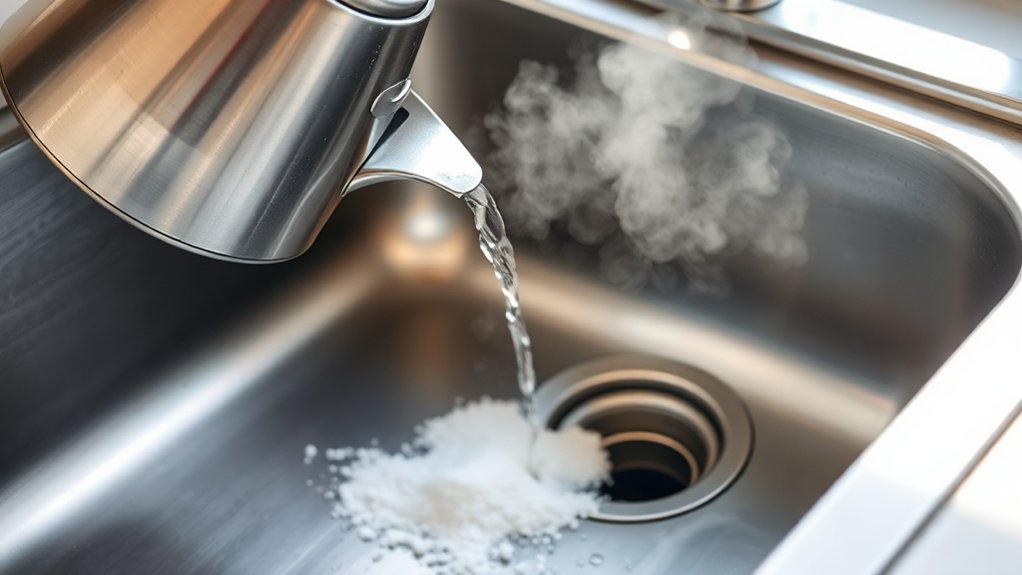
Pour a pot of boiling water slowly down the drain, then add about half a cup of baking soda to help loosen grease and buildup. Let the mixture work for a few minutes so it can break down light clogs before you try anything else.
Boiling water helps melt fatty residue, while Baking soda adds a mild scrubbing action that can lift grime from the pipe walls. If your sink still drains slowly, repeat the treatment once more and watch how the water flows afterward.
You should pour carefully and avoid splashing, especially if your sink has delicate fixtures. This simple first step often clears minor blockages without harsh chemicals, and it can also freshen the drain.
Keep the area dry as you work, and make sure the sink isn’t already full before you begin. If the water backs up completely, you’ll know it’s time to move on.
Use a Plunger, Then Check the P-Trap

If the sink is still clogged, try a plunger next to dislodge the blockage with a few firm, quick pumps. Cover the drain with enough water to seal the cup, then plunge straight up and down for 20 seconds. If the water starts moving, you’ve likely loosened the clog. These unclog tips often work before you touch any pipes.
| Step | What you do |
|---|---|
| 1 | Remove standing water if needed |
| 2 | Place the plunger over the drain |
| 3 | Pump firmly, then test the drain |
| 4 | If it’s still blocked, inspect the P-trap |
Next, put a bucket under the trap and loosen the slip nuts by hand. Clean out debris, rinse the parts, and reconnect them snugly. This quick kitchen plumbing check can catch grease, food scraps, or small objects that the plunger didn’t clear. Run water to confirm the sink drains freely.
Frequently Asked Questions
When Should I Call a Plumber for a Stubborn Clog?
Call a plumber when the clog won’t budge after plunging, snaking, or cleaning the trap, or if water backs up into other drains. You should also call right away if you smell sewage, hear gurgling, or face a plumbing emergency.
A professional assessment can spot deeper blockages, damaged pipes, or venting issues before they get worse and cost you more. Don’t wait if the problem keeps returning.
Can Garbage Disposal Issues Cause Sink Clogs?
Yes, garbage disposal issues can cause sink clogging. If you run the disposal with dull blades, jams, or food buildup, it can trap scraps and block water flow. You might notice slow draining, gurgling, or bad smells. Turn off power, clear any visible jam, and flush with hot water. If the problem keeps coming back, you’ll likely need a plumber to inspect the drain and disposal.
How Do I Prevent Kitchen Sink Clogs in the Future?
You can prevent kitchen sink clogs by scraping food scraps into the trash, not the drain, and running hot water after each use. Practice clog prevention by avoiding grease, coffee grounds, and starchy foods.
Keep up disposal maintenance by grinding small amounts only and flushing it with cold water. Clean the stopper and drain weekly, and use a mesh strainer to catch debris before it builds up.
Are Chemical Drain Cleaners Safe for Kitchen Sinks?
Chemical drain cleaners aren’t always safe for your kitchen sink. You should use them sparingly, because they can damage pipes, splash back, and create serious chemical safety risks. They can also hurt the disposal impact by contaminating wastewater and harming the environment.
If you try one, you’ve gotta follow the label exactly and wear protection. For most clogs, you’ll get better results with a plunger, trap cleaning, or a drain snake.
What Causes Recurring Kitchen Sink Blockages?
Recurring kitchen sink blockages usually come from recurring clog causes like grease buildup, food scraps, soap scum, and coffee grounds. You might also have slow drainage from a partly clogged trap, damaged pipes, or poor pipe slope.
To reduce problems, you should practice kitchen drain maintenance by scraping plates, running hot water, and cleaning the drain regularly. If clogs keep coming back, you’ll likely need a plumber to inspect the line.
Conclusion
You’ve got this! With a plunger, a little boiling water, and a quick look at the P-trap, you can tackle that clogged sink like a total home-improvement superhero. Don’t let a sluggish drain bully your kitchen. Give it these simple moves, and you’ll likely have water flowing again in no time.
If the clog sticks around, don’t panic. It’s just a stubborn little gremlin, and you’re more than ready to defeat it. With these steps, you can unclog your kitchen sink and get back to your day.