How Much Does a New Kitchen Cost?
Planning a kitchen remodel can feel overwhelming, especially when you’re trying to balance your wish list with your budget. You’re not alone: many people struggle to figure out how much a new…

Planning a kitchen remodel can feel overwhelming, especially when you’re trying to balance your wish list with your budget. You’re not alone: many people struggle to figure out how much a new kitchen costs before they know which choices will drive up the price.
A new kitchen can cost anywhere from a modest refresh to a high-end custom remodel, depending on your cabinets, countertops, appliances, layout changes, and labor. If you keep the existing footprint and choose stock or midrange finishes, you’ll spend less; custom cabinets, premium stone, and utility moves quickly raise the total.
Budget kitchens start low, while luxury projects climb much higher. Your final cost depends on size, style, and the features you choose, and there’s more to compare next.
Key Takeaways
- A new kitchen can range from a modest refresh to a high-end custom remodel, depending on finishes, layout, and appliances.
- Cabinetry is a major cost driver, with stock cabinets cheapest and custom cabinets most expensive.
- Countertops, sinks, fixtures, and appliances can significantly raise the total, especially with premium materials or built-in models.
- Labor adds heavily to costs, especially when moving plumbing, electrical, gas lines, or changing the kitchen layout.
- Budget kitchens use basic materials, midrange kitchens offer the best value, and luxury kitchens include custom details and top-tier finishes.
How Much Does a New Kitchen Cost?
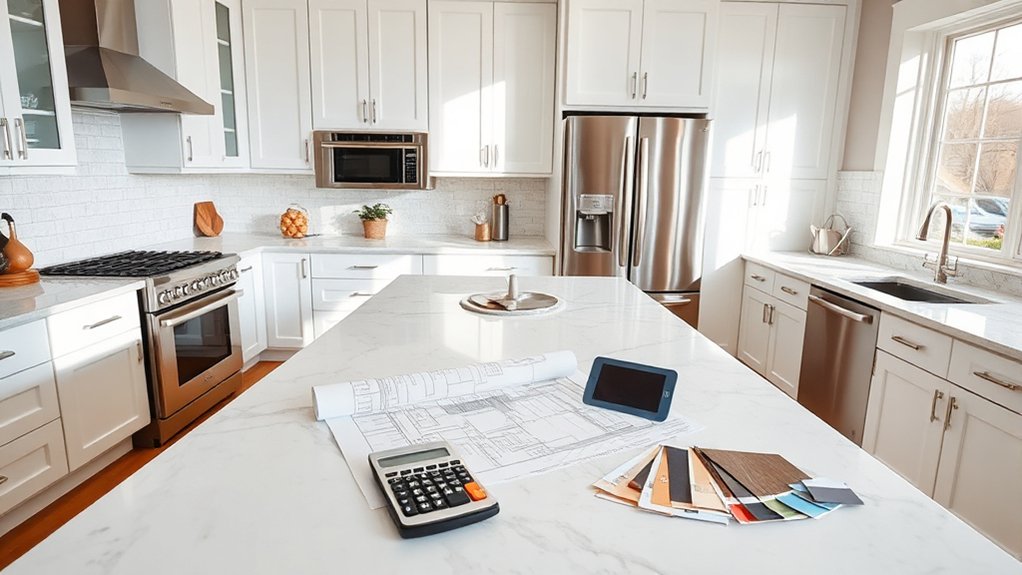
How much does a new kitchen cost? You can expect a wide range, because your choices shape the final price. A basic refresh may stay relatively modest, while a full custom space can climb much higher.
A new kitchen can range widely, from a modest refresh to a high-end custom space.
You’ll usually see differences in cabinets, counters, flooring, lighting, appliances, and layout changes. When you compare options, concept diversity matters: a sleek modern design won’t cost the same as a farmhouse setup or a minimalist galley.
It helps to think in terms of value, not just price. An unrelated comparison: buying a kitchen is a bit like choosing a car trim level; the base model works, but upgrades quickly add comfort and style.
To estimate your budget, focus on the finishes and features you want most. That way, you can set realistic expectations before you start planning.
What Raises Kitchen Remodel Costs?

Several factors can push your kitchen remodel cost higher, starting with layout changes, custom cabinetry, and premium materials. You’ll also pay more when you move plumbing, electrical, or gas lines, because each trade adds labor and permits.
If you want high-end appliances, specialty finishes, or stone slabs with dramatic veining, expect your budget to climb fast. Design complexity matters too: detailed trim, built-in storage, and custom lighting all take more time to install.
Unexpected issues can add surprises, especially if you uncover water damage, old wiring, or uneven floors once demolition starts. Even service upgrades for creative catering features, like larger prep zones or extra refrigeration, can increase costs.
Outside the kitchen, don’t forget related work such as garden irrigation adjustments if your project affects nearby walls or access points. To keep spending under control, prioritize must-haves first, compare bids carefully, and leave room for contingencies.
New Kitchen Cost by Size and Layout

The cost of a new kitchen often depends on its size and layout. A small kitchen usually costs less to remodel than a larger one, while a medium-sized kitchen tends to fall somewhere in between. Large kitchens can cost more because they require additional materials, labor, and design work.
Your layout also affects the budget. It can determine how much cabinetry you need and whether plumbing or electrical work is required.
Small Kitchen Costs
Small kitchens usually cost less to remodel than larger ones, but the price can still vary a lot based on layout, materials, and how much you change the space.
If you’re working with a tiny kitchen, you can often keep costs down by reusing the existing footprint and choosing simple finishes. A galley or one-wall plan usually saves money because you need fewer cabinets and less countertop.
If you want a coastal kitchen look, light cabinets, open shelving, and easy-to-clean surfaces can deliver style without pushing the budget too high. You’ll also spend less when you avoid moving plumbing or electrical lines.
Careful planning helps you focus on upgrades that make the biggest visual impact while keeping your remodel efficient and affordable.
Medium Kitchen Costs
Medium kitchens usually land in the middle of the remodeling cost range because they offer more room for cabinets, counters, and appliances than a small layout, but they don’t carry the higher expense of a large, custom space.
You can expect costs to rise with added cabinetry, more flooring, and extra labor, especially if you change the layout or move plumbing and wiring. A galley, L-shape, or U-shape design can all fit this size well, so your price depends on finishes and the amount of work involved.
If you’re comparing bids, keep your focus on the actual scope, not an unrelated topic or irrelevant planning detail. When you choose midrange materials and keep major fixtures in place, you’ll usually stay within a manageable budget.
Large Kitchen Costs
Large kitchens usually sit at the top of the remodeling budget because they need more cabinets, countertops, flooring, and lighting, plus more labor to install everything. You’ll often spend more if you change the layout, move walls, or reroute underground plumbing for sinks, islands, or appliances.
Because the room is bigger, you’ll also need more kitchen lighting to keep work zones bright and balanced. A simple large kitchen remodel may start around $40,000, but custom finishes, premium materials, and high-end appliances can push costs well past $100,000.
Open-concept plans usually add framing, electrical, and drywall costs too. If you want to control expenses, keep the existing footprint, reuse plumbing lines, and choose durable midrange finishes that still look polished.
How Much Do Cabinets Add to New Kitchen Cost?
Cabinets can make up a significant part of your new kitchen cost. The material you choose matters: solid wood and premium finishes typically cost more than budget-friendly options like laminate or MDF.
You’ll also need to consider whether you want stock or custom cabinets. Stock cabinets usually cost less, while custom cabinets offer a more tailored fit, style, and storage.
Cabinet Material Costs
When you start pricing a new kitchen, cabinet materials can take a big bite out of the budget, often accounting for a major share of the total cost. You’ll see big swings based on wood species, plywood quality, MDF, or laminate finishes.
Solid hardwood usually costs more, while engineered boards can help you stay within budget. Don’t overlook hardware, edge banding, and interior panels, because they all add up.
Smart material sourcing can lower your total without hurting performance, especially if you compare suppliers and ask about surplus stock. Avoid budgeting mistakes like assuming every cabinet box costs the same or forgetting delivery fees.
If you plan carefully, you can choose durable materials that fit your style, your timeline, and your overall kitchen budget.
Custom Vs Stock Cabinets
Beyond materials, the cabinet style you choose can change your kitchen budget just as much. Stock cabinets usually cost less because you pick from standard sizes, finishes, and layouts, so you can keep spending under control and move fast.
Custom cabinets cost more, but you get exact dimensions, smarter storage, and a look that fits your space. If your kitchen has awkward corners or you want premium cabinets materials, custom work can pay off in function and resale appeal.
When you compare two word discussion ideas like price range, lead time, and durability, you’ll see the tradeoff clearly. For many remodels, semi-custom offers a middle ground, giving you flexibility without the full custom price tag.
Countertops, Sinks, and Fixtures Costs
Countertops, sinks, and fixtures can make a big difference in both your kitchen’s look and budget. You’ll usually spend more on natural stone or premium quartz, while laminate and butcher block keep costs lower. As you compare countertop trends, remember that edge profiles, slab thickness, and backsplash integration can all shift your final price. Installation also matters: complex layouts, seams, and cutouts add labor.
For sinks, size and material drive cost. Undermount and farmhouse styles often cost more than basic drop-in models, and larger basins may need extra cabinet support. Don’t fall for sink installation myths that say any sink fits any opening; your countertop and plumbing setup must match.
Fixtures like faucets, sprayers, and soap dispensers can stay affordable, but designer finishes and touchless features raise totals fast. If you want to control spending, mix one splurge item with simpler choices elsewhere, and get itemized quotes before you buy anything.
Appliance Costs for a New Kitchen
Appliances can take a surprisingly large share of your kitchen budget, especially if you choose built-in, panel-ready, or professional-style models. You’ll usually spend the most on the refrigerator, range, and dishwasher, while microwaves, ventilation, and beverage centers add smaller but still meaningful costs.
Basic packages can keep appliance budgeting under control, but premium finishes, smart features, and custom sizes can push totals up quickly. If you want a cleaner look, panel-ready units often cost more and may require matching cabinetry.
Energy-efficient models can save money over time, so compare upfront price with long-term use. During contractor selection, make sure the team knows each appliance’s exact dimensions and utility requirements before installation. That helps you avoid costly surprises and reorders.
You should also reserve a contingency for delivery fees, extended warranties, and any special trim pieces that complete the layout.
How Much Does Kitchen Labor Cost?
Labor usually takes a major share of a kitchen remodel budget, and its cost depends on the size of the job, the complexity of the design, and your local market. You’ll pay for demolition, framing, plumbing, electrical, drywall, tile, cabinetry installation, and finish work.
If you add custom details or move utilities, labor rises fast. A simple layout costs less because crews work faster and need fewer trades. Use this quick guide:
| Task | Typical Driver | Cost Impact |
|---|---|---|
| Demo | Tear-out time | Lower |
| Rough-in | Trade coordination | Medium |
| Finish | Detail level | Higher |
Ask for itemized bids so you can compare labor rates, allowances, and scope. You should also confirm who handles permits and cleanup, since those tasks can be billed separately. Clear plans help you control two word ideas and avoid subtopic irrelevant surprises later.
Budget Kitchen vs. Midrange vs. Luxury
Comparing budget, midrange, and luxury kitchen costs shows just how much your choices can affect the total. A budget kitchen covers the essentials, while a midrange remodel adds better finishes and features. And if you’re after premium materials, custom details, and high-end appliances, luxury costs can climb quickly.
Budget Kitchen Costs
A budget kitchen gives you the basics without the premium price tag, but the tradeoff is usually fewer upgrades, simpler finishes, and less customization than a midrange or luxury remodel. You can expect to focus on function first: stock cabinets, laminate or budget countertops, standard appliances, and basic fixtures.
If you’re balancing a whole-home project, remember that spending here may affect other priorities like exterior design and landscaping costs. To keep your total down, reuse the existing layout, avoid moving plumbing or electrical lines, and choose affordable materials that still hold up well.
A smart budget plan helps you refresh your kitchen without overspending, giving you a clean, practical space that works for daily life.
Midrange Kitchen Costs
Midrange kitchen costs sit in the sweet spot between budget and luxury, giving you better materials, more customization, and a more polished finish without the highest-end price tag. You can expect upgraded cabinets, sturdier countertops, and fixtures that feel more refined.
This range usually lets you improve kitchen lighting, add smarter storage, and fine-tune appliance placement for a better workflow. You’ll still need to watch your choices, because finishes, hardware, and layout changes can raise the total quickly.
Even so, midrange remodels often deliver the best balance of value and comfort. If you want a kitchen that looks tailored and performs well without overspending, this tier gives you room to make meaningful upgrades and enjoy a noticeable transformation.
Luxury Kitchen Costs
Luxury kitchen costs can climb fast because you’re paying for top-tier materials, custom craftsmanship, and a highly tailored design. You might spend far more than a midrange remodel, but you also get premium finishes, advanced appliances, and smarter layouts. Luxury projects often include custom cabinetry, stone slabs, and integrated lighting.
| Tier | Typical Spend | Key Features |
|---|---|---|
| Budget | Low | Basic finishes |
| Midrange | Medium | Better appliances |
| Luxury | High | Custom details |
You can also upgrade insulation choices and add solar shading to improve comfort and efficiency, especially if your kitchen has large windows or exterior walls.
If you want a showpiece space, expect longer timelines, more coordination, and higher labor costs.
Ways to Save on a New Kitchen
Looking to keep your kitchen remodel affordable? Start by choosing a layout that works with your existing plumbing and wiring, so you don’t pay to move costly lines. You can also keep cabinets if they’re sturdy and repaint or reface them for a fresh look.
Choose a layout that works with existing plumbing and wiring to avoid costly changes.
Compare materials carefully; laminate, butcher block, and stock cabinets often cost less than custom options. Shop sales, ask for floor models, and reuse fixtures when they still work.
If you’re tempted by a luxury feature, ask whether it’s a must-have or just an unrelated topic that pulls you off budget. That’s a great way to avoid an irrelevant idea like adding high-end extras you won’t use.
Prioritize the changes that improve function most, then save the cosmetic upgrades for later. By staying focused and making smart tradeoffs, you can get a stylish kitchen without overspending.
How to Plan Your Kitchen Budget
Start by setting a clear total budget, then break it into categories like cabinets, appliances, labor, countertops, flooring, and a contingency fund. Decide what matters most so you can spend more where it counts and trim costs elsewhere. If you want a budget-friendly kitchen, compare prices, request multiple quotes, and choose materials that balance durability with value.
Track every estimate in one spreadsheet, and update it as you refine your plan. Leave 10% to 15% for surprises, because hidden plumbing, electrical work, or delivery delays can raise costs fast. You can also review current design trends to see where splurging makes sense and where simpler choices still look high-end. Stick to your priorities, avoid impulse upgrades, and review the total before you sign anything. A smart budget gives you control, reduces stress, and helps you build a kitchen you’ll love without overspending.
Frequently Asked Questions
How Long Does a Kitchen Remodel Usually Take?
A kitchen remodel usually takes 6 to 12 weeks, but you can expect more time if you change layouts or wait on materials. You’ll move faster if you’ve picked new appliances and cabinet hardware early, since delays often come from deliveries and installation.
Small updates may finish in a few weeks, while full remodels with plumbing, electrical, and custom work can stretch longer. Plan for surprises and build in buffer time.
Do I Need Permits for a New Kitchen?
Yes, you’ll usually need permits for a new kitchen, especially if you change plumbing, electrical, gas, or structural elements. You should check your local permitting process before work starts, because rules vary by city and county. Permit costs also differ, but they’re often worth it to avoid fines, delays, or problems when you sell your home. If you’re only replacing cabinets or finishes, you might not need any permits.
Can I Live at Home During a Kitchen Remodel?
Yes, you can live at home during a kitchen remodel, but it won’t be easy. You’ll need to plan for dust, noise, and limited access to cooking and water.
Set up a temporary kitchen with a microwave, fridge, and portable burner. If you can, seal off the work area and stay flexible.
A shorter kitchen remodel helps you keep daily routines while reducing stress and inconvenience.
What’s the Best Time of Year to Remodel?
The best time to remodel is usually late winter or early spring, when contractor workload often dips and you may find better seasonal pricing. You’ll also get more scheduling flexibility before the busy summer rush. If you want faster access to crews and materials, avoid peak renovation months. That said, you should choose a time that fits your life, since your household’s routine matters just as much as the market.
How Much Value Does a New Kitchen Add?
A new kitchen can boost your home’s value more than you might expect, but the payoff depends on your market. You’ll usually see strong ROI by room, since kitchens often sway buyers fast. Still, you should weigh value vs cost carefully, because a high-end remodel won’t always return every dollar. If you choose smart finishes and a practical layout, you’ll likely increase appeal, speed up sales, and raise offers.
Conclusion
A new kitchen can change your home, but costs can climb fast if you don’t plan carefully. You’ll spend more when you choose custom cabinets, premium countertops, or complex labor, while smart layout choices can keep your budget steady.
Think of your budget like a fence: if one post leans, the whole thing can shift. So set priorities, compare quotes, and leave room for surprises before you start your remodel. Careful planning can help you manage the cost of a new kitchen.