How to Start a Ghost Kitchen in 3 Simple Steps
Starting a food business can feel overwhelming, especially when you’re trying to keep costs low and reach customers online. You’re not alone—many aspiring owners struggle to figure out where to begin. This…
Starting a food business can feel overwhelming, especially when you’re trying to keep costs low and reach customers online. You’re not alone—many aspiring owners struggle to figure out where to begin. This guide breaks down how to start a ghost kitchen in 3 simple steps.
To start a ghost kitchen in 3 simple steps, first choose the right model for your budget and goals: shared space, a dedicated unit, or off-hours use of an existing restaurant. Next, build a delivery-ready menu with simple prep, bold flavors, and packaging that travels well. Finally, launch on delivery apps, train your team, and watch orders closely so you can fix issues fast and grow with confidence as your system gets sharper.
Key Takeaways
- Choose a ghost kitchen model that fits your budget, control needs, and growth plans, such as shared space, a dedicated unit, or off-hours restaurant use.
- Design an efficient kitchen layout with smooth prep, cooking, packing, and dispatch flow to reduce delays and waste.
- Build a delivery-friendly menu with simple prep, sturdy packaging, and ingredients that travel well and overlap across dishes.
- Test and refine menu items, packaging, and delivery handoff to cut mistakes, training time, and spoilage.
- Launch on delivery apps, train staff on safety and quality, and monitor orders to improve pricing, promotions, and customer experience.
Choose the Right Ghost Kitchen Model

Before you launch, you need to choose the ghost kitchen model that fits your goals, budget, and operations. You can lease a shared commercial space, rent a dedicated unit, or run from an existing restaurant during off-hours. Each option changes your startup costs, staffing needs, and control over quality.
Choose a ghost kitchen model that matches your goals, budget, and operations before you launch.
If you want flexibility and lower risk, a shared space may suit you. If you need more brand control and room to grow, a dedicated kitchen might work better.
Next, check the kitchen layout. You need a flow that lets you prep, cook, pack, and dispatch orders without bottlenecks. A smart layout reduces mistakes and cuts ghost kitchen waste by limiting extra movement, spoilage, and duplicate equipment.
Look for storage, ventilation, and loading access that match your volume. When you compare models carefully, you’ll set up a kitchen that supports efficiency from day one.
Build Your Menu and Delivery Systems

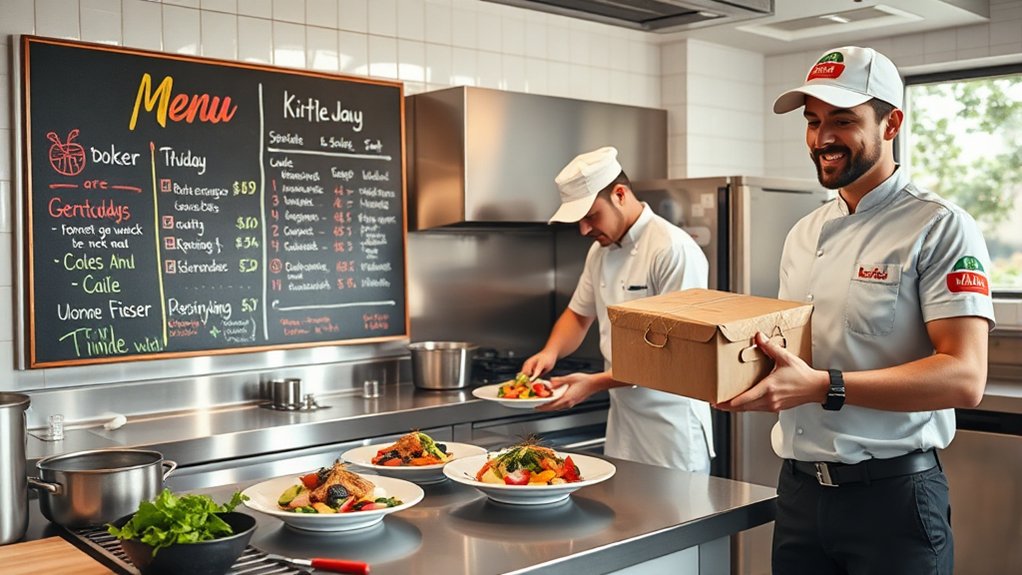
Now that your kitchen model is set, build a menu that works for delivery and keeps prep simple. Choose dishes that travel well, hold heat, and use overlapping ingredients so you can speed up prep without sacrificing quality. Keep portions consistent, packaging sturdy, and flavors bold enough to survive the trip.
Run menu testing with a small group and note what arrives best, what gets soggy, and what customers crave again.
- Limit your core items to reduce waste and training time.
- Use ingredients across multiple dishes to simplify inventory.
- Match packaging to each menu item’s texture and temperature.
- Set up delivery routing that minimizes delays and protects food quality.
As you refine both the menu and the handoff process, you’ll build a system that’s easier to manage and better for repeat orders.
Launch Your Ghost Kitchen and Start Getting Orders

With your menu and delivery systems in place, it’s time to open your ghost kitchen and start bringing in orders. Turn on your listings across delivery apps, update your hours, and make sure every dish matches your photos and descriptions.
Watch your first orders closely so you can spot delays, fix menu issues, and tighten your prep flow fast. Train your team on ghost kitchen safety, from handwashing to temperature checks, so every order leaves your kitchen clean and consistent.
As orders come in, track which dishes sell best and which ones slow you down. Use that data to refine pricing, portions, and promotions.
Keep communication clear with drivers and customers, and respond quickly to complaints or substitutions. You should also review packaging sustainability, choosing materials that protect food while reducing waste.
If you stay organized and flexible, you’ll build momentum, earn repeat customers, and turn your launch into steady growth.
Frequently Asked Questions
What Permits Are Required for a Ghost Kitchen?
You’ll usually need a business license, food service permit, health department permit, fire inspection approval, and sometimes a zoning permit or certificate of occupancy. You may also need a food handler’s permit and sales tax registration, depending on your location. Check local rules early so you stay on track with permits required and health compliance. Your city or county can tell you exactly what applies before you open.
How Much Startup Capital Do I Need?
You’ll usually need $10,000 to $50,000 in startup capital, depending on your menu, location, and lease terms. You’ll spend the most on kitchen equipment, licenses, insurance, packaging, and initial food inventory. If you already rent shared space, your costs stay lower. Build a cushion for marketing and unexpected repairs too, so you don’t run short right after launch.
How Do I Choose the Best Location?
You choose the best location by checking location viability first. You want strong market demand nearby, easy delivery access, and low rent that still fits your volume goals. Look for dense neighborhoods, fast roads, and enough parking for drivers.
Check local competitors, customer demographics, and delivery app coverage before you sign anything. You’ll save money and boost orders when your kitchen sits where demand and logistics line up well.
What Insurance Should a Ghost Kitchen Have?
You should carry general liability coverage, commercial property insurance, workers’ compensation, and product liability insurance. You’ll also want business interruption coverage and cyber insurance if you take online orders.
Review your policy for insurance gaps, because delivery claims, equipment loss, and foodborne illness can leave you exposed. If you rent equipment or share a commissary, ask about additional insured endorsements too. A broker can tailor coverage to your operation.
How Do I Calculate Ghost Kitchen Profit Margins?
You calculate ghost kitchen profit margins by subtracting all costs from revenue, then dividing by revenue and multiplying by 100. Track supplier pricing, compliance costs, delivery fees, and labor, then compare them against sales using market analytics. Don’t forget platform commissions and packaging. Like a ledger from another age, your numbers tell the truth. If you earn $10,000 and spend $7,500, your profit margin’s 25%.
Conclusion
Starting a ghost kitchen doesn’t have to feel like chasing fog. Choose the right model, build a menu that travels well, and set up systems that keep orders flowing smoothly.
I once saw a small taco brand double its weekly sales after tightening just one delivery process. It’s proof that small changes can create big results.
Stay focused and adaptable, and you won’t just open a kitchen. You’ll build a ghost kitchen business that can grow fast.