10 Key Factors That Affect How Much a New Kitchen Does Cost
Figuring out how much a new kitchen costs can feel overwhelming, especially when every choice seems to affect your budget. You’re not alone—many homeowners struggle to balance the kitchen they want with…

Figuring out how much a new kitchen costs can feel overwhelming, especially when every choice seems to affect your budget. You’re not alone—many homeowners struggle to balance the kitchen they want with what they can afford.
A new kitchen’s cost depends on 10 key factors: project type, size, layout changes, cabinets, countertops, sinks, fixtures, appliances, flooring, lighting, wall finishes, labor rates, and permits or design fees. You’ll pay less if you keep the existing layout, choose stock cabinets, and use midrange materials. Bigger spaces, custom work, premium finishes, and local labor costs can push the budget higher. A few smart choices can stretch your money further, and there’s more to know.
Key Takeaways
- Kitchen size and layout changes drive cost because larger spaces and moving walls, plumbing, or wiring require more materials and labor.
- Cabinet choice matters: stock cabinets cost less, while custom cabinets, premium materials, and storage upgrades raise the price.
- Countertops, sinks, fixtures, and appliances vary widely in cost, with stone, specialty sinks, and premium appliance packages costing more.
- Flooring, lighting, and wall finishes affect the budget, especially when using tile, hardwood, designer lighting, or upgraded backsplash materials.
- Permits, design fees, labor rates, and timing can add significant costs, especially for structural work, rush schedules, or high-demand markets.
How Much Does a New Kitchen Cost?

So, how much does a new kitchen cost? You’ll usually spend anywhere from a modest amount for simple updates to a much larger sum for a full transformation. Your total depends on the size of the room, the quality of finishes, and how much labor you need.
A new kitchen can cost a little or a lot, depending on size, finishes, and labor.
If you keep the layout and choose standard products, you can control costs and still get a fresh look. When you add custom cabinets, premium counters, or layout changes, the price rises fast.
You can also find cost savings by reusing some existing elements and shopping strategically. Material innovations now give you more options, too, with durable surfaces and efficient fixtures that can stretch your budget further.
In the end, you should think of kitchen cost as a range, not a fixed number, because every choice you make affects the final bill.
Average Kitchen Cost by Project Type

To get a clearer picture of what you might spend, it helps to look at average kitchen costs by project type. A cosmetic refresh usually sits at the low end, since you’re replacing finishes, paint, hardware, or lighting without major structural work.
A midrange remodel costs more because you may upgrade cabinets, counters, appliances, and plumbing fixtures. A high-end renovation can rise fast when you choose premium materials, custom details, and professional installation throughout.
If you’re kitchen budgeting, compare each project type against your goals so you don’t overspend on features you don’t need. Your project timing also matters, because rush schedules, off-season labor, or delayed material orders can change the final bill.
When you understand these typical ranges, you can set realistic expectations, plan smarter, and decide where to save or splurge based on your priorities.
Kitchen Size and Layout Changes
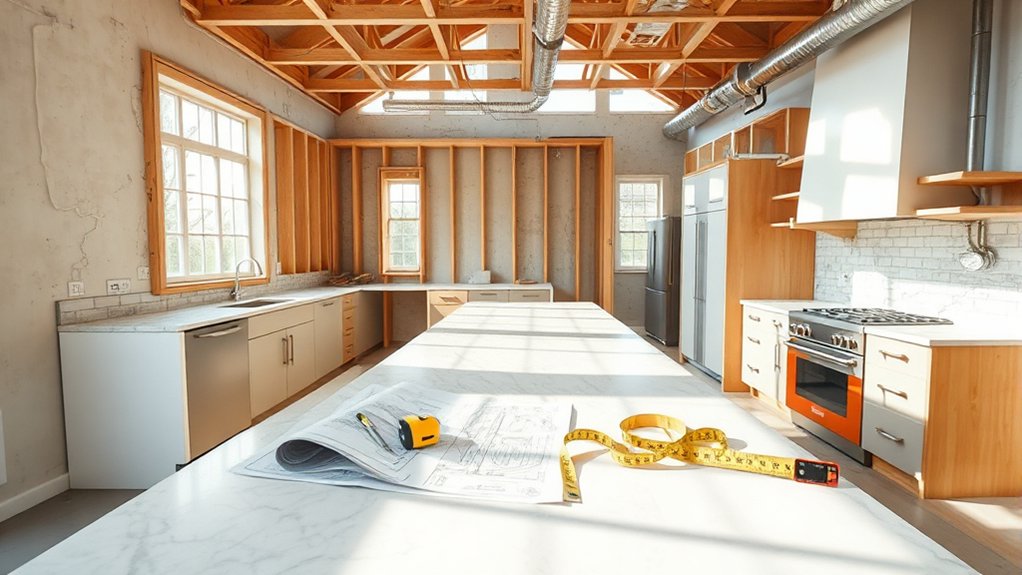
A larger kitchen can quickly increase costs because it needs more materials, labor, and time. Moving walls, plumbing, or appliances can add even more to the budget. So, a simple update that keeps the existing layout usually costs less than a full rework.
Space Size Impact
A kitchen’s size and layout play a major role in what you’ll pay, since larger spaces need more flooring, cabinets, countertops, lighting, and labor. If your kitchen is compact, you can often stretch your budget further because you’re buying fewer materials and covering less square footage.
But small rooms can still challenge you, especially if you want strong space optimization and better workflow efficiency. In that case, you may need custom storage or smarter placements to make every inch work harder.
Larger kitchens usually give you more flexibility, yet they also raise material and installation costs quickly. Even modest changes in dimensions can affect how much you spend, so measure carefully and plan around how you actually cook, move, and use the room.
Layout Modification Costs
Changing your kitchen’s layout can quickly raise the price of a remodel, especially if you move plumbing, gas lines, electrical wiring, or walls. You’ll pay more whenever you change the room’s footprint or shift appliances far from their original spots.
A major layout modification often means extra labor, permits, and inspections, plus possible structural work if you remove load-bearing walls. Even small adjustments can affect cabinets, flooring, and ventilation, so your cost estimation should include every trade involved.
If you keep the existing layout, you’ll usually save money and finish faster. Before you commit, compare your must-haves with the expense of rerouting utilities, because convenience can come at a steep price.
Smart planning helps you balance function, style, and budget without unwanted surprises.
Cabinet Quality and Customization
Your cabinet choices can quickly change your kitchen budget, especially when you compare stock cabinets with custom ones. Upgraded materials, finishes, and hardware can add to the cost, too, while giving your kitchen a more refined look. And if you add storage features like pull-outs or built-ins, expect to pay more.
Stock Vs Custom Cabinets
When you compare stock and custom cabinets, the biggest cost difference usually comes down to quality, fit, and flexibility. With stock cabinets, you’ll usually spend less because manufacturers make them in standard sizes and sell them quickly.
They’re a smart choice if your layout is simple and you want to keep your budget tight. Custom cabinets cost more because a craftsman builds them to match your kitchen’s exact measurements and storage needs.
That extra tailoring can solve awkward corners, unusual ceiling heights, or space-saving goals. You also get more control over details, which can raise labor costs.
If you want a faster, cheaper renovation, stock cabinets often work well. If you want a precise fit and a personalized result, custom cabinets may justify the higher price.
Material And Finish Options
Material and finish choices can quickly move your kitchen budget up or down, because they affect both cabinet quality and the look you’re paying for. When you compare material options, you’ll see that solid wood, plywood, MDF, and thermofoil each come with different price points, durability, and upkeep needs.
Higher-end species and thicker panels usually cost more, but they can also give you a sturdier, longer-lasting result. Finish textures matter too: painted, stained, matte, and high-gloss surfaces all change labor costs and visual impact.
If you want a more personalized design, expect to pay more for specialty colors, glazing, or hand-applied details. By balancing durability, style, and your budget, you can choose cabinets that fit your kitchen without overspending.
Hardware And Storage Upgrades
Beyond cabinet materials and finishes, hardware and storage upgrades can also shift your kitchen budget in a big way. If you choose soft-close hinges, full-extension drawers, pull-out trays, spice inserts, or appliance garages, you’ll raise costs fast.
Higher-quality cabinet boxes and custom sizing also add labor and material charges, but they can improve daily use and durability. When you’re hardware budgeting, compare standard pulls with premium handles, and ask whether every organizer truly adds value.
You’ll get the best results by focusing on storage optimization where you need it most, such as corners, pantry zones, and deep base cabinets. Smart upgrades can make your kitchen feel larger, cleaner, and easier to use without overspending.
Countertops, Sinks, and Fixtures
Countertops, sinks, and fixtures can quickly shift your kitchen budget depending on the materials and finishes you choose. If you want a lower countertops cost, you can pick laminate or butcher block, but stone, quartz, and marble raise the price fast.
You’ll also see big differences in sinks options, from basic stainless steel to farmhouse and composite models. A deeper or custom sink may need extra labor, which adds to your total. Fixtures matter too, since faucets, sprayers, and specialty finishes can cost far more than standard choices.
You can keep spending in check by matching your choices to how you cook and clean every day. If you need durability, you may pay more upfront, but you’ll avoid early replacements.
Simple shapes, standard sizes, and widely available products usually save money. When you compare materials and installation together, you’ll get a clearer picture of what your new kitchen really costs.
Appliance Packages and Upgrade Costs
Your appliance package can have a bigger impact on your kitchen budget than you might expect. Standard sets cover the essentials, while premium options add features, style, and performance—and can raise costs quickly. To stay on budget, focus on which upgrades are worth the extra expense.
Standard Appliance Packages
When you price a new kitchen, appliance packages can make a big difference in the total. If you choose standard appliances, you’ll usually save compared with buying each item separately.
Many retailers bundle a range, refrigerator, dishwasher, and microwave into package deals that lower the upfront cost and simplify shopping. You can also match finishes and features without spending time comparing every brand individually.
These bundles often cover the essentials most kitchens need, so you’re not paying for extras you won’t use. Still, check what’s included, because delivery, installation, and warranties can change the final price.
If you compare a few package options, you’ll see how much your choices affect the kitchen budget and where you can keep costs under control.
Premium Upgrade Costs
Premium appliance upgrades can raise your kitchen cost fast, especially if you move beyond basic package deals. You’ll pay more for pro-style ranges, built-in refrigerators, smart ovens, and panel-ready dishwashers, and the jump can be steep when you choose designer finishes.
Premium materials around those appliances, like stone countertops and custom trim, also add to the total. If you want a seamless look, budget for installation changes, electrical work, and ventilation upgrades, because these details often aren’t included in the sticker price.
You may also spend extra on hidden storage, such as pull-out pantries or appliance garages, to keep the space organized. To stay in control, decide which upgrades truly matter and compare packages before you commit.
Flooring, Lighting, and Wall Finishes
Flooring, lighting, and wall finishes can make a bigger dent in your kitchen budget than many people expect. Your flooring ideas set the tone and the price: luxury vinyl, tile, hardwood, and stone each land in different cost ranges, and bigger rooms need more material. If you want to stretch your budget, choose durable finishes that look high-end without demanding a premium.
Lighting trends also change what you spend. Recessed lights, pendants, under-cabinet strips, and dimmers can add style fast, but fixture quality and quantity affect the total. You’ll also want to think about wall finishes. Paint costs less than tile or specialty panels, while backsplash choices can swing your budget upward if you pick glass, marble, or custom patterns.
To keep control, compare samples, measure carefully, and balance visual impact with practicality. Smart material choices let you upgrade your kitchen without overspending.
Labor Costs in Your Area
Labor costs can vary a lot depending on where you live, and that difference can have a major impact on your kitchen budget. If you live in a city with high demand, you’ll often pay more for carpentry, plumbing, electrical work, and installation.
In smaller markets, you may find lower hourly rates, but availability can still affect pricing. You should ask for multiple quotes so you can compare local rates and see how much each crew charges for the same scope of work.
Experience matters too: seasoned tradespeople may cost more, but they often work faster and make fewer mistakes. If your project needs specialized skills, those labor rates can climb quickly.
Watching for subtopic idea1 and subtopic idea2 in estimates can help you spot why one bid is higher than another. Local wage levels, scheduling, and project complexity all shape what you’ll pay.
Permits, Design Fees, and Other Extras
Beyond labor, your kitchen budget can also grow once you add permits, design fees, and other project extras. You’ll often need permits for electrical, plumbing, or structural changes, and permit fees vary by city, scope, and inspection count.
Permit timing can also affect your schedule, since approvals may take days or weeks before work starts. If you hire a designer or kitchen planner, their fee may be hourly, fixed, or bundled with the remodel. You may also pay for drawings, measurements, engineering, or revisions.
| Extra | Impact |
|---|---|
| Permits | Adds fees and delays |
| Design plans | Raises upfront cost |
| Inspections | Can trigger added charges |
| Revisions | Increase professional time |
Other extras can include delivery, disposal, temporary storage, and utility upgrades. When you plan for these items early, you avoid surprise costs and keep your remodel moving smoothly.
Budget-Friendly Ways to Save on Kitchen Cost
Want to keep your kitchen remodel affordable without sacrificing the result? Start by protecting your budget conscious choices early. Keep the existing layout if you can, since moving plumbing, gas, or electrical lines can quickly raise kitchen cost.
Reface cabinets instead of replacing them, or paint solid boxes for a fresh look. Choose durable midrange materials, like laminate counters or ceramic tile, where style matters less.
Shop sales, compare quotes, and ask suppliers about leftover slabs or discontinued stock. You can also reuse appliances that still work well and upgrade them later.
Handle simple demo, painting, or hardware swaps yourself to save labor, but leave technical work to licensed pros. Planning ahead is time saving and helps you avoid rushed decisions that lead to expensive changes.
Focus your spending on the features you use most, and you’ll get a kitchen that feels new without breaking the bank.
Frequently Asked Questions
How Long Does a Typical Kitchen Remodel Take?
A typical kitchen remodel takes about 6 to 12 weeks, though your timeline can stretch longer if you’re changing the layout or waiting on materials. You’ll want to set clear timeframe expectations early and confirm contractor scheduling before work starts.
Small updates may finish faster, but custom cabinets, plumbing moves, or permit delays can add time. Plan for surprises, and you’ll handle the process with less stress.
Should I Stay in My Home During the Renovation?
It depends on your tolerance. If you can handle noise, dust, and limited cooking, you might stay put and save on staycation costs. But if your kitchen’s unusable for weeks, a temporary relocation can protect your sanity. As they say, “A smooth sea never made a skilled sailor.” You should weigh convenience, safety, and budget, then choose the option that lets you live comfortably during the renovation.
Do I Need to Move Plumbing or Electrical Lines?
You might need to move plumbing or electrical lines if your new layout changes sink, dishwasher, stove, or outlet locations. If you keep fixtures close to existing spots, you’ll save time and avoid extra labor. When you’re planning moving plumbing or electrical routes, ask a licensed pro to inspect your walls and floors. They’ll tell you what’s possible, what’s required, and what’ll work safely in your kitchen.
How Can I Finance a New Kitchen Project?
You can finance your kitchen with savings, a home equity loan, a HELOC, a personal loan, or a contractor payment plan. Start by setting a budget so you know what you can afford, then compare rates, terms, and fees.
If you qualify, a 0% promotional credit card can help, but pay it off quickly to avoid interest and stress.
What Kitchen Features Add the Most Resale Value?
You’ll add the most resale value with a clean, functional layout, quality kitchen materials, and modern appliance upgrades. Focus on durable counters, timeless cabinets, good lighting, and plenty of storage.
Buyers also love an island, updated flooring, and energy-efficient fixtures. You don’t need luxury everywhere; choose finishes that look fresh and durable. A bright, neutral kitchen usually attracts more buyers and helps your home sell faster for more money.
Conclusion
So, when you plan your kitchen, remember that the cost of a new kitchen isn’t just a number—it’s the sum of many moving parts. From layout changes to custom cabinets, each choice can push your budget higher or keep it grounded.
As the saying goes, “Rome wasn’t built in a day,” and neither is the perfect kitchen. If you set priorities, compare options, and watch the extras, you can create a space you’ll love without losing control of your spending.