10 Tips to Decorate Kitchen Counters
Kitchen counters can quickly become cluttered, leaving you with little room to cook and a space that feels less inviting. You’re not alone—many people struggle to balance everyday function with a polished…

Kitchen counters can quickly become cluttered, leaving you with little room to cook and a space that feels less inviting. You’re not alone—many people struggle to balance everyday function with a polished look. These 10 tips to decorate kitchen counters can help you make the most of your space.
To decorate kitchen counters, choose a color palette that complements your cabinets and backsplash, then start with one statement piece like a vase or bowl. Group smaller items on trays, add height with cutting boards and canisters, and bring in fresh greenery or herbs for life. Warm wood and woven accents soften the space, while seasonal touches keep it fresh. Leave room for cooking and cleanup, and keep clutter low so your counters feel polished and inviting.
Key Takeaways
- Choose a counter color palette that complements cabinets, backsplash, and flooring, and repeat one or two tones for cohesion.
- Start with one statement piece, like a vase or bowl, and build around it with simple, intentional accents.
- Group decor on trays to create a tidy display while keeping everyday essentials accessible and organized.
- Add height with cutting boards, canisters, and greenery, using varied materials for texture and balance.
- Keep countertops clutter-free by storing appliances, papers, and small items out of sight to preserve open workspace.
Choose a Kitchen Counter Color Palette

Start by choosing a kitchen counter color palette that complements your cabinets, backsplash, and flooring. You can use color theory to guide your decisions: warm wood cabinets pair well with creamy whites, soft taupes, or muted greens, while cool finishes often look best with crisp grays, blues, or black accents.
Choose a counter palette that complements your cabinets, backsplash, and flooring for a cohesive, balanced kitchen.
If your kitchen already has strong patterns, keep your counter decor simple so the space feels balanced. When you add trays, canisters, bowls, or linens, repeat one or two colors for cohesion.
You should also notice how material textures affect the palette. Matte ceramics, woven baskets, glass, and metal each change how color reads in natural and artificial light. Test items on your counter before committing, and adjust until the tones feel connected.
Aim for a palette that supports your kitchen’s style without competing with it. Keep the mix intentional, calm, and easy to update seasonally.
Start With One Statement Piece

Start with one bold centerpiece—a striking vase, bowl, or tray—to give your counter a clear focal point. Then build the rest of your decor around it, keeping nearby items simple so your statement piece can shine without creating visual clutter.
Choose a Bold Centerpiece
A bold centerpiece can instantly anchor your kitchen counter and give the whole space a clear focal point. Choose one piece that feels intentional, not crowded, and let it show off your bold centerpiece ideas.
A sculptural bowl, dramatic vase, or oversized fruit stand can add personality while respecting your kitchen counter color palette. Keep the rest simple so the feature shines.
| Centerpiece | Mood | Effect |
|---|---|---|
| Tall vase | Elegant | Draws the eye up |
| Wooden bowl | Warm | Adds comfort |
| Ceramic sculpture | Artistic | Sparks curiosity |
| Glass cloche | Delicate | Feels refined |
When you pick one standout object, you create confidence, calm, and a counter that feels designed instead of accidental.
Build Around the Anchor
Once you’ve chosen one standout piece, let it set the tone for everything else on the counter. Use it as your anchor and build a look that reflects your style.
You can echo its shape, texture, or finish in nearby accents so the arrangement feels intentional. If your statement piece has warm wood, pair it with ceramics or brass details that share the same mood.
If it’s bold and colorful, let color coordination guide the rest of your choices. Good design principles help you repeat elements without making the counter feel busy.
You don’t need many items; you need a clear visual connection. When each piece relates to the anchor, your counter looks curated, balanced, and thoughtfully designed.
Keep Surroundings Simple
Keeping the surroundings simple helps your statement piece stand out instead of competing with a crowded display. Choose one bold item, then let it lead the look on your counter.
You can keep surroundings calm by limiting extras to a few useful pieces, like a small bowl, a candle, or a wooden tray. In simple surroundings, each object feels intentional, and your kitchen looks more polished right away.
Keep finishes coordinated so the eye can move easily across the space. If you add too many colors, shapes, or heights, the display loses focus.
Instead, edit often and remove anything that doesn’t support the main piece. This approach gives you balance, highlights your style, and makes everyday cleanup easier too.
Use Trays to Group Decor
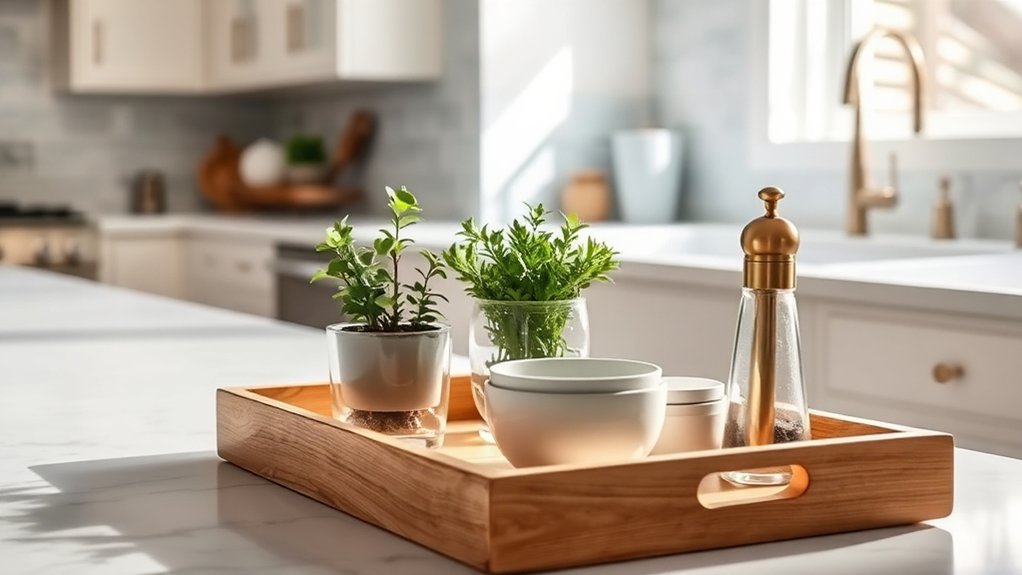
A tray creates a clear zone on the counter, making your decor feel intentional rather than scattered. Group practical items like olive oil, salt, and a small bowl on it to keep everything neat and easy to reach. Choose a tray that suits your style, and it’ll bring the whole area together.
Define A Tray Zone
Want your kitchen counters to look tidy without feeling bare? Define a tray zone by choosing one spot and letting a tray anchor it.
When you define a tray, you create a clear boundary for a few favorite items, so they feel intentional instead of scattered. Use a tray that fits the scale of your counter and leave breathing room around it.
That simple frame helps keep surfaces minimal while still giving you style. Place the tray near a backsplash, corner, or coffee area where it won’t interrupt prep space.
Then limit what sits there to a tight edit of decor, so the arrangement reads as one polished moment. With this approach, you’ll guide the eye, reduce clutter, and make your counters feel calm and styled.
Mix Practical Pieces
Once you’ve defined a tray zone, you can make it feel more useful by mixing practical pieces with a few decorative accents. Add items you reach for daily, like olive oil, salt, a coffee canister, or dish soap, then balance them with a small plant, candle, or framed print.
When you mix practical objects with style, the tray keeps your counter organized and intentional. Choose containers that match your color palette so the display feels cohesive instead of cluttered.
You can also vary height and texture to make the arrangement look layered without losing function. Keep only the essentials on the tray, and let every item earn its place. That way, your counter stays tidy, attractive, and easy to use each day.
Add Height With Cutting Boards and Canisters
How do you keep kitchen counters from looking flat? You can add instant dimension by leaning a wooden cutting board against the backsplash and pairing it with canisters in mixed heights. This simple layering draws the eye upward and makes your counter feel styled, not crowded.
Choose boards with warm grain, then use canisters for dry goods or utensils so they work hard while they decorate. Keep your cutlery arrangement tidy in a crock or jar nearby, and let the tallest pieces sit at the back for a balanced view.
For canister styling, mix materials like ceramic, glass, or matte metal, but repeat one finish to keep everything cohesive. Place these items in groups of three for a natural look, leaving enough open space to avoid clutter.
With just a few vertical elements, you’ll give your kitchen counter structure, personality, and polish.
Bring in Fresh Greenery or Herbs
Fresh greenery instantly softens kitchen counters and adds a lively, natural touch. You can tuck a small pot of basil, rosemary, or mint near a window to brighten the space and bring gentle fragrance into your daily routine.
A balanced herb grouping creates visual rhythm, especially when you mix leaf shapes and container heights. Keep the look simple so the plants feel intentional, not crowded.
| Plant choice | Best container | Effect |
|---|---|---|
| Basil | Small ceramic pot | Fresh, soft, welcoming |
| Rosemary | Terracotta planter | Clean, structured, rustic |
| Mint | Glass or glazed pot | Bright, playful, aromatic |
Place your fresh greenery where you’ll notice it often, and let it echo the colors in your kitchen. When you choose healthy herbs and trim them regularly, you’ll keep the counter looking vibrant without adding clutter.
Keep Everyday Items Stylish and Handy
Keep the items you reach for daily in attractive containers so they work as part of the decor, not against it. You can store soap, utensils, coffee, and cooking tools in matching jars, canisters, or trays that look intentional and neat.
Group similar everyday items together so your counter stays organized and easy to use. Choose pieces with clean lines, simple labels, or neutral finishes for a stylish use that feels calm rather than cluttered.
If you need to leave something out, make sure it earns its spot by looking good and serving a clear purpose. Rotate what you display based on what you use most, and put the rest away.
This keeps your counters functional without sacrificing style. When each item has a home, you’ll move through your kitchen more smoothly and enjoy a polished look every day.
Add Warmth With Wood and Woven Accents
Wood and woven accents can instantly soften a kitchen and make it feel more inviting. Use warmth with wood through cutting boards, bowls, or a lean utensil holder, then balance them with woven accents like a basket or lidded container.
During color palette planning, choose natural tones that echo your cabinets or flooring so everything feels intentional. A bold centerpiece, such as a sculptural wood bowl, gives you style without crowding the counter.
Use trays for grouping smaller pieces, and keep clutter free surfaces by limiting what you display. You can also add greenery and herbs for a fresh, lived-in look that still supports practical tool integration.
Keep the arrangement light enough to preserve open prep space, so you can cook comfortably and move around easily. If you want seasonal countertop decor, swap textures rather than filling every inch, and let the materials do the decorating for you.
Add Seasonal Touches to Countertops
Seasonal touches can make your kitchen counters feel updated without a full makeover. You can swap in small decor pieces that echo the time of year, like a ceramic vase of spring stems, a bowl of citrus in summer, or a rustic pumpkin in fall.
Seasonal touches can refresh kitchen counters with simple decor that reflects the time of year.
Choose seasonal colorways that complement your cabinets and backsplash, so the display feels intentional instead of busy. Mix in seasonal textures too: linen, glazed pottery, glass, or matte stone all add quiet variety.
Keep the arrangement simple by grouping items in threes and varying height for balance. If you love candles, pick unscented versions in colors that fit the season.
You can also rotate a tray, tea towel, or cutting board to refresh the look quickly. These small changes help your counters feel lively, polished, and easy to update all year.
Leave Space for Cooking and Cleanup
Keep a few clear prep zones on your counters so you have room to chop, mix, and plate without feeling crowded. Keep the sink easy to reach for quick cleanup, and store your most-used tools nearby. That way, your counters look styled and work well for everyday cooking.
Clear Prep Zones
To keep your kitchen counters both stylish and practical, leave clear prep zones where you can chop, mix, and set down hot pans without shifting decor out of the way. You’ll cook more efficiently when you reserve at least one open stretch for daily tasks and keep accents clustered to the edges.
Use your cleaning routine to reset that space after each meal, so crumbs, spills, and small appliances don’t take over. Smart utensil placement also helps: store tools you reach for often nearby, but not in the middle of your work area.
Choose one tray or bowl for a few essentials, then let the rest of the counter breathe. That balance keeps your kitchen organized, safe, and ready whenever you need to cook.
Keep Sink Access
Keep the area around your sink open so you can rinse produce, wash dishes, and fill pots without moving decor every time. You’ll make daily cooking smoother when soap, sponges, and hand towels don’t crowd the basin.
Keep one or two small accents nearby, but leave enough room for splashes and quick wipe-downs. That open buffer also helps you stick to cleaning routines and handle appliance maintenance without juggling objects.
- Place a slim tray a few inches away from the faucet.
- Use waterproof decor that’s easy to lift for cleanup.
- Skip tall pieces that block the faucet or window.
- Leave extra space for drying racks during busy nights.
A clear sink zone keeps your counters pretty and practical.
Store Tools Nearby
Once the sink area stays open, place the tools you reach for most—like cutting boards, cooking utensils, and a small knife block—within easy reach. This smart tool placement keeps you moving while you prep, cook, and clean. Use store organization to separate daily items from extras, so your counters stay useful, not crowded.
| Item | Best Spot | Why |
|---|---|---|
| Cutting boards | Beside prep zone | Quick access |
| Utensils | Crock near stove | Fast stirring |
| Knife block | Safe corner | Easy reach |
| Paper towels | Near sink | Cleanup speed |
| Trash bowl | Hidden edge | Less clutter |
When you assign each item a clear home, you’ll protect open workspace and make every task feel smoother.
Keep the Countertop Clutter-Free
A clutter-free countertop instantly makes your kitchen feel cleaner, larger, and more inviting. You can keep only the items you use daily in sight, and tuck everything else into drawers, cabinets, or baskets.
This simple clutter reduction helps your decor stand out instead of competing with appliances and mail. It also gives you room to use color psychology: a few coordinated pieces, like a wooden bowl or a bright vase, can add warmth without overwhelming the space.
- Keep soap, sponge, and dish brush on a tidy tray.
- Store small appliances after each use.
- Limit decor to one or two focal pieces.
- Clear papers, keys, and chargers off the counter daily.
When you maintain open surfaces, you make cleaning faster and styling easier. Your kitchen feels calmer, and every intentional detail gets noticed.
Frequently Asked Questions
How Do I Decorate Counters in a Tiny Kitchen?
Use a few tall, slim pieces so you don’t crowd your tiny kitchen. Choose space saving ideas like a wall shelf, a narrow tray for oils, and one small plant or bowl for color.
Keep only daily essentials on the counter, then store the rest away. Add texture with a wooden board or woven mat. You’ll make the space feel styled, open, and practical without sacrificing valuable work surface.
What Materials Are Best for Heat-Resistant Counter Decor?
You’ll want heat resistant materials like stone, metal, and tempered glass for counter decor, since they handle warmth well and look polished. Choose pieces with durable finishes so spills and steam won’t damage them.
Ceramic trays, sealed wood, and concrete accents can work too if you value material durability. You should avoid fragile plastics near hot appliances, and you can add decorative accents that stay stylish without risking warping, fading, or cracking.
How Can I Clean Decorative Items Without Damaging Them?
You can clean decorative items by dusting them gently with a soft microfiber cloth, then wiping with a barely damp cloth when needed. For how to safely dust glassware, use a lint-free duster and support each piece firmly. For how to preserve ceramic finishes, avoid harsh scrubbers and abrasive cleaners. You should dry everything right away, and skip soaking fragile items so their surfaces stay bright, intact, and beautiful.
What Lighting Works Best Above Decorated Kitchen Counters?
You’ll want warm, layered lighting above decorated kitchen counters, not harsh glare—think of a cozy café rather than a spotlight. Pendant lights work well if you keep them high enough, while under-cabinet LEDs add even task light.
Consider lighting options that show off your décor without creating shadows. Don’t forget safety considerations: choose fixtures with clearances from heat and moisture, and avoid cords that clutter your workspace.
How Do I Decorate Counters Without Blocking Outlets?
You can decorate counters without blocking outlets by keeping low, movable pieces near them. Use trays to group items, then leave outlet zones clear for chargers and appliances.
Choose decorative plants with small footprints, and match them to your color palettes so the setup feels intentional. Hang art or add a slim lamp elsewhere to balance the space.
You’ll keep outlets usable and your counters stylish, tidy, and practical every day.
Conclusion
Your kitchen counters can feel polished and personal when you keep the look simple and intentional. Choose a palette that works for your space, then layer in one standout piece, a tray, and a few natural accents.
Add seasonal touches when you want a refresh, but always leave room to cook and clean with ease. When you keep clutter in check, your kitchen counters will feel as calm as a clear morning breeze.