3 Simple Tips to Prevent Kitchen Fires
Worried about a kitchen fire starting while you’re cooking? You’re not alone—many people find it hard to keep an eye on every pan while juggling other tasks. These kitchen fire prevention tips…

Worried about a kitchen fire starting while you’re cooking? You’re not alone—many people find it hard to keep an eye on every pan while juggling other tasks. These kitchen fire prevention tips can help you cook with greater peace of mind.
You can prevent kitchen fires by staying right by the stove whenever you cook, especially when food is simmering or oil is heating. Keep an eye on hot oil for smoke, popping, or bubbling, and lower the heat if it starts acting up. Also, keep towels, paper, and other flammable items far from burners and the oven. These simple habits cut risk fast, and a few more smart steps can make your kitchen even safer.
Key Takeaways
- Never leave the stove unattended; stay nearby, use timers, and turn off heat before stepping away.
- Keep handles turned inward and watch for smoke, smells, or rising heat while cooking.
- Stay close when frying, since hot oil can flare up quickly; never add water to burning oil.
- If flames start, switch off the burner and smother the pan with a metal lid or baking sheet.
- Keep towels, paper, clutter, and other flammables away from burners, ovens, and hot surfaces.
Never Leave the Stove Unattended

When you’re cooking, stay in the kitchen so you can watch the stove at all times. Even a short distraction can let food boil over, scorch, or ignite, so keep your attention on the burner.
If you need to step away, turn off the heat first or ask someone else to watch it for you. You’ll reduce risk by keeping handles turned inward, using timers, and checking pans often.
This habit supports mindful cooking because you notice changes early and act before a problem grows. It also strengthens fire safety awareness, since you’re less likely to miss smoke, unusual smells, or rising heat.
Keep clutter, towels, and paper away from the stovetop, and don’t leave kids alone near active burners. Staying present isn’t hard, but it matters every time you cook.
That simple focus can stop a small mistake from becoming a dangerous kitchen fire.
Watch Frying Oil and Open Flames Closely
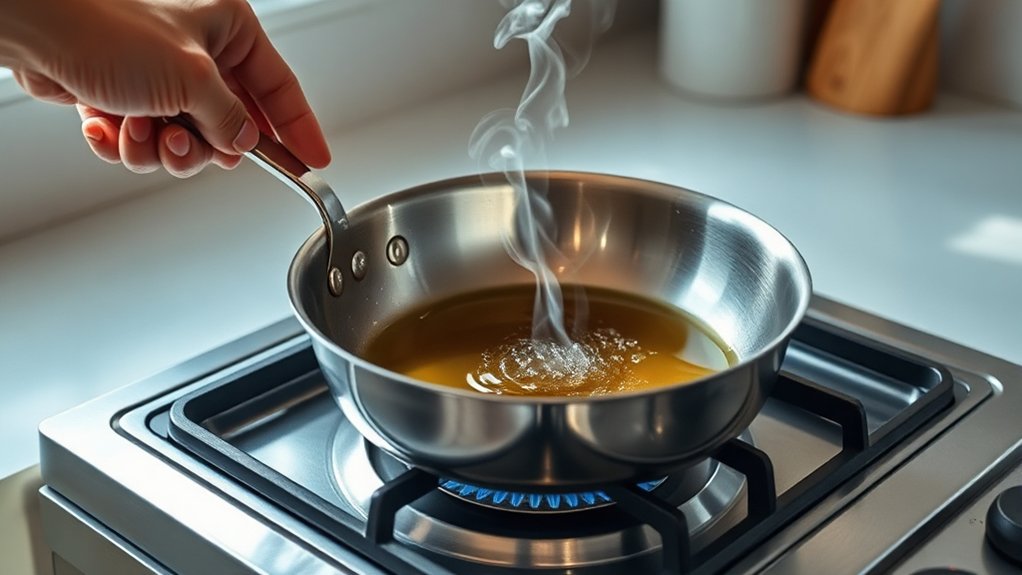
Hot oil can flare up fast, so keep a close eye on frying food and never walk away from the stove. You should watch oil behavior as it heats, because bubbling, smoking, or popping means trouble is building.
Keep a close eye on hot oil—bubbling, smoking, or popping can mean trouble is building.
Lower the heat if the oil looks too active, and use a deep pan to reduce splatter. Keep your face and hands back when you add food, and never pour water into hot oil.
If flames start, switch off the burner right away and smother the pan with a metal lid or baking sheet.
- Stay alert when oil shimmers or smokes
- Keep a lid nearby for quick coverage
- Trust flame sensors on modern ranges
You can also use a timer to check progress often. Small steps like these help you react fast and keep a fire from spreading.
Keep Flammable Items Away From Heat
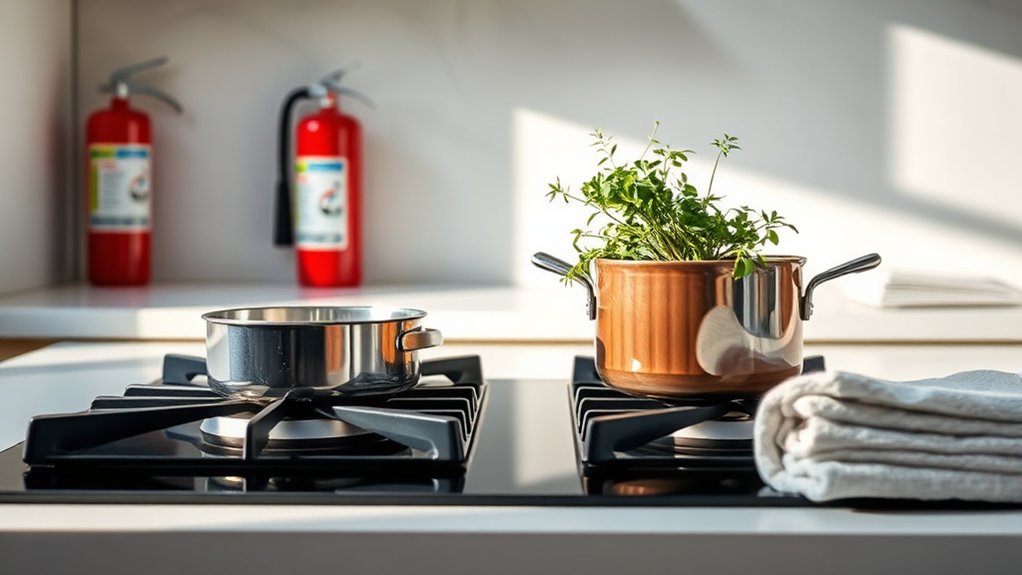
Even with careful cooking, nearby clutter can turn a small mistake into a fast-moving fire. Keep towels, oven mitts, paper bags, and packaging far from burners, toasters, and the oven door.
You should also clear crumbs and grease from the cooking area, since heat can ignite them quickly. Good storage safety means placing matches, cleaning sprays, and disposable napkins in cabinets or drawers away from appliances.
When you reheat food, don’t set dishes, wooden utensils, or plastic containers on hot surfaces.
| Item | Safe placement |
|---|---|
| Towels | Drawer or hook away from heat |
| Paper products | Closed cabinet or pantry |
| Cleaning supplies | Lower cabinet, not beside stove |
| Utensils | Holder far from burners |
After each meal, scan the counter and stovetop for anything flammable. A tidy layout lowers risk, helps you cook confidently, and gives flames less fuel if a mishap happens.
Frequently Asked Questions
What Type of Fire Extinguisher Works Best in Kitchens?
You should use an ABC-rated fire extinguisher in your kitchen because it handles ordinary combustibles, flammable liquids, and electrical fires. For grease fire safety, you’ll want a Class K extinguisher if you cook with oils often, since it’s designed for cooking grease.
The best kitchen extinguisher for most homes is usually ABC, but if you have heavy frying, Class K adds extra protection and peace of mind.
How Often Should Smoke Alarms Be Tested?
You should test your smoke alarms once a month, like clockwork. Press the test button, listen for the beep, and make sure every unit sounds off.
This simple habit supports smoke alarm maintenance and keeps your kitchen safety protocols on track. Don’t wait until you smell smoke—check batteries twice a year, too.
If an alarm chirps or fails to respond, replace the battery or the unit right away.
What Should I Do if Grease Catches Fire?
If grease catches fire, you should turn off the heat, cover the pan with a lid, and let it smother the flames. Never pour water on it.
For small Grease fires, use a fire extinguisher or Fire blankets if you’ve got one nearby. If the fire spreads, get everyone out and call emergency services right away.
Keep calm, act fast, and avoid moving the pan, since splashing can worsen the blaze.
Can a Kitchen Fire Blanket Replace an Extinguisher?
No, a kitchen fire blanket can’t fully replace an extinguisher. You can use one for small pan flames, but it won’t handle every emergency, so the extinguisher debate isn’t over.
Think of it like a knight’s shield, not a whole arsenal. You should keep both ready, watch replacement timing, and maintain your alarm maintenance.
For the best protection, you’ll want layers, not one tool alone.
When Should I Replace Old Stove or Oven Appliances?
You should replace your stove or oven when it shows frequent breakdowns, uneven heating, gas smells, or damaged cords. Your appliance lifespan usually runs 10 to 15 years, so watch replacement timing closely.
If repairs cost more than half of a new unit, upgrading makes sense. Keep kitchen safety priorities first, because an old appliance can raise fire risk and waste energy, too. Trust your instincts and act early.
Conclusion
By staying alert, you can lower your risk of a kitchen fire in just a few simple habits. Never leave the stove unattended, keep a close eye on frying oil and open flames, and move towels, paper, and packaging away from heat.
For example, if you step away while oil is sizzling, a small flare-up can spread fast. A few seconds of caution can help prevent kitchen fires and protect your home, your family, and your peace of mind.