How to Unclog the Kitchen Sink in 7 Easy Steps
A clogged kitchen sink can bring meal prep and cleanup to a frustrating halt—and you’re not alone; many people struggle with stubborn drain blockages. This guide to how to unclog the kitchen…
A clogged kitchen sink can bring meal prep and cleanup to a frustrating halt—and you’re not alone; many people struggle with stubborn drain blockages. This guide to how to unclog the kitchen sink walks you through seven easy steps to get the water flowing again.
Start by clearing visible debris from the drain and removing the stopper so you can inspect the opening. Next, pour boiling water slowly if your pipes can handle it, then use a plunger with a tight seal to loosen the clog. If needed, try baking soda and vinegar, clean the P-trap, or snake the drain. Afterward, test the flow with short bursts of water, and you’ll pick up a few easy prevention tips too.
Key Takeaways
- Remove visible debris and the sink stopper, then clear buildup from the drain opening.
- Try pouring boiling water slowly down the drain if your pipes can safely handle heat.
- Use a plunger with a tight seal to loosen the clog, and repeat if drainage stays slow.
- If the clog remains, place a bucket under the sink and remove the P-trap to clean out trapped gunk.
- For stubborn blockages, use a drain snake, then flush with warm water and practice good disposal habits.
Unclog Your Kitchen Sink the Safe Way
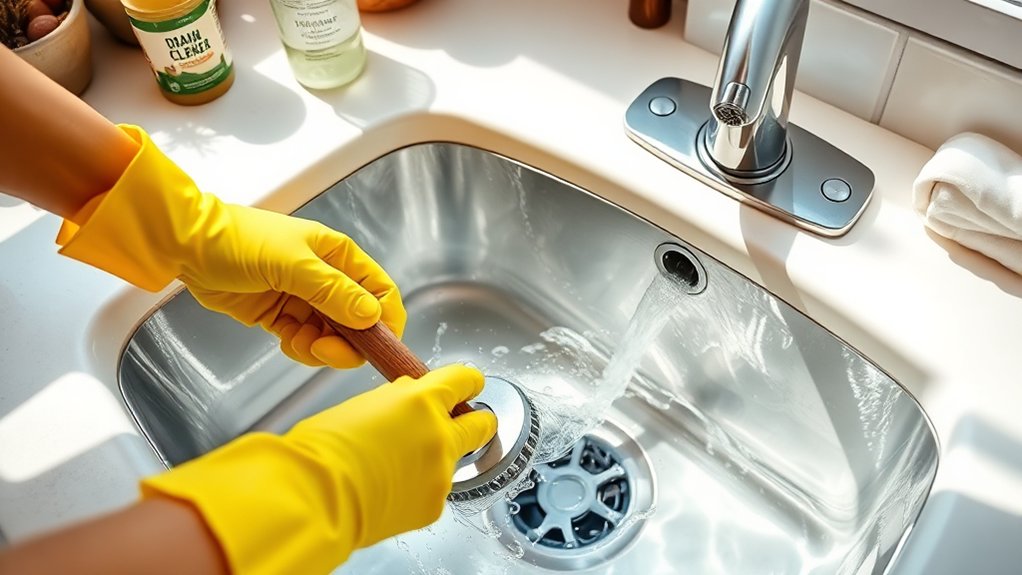
Before you reach for harsh chemicals, try the safest fixes first: clear out any visible debris, pour boiling water down the drain if your pipes can handle it, and use a plunger to loosen the clog.
Start with the safest fixes first: clear debris, flush with boiling water, and use a plunger to break up the clog.
Next, remove the sink stopper and check the opening for trapped food, grease, or scraps. If you spot buildup, pull it out with a gloved hand or a small hook, then wipe the area clean.
Keep water running in short bursts to test flow and see whether the blockage shifts. If the drain still moves slowly, repeat the plunge with a tight seal.
For safe disposal, toss food waste in the trash or compost instead of washing it away. Good maintenance tips include scraping plates before rinsing, avoiding oil in the sink, and flushing the drain regularly with hot water. These habits help you prevent new clogs and keep your kitchen sink working smoothly.
Clear the Kitchen Sink Drain With Boiling Water
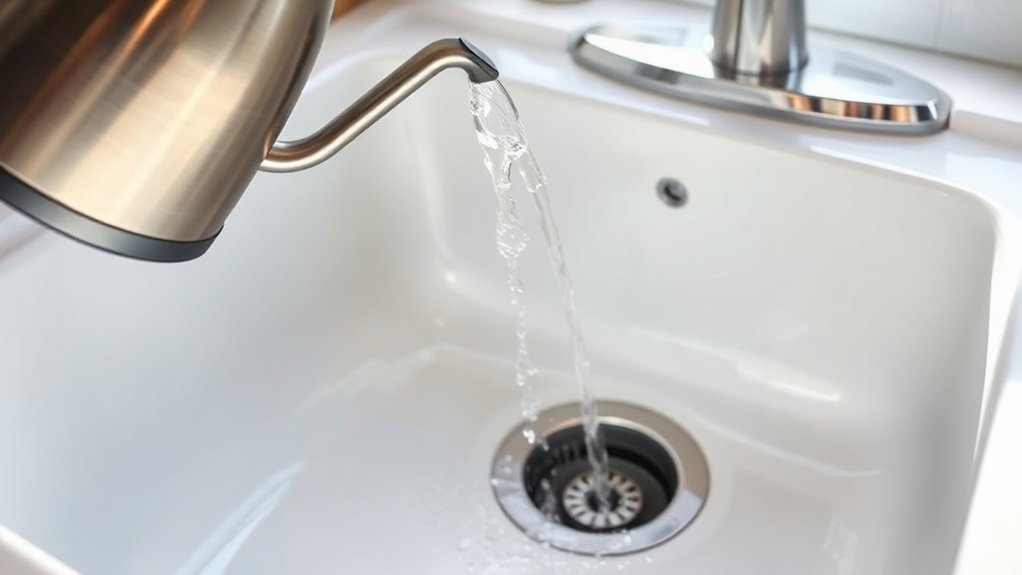
If the clog seems minor and your pipes can handle heat, boiling water can help melt grease and loosen buildup. This simple unclogging technique uses boiling water functionality to break down soap scum and food residue without harsh tools.
Heat a kettle or pot until it reaches a full boil, then carry it carefully to the sink and pour it into the drain in a steady stream.
- Pour slowly so the water reaches the clog.
- Pause a few seconds, then repeat if needed.
- Stop if you smell burning or your sink starts backing up.
Use this method only on metal pipes or heat-safe plumbing. If you’ve got PVC, very old joints, or repeated clogs, skip it and choose another fix.
Boiling water works best when grease is the main problem, and it’s a quick first step before trying other options.
Use a Plunger to Loosen the Clog

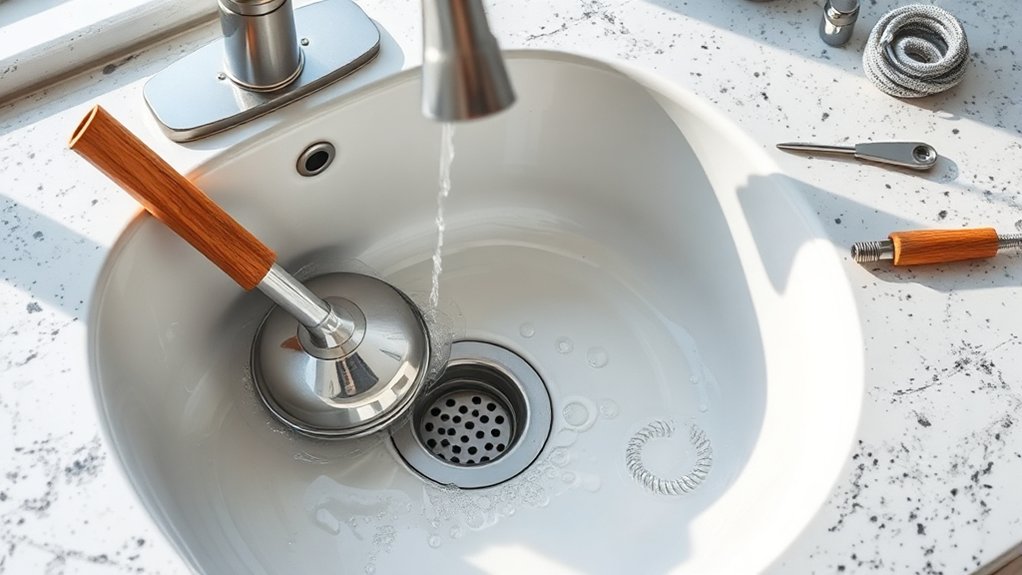
Next, try a plunger to dislodge the clog and get water moving again. Use a cup plunger, not a toilet model, and cover the drain opening completely. Add enough water to seal the cup, then push and pull with steady force.
The plunger technique works best when you keep the handle vertical and avoid jerky motions. A few strong pumps can often loosen clog buildup and restore flow.
| Step | What you do |
|---|---|
| 1 | Block the overflow opening |
| 2 | Fill the sink with a little water |
| 3 | Center the plunger over the drain |
| 4 | Pump firmly 10 to 15 times |
| 5 | Lift and check drainage |
If the water starts draining, repeat the motion once more to clear leftovers. Wipe up splashes afterward. That simple rhythm can save you time and keep your sink usable without extra tools.
Break up Grease With Baking Soda and Vinegar
For greasy clogs, try baking soda and vinegar to help break up the buildup. First, pour about half a cup of Baking soda down the drain, then follow it with a cup of vinegar. You’ll hear fizzing as the mixture works on sticky residue. Let it sit for 10 to 15 minutes so it can loosen the grease without harsh chemicals.
- Flush with hot water: Boil a kettle and slowly pour the water down the sink to wash away loosened grime.
- Repeat if needed: If the drain still moves slowly, try the treatment again before reaching for stronger products.
- Prevent future buildup: Handle grease disposal carefully by wiping pans with a paper towel instead of rinsing oil into the sink.
This simple step can help you keep the drain clearer and make everyday cleanup easier.
Remove and Clean the P-Trap
Still clogged? Place a bucket under the sink and loosen the slip nuts on the P-trap with your hand or pliers. Once you remove p trap, pour the water into the bucket and look for gunk, food scraps, or other debris trapped inside.
Place a bucket under the sink, remove the P-trap, and check for trapped gunk or debris.
Use an old toothbrush or bottle brush to clean trap walls thoroughly, then rinse it with warm water. While the trap is off, inspect seal surfaces for cracks, wear, or mineral buildup. If the washers look flattened or brittle, replace gasket pieces before you reassemble anything.
Tighten the connections by hand first, then give them a small snug turn with pliers, but don’t overtighten. Run water and check for drips around each joint. If you spot a leak, loosen the fitting, realign the parts, and tighten again.
This simple step often clears the clog and restores normal drain flow fast.
Snake the Drain for Stubborn Blockages
If the clog still won’t budge, try using a drain snake to reach deeper into the pipe. Choose one that fits your sink drain, then feed it in slowly until you feel resistance. Turn the handle gently, and pull the snake back carefully to break up the blockage without damaging the pipes.
Choosing the Right Snake
When a plunger won’t break through a stubborn clog, a drain snake can get deeper into the pipe and pull out the blockage. For Choosing Snake, match the size and shape to your sink, so you grab the Right Tool fast. A hand auger works well for most kitchen drains, while a small flat snake fits tight bends. If your sink has a garbage disposal, choose a snake that won’t snag parts inside.
- Pick a flexible cable for curved pipes.
- Choose a length that reaches past the trap.
- Use a model with a comfortable grip.
You don’t need the biggest snake; you need the one that moves smoothly and clears food buildup without forcing it.
Safe Snaking Technique
Now that you’ve picked the right snake, feed the cable into the drain slowly until you feel resistance, then rotate the handle to work it through the clog. Keep the sink basin clear, wear gloves, and stay gentle so you don’t scratch the pipe.
If the cable binds, pull back a little, then advance again; that’s safe snaking in action. Once water starts moving, flush with warm water to clear loosened debris and check the trap for remaining buildup.
| Step | Action | Result |
|---|---|---|
| 1 | Feed slowly | Less pipe stress |
| 2 | Twist lightly | Clog breaks up |
| 3 | Flush warm water | Drain runs free |
This simple kitchen maintenance habit keeps future blockages from turning into bigger repairs.
Prevent Future Kitchen Sink Clogs
A few simple habits can keep your kitchen sink flowing freely long after you clear the clog. To prevent future blockages, make kitchen maintenance part of your routine and stay consistent with what goes down the drain.
- Scrape plates into the trash before rinsing. Food scraps, grease, and coffee grounds build up fast and can slow your pipes.
- Run hot water after each dishwashing session. It helps move soap residue and small particles through the line before they settle.
- Clean the stopper and strainer weekly. You’ll catch hair, bits of food, and sticky grime before they form a stubborn clog.
You should also pour grease into a container, not the sink, and flush the drain with baking soda and vinegar once a month. If water starts draining slowly again, act quickly instead of waiting. Small steps now will save you time, money, and frustration later.
Frequently Asked Questions
How Do I Know if the Clog Is in the Main Sewer Line?
You can tell the clog’s in the main sewer line if several drains back up at once, toilets gurgle, or sewage smells appear. Those are strong sewer line symptoms.
For clog detection, watch for slow draining in multiple fixtures, not just the kitchen sink. If plunging doesn’t help and water backs up when you flush or run another sink, you likely have a deeper blockage, and you should call a plumber.
What Tools Should I Keep for Emergency Sink Clogs?
Keep an emergency plunger, drain snakes, and water test kits under your sink. Think of them like a fire extinguisher: you hope you’ll never need them, but you’ll be glad they’re there.
You’ll also want rubber gloves, a bucket, and a flashlight. For chemical cleaners safety, avoid mixing products and read labels first. With these tools, you can tackle clogs fast, stay safe, and check whether water’s backing up.
Can a Garbage Disposal Cause Slow Draining?
Yes, your garbage disposal can cause slow draining if it’s jammed, dull, or packed with food debris. You may notice gurgling, bad odors, or water pooling in the sink.
Try running cold water, resetting the disposal, and clearing visible buildup. If the slow draining continues, you should check the trap or drain line next.
Regular cleaning helps you avoid bigger clogs and keeps your sink moving freely.
When Should I Call a Plumber Instead of Fixing It Myself?
You should call a plumber when the clog keeps returning, water backs up into other drains, or you’ve tried basic fixes without success. Why keep wrestling with a problem that’s getting worse? Your call timing matters when you smell sewage, hear gurgling, or suspect a broken pipe. Once you reach your professional threshold, you’ll save time, avoid damage, and get the right repair fast.
Are Chemical Drain Cleaners Safe for Kitchen Sinks?
Chemical drain cleaners aren’t always safe for kitchen sinks, so you should use them cautiously. You can damage pipes, seals, and finishes, and harsh fumes raise chemical safety concerns.
If you’ve got a minor clog, try gentler methods first and respect your DIY limits. When a clog keeps coming back, you shouldn’t keep pouring chemicals down the drain. Call a plumber instead; you’ll protect your sink and avoid bigger problems.
Conclusion
With a few simple moves, you can turn a stubborn kitchen sink nightmare into a gurgling, free-flowing victory. From boiling water to the trusty plunger, and from baking soda fizz to the P-trap rescue, you’ve got the tools to blast grease, gunk, and mystery sludge away.
Keep up the good habits, and you won’t be battling a backed-up sink monster again anytime soon. Your kitchen sink will thank you with every smooth, satisfying swish.