How to Dispose of Kitchen Knives in 3 Safe Steps
Getting rid of old kitchen knives can be tricky: you want to keep everyone safe, but you may not know what to do with the blades. You’re not alone—many people struggle to…

Getting rid of old kitchen knives can be tricky: you want to keep everyone safe, but you may not know what to do with the blades. You’re not alone—many people struggle to find the right way to dispose of kitchen knives.
First, choose the safest disposal route for your area: donate knives that still cut well, or take damaged, chipped, bent, or rusted blades to metal recycling or your local waste service.
Next, make each knife safe to handle by cleaning and drying it, checking for loose parts, and confirming it’s ready to discard.
Finally, wrap each blade in thick cardboard or several layers of paper, tape it shut, and label it sharp so handlers stay safe and you’ll know the best next step.
Key Takeaways
- Check whether the knives are still usable; donate serviceable ones to a shelter, culinary school, or community kitchen.
- If blades are chipped, bent, or rusted, use local metal recycling or ask your sanitation department about safe options.
- Do not place loose knives in regular trash unless local rules specifically allow it.
- Clean, dry, and wrap each blade individually in thick cardboard, newspaper, or a sheath, then tape it securely.
- Label the package “sharp object” and follow local disposal or mail-in recycling instructions for safe transfer.
Choose How to Dispose of Kitchen Knives
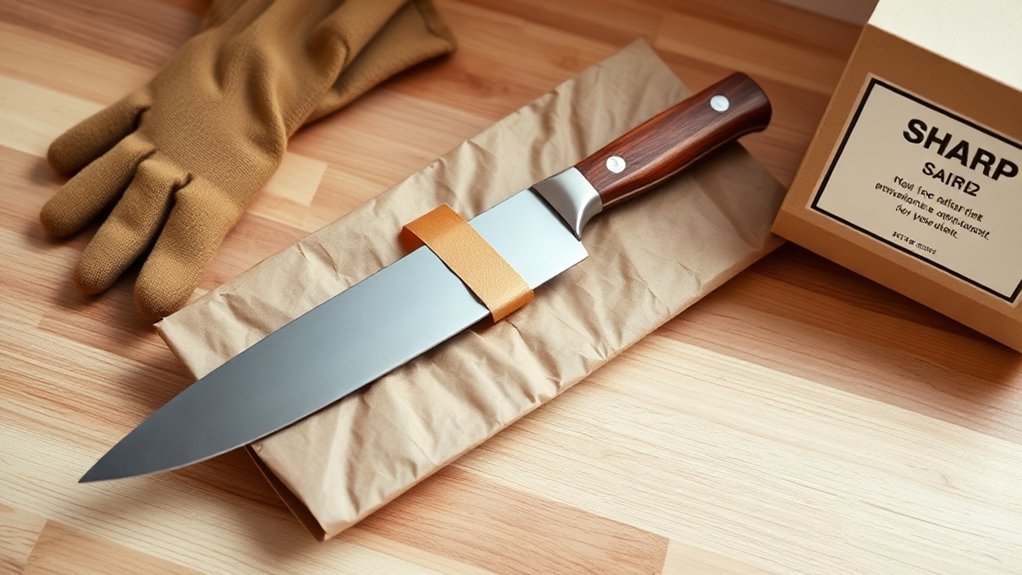
Before you toss out old kitchen knives, choose the safest disposal method for your situation. If the knives still cut well after unused sharpening and routine blade maintenance, consider donating them to a shelter, culinary school, or community kitchen that accepts usable tools.
If your knives are still usable, donate them to a shelter, culinary school, or community kitchen.
If the blades are chipped, bent, or rusted beyond safe reuse, your best option is usually local metal recycling, since steel can often be recovered. Check your city’s rules first, because some curbside programs won’t accept loose blades.
If recycling isn’t available, contact a household hazardous waste drop-off site or sanitation department for guidance. You can also mail knives to specialty knife recycling services if they serve your area.
Don’t put them in regular trash unless your local authority says it’s allowed; loose blades can injure sanitation workers and anyone who handles the bag. Choose the route that reduces risk, matches the knife’s condition, and follows local disposal rules.
Prepare the Knives for Safe Disposal
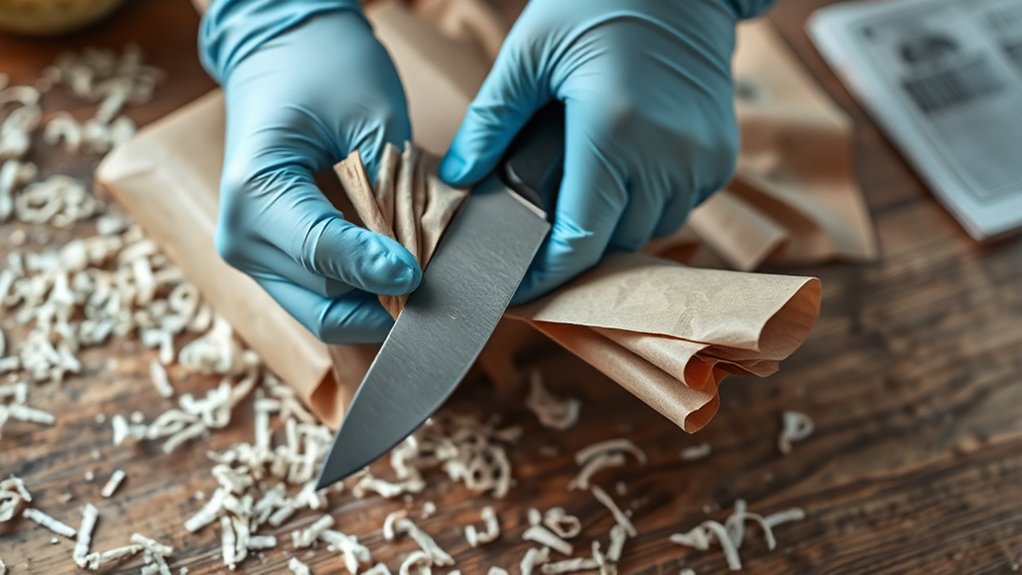
Start by making the blades safe to handle, then keep them from cutting through packaging. Wipe each knife clean and dry so you can inspect it clearly, and remove any food residue that might hide sharp spots. If a handle is cracked or loose, hold the knife carefully and avoid extra pressure.
For knives you’re discarding, check whether any parts still have value for stewardship alternatives, such as donation or repair, before you set them aside for disposal.
If you’re sending them to trash or collection, blunt the edge lightly only if local rules allow it; don’t force the blade against hard surfaces. Keep the knives separated from other metal items to reduce recycling hazards and accidental contact.
Once you’ve confirmed they’re stable enough to move, place them where you can continue the disposal process without risking cuts. Stay alert, move slowly, and treat every blade as live until it’s fully secured.
Wrap and Label the Blades

Once the knives are clean, dry, and stable, wrap each blade so it can’t slice through a bag or box. Use thick cardboard, several layers of newspaper, or a knife sheath, then secure the wrap with tape so it stays put.
If you’re discarding multiple knives, wrap blades one at a time to prevent them from rubbing together or shifting loose during handling. After that, label blades clearly with words like “sharp object” or “used kitchen knife” so anyone who touches the package knows to handle it carefully. You can write directly on the wrap or attach a visible tag.
Keep the wrapped knives separate from regular trash until you’re ready to dispose of them. If your local waste rules call for a special drop-off or pickup, follow those instructions exactly. Taking a few extra minutes to wrap blades and label blades properly lowers the risk of cuts and makes disposal safer for everyone.
Frequently Asked Questions
Can Damaged Knives Be Recycled With Regular Metal Scrap?
Yes, you can sometimes recycle damaged knives with regular metal scrap, but you shouldn’t assume every facility accepts them. You’ll need to check local rules, because recycling myths can mislead you.
Some centers want blades wrapped or labeled, and others reject mixed-material handles. Put them in approved metal recycling streams only when your recycler confirms they’re allowed, so you don’t contaminate loads or create a safety risk.
Are Ceramic Kitchen Knives Disposed of Differently Than Steel Ones?
Yes, you’ll usually handle ceramic knives differently from steel knives. Ceramic knives can shatter, so you should wrap them carefully before disposal and check local hazardous or bulky waste rules. Steel knives are tougher, and you may have more recycling options through metal scrap centers. If the blade is still usable, look for donation opportunities first. Either way, you should never toss loose knives into the trash.
Should I Donate Usable Knives Instead of Throwing Them Away?
Yes—you should donate usable knives instead of tossing them; think of it as passing a useful tool to the next kitchen, not burying treasure. You can support donation ethics by giving clean, sharp blades to shelters, community kitchens, or charity shops that accept them.
Check local rules first, and explore repurposing options if donation isn’t allowed. That way, you help others while keeping good items out of the trash.
Is It Legal to Put Kitchen Knives in Household Trash?
Usually, yes, you can put kitchen knives in household trash, but you should check local rules first because legal concerns vary by city or county. You also need to think about environmental impact, since tossing metal waste can add to landfill burden.
Wrap the blades securely, label the package, and place it where collectors won’t get cut. If your area offers scrap-metal recycling, you’ll often make a safer, greener choice.
Where Can I Find Local Knife Disposal or Drop-Off Programs?
You can find local drop off programs by checking your city waste website, calling recycling centers, and asking hardware stores or knife shops if they accept sharp items. You can also search neighborhood apps, county hazardous-waste pages, and Earth911 for nearby options.
When you call, ask whether they need blades taped, boxed, or labeled before you bring them in. That way, you’ll know exactly where to take them safely.
Conclusion
Disposing of kitchen knives safely doesn’t have to feel like walking a tightrope. I once wrapped an old chef’s knife after nearly slicing my hand on a loose blade in the trash, and it reminded me how small precautions prevent big injuries.
In the U.S., thousands of cuts happen every year from improper disposal, so you’ve got to choose wisely, prep carefully, and wrap every blade. Those three steps make disposing of kitchen knives safer and give you peace of mind.