How to Unclog Your Kitchen Sink in 5 Easy Steps
A clogged kitchen sink can bring meal prep and cleanup to a frustrating halt. If you’re dealing with slow drainage or standing water, you’re not alone—many people struggle with kitchen sink clogs….
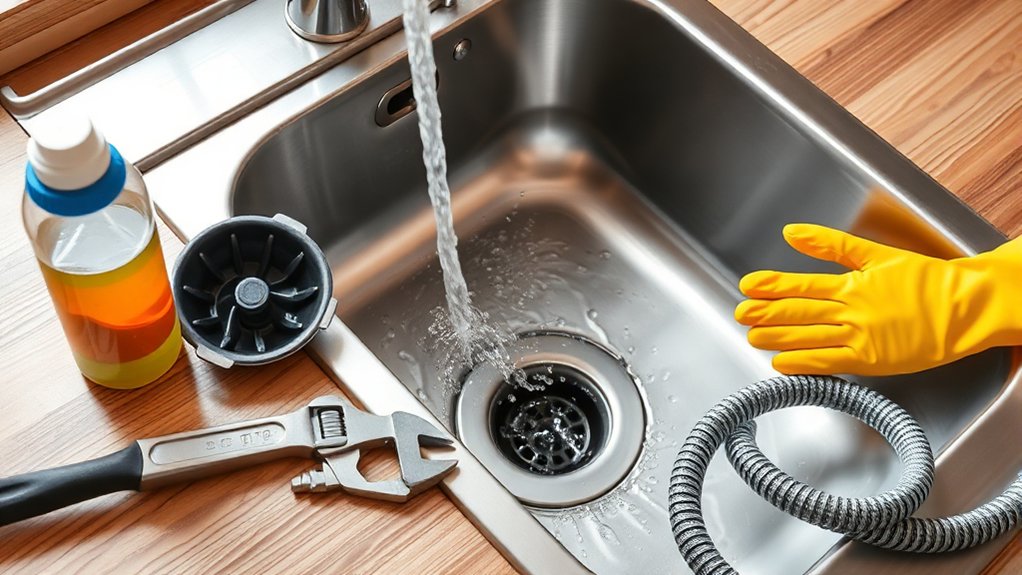
A clogged kitchen sink can bring meal prep and cleanup to a frustrating halt. If you’re dealing with slow drainage or standing water, you’re not alone—many people struggle with kitchen sink clogs. These simple steps can help you clear the blockage and get your sink flowing again.
First, lift out the stopper and clear any grease, food, or soap scum from the drain opening. Next, pour a kettle of boiling water slowly down the sink to loosen grease. Then add half a cup of baking soda, followed by a cup of vinegar, and let it fizz for 10 to 15 minutes. If it’s still clogged, remove and clean the P-trap. If none of that works, a few more tips can help you finish the job.
Key Takeaways
- Remove the stopper and clear visible grease, food scraps, and residue from the drain opening.
- Open the cabinet and inspect the drain with a flashlight to find hidden debris or buildup.
- Slowly pour boiling water down the sink to melt grease and loosen the clog.
- Add baking soda and vinegar, let it fizz for 10–15 minutes, then flush with hot water.
- If the sink still clogs, clean the P-trap. Call a plumber if the blockage remains.
Inspect the Stopper and Drain Opening
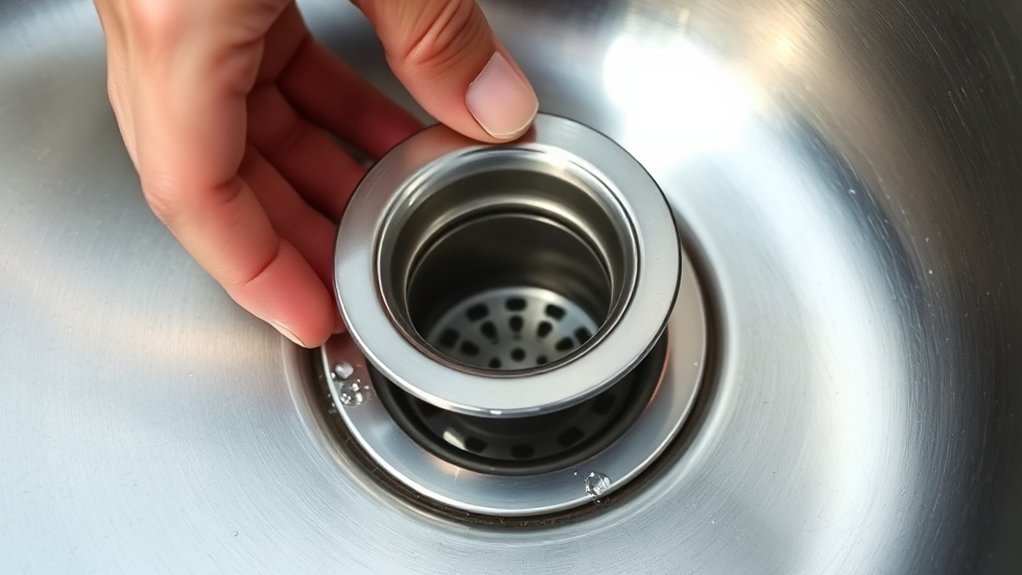
Start by checking the stopper and the drain opening for visible buildup. Lift out the stopper and inspect it for grease, food scraps, and soap scum that can trap water. If you see debris, wipe it clean and set it aside.
Lift out the stopper and check for grease, food scraps, or soap scum before moving on.
Next, use a flashlight to inspect the drain opening itself. Look for strands of food, labels, or hardened residue clinging to the rim. If the sink still holds water, remove a little so you can reach the opening more easily.
You can also gently twist the stopper while checking drain opening parts to spot hidden gunk. Clear away anything you can reach with your fingers or a paper towel. As you work, keep the area aired out drain by leaving the cabinet door open and letting fresh air move through.
This first pass often starts removing blockage before you use any other method, and it helps you judge how serious the clog is.
Flush the Sink With Boiling Water
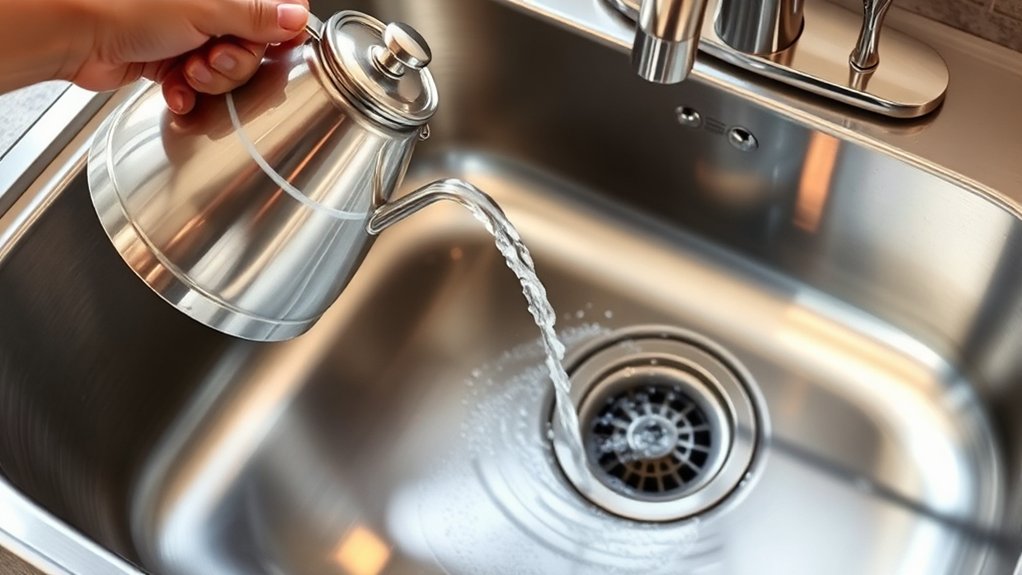
Now pour a kettle of boiling water slowly down the drain to help melt grease and loosen soft buildup. Keep the stream steady, and let the heat work its way through the pipe.
If the water drains a little faster afterward, repeat the flush once more with another kettle. This simple step supports your unclogging mindset because it tests the clog before you reach for harsher fixes.
Use caution around porcelain and plastic parts, and don’t splash yourself while you work. If you have a double sink, plug the other side so the hot water stays focused on the blocked line.
Afterward, run a short stream of tap water to check the flow. Regular hot-water flushing can become part of routine kitchen maintenance, helping prevent grease from hardening and reducing future backups.
If the sink still moves slowly, you’ll know the blockage needs another approach, but this quick flush often clears minor buildup fast.
Use Baking Soda and Vinegar
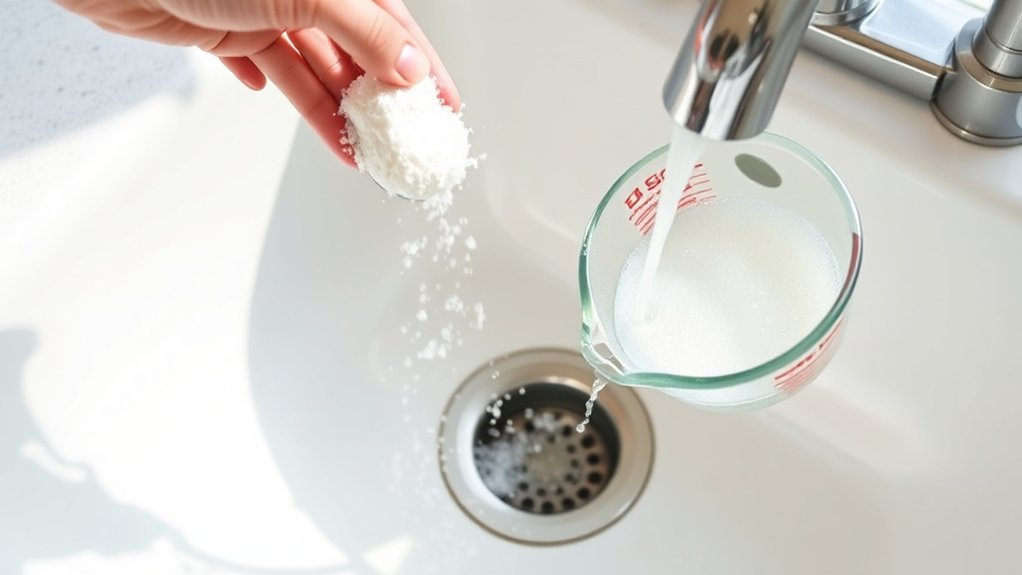
Pour about half a cup of baking soda directly into the drain, then follow it with one cup of vinegar. You’ll see fizzing right away, and that reaction helps loosen greasy residue and food buildup clinging inside the pipe.
Let the mixture work for 10 to 15 minutes so it can break apart the blockage without harsh chemicals. Then flush the sink with hot water to clear away the loosened debris.
| Step | What you do |
|---|---|
| 1 | Add baking soda |
| 2 | Pour in vinegar |
| Result | What you notice |
| Fizzing | Buildup starts to loosen |
| Drain flow | Water moves more freely |
This simple method works well for routine clog prevention, too. If you repeat it once a month, you can help keep your kitchen sink cleaner and reduce the chance of slow drains.
Avoid overusing it, and use it as a gentle maintenance fix between deeper cleanings.
Clean Out the P-Trap
If the clog is still there, the P-trap under your sink may be trapping the debris. Place a bucket beneath it, then loosen the slip nuts by hand or with pliers. Keep a towel nearby, because a little water will spill out.
Remove the trap carefully and empty its contents into the bucket. Use a bottle brush, old toothbrush, or straightened wire to clear grease, food scraps, and gunk from inside the bend. Rinse the pieces with warm water before reassembling them securely.
This step often beats unclogging myths that promise a quick fix from harsh chemicals or endless plunging. If you have a garbage disposal, follow smart disposal tips: always turn off the power before checking the drain, and never push your hand into the unit.
Once you reattach the P-trap, run water to test the seal and confirm the sink drains freely again.
When to Call a Plumber
Sometimes a clog runs deeper than the P-trap, and that’s when it’s best to call a plumber. If you’ve tried plunging, clearing the trap, and flushing with hot water, but the drain still backs up, stop there.
Persistent odors, gurgling pipes, leaks, or water coming up in another sink can point to a larger problem. Don’t turn an unrelated topic into a bigger repair by forcing chemicals or tools into the line.
| Sign | What It Means | Action |
|---|---|---|
| Slow drain | Partial blockage | Call if it returns |
| Multiple drains | Main line issue | Call a plumber |
| Leaks | Damaged seal or pipe | Get help fast |
| Bad smell | Hidden buildup | Inspect soon |
| No improvement | Deeper clog | Avoid professional fees? Not here—DIY delays can cost more |
A plumber can diagnose the issue quickly, protect your pipes, and keep a small clog from becoming a costly emergency.
Frequently Asked Questions
How Can I Prevent Future Sink Clogs?
You can prevent clogs by keeping grease, coffee grounds, and food scraps out of your drain. Run hot water after each use, and clean the stopper weekly.
Use a sink strainer to catch debris, and flush the pipes with baking soda and vinegar during routine maintenance. Also, avoid pouring fibrous foods or oil down the sink. These habits help you prevent clogs and keep water flowing smoothly year-round.
Can Garbage Disposals Cause Sink Blockages?
Yes, your garbage disposal can cause sink blockages, but it isn’t always the culprit. You might blame it first, yet that theory often hides the truth: many clogs come from grease, fibrous scraps, or poor drainage.
Don’t fall for garbage disposal myths. With regular disposal maintenance, you’ll reduce buildup, protect your pipes, and keep water moving freely. Run cold water, avoid overloading it, and clean it often.
Is It Safe to Use Chemical Drain Cleaners?
No, it’s not always safe to use chemical drain cleaners. You can damage pipes, harm skin, and create fumes, so drain safety matters.
If you choose a safe chemical, read the label, wear gloves, and never mix products. You’re usually better off trying a plunger or drain snake first.
If the clog won’t budge, call a plumber before you risk bigger problems.
What Tools Do I Need for Sink Unclogging?
You’ll need a simple tool checklist: a plunger, a bucket, rubber gloves, a flashlight, a drain snake, and a wrench. These basics help you coax the blockage into leaving without making a scene.
Keep a towel nearby for spills, and use preventive measures like a sink strainer to catch food scraps. If your trap needs attention, a small pan and old rag can make the job easier and cleaner.
How Often Should I Clean Kitchen Drains?
You should clean your kitchen drains weekly with hot water and a mild cleaner, then do a deeper cleaning monthly. Your cleaning frequency depends on how much grease and food waste you rinse away.
Use prevention strategies like sink strainers, wiping plates before washing, and avoiding oil down the drain. If you notice slow draining or odors, don’t wait. Clean it sooner so you can keep your pipes flowing freely and avoid clogs.
Conclusion
If your sink is still giving you grief after these steps, don’t beat yourself up. Sometimes a stubborn drain is just telling you it needs a little more help, and that’s okay.
You’ve done the simple fixes, and that’s a win. If the water still won’t budge, it may be time to call in a pro.
A professional can help unclog your kitchen sink and save you time, stress, and a bigger mess later.