3 Tips to Display Cutting Boards on Your Kitchen Counter
A cluttered counter can make even a beautiful kitchen feel messy, and you’re not alone if you struggle to display cutting boards without sacrificing space or convenience. These tips for displaying cutting…
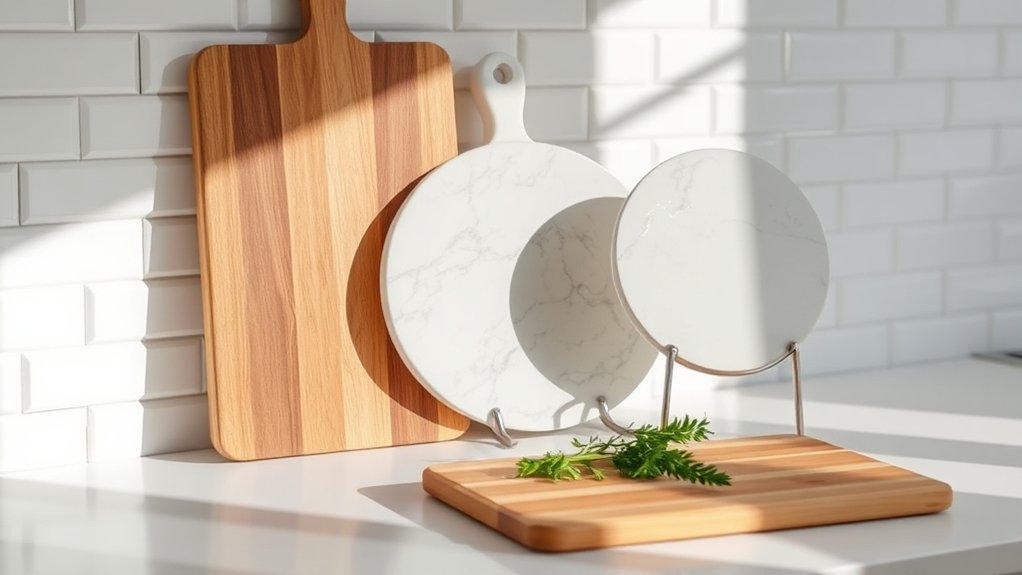
A cluttered counter can make even a beautiful kitchen feel messy, and you’re not alone if you struggle to display cutting boards without sacrificing space or convenience. These tips for displaying cutting boards on your kitchen counter can help you create a setup that looks polished and stays practical.
Choose cutting boards that look good on display, like walnut, maple, teak, or marble, and pick finishes that stay attractive with daily use. Arrange them in layers for balance: place the largest board at the back, a medium one in the middle, and a smaller one in front. Keep them clean, dry, and easy to reach by rotating boards often and using a tray or stand. There’s more to making the setup feel polished and practical.
Key Takeaways
- Choose attractive boards in wood, marble, or mixed tones that match your kitchen and still work for prep.
- Display boards with clean shapes, refined textures, and durable finishes that stay handsome through daily use.
- Layer boards by size, placing the tallest in back, medium in the middle, and smallest in front for balance.
- Keep mixed-material displays intentional by repeating one material and leaving even gaps to avoid visual clutter.
- Store boards clean, dry, and grouped neatly, using a tray or stand for easy access and a polished counter.
Choose Cutting Boards That Look Good on Display
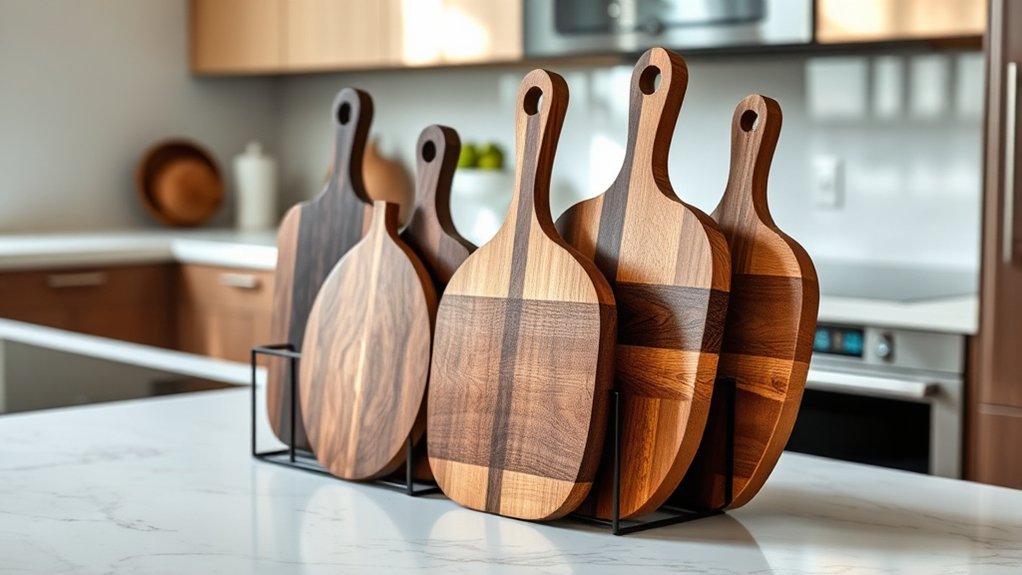
When you want your cutting boards to stay out on the counter, choose ones that look as good as they work. Pick boards made from aesthetic materials like walnut, maple, teak, or marble, so they add warmth or contrast to your kitchen.
You can also mix wood tones to match your cabinets, hardware, or countertops without creating visual noise. Look for displayable textures, such as smooth grain, live edges, or subtle butcher-block patterns, because they give the board character even when you’re not using it.
Avoid boards that are badly stained, deeply scarred, or warped, since those flaws distract from the look you want. If you cook often, choose durable finishes that keep the surface attractive after daily use.
A board with a clean shape and refined detail can double as décor and prep space, so you get both style and function without sacrificing either.
Arrange Cutting Boards for a Balanced Look
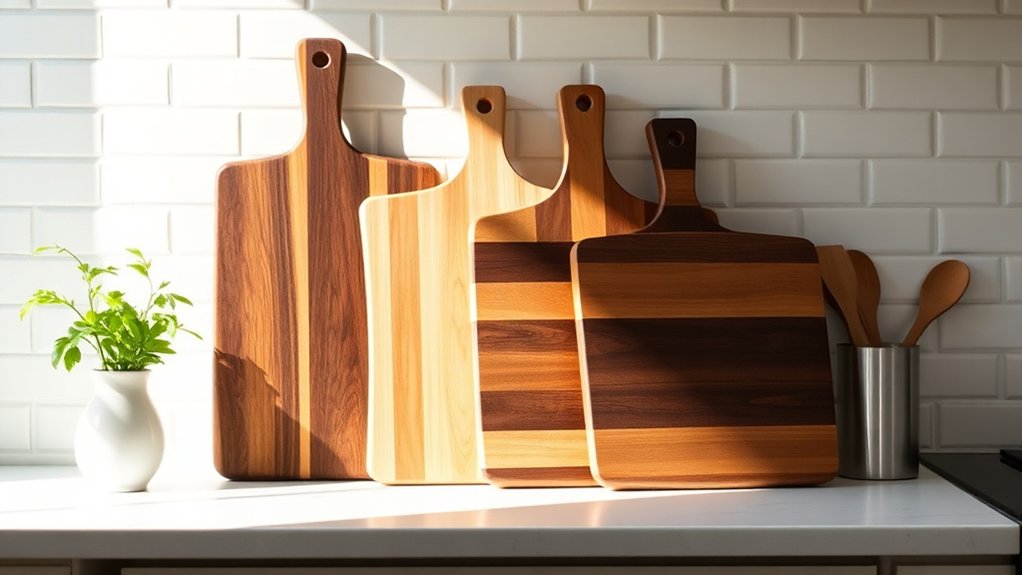
How do you keep cutting boards from looking cluttered on your counter? You can arrange boards by size, shape, and tone so each one supports the next. Lean the tallest board at the back, place a medium one slightly forward, and finish with a smaller board in front.
That layered setup creates a balanced display without blocking your backsplash or crowding prep space. If you mix wood and stone, let one material act as the anchor and repeat it once for harmony. Try this quick guide:
| Board Type | Placement | Effect |
|---|---|---|
| Large board | Back left | Adds height |
| Medium board | Center | Bridges sizes |
| Small board | Front right | Softens edges |
You can also angle one board a little to break up straight lines. Keep gaps even, and your counter will feel intentional, not busy.
Keep Cutting Boards Clean and Easy to Grab

A balanced display only works if the boards stay clean and easy to reach. Wipe each board after use, then dry it fully before you set it back on the counter.
If you let moisture linger, you’ll invite stains, warping, and odors. Keep it tidy by grouping boards with similar sizes and removing any that look worn or greasy.
A simple tray, rack, or stand can help you separate pieces and prevent clutter. Place the board you use most in front so you can grab and go when you’re prepping meals.
If you keep a daily cutting board on display, choose one with a smooth finish that’s easy to wipe down. Rotate boards often so each one gets cleaned, aired out, and inspected for cracks.
That way, your counter stays attractive, and your boards stay ready whenever you need them.
Frequently Asked Questions
What Cutting Board Materials Resist Warping Best?
You’ll get the best warping resistance from hardwoods like maple, walnut, and teak, especially when you care for them properly. These woods offer strong material durability and handle everyday moisture better than softer options.
You should avoid cheap composite boards that swell easily, and you’ll want to dry any board right after washing. Bamboo can resist warping too, but it may crack if you neglect it.
How Many Cutting Boards Should I Display Together?
You should display two or three cutting boards together for a balanced look. That range gives you enough variety without crowding your counter. Use a two word discussion idea, two word discussion idea to keep the grouping cohesive, and mix sizes for interest.
If you’ve got a small kitchen, stick to two. In a larger space, three can look intentional and stylish without feeling cluttered.
Can I Mix Wood and Marble Boards on Counters?
Yes, you can mix wood and marble boards on counters, and about 70% of stylish kitchens do this to add contrast. You’ll create warmth with wood and polish with marble, so your display feels balanced and intentional.
Try mixing woods and mixing marbles thoughtfully by varying sizes, shapes, and finishes. Keep the palette simple, and you’ll make the boards look curated instead of crowded.
Where Should I Place Boards Near Sinks or Stoves?
You should keep boards a little away from both the sink and stove, so they stay dry and safe from heat. If you’re placing boards near sinks, leave enough space to prevent splashes from soaking the wood.
When placing boards near stoves, avoid direct heat and steam, which can warp or crack them. Set them where you can grab them easily, but not where they’ll get damaged.
Do Cutting Boards Need Special Wall Protection Behind Them?
Not always—but if you place boards where splashes happen, you’ll want protection. You can use cutting board protection behind them with easy-to-clean wall backing like tile, sealed wood, or acrylic.
Without it, moisture and crumbs can stain or damage paint fast. For a cleaner look, choose a surface that wipes down quickly. You’ll protect your wall and keep the display looking sharp, even in a busy kitchen.
Conclusion
With a little intention, your cutting boards can do more than sit on your counter. They can add warmth, texture, and style to your kitchen. Choose boards you love, arrange them with balance, and keep them clean and ready to use.
Think of them as both tools and decor, working double duty every day. When you display cutting boards well, your counter stops looking cluttered and starts looking curated, making your kitchen feel polished and welcoming.




One Comment