10 Tips to Organize Your Kitchen Pantry Efficiently
A cluttered pantry can make meal prep feel harder than it needs to be, and you’re not alone—many people struggle to keep food organized and easy to find. These 10 tips to…
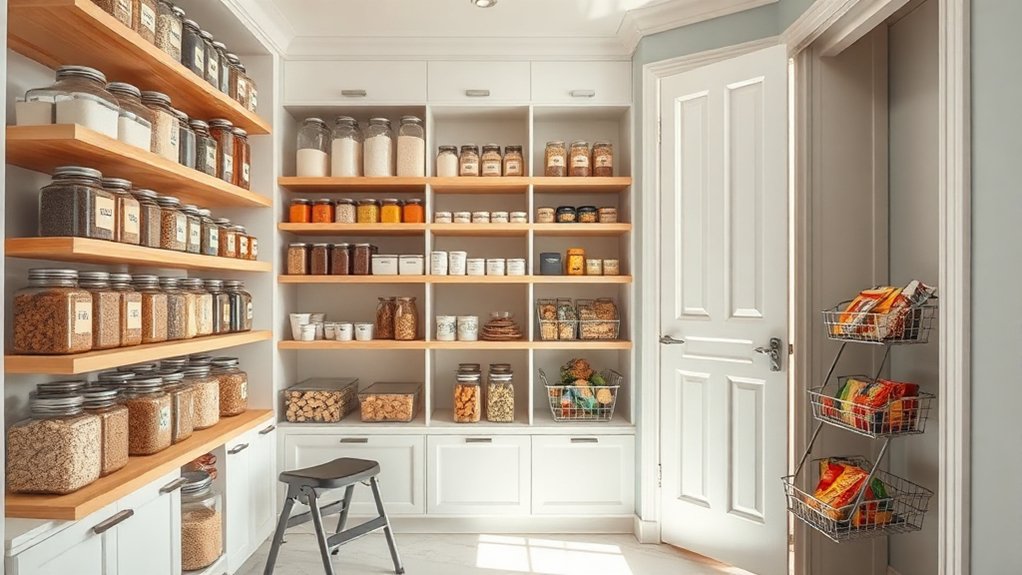
A cluttered pantry can make meal prep feel harder than it needs to be, and you’re not alone—many people struggle to keep food organized and easy to find. These 10 tips to organize your kitchen pantry efficiently can help you make the most of your space and keep everyday essentials within reach.
Choose a pantry system that fits your space, then group foods by how you cook and shop, like breakfast, snacks, baking, and dinner staples. Declutter expired or duplicate items first, then use clear bins and labels so everything’s easy to spot.
Maximize vertical space with risers or stackable containers, and use Lazy Susans for small items. Keep an inventory list and do a quick weekly reset so your pantry stays simple, tidy, and ready for more helpful ideas.
Key Takeaways
- Group pantry items by category, such as snacks, baking supplies, breakfast foods, and dinner ingredients, for faster access.
- Use clear bins, labels, and consistent container styles to keep items visible and easy to return to their assigned spots.
- Maximize vertical space with stackable bins, risers, and shelf organizers, placing frequently used items at eye level.
- Declutter regularly by removing expired, spoiled, or duplicate items, and wipe shelves during each reset.
- Keep a simple pantry inventory list to track quantities, expiration dates, and low-stock items before shopping.
Choose a Kitchen Pantry Organization System
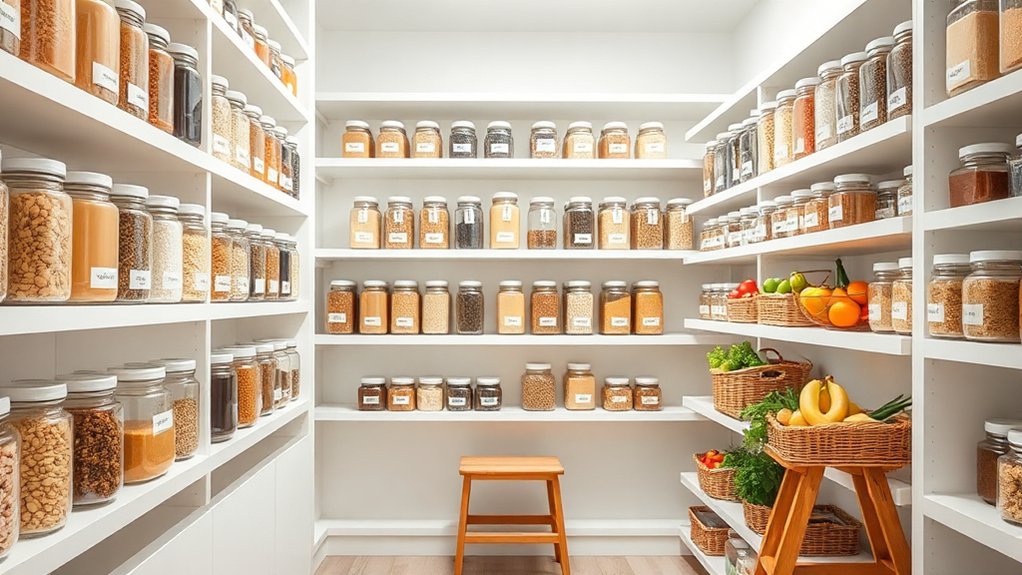
Before you label a single bin, decide on a pantry organization system that fits how you cook and shop. Start by grouping items the way you reach for them: breakfast foods together, baking staples together, snacks in one zone, and dinner ingredients within easy reach.
Choose a pantry system that matches how you cook, shop, and reach for ingredients.
That structure helps you move faster and keeps your pantry intuitive. When evaluating pantry layouts, notice shelf depth, door space, and how often you open each section. Use those details when choosing storage solutions, because the best system depends on your space, not a generic setup.
If you buy in bulk, reserve taller shelves for backups. If you cook daily, place essentials at eye level. Keep your system simple enough that everyone in your home can follow it without instructions.
The right organization system should reduce searching, support your routines, and make restocking feel effortless every week.
Declutter Expired and Duplicate Pantry Items
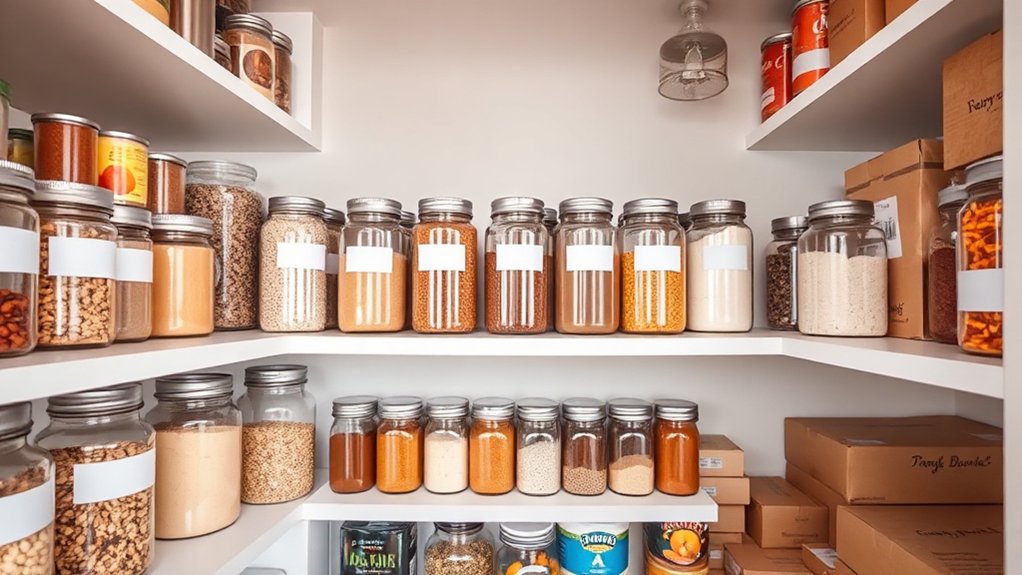
Once you’ve chosen your pantry system, clear out anything expired, stale, or no longer useful so you’re not organizing clutter. Pull every item from the shelves and check dates, seals, and condition. Toss anything that’s gone bad, and recycle packaging when you can.
As you work, declutter expired snacks, spices, canned goods, and baking items before they take up valuable space. Next, remove duplicates so you only keep what you’ll actually use. If you find three half-used boxes of pasta or extra jars of sauce, set a realistic limit and keep the freshest one.
This step helps you spot waste, avoid overbuying, and make room for foods you reach for often. Wipe down shelves before putting anything back, and group the keepers into neat piles. A clean, reduced pantry feels easier to manage and makes every later organizing step faster and more effective.
Sort Pantry Items by Food Category
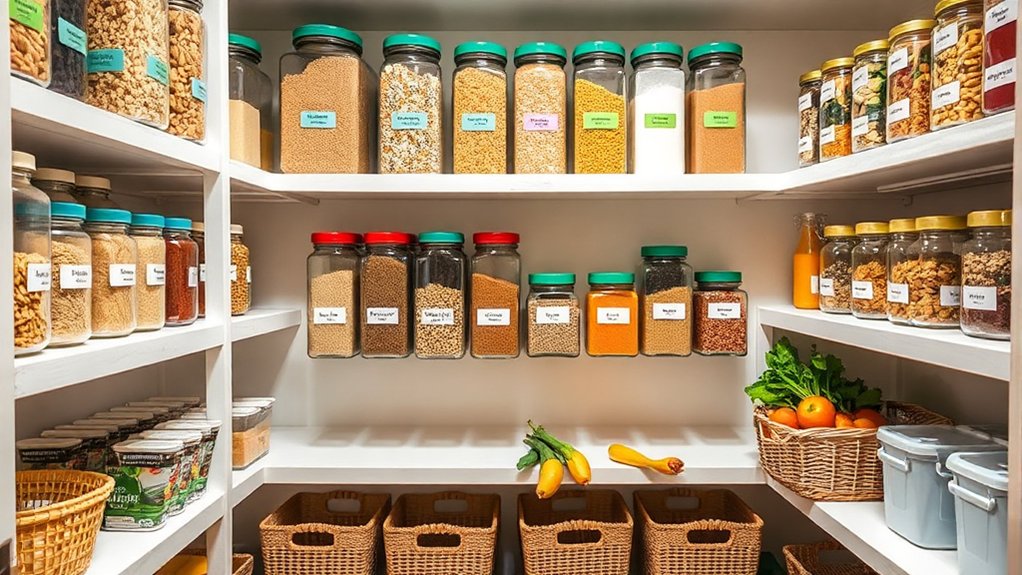
Next, sort your pantry items by food category so you can find what you need quickly. Group similar foods together, such as snacks, baking supplies, canned goods, and breakfast items. Keep dry goods in their own section to make your shelves neat and easy to manage.
Group Similar Foods
Start by grouping similar foods together so your pantry feels organized at a glance. Place snacks, baking ingredients, breakfast foods, and canned goods into their own clear zones so you can find what you need fast.
You’ll save time when you cook, shop, and restock because everything has a defined home. To keep smaller items tidy, organize spices in one section and label containers so you can spot them instantly.
Use bins or trays to keep related foods together and prevent items from drifting around shelves. When you return groceries, put each item back in its category right away.
That simple habit helps you maintain order, cut clutter, and make your pantry easier to use every day without extra effort.
Separate Dry Goods
Keep dry goods in separate categories so your pantry stays easy to scan and restock. You can separate dry goods by grouping grains, baking ingredients, snacks, pasta, and canned staples into their own zones.
Use clear bins, labels, or shelf dividers to categorize storage and keep everything visible. When you return groceries, put each item in its assigned spot right away, so you don’t create clutter later.
This system helps you spot low supplies faster and prevents duplicate purchases. Keep often-used items at eye level and store backups higher or lower on the shelf.
If you cook often, arrange ingredients by meal type or use. With a simple routine, you’ll save time, reduce waste, and make pantry cleaning much easier every week.
Use Clear Bins and Labels
Clear bins make it easy to see what you have at a glance, so you can grab ingredients before they get buried in the back of the pantry. Use clear bins to group snacks, baking supplies, grains, or pasta, and choose labeled containers so everyone knows where things belong.
When you transfer food from bulky boxes or bags, you’ll create a cleaner look and cut down on clutter fast. Add simple labels with the item name and, if helpful, the expiration date. This helps you track freshness and prevents you from buying duplicates.
For best results, use the same style of labels throughout your pantry so the system feels consistent and easy to maintain. You can also use waterproof markers or adhesive tags that won’t peel off. With clear bins and labels, you’ll spend less time searching and more time cooking.
Maximize Vertical Space in Your Pantry
Look up—your pantry’s unused height can be one of the easiest ways to create more storage. Start by adding adjustable shelves, stackable risers, or slim bins that let you use every inch without crowding the floor.
Unused pantry height can create easy extra storage with adjustable shelves, risers, and slim bins.
When you plan for maximizing vertical space, you turn empty gaps into practical zones for canned goods, baking supplies, and snacks. Use height aware shelving so you can match shelf spacing to what you actually store, instead of wasting room above short items.
You can also place tiered organizers on shelves to keep small jars visible while freeing lower levels for bulk items. Add over-the-door racks or hanging baskets if your pantry walls have room.
Keep heavier items on sturdier shelves and lighter items higher up. With a few smart changes, you’ll make your pantry feel bigger, stay organized longer, and find what you need faster without adding extra square footage.
Store Everyday Pantry Items at Eye Level
Once you’ve used your pantry’s vertical space well, put the items you reach for most often at eye level so they’re easy to grab and put back. This simple eye level storage strategy saves time and keeps your pantry working for you.
Place frequently used staples on the middle shelves, where you can see them without bending or stretching. You’ll improve daily accessibility and make meal prep smoother because your go-to ingredients stay in plain sight.
Keep similar items together, and use clear bins or labeled containers so you can spot what’s running low at a glance. When you return groceries, restock these shelves first so your routine stays consistent.
Leave less-used items on higher or lower shelves, and you won’t waste energy searching. By organizing around how you cook and shop, you create a pantry that feels orderly, efficient, and easy to maintain every day.
Group Snacks, Baking, and Breakfast Foods
Create dedicated zones for snacks, baking supplies, and breakfast foods so you can find what you need fast. Keep chip bags, granola bars, and crackers together in one bin or shelf section, and use snack grouping to stop items from drifting around your pantry.
Put flour, sugar, baking soda, chocolate chips, and sprinkles in a separate area so you don’t waste time hunting during recipes. Then gather cereal, oatmeal, pancake mix, and other breakfast items into one spot that’s easy to reach each morning.
When you separate these categories, you’ll see what you have at a glance and avoid buying duplicates. You’ll also make it easier for everyone in your home to put things back where they belong.
If you buy in bulk, store extra packages behind the front row so the items you use first stay visible. This simple system keeps your pantry tidy, speeds up meal prep, and helps you grab what you need without opening every container.
Use Lazy Susans for Small Pantry Items
Lazy Susans are a smart fix for small pantry items that get lost in the back of shelves. You can place spices, jars, condiments, and small bottles on one so you can spin them into view in seconds.
This simple tool creates efficient rotation, so older items come forward and you use them before they sit forgotten. It also supports accessible storage, since you won’t need to reach around stacks or shift everything just to grab one thing.
Choose a sturdy, low-profile turntable that fits your shelf depth and keeps items stable. For extra order, group similar items on each Lazy Susan, like oils, sauces, or seasonings.
You’ll save time during meal prep and keep your pantry looking tidy. Best of all, you’ll make cramped shelves work harder without adding clutter.
Keep a Kitchen Pantry Inventory List
Keeping your pantry organized gets even easier when you know exactly what you have on hand. Create a kitchen pantry inventory list and update it as you shop, cook, and restock.
You can use a notebook, spreadsheet, or app, but pick one method and stick with it for reliable inventory control. List staples such as grains, canned goods, spices, snacks, and baking items, then note quantities and expiration dates.
This helps you avoid buying duplicates and lets you plan meals around ingredients you already own. Add categories that match your shelves so you can scan the list quickly.
If you pair it with a simple labeling system, you’ll find items faster and track what’s running low. Keep the list where you’ll use it often, like on your phone or inside a cabinet door.
A current inventory saves time, reduces waste, and keeps your pantry working for you.
Do a Weekly Pantry Reset
Set aside a few minutes each week to do a pantry reset so clutter never gets a chance to build up. Pull everything off the shelves, wipe away crumbs, and check for spills or expired items. As you put groceries back, group similar foods together and return each item to its proper spot. This quick habit helps you spot low supplies, keep labels visible, and stop duplicates from piling up.
Make your weekly maintenance easier by using the same order every time. Start with snacks, then grains, canned goods, baking items, and extras. If you notice containers that need refilling, add them to your shopping list right away. You can also rotate older products to the front so you use them first. A consistent pantry reset keeps your space tidy, saves time during meal prep, and makes it simpler to find what you need when you need it.
Frequently Asked Questions
How Often Should I Deep Clean Pantry Shelves?
You should deep clean pantry shelves every three to six months, depending on use and spills. If you notice crumbs, sticky spots, or expired items sooner, clean them right away.
Regular shelf maintenance helps you prevent pests, odors, and mess buildup. Wipe shelves monthly, then do a deeper scrub quarterly for best results. This deep clean frequency keeps your pantry fresh, organized, and easier for you to manage.
What Containers Work Best for Flour and Sugar Storage?
For flour and sugar, you’ll want airtight canisters, glass jars, or BPA free containers that seal tightly and keep out moisture. You can use clear glass jars if you like a clean look, but airtight canisters usually protect freshness best. Add a simple label system so you won’t mix them up. Like sentinels guarding a gate, these containers keep pests, clumps, and spills from sneaking in.
How Can I Keep Pests Out of My Pantry?
You can keep pests out by sealing every gap, storing food in airtight containers, and cleaning spills right away.
Check pantry seal airtightness around doors, shelves, and walls, then caulk cracks and replace torn weatherstripping.
Use pest proofing strategies like rotating old food, vacuuming crumbs, and emptying trash often.
You should also inspect dry goods before storing them, because a few insects can spread fast if you don’t act quickly.
What Lighting Options Improve Pantry Visibility?
You can improve pantry visibility with brighter lighting that spreads evenly across shelves, plus shorter fixtures under upper shelves or inside dark corners. Choose energy efficient bulbs, like LEDs, so you’ll see labels clearly without raising your power bill.
Add motion-sensor lights if you often carry groceries in with your hands full. You can also use warm white light to reduce shadows and make items easier to spot.
How Do I Organize a Small Pantry With No Shelves?
Can’t you turn empty walls into storage? You can organize a small pantry with no shelves by using stackable bins, hanging organizers, and door racks. How to maximize vertical space? Add tension rods, wall hooks, and over-the-door caddies to lift items off the floor. For Budget friendly shelfless solutions, use crates, baskets, and clear containers to group foods by type. Label everything, keep frequently used items upfront, and rotate stock often.
Conclusion
With the right pantry system in place, you’ll turn a cluttered shelf into a well-oiled machine. By decluttering, sorting, labeling, and using every inch of space, you’ll make it easier to find what you need and waste less food.
Keep your snacks, baking supplies, and breakfast items in their own spots, and stay on top of your inventory. A weekly reset will keep everything running smoothly, making it easier to organize your kitchen pantry efficiently.