How Big Is the Kitchen in Pickleball?
Many pickleball players struggle to judge how close they can get to the net without committing a fault—you’re not alone. Understanding the kitchen’s size can make your footwork and shot choices feel…
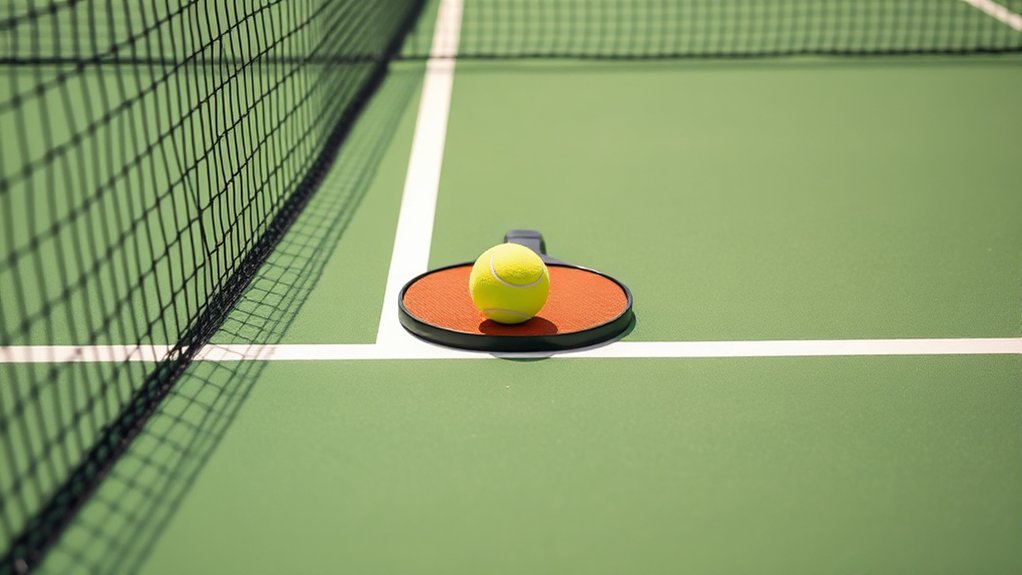
Many pickleball players struggle to judge how close they can get to the net without committing a fault—you’re not alone. Understanding the kitchen’s size can make your footwork and shot choices feel more confident. So, how big is the kitchen in pickleball?
The pickleball kitchen is a 7-foot non-volley zone on each side of the net, so it stretches 7 feet back from the net across the full width of the court. You can step into it, but you can’t volley while standing in it or on its line. It shapes your footwork, shot choices, and net play. If you keep going, you’ll see how this zone changes rallies and strategy.
Key Takeaways
- The kitchen, or non-volley zone, extends 7 feet from the net on both sides of the court.
- Its boundary line is part of the kitchen, so stepping on the line counts as being in the zone.
- The kitchen spans the full width of the court between the sidelines and the centerline.
- You can enter the kitchen, but you cannot volley from inside it or while touching its line.
- The kitchen is designed to slow net play, encourage soft shots, and promote fair, strategic rallies.
What Is the Pickleball Kitchen?

If you’ve heard pickleball players talk about “the kitchen,” they mean the non-volley zone: a seven-foot area on both sides of the net where you can’t volley the ball. You enter it anytime you want, but you can’t hit the ball out of the air while standing inside it or on its line.
That rule changes how you position yourself, because you need to think about when to move forward and when to stay back. You’ll use the kitchen to slow the pace, reset rallies, and force your opponents into softer shots.
It isn’t a scoring zone; it’s a control zone. If you plan two word discussion ideas with friends, this topic gives you plenty to cover.
A subtopic unrelated to size is footwork, since balance matters every time you approach the line. Understanding the kitchen helps you play smarter, avoid faults, and keep rallies alive longer.
How Big Is the Kitchen in Pickleball?

How big is the kitchen in pickleball? You’ll hear players use that phrase a lot, because the kitchen shapes how you move, volley, and reset rallies. You should treat it as a special no-volley area near the net, and you’ll respect it every time you step onto the court.
Good kitchen etiquette keeps play fair and smooth, while also helping with court maintenance by reducing scuffs and unnecessary wear.
- You avoid volleying inside this zone.
- You watch your footwork near the line.
- You let the ball bounce when needed.
- You keep your body balanced and controlled.
When you understand the kitchen’s role, you’ll make smarter shot choices and fewer faults. That awareness also helps you play safely with partners and opponents.
In short, the kitchen isn’t just a rule; it’s a key part of the game’s rhythm, strategy, and respect.
Kitchen Dimensions and Markings

You’ll notice a 7-foot line on each side of the net. Together, these lines mark the non-volley zone, often called the kitchen. They show where you can and can’t step when playing at the net, helping you judge your shots and footwork with confidence.
Kitchen Line Measurements
The kitchen line in pickleball marks the front edge of the non-volley zone, and it runs parallel to the net on both sides of the court. You’ll see it stretch 7 feet from the net, creating a clear visual guide for play.
That line helps you maintain kitchen etiquette and line compliance during fast exchanges. Watch for these key details:
- The line spans the full width of each side.
- It sits exactly 7 feet from the net.
- It’s part of the non-volley zone boundary.
- It must stay visible and clearly marked.
When you step near it, you’ll know your position quickly and adjust your footwork with confidence. Accurate measurements keep the court fair, consistent, and easy to read.
Non-Volley Zone Boundaries
Ever wondered what makes up the non-volley zone boundaries in pickleball? You’re looking at a seven-foot strip on each side of the net, marked by the sideline, centerline, and kitchen line.
These lines create the kitchen’s edge, so you can judge when you’ve stepped in before volleying. The boundary line counts as part of the zone, which means your feet or momentum can still fault you if you cross it while striking the ball.
You should read the markings quickly, stay balanced, and keep your equipment grip firm for control near the net. Good kitchen etiquette means you respect the space, avoid crowding, and move with awareness.
When you know these boundaries, you play safer, cleaner, and smarter.
Where the Kitchen Sits on the Court
The kitchen, also called the non-volley zone, is on both sides of the net and extends 7 feet back from it. It’s the area between the net and the rest of the court where you can’t volley the ball. Knowing where it starts and ends helps you play smarter and avoid foot faults.
Kitchen Position Basics
At the front of the court, the kitchen stretches 7 feet back from the net on both sides, creating a no-volley zone that directly shapes how you position yourself in pickleball. You’ll use this space to control rallies, reset pace, and pressure opponents without crowding the net.
Stay balanced, keep your feet light, and move with purpose as you approach or retreat from this area. Good kitchen etiquette helps you avoid unnecessary contact and keeps play smooth, while smart court maintenance means you notice surface wear and stay aware of footing.
- Hold a ready stance
- Let the ball drop before attacking
- Recover quickly after each shot
- Communicate with your partner
Non-Volley Zone Boundaries
The kitchen’s boundaries are easy to spot once you know what to look for: it spans 7 feet from the net on each side and runs from sideline to sideline. You’ll see this non-volley zone marked by clear lines, and those lines count as part of the kitchen.
When you stand inside it, you can’t volley the ball before it bounces. That rule shapes your court positioning and keeps rallies honest.
If you’re near the line, respect distance etiquette and make sure your feet stay out until the ball lands. You can step in to play a bounce, then move back out for volleys.
Knowing exactly where the kitchen sits helps you react faster, avoid faults, and control the net with confidence.
Why the Pickleball Kitchen Exists
So why does the kitchen exist in pickleball? It keeps the game fair, strategic, and fun. The non-volley zone stops players from camping at the net and smashing easy winners all day. Instead, it encourages softer shots, better placement, and smarter movement. That balance helps beginners rally longer and gives skilled players room to outthink each other.
The kitchen keeps pickleball fair, strategic, and fun by rewarding touch, timing, and smarter play over pure force.
- It reduces overpowering net play.
- It encourages dinks and control.
- It protects reaction time near the net.
- It keeps points more tactical.
Kitchen etiquette is really about respect: don’t crowd the line, know your space, and play clean. The kitchen’s purpose is to bring pauses, touch, and patience into rallies. As a result, the game feels more social and less about pure force, with more emphasis on timing. That’s why the kitchen matters.
Volleying Rules in the Kitchen
When you’re volleying near the kitchen line, keep your feet out of the non-volley zone—and off the line. Stepping in or touching the line while volleying is a fault, even if your shot lands in. Stay balanced and control your momentum to keep your footwork legal.
Volleying Line Rules
At the kitchen line, volleying gets especially tricky because you can’t step on or over the non-volley zone line while hitting a ball out of the air. You also need to keep your momentum in check, since your feet must stay behind kitchen boundaries until the volley ends. Good volleying rules help you position yourself, react faster, and avoid sloppy contact.
- Stay balanced near the line.
- Watch your feet before swinging.
- Keep your paddle ready at chest height.
- Reset your stance after each shot.
When you practice these kitchen boundaries, you’ll read the line better and make cleaner volleys. The key is control: move smart, hit clean, and let your body stay clearly outside the zone while you attack the ball.
Non-Volley Zone Faults
Non-volley zone faults happen the moment you volley a ball while your feet, momentum, or paddle action break kitchen rules. You’ll commit a fault if you strike a volley while touching the kitchen or the line, or if your follow-through carries you into it. Good kitchen etiquette means you respect the line and avoid swinging through carelessly.
| Fault trigger | Result |
|---|---|
| Feet in the kitchen on a volley | Fault |
| Momentum carries you in after contact | Fault |
| Paddle or clothing touches the zone | Fault |
| Volley after a bounce | Legal |
Use this fault troubleshooting guide to spot errors fast. If you’re unsure, pause, reset, and remember the kitchen only allows volleys from outside the zone.
Kitchen Footwork Basics
How do you stay legal at the kitchen line? Keep your feet behind the non-volley zone line whenever you volley, and move with control so you don’t drift into the kitchen. Good foot positioning helps you balance, recover, and avoid faults while staying ready for the next shot. Kitchen etiquette means you respect the line, watch your momentum, and reset before attacking.
- Plant both feet behind the line before contact.
- Don’t let your paddle or body touch the kitchen on a volley.
- Land outside the zone after a jump volley.
- Step back quickly after dinks and blocks.
You can lean forward, but you can’t step on or over the line until the ball bounces. Practicing clean footwork builds confidence and keeps your volleys legal.
Common Kitchen Foot Faults
One of the most common kitchen foot faults happens when you step on or over the non-volley zone line while volleying the ball. You can also fault if any part of your body, clothing, or paddle crosses the line during that volley.
Even a quick toe tap can cost you the point, so keep your feet aware and your balance controlled. Good kitchen etiquette means respecting the line and waiting until the ball bounces before entering the zone to play a soft shot.
A rushed paddle grip can make you lunge forward, so stay relaxed and let the ball come to you. Watch for momentum, too; if your hit carries you into the kitchen after contact, it still counts as a fault.
Pay attention to your shoes and footing, because sloppy movement creates avoidable mistakes. Stay disciplined, and you’ll avoid these common errors.
How to Stand at the Kitchen Line
At the kitchen line, stand balanced with your feet just behind the non-volley zone line so you can react quickly without drifting forward. Keep your knees soft, your chest relaxed, and your weight slightly on the balls of your feet. This stance helps you stay ready for fast exchanges and keeps your paddle in position.
Stand balanced just behind the kitchen line, knees soft, paddle ready, and weight on the balls of your feet.
- Plant your feet shoulder-width apart.
- Hold your paddle out in front of your body.
- Stay light, not stiff, so you can shift laterally.
- Reset after each shot and return to balance.
You don’t need to lean over the line to reach tough balls. Instead, move your feet and keep control. Think of your stance as a stable base, not a rushing step. If you want two word discussion ideas, focus on balance and spacing. Save any unrelated topic for later, because your attention here should stay on positioning, control, and quick reaction.
Best Shots to Play at the Kitchen
Once you’re set at the kitchen line, the best shots are the ones that stay low and force your opponent to hit up. Use soft dinks to the corners, especially near your opponent’s backhand, so you can create weak replies.
A drop shot from deeper court positions can also help you move forward and reset the rally on your terms. If the ball pops up, take the put-away with a controlled volley, not a wild swing.
You can also angle your shots crosscourt to open space and keep pressure on both opponents. Good kitchen etiquette means you don’t crowd the line or reach into your opponent’s space.
Your equipment choices matter too: a paddle with good touch can make dinks and blocks feel easier. Stay patient, aim for consistency, and make every shot work to keep your opponents defending and guessing.
Kitchen Control Drills for Practice
To sharpen your kitchen control, practice drills that train touch, balance, and quick reactions. Start with soft dink rallies, aiming for the same spot while you stay low and relaxed. Then add a reset drill: have a partner drive balls at you, and block them back into the kitchen with a quiet paddle. You’ll build feel and confidence fast.
- Cross-court dinks to improve angle control
- Third-shot drop reps to soften incoming pace
- Volley-to-dink transitions for faster hands
- Kitchen line footwork with split-step timing
Keep your paddle out front and your feet light so you can adjust without reaching. Use these practice drills often, and you’ll notice better kitchen control, fewer errors, and more pressure on your opponent. Mix solo and partner work to challenge different spins, speeds, and bounce heights.
Frequently Asked Questions
Can You Hit the Ball Out of the Kitchen After a Bounce?
Yes, you can hit the ball out of the kitchen after it bounces, as long as you follow the hit rules and court etiquette. Once the ball bounces in the non-volley zone, you may step in and play it. You still can’t volley it there. If you’re unsure, watch your feet and let the bounce happen first. That keeps you legal and avoids faults during play.
Does the Kitchen Size Change for Singles and Doubles?
No, you’ll use the same kitchen size in singles and doubles, like a fixed stage under every rally. The court dimensions and non-volley zone stay the same in both formats, and the skip lines don’t change the kitchen itself.
You’ll just adjust your strategy and positioning, since singles can feel faster and doubles demands tighter teamwork near the net.
Is the Non-Volley Zone the Same as the Kitchen?
Yes, you’re talking about the same area. The non volley zone vs kitchen is just two names for the seven-foot zone beside the net. You can’t volley there, and kitchen boundary rules still apply when you step in or out.
Use smart paddle technique to control soft shots, and practice quick footwork in the kitchen so you stay balanced, avoid faults, and handle dinks with confidence during play.
Are Kitchen Lines Considered Part of the Kitchen?
Yes, you should treat kitchen lines as part of the kitchen. If you’re tracing the kitchen boundary, those lines help define the nonvolley distinction, so a foot on the line counts as in.
Imagine a chalk outline on the court: step on it, and you’ve crossed the threshold. That’s why your volley rule changes right at the line, not just beyond it. Keep your feet clear, and you’ll stay safe.
Can You Enter the Kitchen After Making a Volley?
No, you can’t enter the kitchen after making a volley if your momentum carries you in before the ball bounces. You must stay out of the non-volley zone until the next shot lands. Good pickleball etiquette means you control your footwork and avoid faults. For court maintenance, keep shoes clean and respect the surface so you don’t scuff lines or leave debris near the kitchen area.
Conclusion
So, how big is the kitchen in pickleball? Small enough to humble you, apparently. You get a neat 7-foot no-volley zone on each side of the net, and suddenly your best smash turns into a foot-fault comedy routine.
Respect the line, keep your balance, and practice your soft game if you want to survive there. Master the kitchen, and you’ll stop treating it like a trap and start using it like your best weapon. Knowing how big the kitchen is in pickleball can help you make the most of it.