How Deep Are Kitchen Base Cabinets?
Planning a kitchen can be tricky when you’re unsure how much space your cabinets will take up. You’re not alone—many people struggle to balance storage, counter space, and room to move. So,…
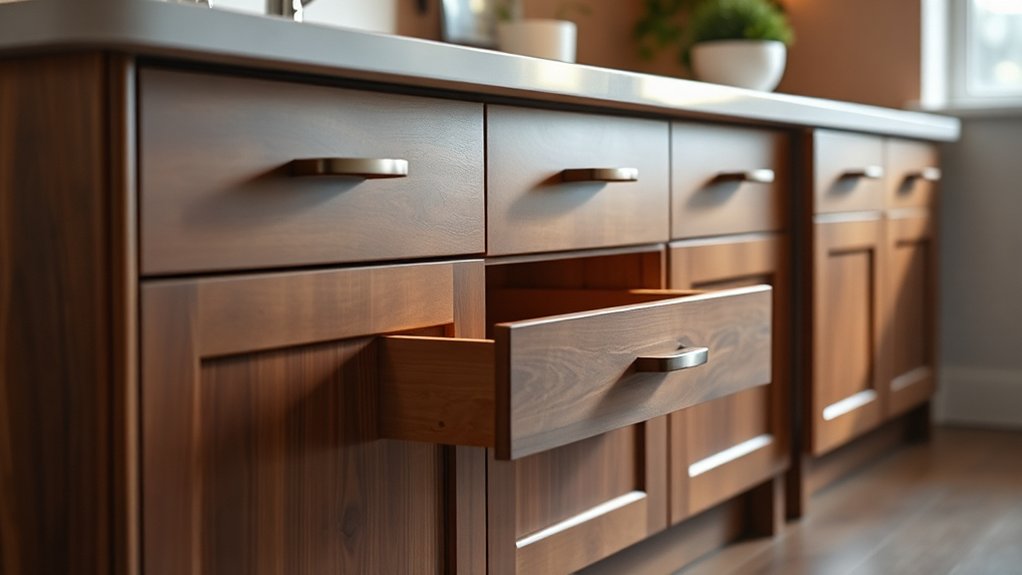
Planning a kitchen can be tricky when you’re unsure how much space your cabinets will take up. You’re not alone—many people struggle to balance storage, counter space, and room to move. So, how deep are kitchen base cabinets? Most are 24 inches deep, not counting the countertop overhang.
That standard depth usually works well for dishes, pots, and everyday kitchen tasks, while leaving room for a typical 1- to 1.5-inch overhang. You may need deeper cabinets for an island or seating, or shallower ones in a tight space. Keep reading to find out how to measure and choose the right fit.
Key Takeaways
- Standard kitchen base cabinets are usually 24 inches deep from front to back, excluding countertop overhang.
- Face frames, backs, and toe kicks can change the cabinet’s overall footprint, so check manufacturer specs.
- Depth determines usable storage space, with deeper cabinets fitting larger items but reducing easy access.
- Most countertops overhang base cabinets by about 1 to 1.5 inches, and seating areas need about 10 to 12 inches.
- Islands, sinks, and appliances may require different depths, so measure carefully before planning your layout.
How Deep Are Standard Base Cabinets?
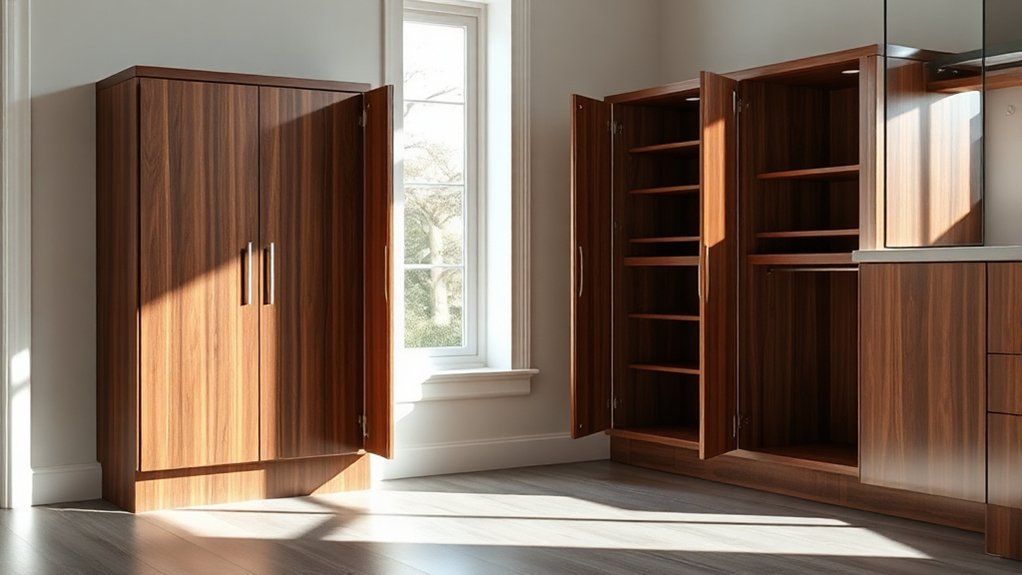
Standard base cabinets are usually 24 inches deep from the front of the cabinet to the back, not including the countertop overhang. When you’re planning a kitchen, that standard depth gives you a familiar starting point for layout and product selection.
You’ll often find this size used across many cabinet lines, so you can compare options more easily. If your space is tight, you may also see shallow or deeper versions, but 24 inches remains the common benchmark.
This measurement helps you match cabinets with appliances, counters, and adjacent elements without guesswork. You should still check manufacturer specs, since face frames, backs, and toe kicks can affect the overall footprint.
For built-ins or custom designs, a two word feature may change the final depth, and another two word detail can influence fit. Knowing the standard lets you shop confidently and avoid surprises during installation.
Why Base Cabinet Depth Matters
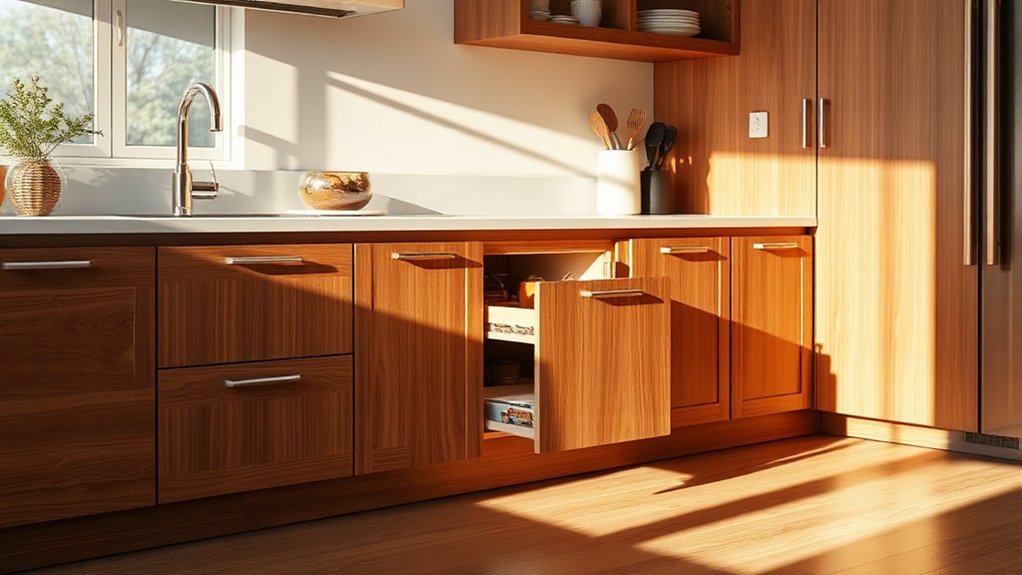
Base cabinet depth affects how much you can store, how far your countertop extends, and how comfortable your kitchen feels. Choose the right depth to make the most of your storage without compromising countertop overhang or workflow. You’ll also find it easier to move around, cook, and clean every day.
Storage Capacity
How much you can store in a kitchen base cabinet depends directly on its depth, because that measurement sets the usable space for dishes, pots, pantry items, and organizers. Deeper cabinets give you more room for bulk items, but you still need to account for material thickness, which slightly reduces the interior space.
You’ll get better storage efficiency when you match cabinet depth to the items you actually keep inside. Shallower cabinets can work well for everyday plates, bowls, and smaller containers, while deeper ones suit stockpots, mixing bowls, and tall supplies.
If you plan your layout carefully, you can avoid wasted space and make each shelf, drawer, and pullout easier to use. The right depth helps you store more without crowding access.
Countertop Overhang
Countertop overhang depends on cabinet depth, because the top needs enough support while still giving you a comfortable lip at the front. When you choose deeper base cabinets, you give the countertop more bearing area, which helps it stay stable and look proportioned.
You also need to match the overhang to the countertop thickness, since thicker tops usually need a slightly different reveal than slim profiles. If you pick stone, quartz, or another heavy surface, material durability matters too, because the overhang must resist sagging and edge damage over time.
With the right depth, you can create a clean front line, protect cabinet faces from drips, and keep the whole installation balanced without wasting space or compromising strength.
Kitchen Workflow
When you’re planning kitchen workflow, base cabinet depth plays a bigger role than many people expect. Standard 24-inch cabinets help you move between prep, cook, and cleanup zones without crowding your path.
They give you enough counter space for chopping, appliances, and serving, while still letting you reach the back of the cabinet easily. If you choose deeper units, you may gain storage, but you can also create awkward reaches and disrupt traffic flow.
Shallower cabinets can improve movement in compact kitchens, yet they may limit what you can store. Use topic ideas unrelated to other h2s to compare how cabinet depth affects ergonomics, accessibility, and daily efficiency so your layout supports the way you actually cook.
Countertop Overhang And Cabinet Depth
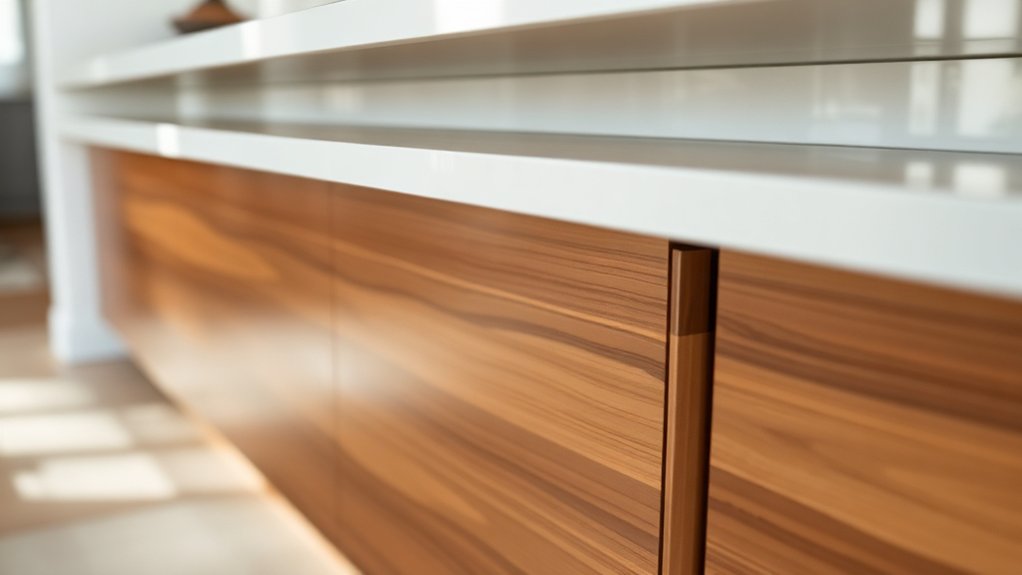
When choosing a countertop overhang, start with a standard depth that extends just beyond the cabinet face for comfort and style. Make sure the countertop aligns with the cabinet depth so the edge looks balanced and works well. If you’re planning to add seating, leave enough room for knees and movement without making the overhang too deep.
Standard Overhang Dimensions
A standard countertop overhang usually extends about 1 to 1.5 inches past the front of the base cabinets, creating enough space for a comfortable grip and a finished look. You’ll usually see this on laminate, quartz, and stone tops, where the edge protects cabinet faces from spills.
Use these two word discussion ideas to guide your planning: style balance, hand clearance, cleanup ease, and visual trim. An irrelevant subtopic, like appliance color, won’t change the overhang you need.
- 1 inch: tight, practical edge
- 1.25 inches: common standard choice
- 1.5 inches: slightly deeper feel
- Extra overhang: check with your installer
Cabinet Depth Alignment
How do countertop overhang and cabinet depth work together? You align them so the countertop extends slightly past the cabinet front, which protects doors and gives your kitchen a finished look.
Most base cabinets measure about 24 inches deep, and standard counters usually add a small overhang at the front and sometimes the back. That extra lip doesn’t change your usable storage depth, but it does affect how the cabinet meets the counter edge.
When you plan cabinet width, keep each run consistent so the overhang stays even from end to end. If your cabinets sit deeper or shallower than average, adjust the countertop layout to match.
This keeps the surface centered, avoids awkward edges, and gives your installation a clean, intentional profile.
Seating And Clearance
For seating at a counter, you’ll want enough overhang to make room for knees without making the base cabinets feel too deep. Aim for balance: too little overhang tightens seating clearance, while too much can weaken support and crowd the room.
Match cabinet depth to your layout so stools, legs, and traffic all fit comfortably. Good proportions also improve dining interaction, letting people sit, talk, and move without bumping edges.
- Keep about 10 to 12 inches of overhang for casual seating.
- Confirm knee space before finalizing cabinet depth.
- Leave room behind stools for easy passage.
- Check that the countertop edge supports daily use.
When To Choose Deeper Base Cabinets
Deeper base cabinets make sense when you need extra storage, want more countertop depth, or have appliances and workspaces that benefit from added room. You’ll appreciate them if you store bulky cookware, use deep storage for pantry overflow, or pair them with tall cabinets for a full-height layout.
They also help when you want a more substantial prep zone for baking, small appliances, or integrated sinks.
| Need | Deeper Cabinet Benefit | Best Fit |
|---|---|---|
| Bulk storage | More usable interior space | Pots, mixers |
| Counter depth | Extra work surface | Prep areas |
| Appliance fit | Better clearance | Coffee stations |
Choose them when your kitchen plan prioritizes capacity and utility over a compact footprint. You get a stronger workflow, fewer countertop limitations, and easier organization for items that don’t fit standard bases.
When Shallower Base Cabinets Work Better
Shallower base cabinets work better when your kitchen feels tight, you need easier reach into storage, or you want a lighter visual profile. You’ll appreciate them in narrow galley layouts, small apartments, or rooms where you don’t want cabinets to crowd the walkway.
Shallower base cabinets are ideal for tight kitchens, offering easier reach and a lighter, less crowded feel.
They also suit you when you value quick access to dishes, pans, and daily tools without stretching deep inside a cabinet. If you’re comparing options, consider the two word discussion idea 1 and the two word discussion idea 2 as practical planning cues.
- Tight aisles
- Easier access
- Cleaner sightlines
- Smaller rooms
You can also choose shallower bases when you want the kitchen to feel less heavy and more open. They keep the run of cabinets visually tidy, and they often make a compact space feel calmer, brighter, and simpler to navigate.
How Depth Changes Storage Space
Cabinet depth affects how much storage space you get, not just how large the cabinet looks. A deeper cabinet can hold more, but you may have to reach farther to grab items at the back. A shallower cabinet gives you less room overall, but makes it easier to see and reach everything.
Depth And Usable Space
When you compare kitchen base cabinets, depth does more than change the overall footprint—it directly affects how much usable storage you get. A 24-inch cabinet gives you room for larger pots, pans, and bulk items, while a shallower unit can save floor space in tight kitchens.
You also need to account for the countertop gap, since the top overhang can change how the cabinet feels and how much room you actually use. Deeper boxes often raise cabinet pricing, but they can make your layout more efficient.
- Deeper cabinets hold larger cookware.
- Shallower cabinets fit compact rooms.
- Extra depth can improve storage volume.
- Price often rises with added depth.
Shelf Reach And Access
How easily can you reach the back of a kitchen base cabinet? You’ll notice that shelf depth affects how far you can comfortably grab dishes, pans, and pantry items. When the cabinet runs deeper, you gain more storage, but you also push items beyond easy view and touch.
If you’re shorter or the cabinet sits under a countertop overhang, your reach limits matter even more. To improve access, keep frequently used items near the front and store bulkier things in the back.
Pull-out trays, lazy Susans, and adjustable shelves can help you use every inch without straining. Choosing the right shelf depth lets you balance capacity with convenience, so you don’t waste space or fight to retrieve what you need.
Cabinet Depth For Kitchen Islands And Peninsulas
For islands and peninsulas, you’ll usually want a deeper cabinet than a standard base cabinet so the counter has enough support and usable space on both sides. You should think about island depth and peninsula depth early, because each affects seating, walking room, and how comfortably you work around the layout.
A deeper cabinet often creates a sturdier feel and gives you better overhang options for stools.
- Match the depth to your room size.
- Leave clear traffic paths around every side.
- Allow enough counter overhang for seating.
- Keep the cabinet proportioned to nearby bases.
If you choose too shallow a cabinet, you may lose function; too deep, and the island can crowd the kitchen. Measure carefully, then balance comfort, movement, and visual scale so your island or peninsula feels intentional and easy to use.
Depth Considerations For Sinks And Appliances
Sinks and appliances can change the depth you need for a base cabinet because they often require extra clearance, support, or space for plumbing and hookups. You should plan for the sink bowl, faucet hardware, and drain lines before you choose a cabinet depth.
A shallow cabinet can crowd the basin, while a deeper one may give you room for a trash pullout or cleaner drawer depth. If you’re installing a dishwasher, oven, or cooktop nearby, check how far each unit projects and whether its frame needs extra setback.
You also need to consider hinge placement on adjacent doors so they won’t hit plumbing or appliance trim. Cabinet depth affects how comfortably you open doors, reach stored items, and align fronts with counters.
When in doubt, match the cabinet to the appliance specs and the sink base size recommended by the manufacturer. That helps you avoid fit problems and keeps the layout practical.
How To Measure Base Cabinet Depth
To measure base cabinet depth, start at the front edge of the cabinet box or face frame and measure straight back to the deepest point at the rear. Use a tape measure, keep it level, and note the cabinet depth in inches.
Measure from the front edge to the deepest point at the rear, keeping the tape level.
For best measurement accuracy, check the opening in two places: left and right sides. If the cabinet has a recessed back, measure to the furthest structural point, not just the visible panel. Record the number before you move on.
- Place the tape at the front edge.
- Extend it straight to the back.
- Read the deepest interior point.
- Repeat for accuracy.
If you’re comparing cabinets, use the same method each time. That way, you’ll get consistent results when planning countertops, appliances, or storage layout. Small differences can matter, so measure carefully and write the figure down immediately.
Common Base Cabinet Depth Mistakes
Even with a careful tape measurement, it’s easy to misread base cabinet depth and end up with the wrong fit. You might measure only the box and forget the countertop overhang, toe kick, or door style, which can throw off your layout.
Don’t assume every cabinet matches standard depth; small deviations can affect appliance clearance, aisle space, and drawer movement. You can also overlook wall bumps, uneven floors, or trim that reduce usable depth.
If you ignore decor dimensions, your cabinets may crowd seating or block sightlines. Check how cabinet lighting will sit under uppers too, since shadows can hide a depth mismatch.
Always confirm measurements at several points, compare them with your plans, and account for hardware and filler strips. When you spot these mistakes early, you’ll avoid costly adjustments and get a cleaner, safer installation that fits your kitchen.
Frequently Asked Questions
Do Base Cabinet Depths Vary by Cabinet Material?
Yes, you’ll find base cabinet depths can vary a bit by cabinet material, though standard cabinet depth usually stays close to 24 inches. You might see slight differences in plywood, MDF, or solid wood because of construction strength, panel thickness, and hardware needs. When you choose base materials, check the manufacturer’s specs so you know the exact cabinet depth before you buy or install anything.
Can Custom Base Cabinets Fit Awkward Kitchen Layouts?
Yes, custom base cabinets can fit awkward kitchen layouts. Why let a crooked wall or odd alcove waste space when you can tailor every inch?
You can use custom optimization to work around layout constraints, match corners, and maximize storage. You’ll get cabinets that follow your room’s angles, clear appliances, and feel built-in.
With the right measurements, you can turn tricky spaces into a seamless, functional kitchen.
How Does Cabinet Depth Affect Toe Kick Comfort?
Cabinet depth changes how much room you get for toe kick comfort. If you choose deeper cabinet depth, you may need a larger toe recess so your feet don’t bump the base while you work. Shallower cabinets can feel easier to stand at, but they may reduce storage. You’ll want to balance reach, stance, and comfort, especially along long prep runs, islands, and tight kitchens where every inch counts.
Are Deeper Cabinets Harder to Install?
Yes, deeper cabinets can be harder to install. About 1 in 3 installers say extra depth adds alignment stress, so you’ll feel the difference fast.
You’re handling greater cabinet weights, which can make lifting, leveling, and fastening trickier. You’ll also face more installation challenges with walls, floors, and corners.
Check material compatibility early, because thicker panels and heavy hardware don’t always fit or support the added depth well.
Do Base Cabinet Depths Differ in Outdoor Kitchens?
Yes, base cabinet depths can differ in outdoor kitchens. You’ll often see outdoor cabinet depths sized to fit grills, sinks, and weatherproof storage, so they may be shallower or deeper than indoor units. You should also check toe kick comfort, because the extra space helps you stand closer without strain. You’ll want durable materials and clearances that match your appliances, patio layout, and ventilation needs for safe, easy use.
Conclusion
Choosing the right base cabinet depth is like setting the foundation of a house. It shapes everything above it. Standard kitchen base cabinets are usually 24 inches deep, but your space, appliances, and countertop overhang can change what works best.
Whether you need deeper cabinets for storage or shallower ones for a tight layout, the right depth keeps your kitchen comfortable, functional, and polished. Measure carefully, avoid common mistakes, and you’ll find the right depth for your kitchen base cabinets.