How Much Do New Kitchen Cabinets Cost?
Choosing new kitchen cabinets can be exciting, but figuring out what they’ll cost can feel overwhelming. You’re not alone—many homeowners struggle to balance their budget with the style, storage, and fit they…
Choosing new kitchen cabinets can be exciting, but figuring out what they’ll cost can feel overwhelming. You’re not alone—many homeowners struggle to balance their budget with the style, storage, and fit they want.
New kitchen cabinets usually cost you about $3,000 to $15,000, with most budgets shaped by kitchen size, layout, materials, and installation. Stock cabinets are the cheapest, while semi-custom and custom cabinets cost more for extra flexibility and better fit.
Your price can also rise with soft-close hinges, organizers, finish upgrades, delivery, and removal of old cabinets. If you want the best value, compare multiple itemized quotes and match your choices to your space.
Key Takeaways
- New kitchen cabinets typically cost $3,000 to $15,000 for a full kitchen, depending on size, materials, and installation.
- Stock cabinets are the cheapest option; semi-custom costs more, and custom cabinets are the most expensive.
- Material choice affects price: MDF is budget-friendly, plywood is mid-range, and solid wood costs the most.
- Larger kitchens, custom sizes, specialty finishes, and added storage features like soft-close hinges increase total cost.
- Installation, delivery, removal, and any plumbing or electrical changes should be included when budgeting.
How Much Do Kitchen Cabinets Cost?

So, how much do kitchen cabinets cost? You’ll usually spend anywhere from $3,000 to $15,000 for a typical kitchen, though your total can rise or fall based on size, layout, materials, and installation needs.
For scope clarification, focus on the full cabinet project, not just box prices, because labor, hardware, and removal often affect your budget more than you expect.
If you want a realistic estimate, compare your kitchen’s dimensions, storage goals, and finish choices before you shop. Small kitchens can come in under that range, while larger kitchens or upgraded finishes can push costs higher.
You can control spending by measuring accurately, setting priorities, and getting multiple quotes. In short, cabinet cost depends on what you need, how much space you have, and how much finish detail you want.
Stock, Semi-Custom, and Custom Cabinets
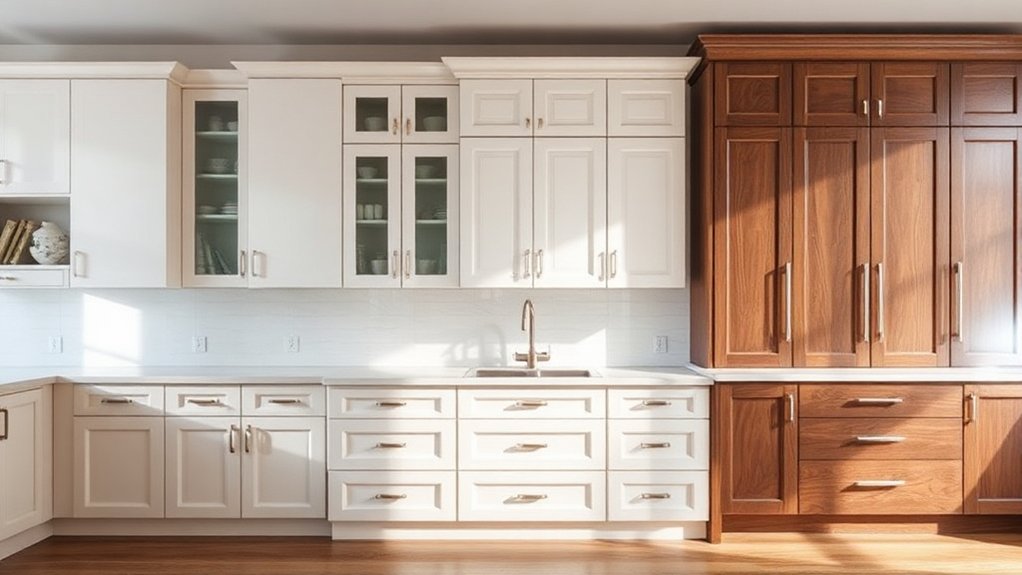
Stock cabinets are usually the most budget-friendly option, with standard sizes and finishes that help keep costs down. Want more choice? Semi-custom cabinets offer greater flexibility in style, size, and storage, while custom cabinets let you tailor nearly every detail. Your choice affects both the final look and the cost.
Stock Cabinet Pricing
Stock cabinet pricing usually starts with three tiers: stock, semi-custom, and custom. You’ll usually see stock cabinets as the lowest-cost option, and their appeal often follows stock trends that favor fast availability and standard sizes.
Price psychology matters here, because a lower upfront number can make your project feel more affordable, even if you’ll need to work around fixed dimensions. You can expect stock cabinets to use simpler finishes, fewer style choices, and limited upgrades, which keeps manufacturing efficient and prices down.
If you’re comparing quotes, look at what’s included, since hardware, assembly, and delivery can change the total. For many kitchens, stock cabinets give you a practical starting point without stretching your budget.
Semi-Custom And Custom Options
Semi-custom cabinets bridge the gap between budget-friendly stock units and fully custom builds, giving you more flexibility in sizes, finishes, and storage features without the highest price tag. You can expect semi custom pricing to land above stock cabinets but below full custom options, often because you get better materials, more door styles, and design tweaks that fit your kitchen more closely.
If you need special dimensions, upgraded hardware, or pull-out organizers, this tier usually makes sense. Custom cabinets cost the most, but they let you choose every detail, from wood species to layout.
When you’re balancing cost and personalization, compare quotes carefully and ask how much of the project includes cabinetry, installation, and finish work so you can spot hidden expenses.
Kitchen Cabinet Cost by Material

When comparing kitchen cabinet costs by material, solid wood is often the most expensive option, but it offers classic appeal and durability. MDF and plywood typically cost less, though each has its own strengths when it comes to budget, stability, and finish quality. So, consider what matters most to you, and choose cabinets that suit both your style and your budget.
Solid Wood Cabinets
Solid wood cabinets bring natural warmth and durability to a kitchen, but they usually cost more than plywood, MDF, or particleboard options. You’ll often pay a premium for premium species, custom finishes, and detailed craftsmanship.
Solid wood works especially well for cabinet doors, where you want a rich grain and a sturdy feel that ages well. If you choose this material, expect stronger resale appeal and a timeless look that can uplift your space.
You should also budget for finish quality, since stains and paints can change the final price. While solid wood can cost more upfront, you’re investing in a classic style that can handle years of daily use and still look attractive.
MDF And Plywood
MDF and plywood are two of the most common cabinet materials, and each offers a different balance of cost, durability, and appearance. You’ll usually pay less for MDF, but you should weigh the mdf drawbacks, like weaker moisture resistance and easier edge damage. Plywood costs more, yet its layers add strength and better hold screws over time, boosting plywood durability in busy kitchens.
| Material | Typical Cost | Best For |
|---|---|---|
| MDF | Lower | Painted finishes |
| Plywood | Mid-range | Long-term use |
| Both | Varies | Budget planning |
If you want a smooth, budget-friendly look, MDF can work. If you expect heavy daily use or possible spills, plywood often gives you better value and fewer repairs.
How Cabinet Size Affects Price
Cabinet size plays a big role in what you’ll pay because larger cabinets use more materials, take more labor to build, and often need extra reinforcement. When you choose tall pantry units or wide base cabinets, your quote climbs fast.
Smaller boxes cost less, but they may require more pieces to cover the same wall space. That’s why you should compare measurements before you order and look at pricing trends in your room layout.
- More width means more wood, hardware, and support
- Taller cabinets often need stronger construction
- Deep cabinets can raise shipping and installation costs
- Custom sizes usually cost more than standard units
You can also use two word discussion ideas like “cabinet height” or “storage depth” to keep estimates clear. If you plan carefully, you’ll spot where size drives cost and where standard dimensions can save you money without changing the overall design.
How Finish and Style Affect Price
What you choose for finish and style can change cabinet price just as much as size. You’ll see a clear price impact when you compare simple painted boxes with specialty wood grains, glazing, or high-gloss coatings.
Basic finish options usually cost less because they need fewer materials and less labor. More detailed looks, like distressed or hand-rubbed finishes, add steps and raise the total.
| Style | Finish Options | Price Impact |
|---|---|---|
| Shaker | Painted | Low to moderate |
| Traditional | Stained wood | Moderate |
| Custom | Glazed or specialty | High |
You’ll also pay more for ornate door styles, inset fronts, and custom trim details because they require tighter craftsmanship.
If you want to keep costs down, choose a clean style and a durable standard finish. If you want a designer look, expect your cabinet budget to climb quickly.
Kitchen Cabinet Installation Costs
Installation costs can add a significant amount to your kitchen cabinet budget, especially if the layout is complex or the cabinets need custom fitting. You’ll usually pay more when you choose skilled installers, detailed trim work, or a full removal and replacement.
Your total also depends on:
- cabinet materials and their weight
- installation timing during busy seasons
- wall repairs or leveling needs
- how many cabinets you’re putting in
If your kitchen has uneven walls, plumbing cutouts, or tight corners, installers may need extra time, and that raises labor costs. You can often save money by scheduling work during slower periods and keeping your design straightforward.
Ask for a clear estimate that separates labor, delivery, and any assembly work so you can compare quotes easily. When you understand installation pricing, you’ll set a more accurate budget and avoid surprises while planning your new kitchen.
Hidden Costs That Add to Cabinet Price
Even a well-planned cabinet budget can grow once you factor in the extras that don’t always show up in the base price. You may need to pay for delivery, old cabinet removal, hardware upgrades, trim, filler panels, crown molding, and custom color matching.
If your walls or floors aren’t level, installers might charge more to make cabinets fit cleanly. You can also face added costs for plumbing or electrical adjustments when new cabinet layouts change access points.
Soft-close hinges, pull-out organizers, and specialty inserts often improve function but raise the total. For a budget friendly plan, ask for an itemized quote before you commit. That helps you spot add-ons and compare options clearly.
If you’re focused on small space optimization, remember that deeper drawers and compact organizers can cost more, but they often make the kitchen work harder for you.
Kitchen Cabinet Costs by Kitchen Size
Cabinet costs often depend on how much of your kitchen you need to cover. A small kitchen usually costs less, while a medium kitchen tends to fall somewhere in the middle. If you have a large kitchen, you can expect to pay more because you’ll need additional cabinets and materials.
Small Kitchen Costs
For a small kitchen, cabinet costs usually stay lower than in larger spaces because you need fewer linear feet of cabinetry and less labor to install them. In a small kitchen, your budget planning gets easier, but finishes and features still change the total.
Expect prices to vary based on material, door style, and whether you choose stock or custom cabinets.
- Stock cabinets often save you the most.
- Semi-custom options add flexibility without huge costs.
- Custom cabinets raise the price, but fit tight layouts well.
- Simple hardware and standard sizes help you control spending.
If you’re updating a compact space, focus on storage that works hard and keeps your project affordable.
Medium Kitchen Costs
Medium kitchens usually cost more than small ones because you’re covering more cabinet space, using more materials, and often paying for a longer installation. For a mid-sized layout, you might spend from about $8,000 to $15,000 for stock or semi-custom cabinets, while fully custom choices can push higher.
Your final price depends on door style, finish, hardware, and whether you choose upgrades like soft-close hinges or drawer organizers. If you’re comparing quotes, ask what’s included so you can judge value clearly.
Good cabinet maintenance also matters, since quality care can extend the life of your investment. You can also use color trends to refresh the look without changing the entire layout, keeping your kitchen current and practical.
Large Kitchen Costs
Large kitchens naturally cost the most because they require more cabinet boxes, doors, shelves, and labor to cover the extra square footage. You’ll often pay a premium for custom layouts, specialty storage, and extra finish work, too.
Expect your total to climb as you add islands, pantry runs, and tall cabinets. To stay on track, use smart budgeting strategies and compare quotes carefully.
- Measure every wall section before you shop
- Ask for itemized labor and install fees
- Compare stock, semi-custom, and custom options
- Review material comparisons for durability and price
If you want to save, simplify the design and keep hardware selections consistent. Even small changes can trim costs without hurting function.
Ways to Save on Kitchen Cabinets
Looking for ways to cut kitchen cabinet costs without sacrificing style? You can save by choosing stock or semi-custom cabinets instead of fully custom ones. Mix painted uppers with a more affordable lower finish, or skip extras like glass fronts and decorative molding.
Save on cabinets by choosing stock or semi-custom styles, and skip costly extras without losing appeal.
If your layout already works, keep it unchanged to avoid costly plumbing or electrical moves. You can also refresh cabinets with new doors, hardware, and paint when the boxes are solid. Compare quotes from several installers, and ask about package deals or leftover inventory.
If you’re planning around home financing, set a realistic cabinet budget so you don’t stretch your loan too far. Smart savings can protect your resale value too, since buyers still notice clean lines, durable materials, and a cohesive look.
Focus on value-driven choices that improve appearance and function without overspending, and you’ll keep more money for other parts of your remodel.
How to Get the Best Cabinet Value
To get the best cabinet value, focus on the features that matter most to you and skip the upgrades that won’t improve daily use. You’ll usually get more from sturdy boxes, quality hinges, and smooth drawer glides than from fancy finishes.
Compare several bids, but also compare what’s included, because a lower price can hide installation gaps or weak materials. Ask for samples, inspect joinery, and check warranty terms before you decide.
- Choose durable materials over flashy extras
- Prioritize storage layouts you’ll use every day
- Ask for itemized quotes to spot markups
- Match your budget to long-term performance
When you weigh two word ideas like layout efficiency and finish durability, you make smarter tradeoffs. Ignore unrelated topics that don’t affect function or lifespan, and you’ll stretch your budget further.
Good value means cabinets that look great, work hard, and stay reliable for years without costing more than they should.
Frequently Asked Questions
How Long Do New Kitchen Cabinets Typically Last?
You can expect new kitchen cabinets to last 20 to 50 years, depending on cabinet durability, care, and humidity. If you clean them regularly and avoid excess moisture, you’ll extend their life.
Check hardware reuse options during repairs, and review warranty coverage for defects. If issues appear early, you may qualify for refunds. Installers should protect flooring over cabinets so the setup doesn’t shorten how long they perform well.
Can I Reuse Existing Cabinet Hardware With New Cabinets?
Yes, you can reuse existing cabinet hardware with new cabinets, but only if cabinet compatibility lines up. Like puzzle pieces, your pulls and knobs need the right hole spacing, size, and finish to fit cleanly.
You should measure carefully before you order anything. If the new doors match, reusing hardware can save money and keep your kitchen’s look familiar. If they don’t, you’ll need new hardware for a seamless result.
Do Cabinet Warranties Cover Water Damage?
Usually, you can’t count on cabinet warranties to cover water damage. You’ll often find that cabinet warranties only protect against manufacturing defects, not leaks, flooding, or humidity issues.
If water damage happens, you’ll need to check the warranty terms and prove the problem wasn’t caused by misuse or poor maintenance. You should also act fast, because stopping the moisture early can help you avoid bigger repairs and preserve your cabinets.
Are Kitchen Cabinets Refundable After Ordering?
Yes, you can sometimes get a refund after ordering kitchen cabinets, but it depends on the seller’s refund policy. Imagine you order custom oak cabinets, then change your mind a week later. If you’re still inside the return window, you may qualify for a refund; if not, you might only get store credit. Check the warranty scope too, since damage from water damage usually won’t make them refundable.
Can I Install New Cabinets Over Old Flooring?
Yes, you can install new cabinets over old flooring if the surface is level, solid, and dry. Check cabinet clearances, appliance heights, and flooring compatibility first.
If the old floor is damaged, uneven, or too thick, remove it or adjust the cabinet bases. Leaving it in place can save time, but accurate measurements are essential to ensure your cabinets fit properly and remain stable.
Conclusion
Choosing new kitchen cabinets isn’t just about what you can afford today; it’s about what your kitchen gives back tomorrow. You’ll pay more for custom options, premium materials, and special finishes, but you also get durability, function, and style that can lift your whole home.
So when you compare prices, ask not just “How much do new kitchen cabinets cost?” but “What value will they bring to your everyday life?” That’s where smart spending really begins.