3 Price Ranges for How Much a Kitchen Island Costs
Choosing a kitchen island can be tricky: you want extra storage and workspace, but costs can add up fast. You’re not alone—many people struggle to find an option that fits both their…

Choosing a kitchen island can be tricky: you want extra storage and workspace, but costs can add up fast. You’re not alone—many people struggle to find an option that fits both their needs and their budget. These kitchen island cost ranges can help you get started.
You can usually split kitchen island costs into three ranges. Budget islands run about $100 to $1,000 and focus on simple, sturdy storage with basic materials like laminate, particleboard, or butcher block. Mid-range islands typically cost $1,000 to $5,000 and add better craftsmanship, stone tops, or extras like shelving and outlets. High-end islands start around $5,000 and can exceed $15,000, especially with custom cabinetry, premium finishes, and plumbing or electrical upgrades, as you’ll see below.
Key Takeaways
- Budget kitchen islands typically cost $100 to $1,000, with simple flat-pack or repurposed options offering the best savings.
- Mid-range islands usually run $1,000 to $5,000, adding better materials, craftsmanship, and optional features like storage or a prep sink.
- High-end kitchen islands start around $5,000 and can exceed $15,000, especially with custom cabinetry, stone, and premium finishes.
- Costs rise with size, materials, and extra work, especially plumbing, electrical wiring, and structural changes.
- To stay affordable, choose sturdy basic designs, compare retailers, and skip nonessential features until later.
What a Budget Kitchen Island Costs?

A budget kitchen island usually costs between $100 and $1,000, depending on size, materials, and whether you buy it ready-made or assemble it yourself. You can keep costs low by choosing simple designs, flat-pack units, or repurposed furniture.
Budget kitchen islands typically cost $100 to $1,000, with flat-pack and simple designs helping keep expenses down.
If you’re working within budget constraints, focus on sturdy construction and basic storage instead of extras like built-in seating or premium hardware. Laminate, particleboard, and butcher block often offer the best value, especially when current material trends favor clean finishes and practical surfaces.
You might also save by skipping plumbing or electrical work, which can quickly raise the price. Measure your kitchen carefully so you don’t pay for more width or depth than you need.
Compare retailers, warehouse stores, and online marketplaces to spot discounts. With a clear plan, you can get a functional island that improves prep space, adds storage, and stays affordable without sacrificing everyday usefulness.
What Mid-Range Kitchen Islands Cost?
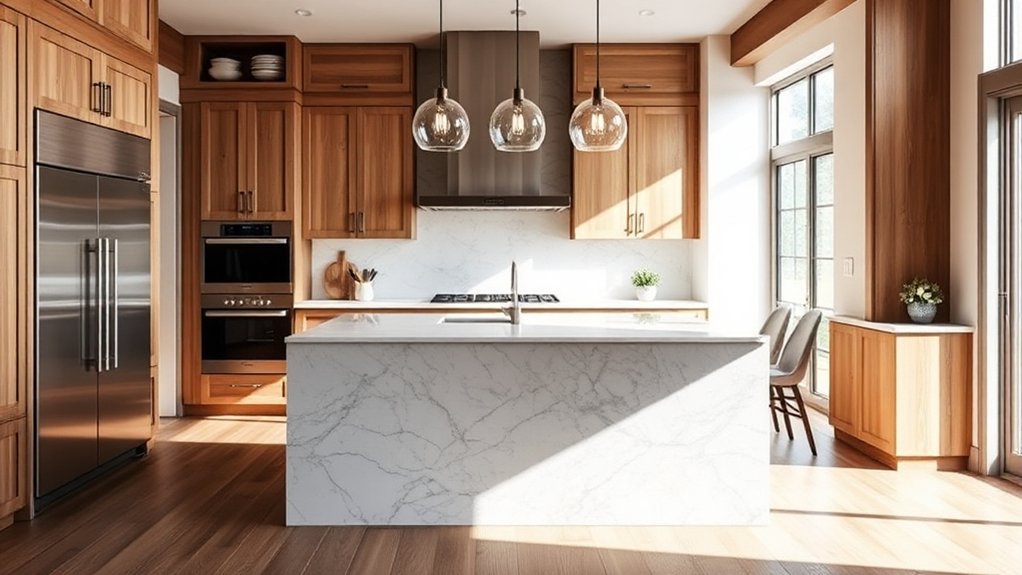
Mid-range kitchen islands typically cost between $1,000 and $5,000, with the price rising based on size, layout, materials, and added features like seating, drawers, or built-in storage. At this mid range price, you usually get better craftsmanship and more design flexibility than you’d find with a basic model.
You can choose between portable carts, freestanding units, or semi-custom pieces that fit your kitchen better. Solid wood, butcher block, stone countertops, and upgraded finishes often push the cost higher, but they also improve durability and style.
If you want island features such as a prep sink, electrical outlets, or extra shelving, expect the total to climb. Installation may add more to your budget, especially if plumbing or wiring is involved.
For many homeowners, this range offers the best balance of value, function, and appearance without moving into luxury pricing.
What a High-End Kitchen Island Costs?

High-end kitchen islands usually start around $5,000 and can climb well beyond $15,000, depending on the size, materials, and level of customization. You’ll pay more when you choose high end materials like waterfall quartz, solid hardwood, marble, or integrated appliances. Custom cabinetry, built-in storage, prep sinks, and specialty lighting also push the price up fast.
If you want a dramatic centerpiece, you may need structural changes, electrical work, or plumbing, and that adds to installation complexity.
You should expect labor costs to rise when installers must level an oversized island or coordinate multiple trades. For luxury projects, the final bill can reach $25,000 or more if you add premium finishes and features.
If your kitchen needs a statement piece that boosts function and style, this tier delivers, but it demands a larger budget and careful planning.
Frequently Asked Questions
What Kitchen Island Shapes Are Most Space-Efficient?
You’ll usually get the best fit from rectangular, square, and narrow galley islands. These space saving shapes work well in compact layouts because you can tuck them into traffic paths without crowding the room. If you’ve got an awkward corner, a rounded or small L-shaped island can help too. Choose clean edges, slim widths, and built-in storage so you keep prep space while preserving easy movement around your kitchen.
How Much Does Island Installation Typically Cost?
You’ll usually pay $1,000 to $5,000 for island installation, depending on size, plumbing, electrical, and labor. You’ll spend more for custom work, less for simple setups; more for premium finishes, less for basic materials.
If you want island material durability and storage optimization, expect costs to rise because sturdy surfaces and built-in cabinets add value, complexity, and time. Get quotes, compare options, and plan your budget carefully.
Can a Kitchen Island Include Plumbing or Electrical?
Yes, you can add plumbing or electrical to a kitchen island if you plan it properly. You’ll need to run water lines, drains, outlets, or wiring before you finish the base. Plumbing works well for sinks or dishwashers, and electrical integration supports cooktops, lighting, or charging stations. You should hire licensed pros, since codes, permits, and inspections can affect the work and your island’s final layout.
How Do I Measure the Right Island Size for My Kitchen?
You should size your island by measuring your kitchen’s clear walkway first. Think of space like a dance floor: you need room to move.
Use a measuring formula that leaves at least 36 inches around the island, or 42 inches in busy kitchens. Consider space planning considerations like appliance doors, traffic flow, and seating.
Then mark the footprint with painter’s tape so you can see whether it fits comfortably.
What Materials Last Longest for Kitchen Island Countertops?
You’ll get the longest-lasting kitchen island countertops from quartz and granite. Quartz resists stains, scratches, and daily wear with little maintenance.
Granite handles heat well and can last for decades if you seal it regularly. If you want a natural look, granite’s a solid pick.
If you’d rather skip sealing, quartz is easier to live with and still lasts a long time.
Conclusion
No matter which price range you choose, your kitchen island can become the heart of the room. Picture warm wood, smooth stone, and soft light gathering around a space that fits your budget and your life.
Whether you go simple, balanced, or luxurious, a kitchen island is more than extra counter space. It’s a place for meals, conversations, and everyday moments. Choose the island that feels right, and let your kitchen come alive around it.