10 Price Factors Affecting How Much to Paint Kitchen Cabinets
Painting kitchen cabinets can refresh your kitchen, but figuring out how much it will cost can be a challenge. You’re not alone—many homeowners struggle to estimate the price before they start. These…

Painting kitchen cabinets can refresh your kitchen, but figuring out how much it will cost can be a challenge. You’re not alone—many homeowners struggle to estimate the price before they start. These 10 price factors affecting how much to paint kitchen cabinets can help you understand what goes into the total.
You’ll pay more to paint kitchen cabinets when the job has more square footage, doors, drawers, and tricky corners. Damage, grease, peeling finishes, and needed repairs also raise the price. Primer, paint, and sheen choices matter too, since specialty products and glossy finishes take more prep and care. Skilled labor, hardware removal, masking, sanding, and reinstallation add to the total. DIY can save money, while pros charge more for speed and cleaner results. The details ahead explain each factor.
Key Takeaways
- Cabinet size and total surface area drive labor and material costs.
- More doors, drawers, and complex layouts increase prep and painting time.
- Cabinet condition, repairs, and difficult surfaces raise project expenses.
- Paint type, sheen, and specialty finishes change material and application costs.
- Skilled labor, scheduling, and included prep or reinstallation affect the final bid.
How Much Does It Cost to Paint Kitchen Cabinets?

So, how much does it cost to paint kitchen cabinets? You’ll usually pay for prep, primer, paint, labor, and cleanup, so the total can vary widely. If you tackle the job yourself, you can trim costs, but you’ll still need quality supplies and time.
Painting kitchen cabinets typically includes prep, primer, paint, labor, and cleanup, so costs can vary widely.
Hiring a pro often costs more because you’re paying for expertise, masking, sanding, spray work, and a smoother finish. Your cabinet condition matters too; damaged doors, grease buildup, or poor previous finishes raise the price.
Material durability also affects what you spend, since solid wood, MDF, and laminate need different primers and coatings. For efficiency tips, empty the cabinets, remove hardware, label doors, and clean thoroughly before work starts. Those steps help you save time and reduce mistakes.
In short, your cost depends on scope, prep, and finish quality, not just paint alone.
Average Cost to Paint Kitchen Cabinets
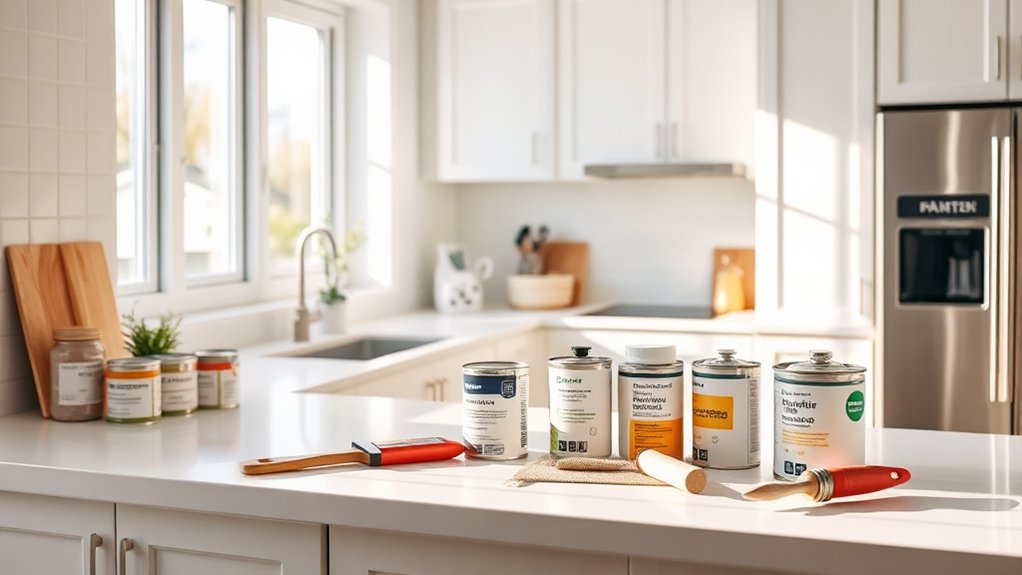
On average, painting kitchen cabinets costs about $3 to $10 per square foot, though your final price can land higher or lower depending on cabinet size, condition, and whether you hire a pro. That range gives you a quick benchmark, but your quote may shift with prep time, paint quality, and labor rates. If you want cost savings, compare what each contractor includes before you decide.
| Option | Typical Price | Notes |
|---|---|---|
| DIY | Lowest | You handle prep, tools, and cleanup |
| Local painter | Mid-range | Good balance of speed and skill |
| Cabinet specialist | Highest | Often includes detailed prep and finish |
A smart contractor comparison helps you see where your money goes. Ask for itemized bids, then weigh coverage, finish quality, and turnaround time. You’ll make a better choice when you focus on value, not just the lowest number.
How Cabinet Size Affects Painting Costs
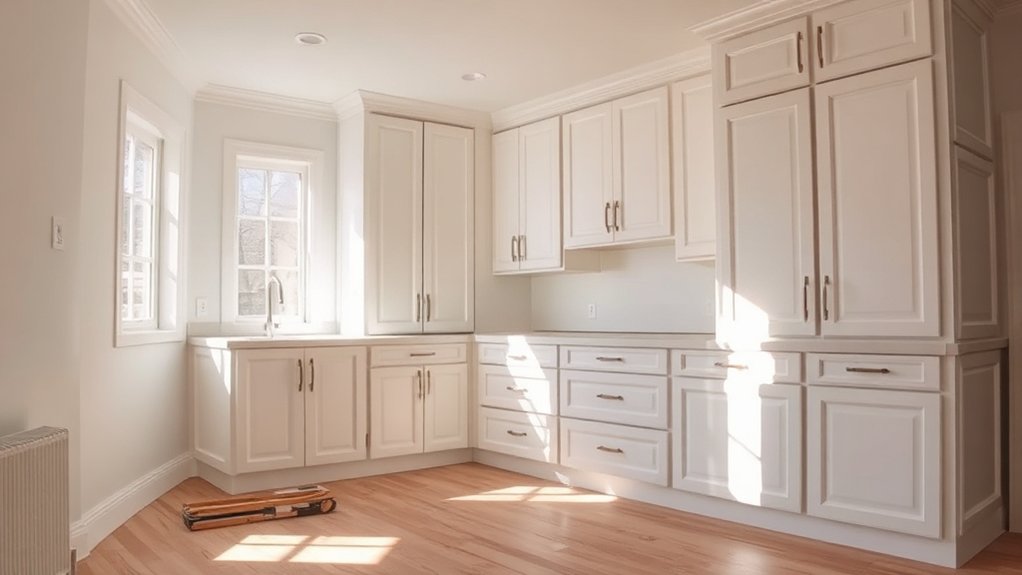
Larger cabinets usually cost more to paint because they have more surface area to prep, prime, and coat. Extra doors and drawers can raise the price, too, since each one takes additional time and detail work. So even if two kitchens look similar, the number and size of their cabinets can make a big difference in the final cost.
Cabinet Surface Area
How much cabinet space you need painted has a direct impact on labor and material costs. When your cabinet surface area is large, the painter must sand, prime, and coat more square footage, which raises both time and paint use.
You’ll usually pay more for tall pantry units, wide base cabinets, and extended wall runs because each extra inch adds work. Smaller kitchens can cost less simply because they have less cabinet surface to prepare and finish.
Flat, simple surfaces also help keep costs down, since they’re quicker to cover evenly. If your cabinets have lots of exposed panels or stretch across many feet, expect the estimate to climb.
Measuring the full surface area gives you a clearer idea of what you’ll really pay.
Door And Drawer Count
The number of cabinet doors and drawers you have can quickly change your painting cost. More pieces mean more prep, sanding, priming, and drying time, so your quote rises as your door count and drawer count increase.
Each door needs careful removal, labeling, masking, and spraying or brushing, while every drawer front adds another surface to clean and coat. If you have lots of small drawers, expect the labor to climb faster than you’d guess because tight edges and hardware take extra time.
A simple kitchen with fewer fronts usually costs less to paint than a larger layout with many compartments. When you compare estimates, ask how the contractor prices each door and drawer so you can see exactly where your money’s going.
How Cabinet Layout Changes the Price
Your cabinet layout can affect the price just as much as the number of cabinets. More boxes mean more prep and painting time, while corners, odd angles, and built-ins take extra care. Hard-to-reach areas can also raise the cost because they slow the work down.
Cabinet Count Impact
More cabinets almost always mean a higher painting price, because each extra door, drawer front, and frame adds prep, labor, and materials. You’ll usually see the biggest jump when your cabinet count grows, even if the cabinet size stays the same.
The layout impact matters too, since more separate boxes create more surfaces to sand, prime, and coat.
| Cabinet count | Price effect |
|---|---|
| Fewer cabinets | Lower cost |
| Moderate count | Mid-range cost |
| Many cabinets | Higher cost |
| Extra details | More labor |
You don’t pay only for paint; you also pay for the time it takes to remove hardware, mask edges, and keep each piece consistent. If your kitchen has lots of uppers, lowers, and pantry units, expect a larger total.
Layout Complexity
Layout Complexity
Layout plays a big role in cabinet painting costs because tricky designs take more time to prep and finish. If your kitchen has lots of corners, staggered uppers, angled cabinets, or mixed-height runs, your painter has to spend extra time measuring, masking, and planning each section.
That complexity can raise labor costs, especially when layout optimization is needed to keep the finish consistent across different cabinet zones. You’ll also pay more if your design calls for careful color coordination between islands, pantry towers, and perimeter cabinets, since those choices can require separate setup and more detailed application.
A simple galley layout usually costs less than a large, broken-up kitchen with many transitions. The more your cabinet layout varies, the more work your painter does, and the higher your total price becomes.
Hard-To-Reach Areas
Hard-to-reach cabinet areas can quickly push up painting costs because they slow down prep, sanding, priming, and spraying. When your kitchen has deep corner cabinets, tall uppers, or tight spaces near appliances, you’ll pay more for the extra time it takes to move around and protect surrounding surfaces.
Painters may need special tools, smaller spray tips, or more hand-brushing to cover spots with awkward access. If they can’t reach an area easily, they’ll spend longer cleaning edges, removing hardware, and checking for missed patches.
That extra labor adds up fast. Even simple cabinets can cost more when the layout makes every step harder. The more hard to reach spaces you have, the more your final price usually climbs.
How Cabinet Condition Affects Cost
The better shape your cabinets are in, the less prep work the project usually needs, which can keep labor costs down. If your doors and boxes are solid, painters can focus on cleaning, sanding, and masking instead of repairs.
But if you’ve got peeling finish, deep scratches, loose hinges, swollen wood, or water damage, you’ll pay more because those issues take time to fix before paint can stick properly.
Cabinet durability also matters: sturdier cabinets hold up better during prep, so crews can move faster and waste less material. Moisture resistance plays a role too, since cabinets that resist humidity usually need fewer repairs in kitchens with steam and spills.
The more damage your cabinets have, the more labor, filler, and touch-up work your project needs, and that raises the total price.
Paint Types That Change Cabinet Painting Costs
Once your cabinets are ready for paint, the product you choose can change the price just as much as the prep work. You’ll usually pay more for premium cabinet paint because it levels better, resists chips, and covers in fewer coats. That can cut labor time, but the gallon price is higher.
Standard latex paint costs less, yet you may need extra coats to hide old stains or dark wood, which raises the total. Oil-based products can also affect cost because they’re slower to apply and clean up, so crews may charge more for the added time.
If you want specific paint finishes, specialty formulas often cost more than basic options. Your choice can also follow current color trends, and some bold or custom shades need deeper tinting that adds expense. Matching the right paint to your cabinets helps you balance upfront material cost with long-term durability and appearance.
Finish Options for Painted Kitchen Cabinets
Your cabinet finish can change the total cost just as much as the paint itself, since some sheens need more prep, more product, or more careful application. You’ll usually choose among matte, satin, semi-gloss, and gloss finish options, and each one shifts both appearance and price.
Matte hides flaws well, but it can mark more easily. Satin gives you a softer look with decent wipeability, while semi-gloss reflects more light and usually improves color durability in busy kitchens. Gloss creates the most shine, but it can expose surface imperfections, so you may need extra surface prep before painting.
- Matte: low sheen, subtle look
- Satin: balanced sheen, popular choice
- Semi-gloss or gloss: higher shine, easier cleaning
If you want a polished cabinet style, expect the finish you pick to influence product choice and the final budget.
Labor Costs for Painting Kitchen Cabinets
Labor costs can vary quite a bit depending on the painter’s experience. A more skilled pro may charge more, but they can often deliver a cleaner finish in less time. The longer the job takes, the more you’ll typically pay—especially if your cabinets need extra prep, drying time, or detailed work. Together, these factors can have a big impact on your total cabinet painting cost.
Painter Skill Level
A painter’s skill level can noticeably shift what you’ll pay to paint kitchen cabinets, because experienced pros usually work faster, produce cleaner finishes, and handle prep and detail work more efficiently. When you choose higher painter skill, you often get better adhesion, smoother lines, and stronger surface durability, which can justify the added labor cost. Less experienced painters may charge less, but you could see more visible brush marks or uneven coverage.
- Better prep reduces flaws
- Cleaner spraying improves appearance
- Careful sanding boosts finish longevity
You should also expect seasoned painters to spot problems early and recommend the right products for your cabinets. That expertise helps protect your investment and can lower the chance of costly touch-ups later.
Project Time Requirements
Project time requirements play a big role in labor costs for painting kitchen cabinets, since longer jobs mean more hours on-site and higher total charges. You’ll usually pay more when your cabinets need extensive prep, repairs, sanding, priming, and multiple coats.
Tight spaces, intricate doors, and hardware removal can slow the crew down and raise labor pricing. Good cost estimation depends on how efficiently the painter can move through each step without sacrificing quality.
Clear time scheduling also matters, because rushed deadlines may require extra workers or overtime. If you want to control labor costs, ask for a realistic timeline before work starts and confirm what tasks are included. That way, you can compare bids accurately and avoid surprise charges later.
Prep Work, Hardware Removal, and Reinstallation Costs
Before painting begins, prep work can add a noticeable chunk to your cabinet cost because it takes time to clean, sand, degrease, mask nearby surfaces, and protect the kitchen from dust and drips. You’ll also pay more when hardware removal is involved, since each hinge, knob, pull, and screw has to come off, stay organized, and go back on without damage. The more doors and drawers you have, the more labor this step adds.
- Label every piece so reassembly stays accurate.
- Store screws and hinges safely to avoid replacements.
- Account for minor repairs if stripped holes or worn hardware slow the job.
Reinstallation isn’t just putting parts back; it also includes aligning doors, adjusting hinges, and checking that everything opens smoothly. When your cabinets need extra prep or careful hardware handling, the total price rises because the work is slower and more detailed, even before paint ever touches the surface.
DIY vs. Professional Cabinet Painting Costs
Once you’ve accounted for prep, hardware removal, and reinstallation, the next big cost decision is whether you’ll paint the cabinets yourself or hire a professional. DIY usually looks cheaper at first, but your real cost comparison should include primer, paint, brushes, sprayers, sandpaper, tape, drop cloths, and the tools needed for a smooth finish.
If you already own those items, you can save hundreds. If you don’t, your savings shrink fast. You’ll also spend more time, and mistakes can mean sanding and repainting.
A professional painter costs more upfront, but you’re paying for speed, experience, and a finish that usually lasts longer. Pros bring specialized equipment, handle tricky surfaces, and reduce the chance of drips or uneven coverage.
If your cabinets are high-end, heavily used, or hard to access, hiring out often makes better financial sense than taking on the risk yourself.
Frequently Asked Questions
Does Cabinet Color Affect Painting Cost?
Yes, cabinet color can affect painting cost because you may need extra coats to cover dark or bold shades, and some colors demand more prep. You’ll also pay more if you want a specific finish sheen or better color durability, since those products can cost more and take longer to apply. Lighter colors usually cover faster, while deep tones often need priming and careful touch-ups for a smoother result.
Are Island Cabinets Priced Separately?
Yes, you’ll usually find island cabinets priced separately, and that can feel like a whole extra kitchen sneaking into the quote. You often pay extra because islands need more time, detail, and sometimes different prep than the rest. If your island has separate cabinets, expect them to be listed as an add-on or a distinct line item, not bundled automatically with the main cabinet painting job.
Can Painted Cabinets Be Refinished Later?
Yes, you can refinish painted cabinets later, but you’ll need to prep them well and remove loose coating first. Your repainting longevity depends on the existing finish, how hard you use the cabinets, and the new paint system you choose. Strong finish durability helps future refinishing go more smoothly, while poor adhesion can make sanding and priming harder. If you maintain them well, you can refresh the look again down the road.
Do Open Shelves Change the Total Price?
Absolutely, open shelves can make the price impact a bit larger. You’ll usually pay less for painting because there are fewer cabinet doors and boxes to prep, but shelves still need sanding, masking, and careful finishing. If your kitchen has lots of exposed shelving, you may save some labor, yet the extra detail work can balance that out. Ask for a quote that separates open shelves from closed cabinets.
Is Cabinet Painting Cheaper Than Replacement?
Yes, cabinet painting is usually cheaper than replacement. You save on replacement costs because you keep the existing boxes, doors, and layout. You’ll also benefit from better labor efficiency since painters can refresh surfaces faster than a full tear-out and install.
Painting works well if your cabinets are structurally sound and you want a new look without major disruption. Replacement only makes sense when damage, poor layout, or style limits demand a full upgrade.
Conclusion
So, when you’re weighing cabinet painting costs, you’re not just buying color. You’re investing in the time, care, and finish that can transform your kitchen. Picture dull, worn doors becoming smooth and bright, with every hinge reset and every corner polished.
The final price can shift with each choice you make, but the result should feel worth it. Plan carefully, and your freshly painted kitchen cabinets can quietly steal the spotlight every time you walk in.