3 Key Factors That Determine How Much to Remodel a Kitchen
Planning a kitchen remodel can feel overwhelming when you’re trying to balance your wish list with your budget. You’re not alone—many homeowners struggle to estimate costs before choosing materials or making layout…

Planning a kitchen remodel can feel overwhelming when you’re trying to balance your wish list with your budget. You’re not alone—many homeowners struggle to estimate costs before choosing materials or making layout changes.
The three biggest factors that shape your kitchen remodel cost are size, materials, and labor. A larger kitchen needs more demolition, flooring, cabinets, and labor hours, while a compact space is usually simpler and cheaper to update. Your cabinet, countertop, and finish choices can swing the budget fast, especially if you want custom pieces or premium surfaces. Labor, layout changes, and permits can add even more, and the details ahead break each part down.
Key Takeaways
- Kitchen size matters because larger spaces need more materials, labor, and time to remodel.
- Layout changes increase costs by adding demolition, rerouting, inspections, and possible permit requirements.
- Cabinets, countertops, and finishes are major budget drivers, with custom choices costing more than stock options.
- Appliance needs affect price, since larger kitchens may need bigger or additional appliances.
- Labor and project delays can raise costs, so detailed bids and clear permit handling help control spending.
How Kitchen Size Affects Remodel Cost

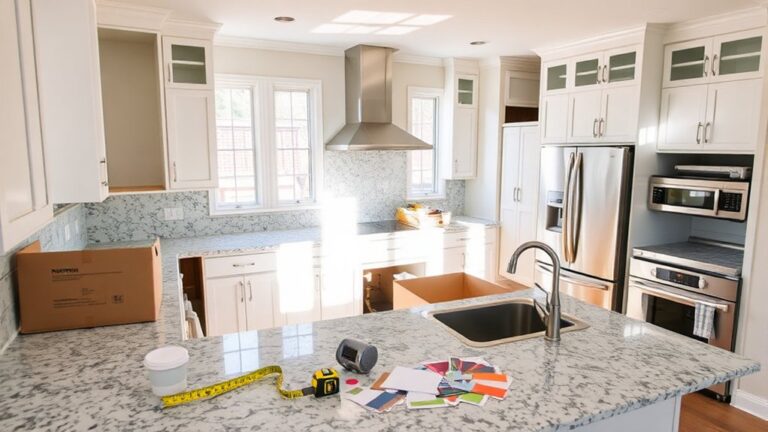
Kitchen size plays a big role in what you’ll pay because a larger space usually needs more materials, labor, and time. When you remodel a compact kitchen, you can often keep demolition, installation, and permitting simpler, which helps control costs.
A bigger layout usually adds more square footage to finish, more surfaces to update, and more steps for your crew. You’ll also face tradeoffs: if you want to stretch your budget, you may need to simplify layout changes or choose modest upgrades in some areas.
Appliance selection can shift the total, too, because larger kitchens may invite bigger or additional appliances, while smaller spaces often need compact models that cost less. You should measure your room carefully and compare quotes based on the exact size of the work.
That way, you’ll see how every extra foot affects your budget and avoid surprises later.
Cabinets, Countertops, and Finishes

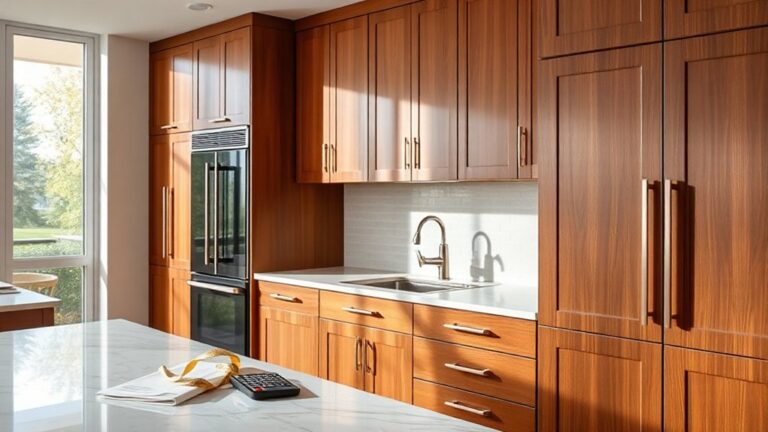
Next, cabinets, countertops, and finishes can quickly shape your remodel budget because they account for a large share of both materials and labor. If you choose stock cabinets, you’ll usually spend less than you would on custom options, but the look may feel more limited.
Your cabinet finishes also matter, since paint, stain, and specialty coatings can change both price and style. Countertop materials can swing your total even more: laminate keeps costs down, while quartz, granite, or solid surface options raise them.
Hardware, trim, and backsplash details may seem small, yet they add up fast.
- Swap upper cabinets for open shelving to save money.
- Pick durable countertop materials that fit your cooking habits.
- Compare cabinet finishes before you commit.
- Choose simple pulls and knobs for a cleaner bill.
- Use finishes that balance style, maintenance, and cost.
Labor, Layout Changes, and Permits

Labor, layout changes, and permits can shift your remodel cost just as much as materials, especially if you’re moving walls, plumbing, or electrical lines. You’ll usually pay more when your design needs skilled trades, structural work, or custom coordination between contractors.
Labor, layout changes, and permits can raise remodel costs as much as materials.
Labor considerations matter because experienced plumbers, electricians, and carpenters charge for expertise, scheduling, and problem solving. If you keep the existing layout, you can often save on demo, rerouting, and inspections.
Once you change the footprint, your project may trigger permit requirements from your local building department. That means you’ll need drawings, reviews, fees, and possibly multiple inspections before work can continue.
Delays can add cost, too, if crews sit idle or revisions are needed. To control spending, get detailed bids, confirm what’s included, and ask whether permit handling is part of the quote. A clear plan helps you avoid surprise expenses and keeps your remodel moving smoothly.
Frequently Asked Questions
How Long Does a Kitchen Remodel Usually Take?
A kitchen remodel usually takes 6 to 12 weeks, though your timeline can stretch longer if you’re changing layouts or waiting on custom items. You’ll want to factor in timeframe considerations, project milestones, budget overlap, and material lead times. You can speed things up by choosing in-stock finishes and keeping decisions firm. If you plan well and stay flexible, you’ll avoid surprises and keep your remodel moving smoothly.
What Financing Options Are Available for Kitchen Renovations?
You’ve got choices: cash now or payments over time. For kitchen renovations, you can use savings, a home equity loan, a HELOC, a personal loan, or a contractor’s financing plan. Credit cards can work for smaller updates, though rates often bite harder.
Compare fixed and variable rates, fees, and terms so you don’t trade a beautiful kitchen for a budget headache. Choose the financing options that fit your timeline and comfort.
Can I Live in My Home During the Remodel?
Yes, you can usually stay in your home during the remodel, but you’ll need to plan around noise levels, dust, and limited kitchen access. You’ll want to set up a temporary cooking area, protect nearby rooms, and keep kids and pets safe. If the work is extensive, you may prefer to leave for a few days. Check travel safety if you’ll be away, then coordinate with your contractor.
How Do I Choose a Contractor for My Kitchen Project?
You should start by checking references and licenses, then compare at least three bids. For example, if one contractor promises a sleek kitchen in eight weeks, you can verify whether they’ve handled similar projects.
Look for strong contractor qualifications, clear communication, and detailed schedules. Don’t just pick the lowest price; use bid comparison to spot missing labor, materials, or warranties. You’ll choose better when you trust both skill and transparency.
What Should I Budget for Unexpected Remodel Expenses?
You should budget an extra 10% to 20% for unexpected costs when you remodel. Hidden plumbing, electrical issues, permit delays, and material price jumps can pop up fast.
Good contingency planning helps you stay on track and avoid stress when surprises hit. If your project is older or more complex, lean toward the higher end. Keep that reserve separate, so you don’t spend it early and derail your budget.
Conclusion
Your kitchen remodel is like a compass, pointing your budget in different directions. A bigger space can pull costs higher, while cabinets, countertops, and finishes shape how polished the final room feels.
If you change the layout or need permits, the path gets longer and pricier. By weighing these three factors early, you can steer your project with confidence and create a kitchen that fits your life, style, and wallet. Understanding these key factors can help you determine how much to remodel a kitchen.