How to Choose a Kitchen Sink With 3 Essential Tips
Choosing a kitchen sink can feel surprisingly complicated: you need one that fits your space, holds up to daily use, and looks right in your kitchen. You’re not alone—many people struggle to…
Choosing a kitchen sink can feel surprisingly complicated: you need one that fits your space, holds up to daily use, and looks right in your kitchen. You’re not alone—many people struggle to balance all three. These tips will help you choose a kitchen sink with confidence.
Choose a kitchen sink by focusing on three essentials: fit, material, and style. First, measure your cabinet base, counter space, and faucet clearance so the sink won’t crowd your workflow. Next, pick a material that matches your routine, like stainless steel for easy upkeep or composite granite for durability. Finally, choose a mounting style that suits your countertop and budget, whether undermount, top-mount, or farmhouse. Keep going, and you’ll see how each option affects daily use.
Key Takeaways
- Measure cabinet, counter, faucet, and clearance space before shopping to ensure the sink fits without crowding.
- Choose bowl size and depth based on cooking habits; frequent cooks often prefer a large single bowl.
- Pick a mounting style that suits your countertop and workflow, such as undermount, top-mount, or farmhouse.
- Balance material durability and maintenance; stainless steel is easy to care for, while cast iron and composite offer different tradeoffs.
- Consider installation time, budget, and nearby appliances to ensure the sink works well in your kitchen layout.
What Size Kitchen Sink Fits Your Space?
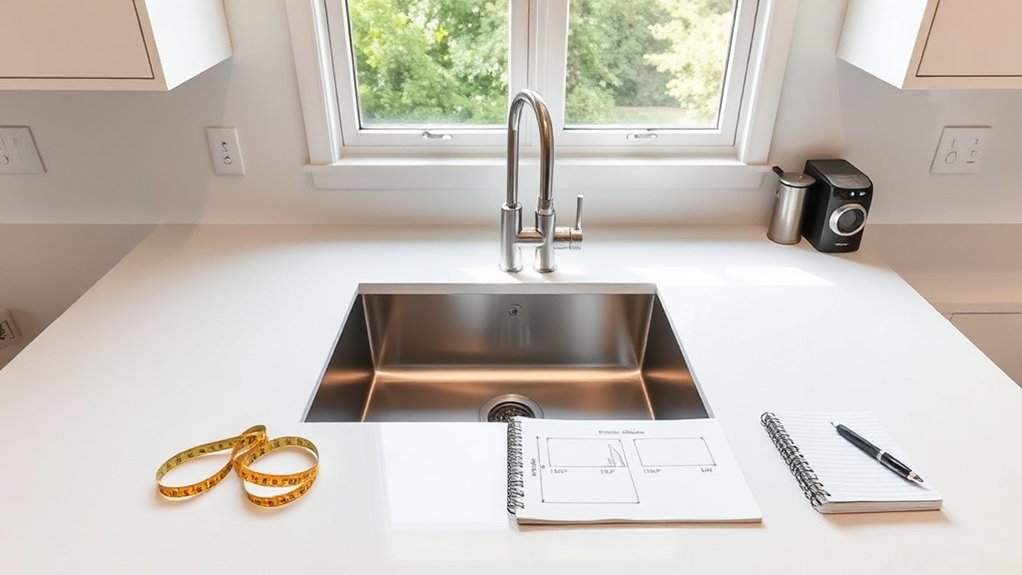
Before you pick a sink, measure your cabinet base and counter space so the sink fits without crowding the area. Start with what size considerations matter most: bowl width, depth, and how much prep room you’ll lose on each side.
Use space measurement tips like checking the cabinet opening, faucet clearance, and nearby appliances before you shop. If you cook often, a larger single bowl can help; if you wash dishes by hand, a double bowl may suit you better.
Compare sink style options, because farmhouse, undermount, and top-mount models each need different clearances. Weigh mounting type pros too: undermounts make wiping counters easier, while drop-ins usually install faster and work with more counters.
Keep materials durability in mind only as it affects thickness and support, since the sink must fit securely and stay stable in your chosen space.
Which Kitchen Sink Materials Are Most Durable?
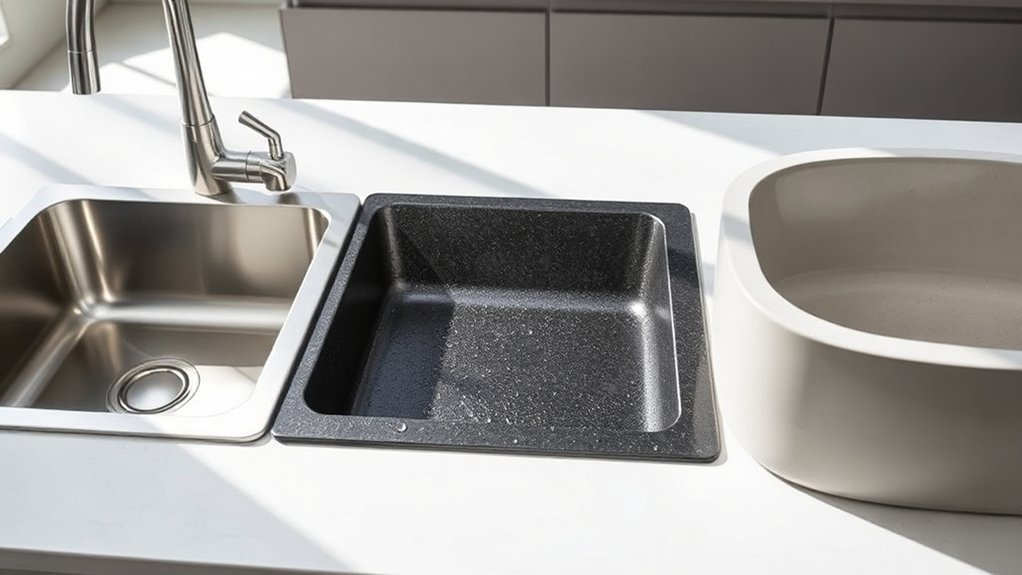
When you’re choosing a sink material, focus on how well it stands up to daily wear, heat, and heavy use. Stainless steel is a top choice because it resists rust, cleans easily, and handles impact well. Cast iron with an enamel coating feels solid and lasts for years, but chips can expose the base. Composite granite offers excellent scratch resistance and a sturdy feel, though it can stain if you skip quick cleanup.
- Stainless steel: practical, low-maintenance, and budget-friendly
- Cast iron: very durable, but heavier and more vulnerable to chips
- Composite granite: strong, stylish, and resistant to scratches
For Durability comparisons, think about how you cook, clean, and use your sink each day. Also review Material finish options, since brushed, matte, and glossy surfaces affect visible wear and upkeep. Pick the material that matches your routine, and you’ll get a sink that performs well for years.
Which Sink Style and Mounting Type Work Best?

Sink style and mounting type shape both the look and the function of your kitchen, so pick them based on how you use the space. If you cook often, a deep single-bowl sink gives you room for pots and pans. If you multitask, double-bowl sink styles let you wash on one side and rinse or dry on the other. Farmhouse sink styles add charm and extra depth, while compact bar sinks suit small kitchens or prep areas.
For mounting types, undermount sinks create a clean edge and make countertop cleanup easier. Top-mount sinks install faster and usually cost less, so they work well for remodels on a budget. Flush-mount options blend smoothly with the counter for a sleek, custom look. Choose the style that matches your workflow, cabinet space, and countertop material, then balance appearance with easy maintenance and installation.
Frequently Asked Questions
How Do I Clean and Maintain a Kitchen Sink Properly?
You clean and maintain your kitchen sink by rinsing it daily, scrubbing with mild soap, and drying it to prevent water spots. Use simple cleaning hacks like baking soda and vinegar for stains, then rinse well. Avoid harsh abrasives that can scratch the surface.
Build strong maintenance habits by clearing the drain, wiping spills quickly, and sanitizing the basin weekly. That keeps your sink fresh, shiny, and working properly.
What Faucet Features Pair Best With a New Kitchen Sink?
You’ll want a faucet that matches your sink like a key fits a lock. Choose a high-arc pull-down model for easier rinsing, and make sure faucet sizing suits the basin and mounting holes.
Prioritize finish durability, too, so it resists spots, scratches, and corrosion. Add a swivel spout and spray modes for flexibility.
If you cook often, touchless controls can boost hygiene and make cleanup faster every day.
How Much Should I Budget for a Quality Kitchen Sink?
You should budget about $150 to $600 for a quality kitchen sink, depending on size, brand, and material options. You can find solid stainless steel sinks near the lower end, while composite, fireclay, and cast iron models usually cost more.
If you want premium features or a custom fit, expect to spend $700 or more. Don’t forget to budget for installation, which can add another $100 to $400.
Do I Need a Sink With Soundproofing Pads?
Yes, you’ll likely appreciate soundproofing pads if you want a quieter kitchen. A clattering pan and a calm counter can’t coexist easily, but these pads soften the noise fast. You’ll hear the soundproofing benefits every time water hits the bowl.
Consider installation considerations too, since thicker pads can affect fit and mounting. If you cook often or have an open layout, they’re worth it; if not, you can skip them.
Which Sink Accessories Improve Everyday Kitchen Use?
Sink accessories like a roll-up drying rack, bottom grid, colander, and basin mat can boost daily usability fast. You’ll wash, dry, and prep more easily, while a cutting board insert saves counter space.
Choose accessories that match your sink size and improve material durability by reducing scratches. If you want a quieter setup, add pads or a grid for noise reduction and less vibration.
Conclusion
Choosing the right kitchen sink comes down to fit, durability, and style. Measure your space carefully, choose a material that can handle daily use, and select a mounting type that suits your kitchen’s layout.
Remember, “measure twice, cut once” applies here, too. A little planning now can save headaches later and help you choose a kitchen sink that looks great and performs even better.