7 Steps to Clean Kitchen Sink Drain Smell Fast
A smelly kitchen sink drain can make the whole kitchen feel unpleasant, even when everything else is clean. You’re not alone—many people struggle with lingering drain odors and want a quick, simple…

A smelly kitchen sink drain can make the whole kitchen feel unpleasant, even when everything else is clean. You’re not alone—many people struggle with lingering drain odors and want a quick, simple way to freshen things up.
Start by finding where the odor is strongest around the sink, drain, stopper, or cabinet. Run the hottest safe water down the drain for 30 to 60 seconds.
Then pour in 1/2 cup baking soda and follow with 1 cup white vinegar. Let it fizz, wait 10 to 15 minutes, and flush again with hot water.
Scrub the stopper and disposal parts, then check the P-trap for grime or standing water. Keep going to see the rest.
Key Takeaways
- Check the sink, drain, stopper, and disposal area to find where the odor is strongest.
- Flush the drain with the hottest safe water for 30–60 seconds to wash away loose residue.
- Pour baking soda into the drain, let it sit, then wipe the sink opening clean.
- Add white vinegar, wait 10–15 minutes, then flush again with hot water to dissolve grease.
- Remove and scrub the stopper, splash guard, and P-trap if the smell persists.
Find the Source of the Smell
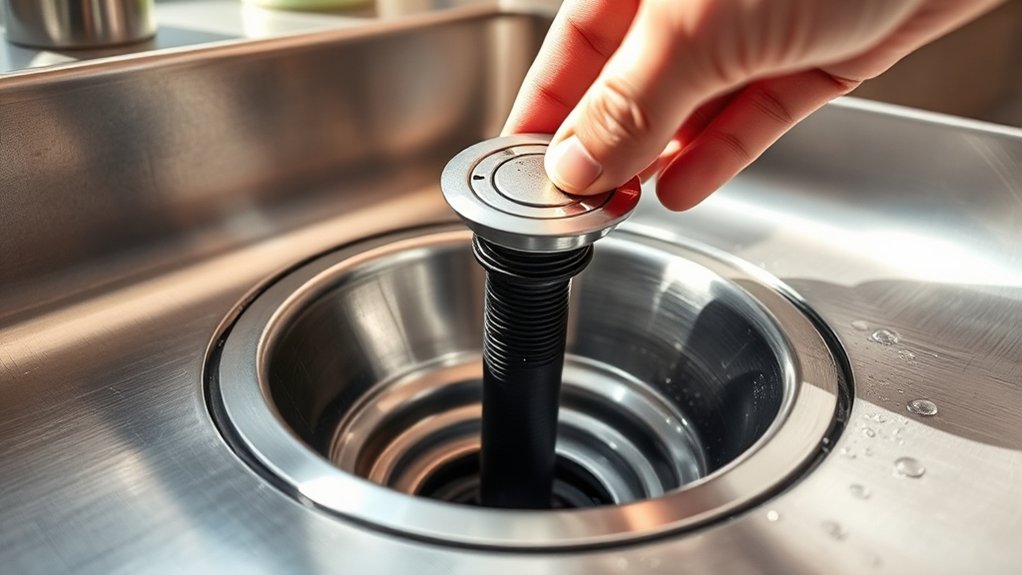
Before you clean anything, you need to pinpoint where the odor is coming from. You should inspect the sink area, the drain opening, and the garbage disposal, if you have one, so you can rule out nearby spills or splashes. Sniff around the rim, underside, and cabinet below, because food residue often hides there and keeps releasing a foul smell.
If the odor gets stronger near the drain, focus your attention there instead of on the countertop. You can also run your fingers along the stopper and strainer to check for trapped scraps. When you’re finding odors, pay attention to whether the smell appears after washing dishes or only when the sink sits unused. That clue helps you narrow the problem fast.
If you use disposal alternatives, like a compost bin or trash pail, make sure they aren’t adding to the stink nearby. Once you isolate the source, you’ll know exactly where to clean next.
Flush the Drain With Hot Water
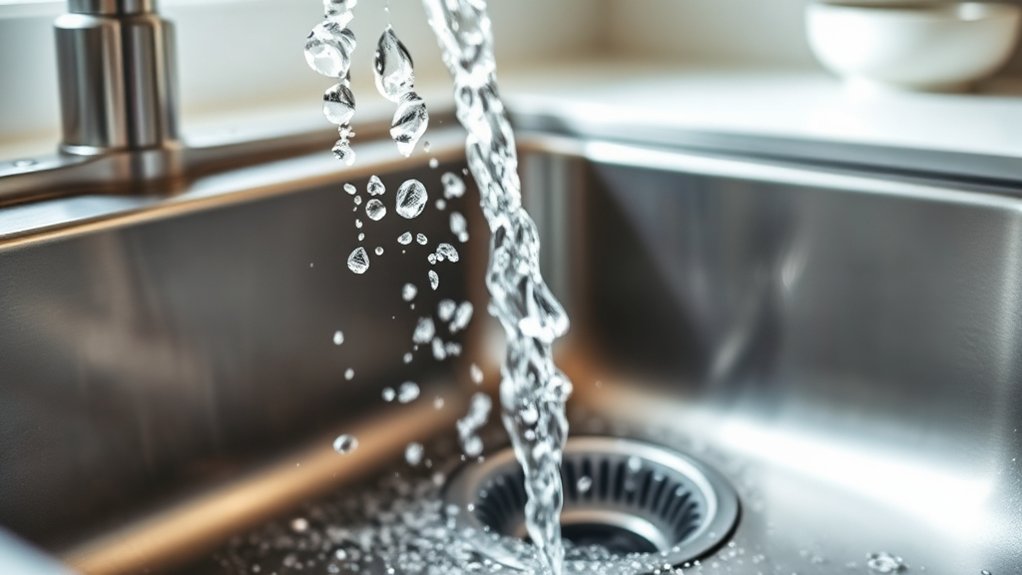
Start by running the hottest water your faucet can safely deliver straight down the drain for 30 to 60 seconds. This helps loosen greasy film and carries away surface residue that traps odor. Keep the sink clear while you work, and let the heat do the heavy lifting. If the smell lingers, repeat the flush once more after a short pause.
| Step | Action |
|---|---|
| 1 | Open the faucet fully |
| 2 | Use the hottest safe water |
| 3 | Run it for 30–60 seconds |
| 4 | Repeat if needed |
| 5 | Check odor guidelines |
You can also open a window for fresh air so the room feels less stale while the drain clears. Don’t use boiling water if your pipes can’t handle it; stick with safe heat from the tap. This simple rinse often cuts down on sour, musty smells fast and sets you up for the next cleaning step.
Clean the Drain With Baking Soda
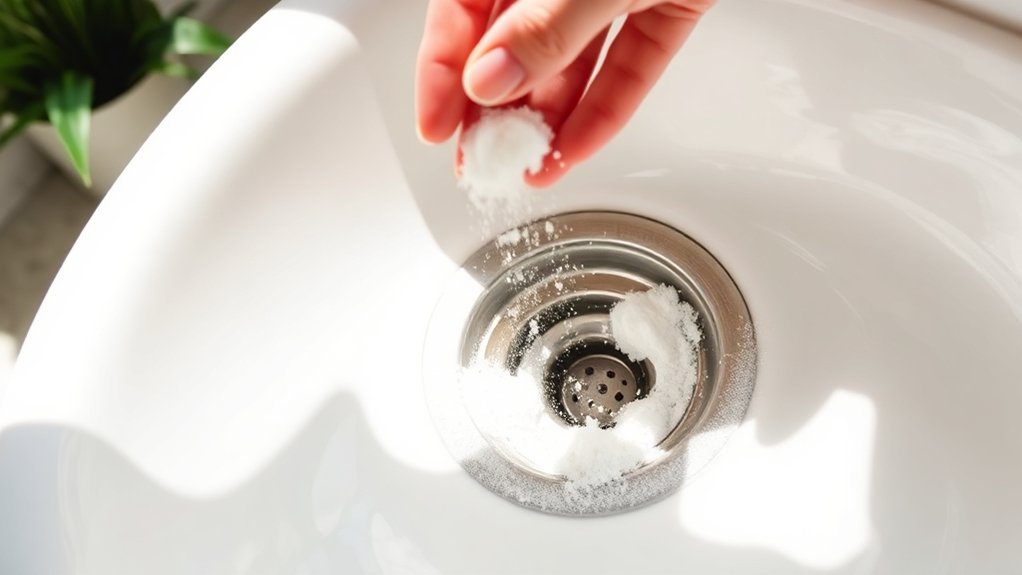
Pour 1/2 cup of baking soda directly into the drain, letting it settle in the pipe where odors tend to build up. Let it sit for a few minutes so it can absorb sour smells and loosen grime.
Pour 1/2 cup of baking soda into the drain and let it sit to absorb odors.
Then brush the sink opening with a damp sponge and wipe away any powder that clings to the rim. Make this a simple part of your cleaning routine for steady odor prevention.
- White powder resting in the drain throat
- A clean sponge circling the sink edge
- Powder dusting the metal strainer
- Fresh, dry sink walls after wiping
- A quiet kitchen with no sour whiff
You’ll notice the drain smells fresher right away, and the sink looks cleaner too. If odors return, repeat this step regularly to keep buildup from taking over.
Use Vinegar to Dissolve Grease
Now, add vinegar to cut through the greasy film that baking soda loosens. Pour about one cup of white vinegar slowly into the drain, then let the Vinegar action work for 10 to 15 minutes.
You’ll hear a light fizz as it reacts with residue, helping break down sticky oil, food film, and odor-causing buildup. This simple step also helps loosen light lime scale along the drain walls.
If the smell’s strong, cover the opening with a stopper or plate while it sits so the reaction stays active below the surface. After the wait, flush the drain with a kettle of hot water to carry away the softened grime.
Keep your Two word ideas focused on simple cleaning habits: use vinegar regularly, avoid pouring fats down the sink, and rinse with hot water after greasy dishes. This gives you a fast, low-cost way to freshen the drain without harsh chemicals or extra scrubbing.
Scrub the Stopper and Garbage Disposal
Next, remove and scrub the stopper and, if you have one, the garbage disposal splash guard, since both can trap slime, food bits, and foul odors. Use hot, soapy water and an old toothbrush for a thorough stopper scrub, paying attention to grooves, seams, and the underside.
For stubborn grime, sprinkle baking soda, then rinse well and dry before you replace it. During garbage disposal cleanup, lift the splash guard and wash both sides, then wipe the rim and opening with a sponge.
Turn on the light and check for stuck debris. Keep your hands clear, and run a little water while you clean if needed. Fresh, clean parts help the whole sink smell better fast.
- Sticky gray film
- Clogged rubber flaps
- Bright metal edges
- Foamy suds
- A fresh, clean drain
Clean the P-Trap for Hidden Odors
Next, remove the P-trap and check for hidden gunk or standing water. Scrub the inside with a brush and warm, soapy water. Then reassemble it securely to help keep odors from sneaking back in.
Remove And Inspect Trap
If the smell lingers after scrubbing the drain, the P-trap may be hiding gunk, grease, or trapped debris. Shut off water, place a bucket under the bend, and loosen the fittings by hand or with pliers.
During trap inspection, watch for standing sludge, warped washers, or stray bits that can become odor sources. Remove the trap carefully, then hold it up to the light and check for clogs, cracks, and stale residue inside.
- a white plastic elbow
- a dark bucket below
- damp rings on the pipe
- a stubborn clump inside
- a faint sour haze
If anything looks damaged, replace it before reattaching the trap. Tighten the connections snugly, restore water, and test for leaks.
Scrub Away Buildup
Scrub the P-trap inside and out with a bottle brush or old toothbrush, using warm water and a little dish soap to lift grease, slime, and food residue. Pay extra attention to the bends and joints, where gunk hides and odors linger.
If buildup feels stubborn, soak the trap in a sink of warm soapy water for a few minutes, then scrub again. Rinse it thoroughly so no soap or debris stays behind.
Before you reinstall it, check for cracks, loose fittings, or worn washers that can trap smell. Making this part of your cleaning schedule helps with odor prevention and keeps the drain smelling fresh longer.
A clean P-trap also improves flow, so water moves freely and less grime collects.
Prevent Future Drain Odors
To keep kitchen sink drain odors from coming back, make a few simple habits part of your routine: rinse the drain with hot water after messy prep, avoid letting food scraps sit in the sink, and clean the stopper and strainer regularly.
You can prevent odors by flushing the drain weekly with baking soda and vinegar, then running hot water. If you’ll be away for a while, seal drains with a stopper or a small cup of water in unused sinks to block sewer gas.
Watch for slow drainage, because trapped grease and bits of food invite smell. A dry, tidy sink stays fresher and cuts down on repeat cleaning.
- Steam rising from a just-rinsed sink
- A strainer catching onion skins and rice
- Hot water swirling through a clean drain
- Baking soda fizzing in the pipe
- A tight stopper sealing an unused drain
Frequently Asked Questions
How Do I Know if the Smell Comes From the Faucet Aerator?
Check the faucet aerator first: if the smell gets stronger when you run water but not when the sink sits unused, the aerator may be trapping grime. Unscrew it, sniff it, and look for slime or mineral buildup. Do an aerator assessment by cleaning or replacing it, then retest. If the odor stays, you’re likely dealing with other drain odor sources below the sink or in the trap.
Can Lemon Peels Help Remove Kitchen Sink Drain Odors?
Yes, lemon peels can help freshen kitchen sink drain odors. You’ll notice a lemon peel aroma as you run them through the disposal or rinse the drain, and that citrus cleaning action can mask light smells. Don’t count on them alone, though; they won’t clear grease or gunk. If you want the whole nine yards, pair peels with hot water, baking soda, and vinegar to actually tackle buildup.
How Often Should I Sanitize the Sink Drain?
You should sanitize your sink drain once a week, and more often if you notice odors or heavy use. That sanitation frequency helps you stop odor sources like food scraps, grease, and soap buildup before they spread.
If you cook a lot, rinse and sanitize it every few days. You’ll keep smells down, prevent grime, and make cleanup easier by staying consistent with simple, regular care.
Is It Safe to Use Bleach in the Kitchen Sink Drain?
Yes, it’s generally safe if you use bleach in sink drains sparingly, but you shouldn’t mix it with vinegar, ammonia, or other cleaners. About 1 in 3 household cleaning accidents involve chemical combinations, so you’ve got to be careful.
To remove odors, try hot water first, then a little diluted bleach if needed. You can also use lemon peels to freshen the drain naturally and avoid harsh buildup.
Why Does the Drain Smell Worse After Running the Dishwasher?
Your drain smells worse after the dishwasher because heat, food debris, and soap can stir up trapped grime and push sewer gases through the line. You might assume the dishwasher cleans everything, but drainage misconceptions often hide clogs and venting issues.
Check for food buildup in the trap, a blocked air gap, or a loose disposal connection. These kitchen odor sources can intensify after a cycle and make the smell seem stronger.
Conclusion
When your sink drain starts to stink, don’t ignore it. Follow these steps to get rid of the smell fast. A quick rinse, a little baking soda and vinegar, and a good scrub can wash away the grime hiding below the surface.
You’ll not only freshen the drain but also restore the kitchen’s calm, clean rhythm. Keep up the habit to stop small odors before they grow into something harder to shake. These steps can help you clean kitchen sink drain smell fast.