How to Fix a Clogged Kitchen Sink in 5 Easy Steps
A clogged kitchen sink can bring meal prep and cleanup to a standstill, and you’re not alone—many people struggle with stubborn blockages. If you’re looking for the best products to clear a…

A clogged kitchen sink can bring meal prep and cleanup to a standstill, and you’re not alone—many people struggle with stubborn blockages.
If you’re looking for the best products to clear a clogged kitchen sink, these five easy steps can help you get started.
Turn off the faucet, bail out any standing water, and keep a towel under the cabinet. Remove the sink stopper so you can reach the clog. Pour boiling water down the drain, then add baking soda and more hot water if needed. Plunge the drain for 15 to 20 seconds, repeating until it loosens. If it’s still blocked, clean the P-trap and reassemble it. Keep going, and you’ll pick up a few smarter fixes too.
Key Takeaways
- Turn off the faucet, remove standing water, and clear any debris around the drain.
- Remove the sink stopper so you can access and inspect the clog directly.
- Pour boiling water, then baking soda and more hot water to help break up the blockage.
- Use a plunger to create pressure and dislodge the clog if water still won’t drain.
- Clean and reassemble the P-trap, then test for leaks and proper drainage.
Clear the Clogged Kitchen Sink and Stop the Water
If water is backing up in your sink, stop it fast to prevent a bigger mess. Turn off the faucet, then scoop out any standing water with a cup or bowl and dump it into a bucket. This keeps the overflow from spreading while you work.
Next, place a towel under the cabinet in case drips escape. If you can see loose food or debris near the drain opening, pull it out by hand or with tongs. Don’t waste time on an unrelated topic or a nonessential detail; focus on clearing the blockage and keeping the area dry.
Check the sink basin for fresh backup as you remove material, because the water level should drop once flow improves. If the clog stays put, you’ve at least made the workspace safer and easier to handle. Keep your tools nearby, and move to the next step only after the sink stops filling again.
Remove the Kitchen Sink Drain Stopper

Now that the sink is drained and the area’s clear, remove the drain stopper so you can reach the clog directly. Check how it’s held in place before you pull anything apart. If you see a pivot rod under the sink, loosen the nut and slide the rod out gently. If your stopper lifts straight up, twist and lift it free. Keep a small bowl nearby to catch drips or parts.
As you remove it, look for hair, food scraps, or grease wrapped around the stopper. Wipe it clean with a damp cloth and set it aside where it won’t get lost. Using simple removal techniques here helps you avoid damaging the drain parts. If the stopper feels stiff, don’t force it; work it loose with a steady hand. Good stopper maintenance now makes the rest of the repair easier and helps prevent future clogs.
Try Boiling Water and Baking Soda First

Before you reach for harsher tools, pour a kettle of boiling water slowly down the drain to help melt grease and loosen light buildup. Let it work for a minute, then check whether the water starts draining more freely. If the clog seems stubborn, sprinkle about half a cup of baking soda into the drain opening.
Follow it with another cup of boiling water, and let the mixture sit for 10 to 15 minutes. The baking soda can help break up greasy residue, while the hot water carries loosened debris farther down the pipe.
After the wait, run more boiling water through the sink to flush the drain again. If the water drains better, repeat the process once more for extra cleaning. This simple method often clears minor blockages without special tools or chemicals, and it gives you an easy first step before moving on to stronger fixes.
Plunge the Clogged Kitchen Sink Drain
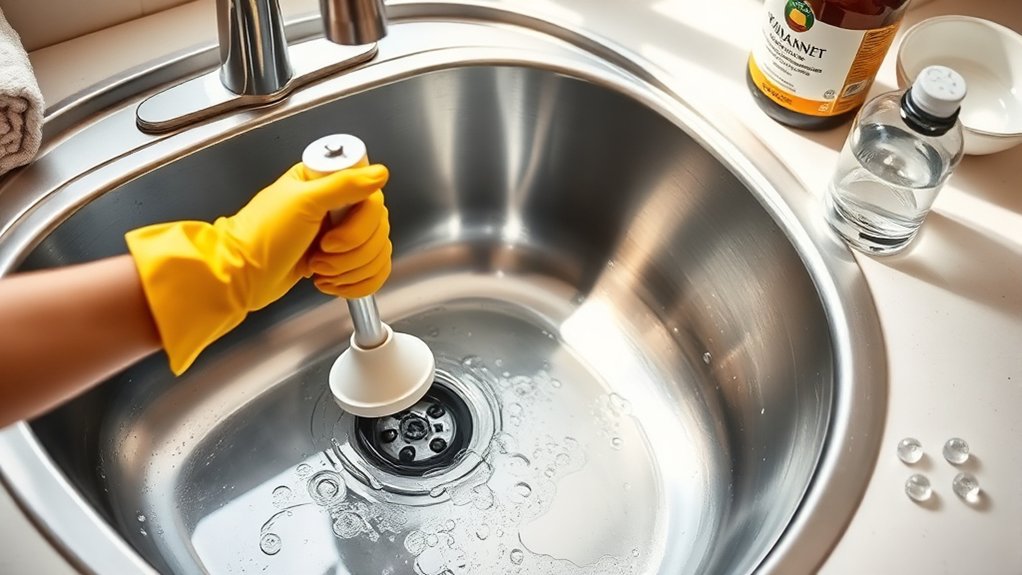
A plunger can often dislodge a clog that hot water and baking soda couldn’t clear. Before you start, remove any standing water only enough to cover the cup, then place the plunger over the drain opening and create a tight seal. If your sink has two basins, block the other drain with a wet cloth so you don’t lose pressure.
Pump the handle with firm, quick strokes for 15 to 20 seconds, then lift and check whether the water moves. Repeat several times if needed, keeping your motions controlled and steady.
Use one of the simplest unclogging tools you already own, and focus on DIY safety throughout the process. Wear gloves if the water looks dirty, and avoid splashing. If the clog loosens, run warm water to help clear the drain. When the sink still backs up after a few rounds, stop and move on.
Clean the P-Trap and Test the Kitchen Sink Drain
If plunging didn’t clear the clog, the problem may be sitting in the P-trap under the sink. Place a bucket beneath it, then loosen the slip nuts with a wrench or by hand. Remove the trap carefully, and watch for standing water.
Empty the contents, then scrub the pipe with a brush and warm soapy water. This simple cleaning traps grease, food scraps, and sludge before they can block the line again. Check the washers for cracks, and replace them if they look worn.
Reassemble the P-trap snugly, but don’t overtighten. Next, turn on the faucet and let water run for a minute. Watch for leaks at each connection and listen for smooth drainage.
If the sink still backs up, repeat your DIY troubleshooting by checking the trap and the next pipe section. You’ll often find the clog close by, and a quick inspection can save you from calling a plumber.
Frequently Asked Questions
How Can I Prevent Future Kitchen Sink Clogs?
You can prevent future kitchen sink clogs by scraping plates into the trash, wiping greasy pans before washing, and using a sink strainer to catch food scraps. Run hot water after each use, and avoid pouring oil or coffee grounds down the drain.
For preventing clogs, flush the drain with baking soda and vinegar monthly. These sustainable maintenance habits keep your pipes clearer, reduce buildup, and save you from costly repairs.
What Causes Recurring Kitchen Sink Blockages?
Recurring kitchen sink blockages usually come from grease, soap buildup, and trapped food waste that narrow your pipes over time. You might also have a blocked drain caused by poor disposal habits, old plumbing, or a partial clog that never fully cleared.
If you keep rinsing scraps, oils, or coffee grounds down the sink, they’ll collect again and again, and you’ll notice slow draining or repeated backups sooner than you expect.
When Should I Call a Plumber for a Clogged Sink?
Call a plumber when your sink stays clogged after you’ve tried basic fixes. If water backs up into other drains, you notice foul smells, or the blockage keeps returning, you should stop the DIY route.
In this modern-day quest, your call out timing matters. Choose plumber vs DIY wisely when you suspect a deeper pipe issue, a jam you can’t reach, or leaks under the cabinet.
Can Garbage Disposal Problems Cause Sink Clogs?
Yes, garbage disposal problems can cause sink clogs. If you run the garbage disposal with dull blades, jammed parts, or poor drainage, food waste can back up and create sink clogs.
You should clean it regularly and use prevention strategies like cold water, small food scraps, and avoiding grease. If you keep getting recurring blockages, you may need to inspect the disposal or call a plumber for help.
What Tools Help Remove Stubborn Sink Debris?
A sturdy plunger, sink auger, and drain snake are your best Tools for Debris removal. Have you ever pictured a greasy lump trembling in the pipe? You can break it loose with a cup plunger, then fish out stubborn bits with a zip tool or bent wire hook. Wear gloves, use a flashlight, and keep a bucket nearby so you can catch messes fast and clear the drain safely.
Conclusion
Now you’ve got the tools to clear a clogged kitchen sink fast. Start by stopping the water, then remove the stopper and try boiling water with baking soda before plunging. If the clog still hangs on, clean the P-trap and test the drain again.
I once watched a tiny strand of spaghetti jam a whole sink—proof that small blockages can cause big messes. Stay patient, and you’ll get your clogged kitchen sink flowing again.