How to Get Rid of Roaches in Your Kitchen Fast
Roaches in the kitchen can be stressful, especially when they show up where you prepare food. You’re not alone—many people struggle to get rid of roaches quickly and keep them from coming…

Roaches in the kitchen can be stressful, especially when they show up where you prepare food. You’re not alone—many people struggle to get rid of roaches quickly and keep them from coming back. The right traps and baits can help you tackle the problem faster.
To get rid of roaches in your kitchen fast, find their hotspots under the sink, behind the fridge, around the stove, and inside cabinets, then inspect for droppings, egg cases, and grease marks. Set traps there, place fresh bait near warm, dark spots, and avoid spraying repellent cleaners near it.
Wipe crumbs, spills, and grease right away, dry sinks, and seal cracks, pipes, and gaps. If you keep going, you’ll uncover the fastest way to finish the job.
Key Takeaways
- Inspect kitchen hotspots like under sinks, behind the fridge, cabinets, stove areas, and pipe gaps for droppings, egg cases, and smear marks.
- Place roach traps in active spots to monitor movement and quickly reveal where the infestation is strongest.
- Use bait stations or gels near warm, dark corners so roaches carry poison back to the nest.
- Clean crumbs, spills, grease, dishes, and trash immediately to remove food and water sources.
- Seal cracks, fix leaks, dry sinks, and treat hidden seams and baseboards to stop roaches from returning.
Identify Roach Hotspots in Your Kitchen
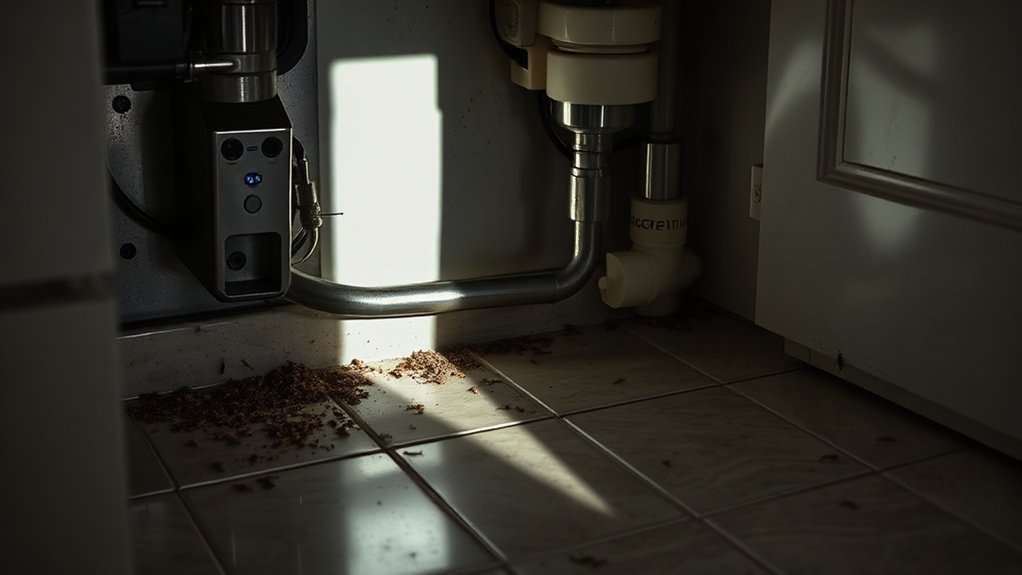
Start by finding where roaches hide most often in your kitchen: under the sink, behind the fridge, inside cabinets, around the stove, and near food crumbs or water leaks. Then inspect each area with a flashlight and look for droppings, egg cases, shed skins, and greasy smear marks.
You should identify hotspots where warmth, moisture, and easy food meet, because roaches cluster there first. Check gaps around pipes, loose trim, torn weatherstripping, and cracks along baseboards, since these often serve as roach entrypoints.
Don’t ignore pantry shelves, appliance motors, or the space beneath small appliances. Move items aside so you can see hidden corners and reach tight spaces.
If you spot more activity in one zone, mark it and revisit it daily. The faster you identify hotspots, the sooner you can target the problem and stop roaches from spreading deeper into your kitchen.
Use Roach Traps to Cut Activity Fast
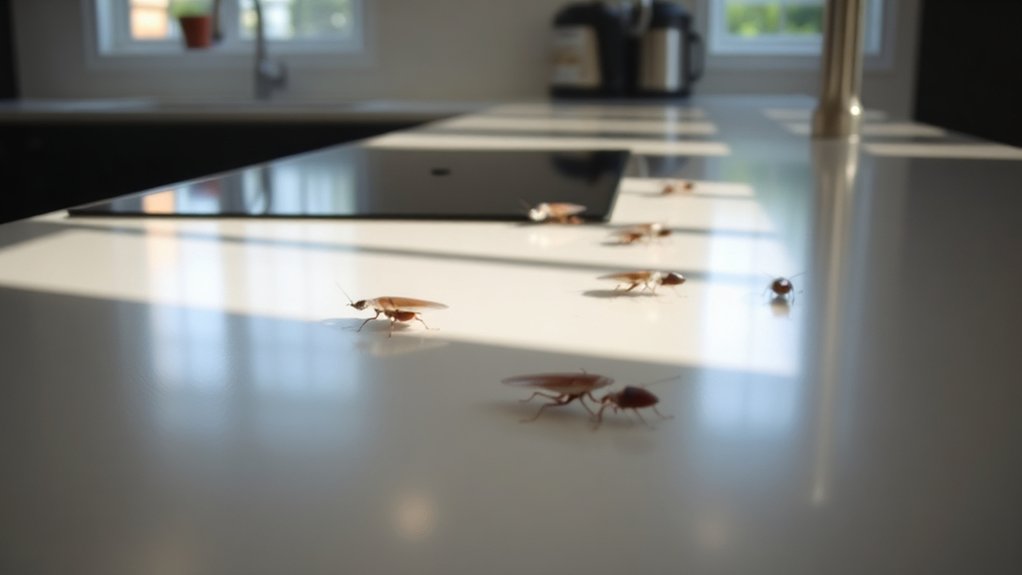
Place roach traps in the hotspots you found to cut down activity fast and see where the problem is worst. Set them along baseboards, behind the fridge, under the sink, and near trash bins where roaches travel at night.
Keep traps flat and out of the way so insects can enter without noticing. Check them daily, and replace any that fill up or lose stickiness.
Moving traps every few days helps you test roach trap effectiveness and spot new activity patterns. Use several at once instead of one, because roaches spread through hidden routes.
Good trap placement strategies let you map the problem quickly without guessing. Keep food sealed and counters clean while the traps work, so you don’t draw more bugs in.
Traps won’t solve everything, but they give you fast proof that your cleanup efforts are working and help you focus on the worst areas first.
Kill Roaches in Your Kitchen With Bait
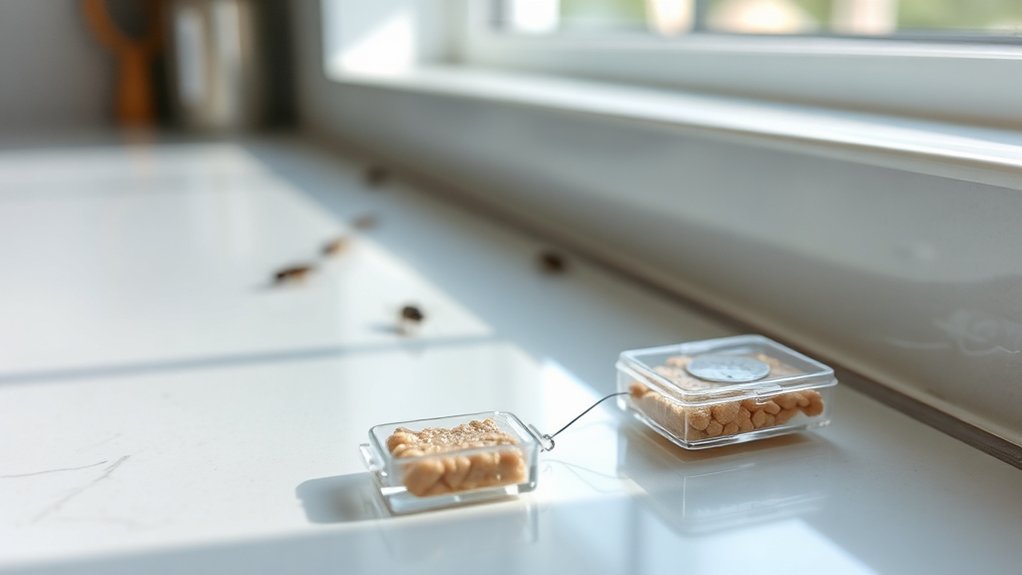
Use roach bait to attack the colony at its source, not just the bugs you see. Place bait where roaches travel, and they’ll carry the poison back to the nest. That slow transfer matters because it reaches hidden adults and young at once.
For a smart roach bait comparison, choose gels, stations, or granular baits based on your kitchen layout and infestation level. Gel works well in cracks; stations suit open edges; granules fit damp, tucked spaces.
- Put bait near warm appliances and dark corners.
- Space placements evenly, but don’t overdo it.
- Replace bait if it dries out or gets eaten.
- Follow bait safety guidelines to keep pets and children safe.
You’ll get better results with small, fresh placements that you check regularly. Avoid spraying repellent cleaners nearby, since they can make roaches avoid the bait and slow your progress.
Clean Up Kitchen Food and Crumbs Fast
Crumbs, spills, and sticky residue give roaches easy meals, so wipe them up right away and don’t leave food out overnight. After every meal, check counters, tables, stovetops, and the floor for stray bits.
Wipe up crumbs and spills right away, and don’t leave food out overnight.
Sweep or vacuum quickly, then mop areas where grease or sugar has landed. When you clean crumbs, pay attention to toaster trays, under appliances, and around pet bowls, since roaches feed in hidden spots.
Use a damp cloth or paper towel to wipe spills before they dry and turn sticky. Rinse sponges often so you don’t spread food residue around.
Empty trash cans regularly, and keep liners tied shut. Wash dishes promptly instead of letting them stack in the sink.
If you snack late, clear away wrappers and plates before bed. A spotless kitchen gives roaches fewer reasons to stay, and it helps your other pest-control steps work much better.
Seal Kitchen Entry Points
Next, seal any kitchen entry points to keep roaches from coming back. Check for cracks and gaps around walls, cabinets, and baseboards. Then use caulk or weatherstripping to seal openings around doors and pipes. Blocking these gaps can help cut off their access quickly.
Find Cracks And Gaps
Where are roaches sneaking in? Inspect your kitchen with a flashlight and trace every wall, baseboard, cabinet seam, and countertop edge. You’re looking for cracks gaps that hide in plain sight and give pests easy entry points. Mark each spot you find so you can seal them later.
- Check behind appliances for thin openings.
- Examine cabinet corners and trim lines.
- Look under sinks for hairline splits.
- Scan around utility penetrations and wall joints.
Use a bright light and move slowly, because roaches exploit tiny flaws. If you spot crumbs near these openings, clean them right away. The smaller the gap, the easier it is to stop roaches before they spread through your kitchen.
Seal Doors And Pipes
After you’ve spotted the problem areas, seal the main entry points so roaches can’t slip back in. Install door sweeps on exterior and pantry doors, and weatherstrip any loose frames to close tiny gaps.
Check around under-sink plumbing, dishwasher lines, and wall penetrations, then seal pipes with silicone caulk or expanding foam rated for kitchens. Don’t forget utility holes, baseboards, and spaces behind appliances, where roaches often travel unseen.
If you can see daylight under a door, bugs can use it too. Tight seals block their access, reduce hiding spots, and make your cleanup work much more effective.
Recheck these barriers after a few days, especially if you’ve had repairs or moisture issues. A well-sealed kitchen gives roaches fewer chances to return.
Remove Kitchen Moisture That Attracts Roaches
Roaches love moisture, so the fastest way to make your kitchen less inviting is to cut off their water sources. Wipe sinks, counters, and stovetops dry after every use, and don’t leave dish racks dripping overnight.
Check for leaks under the sink, around the dishwasher, and near the refrigerator, then fix them fast. Good moisture reduction also means watching for condensation on windows and pipes, since roaches can thrive on tiny water spots.
For stronger humidity control, run an exhaust fan while cooking and use a dehumidifier if your kitchen stays damp.
- Empty pet bowls before bed
- Dry mop spills right away
- Clean out sink strainers daily
- Keep sponges and towels fully dry
When you remove standing water and cut damp hiding places, you make your kitchen far less attractive. Stay consistent, because even small wet areas can keep roaches coming back tonight.
Use Spray in Hidden Roach Spots
Once you’ve cut back on moisture, target the places roaches hide with a spray designed for cracks and crevices. Focus on baseboards, gaps behind toe kicks, hinge lines, and the seams around sinks and trim. A discreet spray lets you treat hidden hotspots without soaking open surfaces or leaving a heavy residue.
Aim the nozzle into narrow spaces where roaches travel and rest, then apply a light, even mist. You don’t need to drench the area; a thin barrier is enough to hit pests as they move through.
Work methodically from one end of the kitchen to the other, paying extra attention to dark corners and tight gaps near storage areas. Reapply only as the label directs, and keep food, utensils, and pets out of the way while you treat.
Deep Clean Cabinets, Appliances, and Drains
Start by scrubbing cabinet corners, where crumbs and grease can hide and attract roaches. Then pull appliances away from the wall and clean behind and underneath them, since debris can quickly build up in those dark gaps. Finally, remove grease buildup from drains, which can give roaches a slimy place to hide.
Cabinet Corner Cleaning
Tuck into the cabinet corners where crumbs, grease, and moisture collect, because that hidden mess gives roaches exactly what they need.
For cabinet corner cleaning, empty the shelves, then wipe every seam with hot, soapy water and a microfiber cloth. Use a toothbrush to reach the tight cabinet corner where grime clings. Keep your focus on:
- shelf joints and trim
- hinge edges and latch areas
- the inside lip of the cabinet
- any sticky residue near bins
Dry each surface completely, since damp spots invite pests back. If you spot food spills, clean them right away and seal dry goods in tight containers.
This quick corner cleaning routine removes food traces, reduces shelter, and makes your kitchen far less appealing to roaches.
Appliance Backside Scrubbing
After you’ve cleaned the cabinet corners, move on to the hidden spots behind appliances, under cabinets, and around drains where grease, crumbs, and moisture build up. Pull out your fridge, stove, and microwave if you can, then vacuum loose debris and wipe every surface with hot soapy water.
Focus on the appliance backside, where roaches love to hide in warm, dark gaps. Use a scrub brush or sponge for scrubbing kitchen walls, baseboards, and shelving edges, then dry everything well.
Check under toe kicks and around pipes for sticky residue or food bits. Keep the area uncluttered so you can spot new activity fast.
When you finish, return appliances carefully and make sure no crumbs, spills, or damp spots are left behind.
Drain Grease Removal
Now tackle the drains, since greasy buildup there can keep attracting roaches even after the kitchen looks clean.
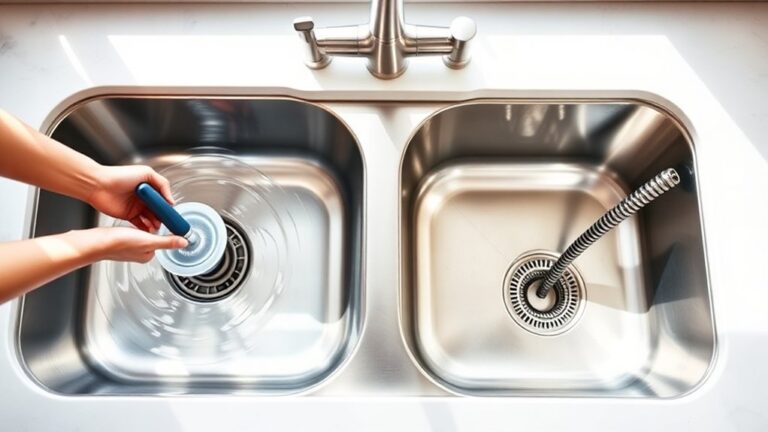
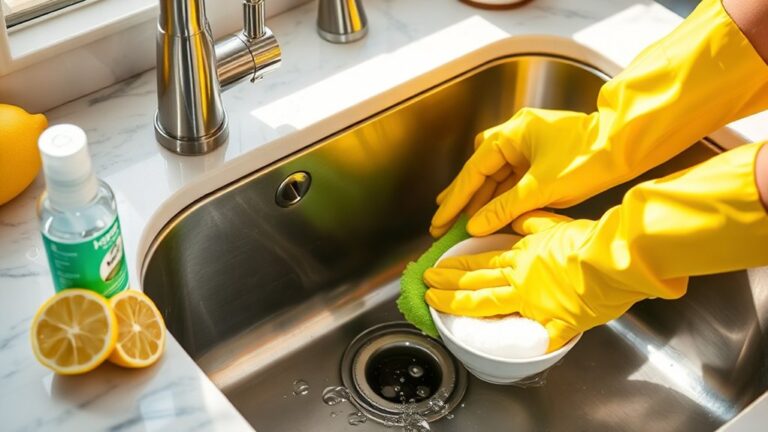
For effective drain grease removal, pull out strainers, then scrub the rims and splash zones with hot, soapy water. Flush each drain with boiling water, then follow with baking soda and vinegar to loosen residue.
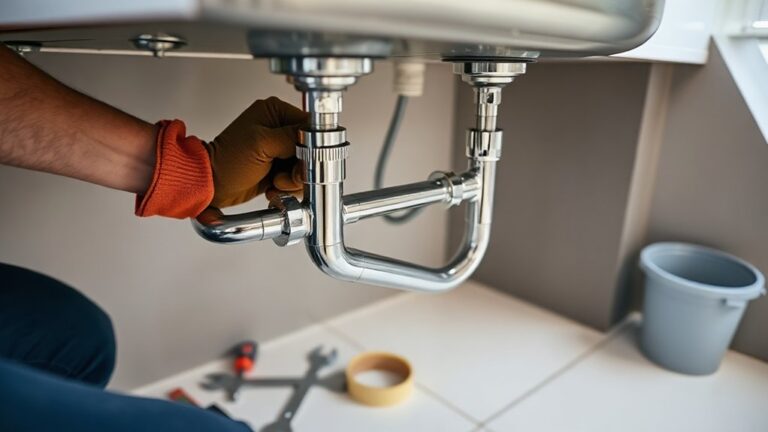
If you can, remove and clean the P-trap during kitchen plumbing cleaning, because slime often hides there. Wipe cabinet bottoms, sink edges, and appliance seams where drips collect.
- Seal crumbs and grease in containers
- Dry sinks after every use
- Check for slow drains and standing water
- Repeat cleaning weekly until activity stops
Keep Roaches Out of the Kitchen
To keep roaches out of your kitchen, cut off the food, water, and hiding spots they need to survive. Keep a pest proofing mindset every day: wipe counters after cooking, sweep crumbs from floors, and store dry goods in sealed containers.
Cut off roaches’ food, water, and hiding spots by wiping counters, sweeping crumbs, and sealing dry goods.
Tighten your kitchen sanitation by washing dishes promptly, emptying the trash nightly, and rinsing recyclables before they sit overnight. Fix leaky faucets, dry sinks, and don’t leave pet food out after meals.
You should also seal gaps around pipes, baseboards, and cabinets with caulk so roaches can’t slip inside. Check under the sink, behind the fridge, and around the stove for spilled grease or hidden crumbs, then clean those areas often.
Keep cardboard boxes and clutter out of the kitchen, since they give roaches places to hide and breed. Small daily habits make your kitchen far less inviting and help stop new roaches from coming back.
When To Call a Pest Control Pro
If you’re still seeing roaches after cleaning, sealing gaps, and setting traps, it’s time to call a pest control pro. You may be dealing with a hidden nest, plumbing leaks, or a bigger infestation than you can handle alone.
A trained technician can assess roaches behavior, locate breeding sites, and choose targeted treatments that work fast without wasting time or product.
- Ask for an inspection before treatment starts.
- Confirm the company uses integrated pest management.
- Check pest control ethics and safety practices.
- Request follow-up visits to prevent reinfestation.
You should also mention where you’ve seen activity, what you’ve already tried, and whether pets or kids live in the home. That helps the pro act quickly and safely.
When the infestation keeps spreading, expert help can protect your kitchen, save money, and restore peace of mind before roaches take over.
Frequently Asked Questions
How Long Does It Take to Fully Eliminate Roaches?
You’ll usually need 2 to 8 weeks to fully eliminate roaches, but severe infestations can take longer. Your extermination timeline depends on how many roaches you have, how many hiding spots they’ve found, and how consistently you treat every area.
You can speed results by sealing cracks, removing food sources, and repeating bait or spray treatments. If you miss nests, they’ll return, so stay persistent until activity stops.
Are Roaches Dangerous to My Pets?
Yes—roaches can endanger your pets, like sneaky thieves slipping through a guarded house. You may not see the harm at once, but they can spread germs, trigger allergies, and poison curious animals if your pet bites a treated bug.
You should use pet safe pesticides, keep food sealed, and watch where your pets roam. When you treat roaches and pets carefully, you protect your home’s smallest residents.
Can Roaches Survive Without Food for Weeks?
Yes, roaches can survive without food for weeks, especially if they find water. You’ll see that their roaches’ feeding habits make them flexible scavengers, so they can slow their metabolism and stretch resources. Their roach survival methods include hiding, conserving energy, and eating tiny scraps. If you cut off food and moisture, you’ll weaken them faster and make your kitchen far less welcoming.
Do Roaches Come Out More at Night?
Yes, roaches usually come out more at night, like tiny shadows slipping through your kitchen. You’ll notice their roaches behavior shifts after dark, when night activity helps them avoid people and find food, water, and shelter.
They’re nocturnal, so they stay hidden in daylight and roam when it’s quiet. If you see one during the day, you may have a bigger infestation than you thought.
Will One Roach Mean I Have a Big Infestation?
No, seeing one roach doesn’t always mean you’ve got a big infestation, but you shouldn’t ignore it. You might catch a lone scout, yet one roach myths can be misleading.
Check for early warning signs like droppings, egg cases, shed skins, and a musty smell. Act fast, because roaches hide well and breed quickly. If you keep spotting them, you likely have a larger problem.
Conclusion
You can get rid of roaches in your kitchen fast if you act right away. Place traps, use bait, clean up crumbs, seal gaps, and spray hidden spots where they hide.
Don’t forget to deep clean cabinets, appliances, and drains to cut off their food and shelter. Keep up with these habits, because an ounce of prevention is worth a pound of cure.
If the problem keeps growing, call a pest control pro to get rid of roaches in your kitchen fast.