How to Clean a Kitchen Sink in 3 Easy Steps
A dull, stained kitchen sink can make the whole kitchen feel less clean, even when you’ve just tidied up. If you’re wondering how to clean a kitchen sink without a lot of…

A dull, stained kitchen sink can make the whole kitchen feel less clean, even when you’ve just tidied up. If you’re wondering how to clean a kitchen sink without a lot of fuss, you’re not alone—many people struggle with stubborn stains and lingering odors. The right cleaning products can make the job easier.
Start by gathering a soft sponge, microfiber cloths, dish soap, baking soda, white vinegar, and gloves, then keep everything handy in one caddy. Next, rinse the sink with warm water, sprinkle on a little baking soda or mild cleaner, and scrub the basin, drain, and faucet base in circular motions. Finally, rinse well and dry with a microfiber towel for a bright finish; a few extra tips can help you tackle stains and odors too.
Key Takeaways
- Gather a soft sponge, microfiber cloth, baking soda, dish soap, white vinegar, and rubber gloves before you start.
- Rinse the sink with warm water, then scrub the basin, drain, and faucet base with a mild cleaner or baking soda.
- Use an old toothbrush for corners and stubborn spots, working from the edges toward the center.
- Rinse thoroughly with clean water to remove residue, then dry the sink with a microfiber towel.
- For stains or odors, apply baking soda, vinegar, or lemon juice, then scrub, rinse, and buff dry.
Gather Kitchen Sink Cleaning Supplies
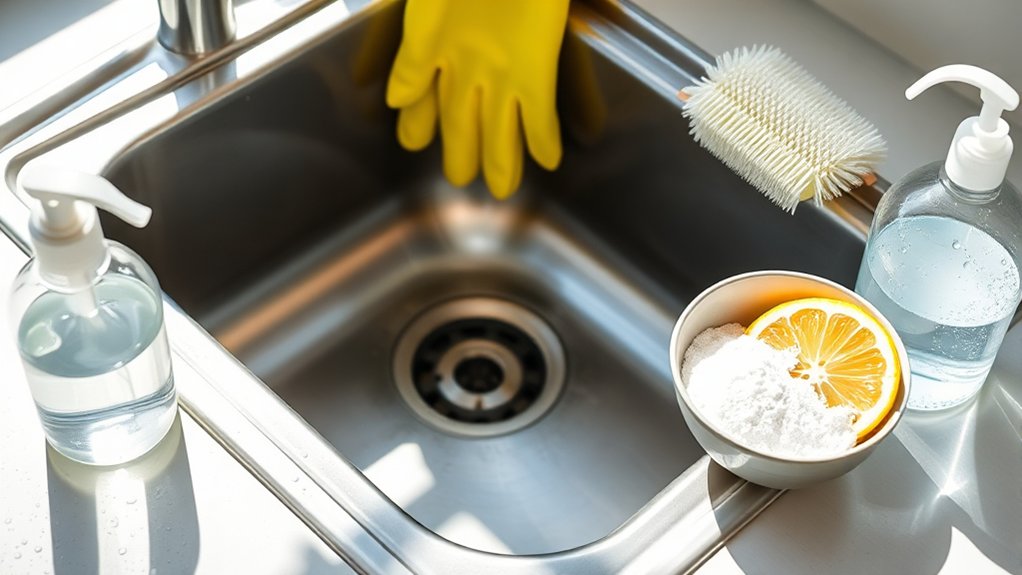
Before you start cleaning, gather a few basic supplies so the job goes faster and easier. You’ll want to gather supplies like a soft sponge, microfiber cloths, a nonabrasive scrub brush, dish soap, baking soda, white vinegar, and a spray bottle.
If your sink is stainless steel, grab a gentle cleaner made for metal surfaces. For porcelain or enamel, choose a mild cleaner that won’t scratch the finish. Keep rubber gloves nearby if your hands are sensitive.
A small bowl or measuring cup can help you mix solutions quickly, and an old toothbrush works well for tight corners. If you handle regular shop cleanups, it helps to keep these items together in one caddy or bin, so you’re always ready.
Check that your tools are clean and dry before you begin, since dirty supplies can spread grime instead of removing it.
Clean the Kitchen Sink Step by Step

Start by rinsing the sink with warm water to loosen debris and wash away loose crumbs. Next, sprinkle a small amount of mild cleaner or baking soda across the basin, then use a soft sponge to scrub the sides, bottom, and drain area in circular motions.
Work from the edges toward the center so you don’t miss spots. Pay attention to the faucet base and handles, and wipe them with a damp cloth to lift grime. Rinse the sink thoroughly with clean water until no residue remains.
Then dry the surface with a microfiber towel to prevent streaks and keep the finish looking bright. If you do this after meal prep, you’ll build a simple cleaning routine that keeps the sink neat with less effort. Each quick wash gives your kitchen a fresh start and helps you stay on top of daily messes.
Remove Stains, Odors, and Water Spots
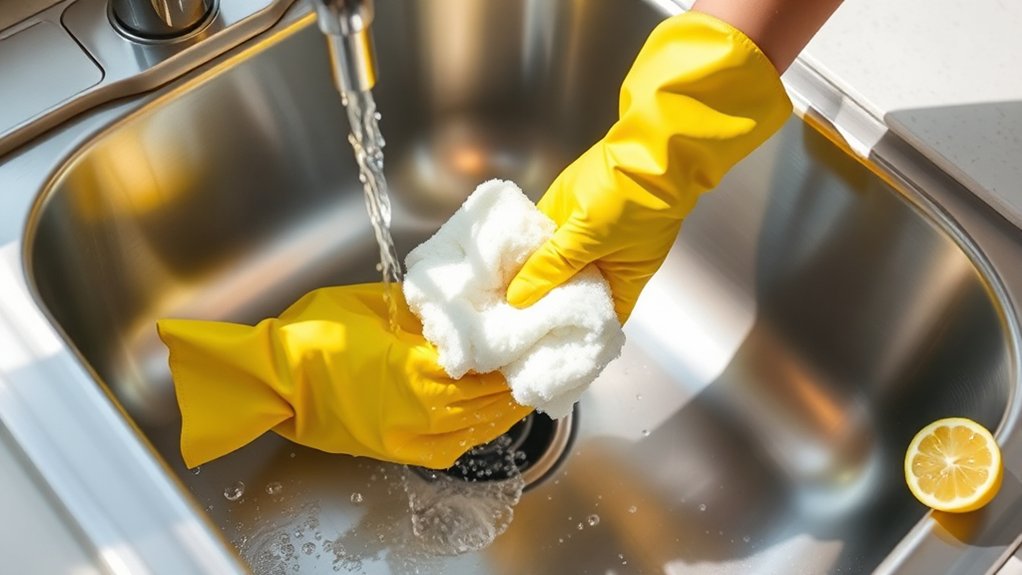
For stubborn stains, sprinkle baking soda or apply a little cleaner directly to the mark, then scrub gently with a soft sponge until it lifts. Rinse well, then dry the sink with a microfiber cloth to prevent new water spots from forming.
Sprinkle baking soda or cleaner on stubborn stains, then gently scrub and dry to prevent water spots.
For tougher discoloration, let the cleaner sit for a few minutes before you wipe it away. If you’re dealing with odor control, sprinkle baking soda down the drain, then pour in warm vinegar and let it fizz for a minute before flushing with hot water.
This helps freshen the sink and supports effective stain removal at the same time. You can also rub lemon juice on dull metal or porcelain surfaces for extra shine and a cleaner scent.
Finish by buffing the basin, faucet, and drain area until they look spotless. Regular touch-ups keep your sink bright, fresh, and ready for daily use without much effort.
Frequently Asked Questions
How Often Should I Deep Clean My Kitchen Sink?
You should deep clean your kitchen sink once a week if you cook often, or every two weeks if you use it lightly. That deep cleaning cadence helps stop odors, stains, and buildup.
For maintenance tips, rinse after each use, wipe the basin dry, and scrub the drain area regularly. If you notice grime, cloudy spots, or smells sooner, don’t wait—clean it right away to keep your sink fresh.
Can I Use Bleach on All Sink Materials?
No, you can’t use bleach on all sink materials. For example, if you spray bleach on a stainless steel sink and leave it too long, you might dull the finish. You need to check Material compatibility first, because bleach safety varies by surface. Avoid bleach on cast iron, colored enamel, granite composite, and natural stone. Test a hidden spot, dilute it properly, and rinse well to protect your sink.
What Should I Do for a Clogged Sink Drain?
Start with a plunger and a bucket. You should seal the overflow, fill the sink enough to cover the cup, then plunge hard in short bursts.
If that doesn’t work, remove the trap and clear debris with a wire. For clog troubleshooting, flush with hot water only if pipes allow.
If you’ve got a disposal, turn it off first and follow disposal tips like running cold water while you grind.
How Can I Prevent Sink Scratches During Cleaning?
Use a soft sponge or microfiber cloth, not steel wool, to prevent scratches. You’ll keep your sink looking great if you rinse away grit before wiping and choose a cleaner that matches the surface. For stainless steel, work with the grain; for porcelain, go gently.
Good material care means you avoid harsh pads, bleach, and abrasive powders. Dry the sink after cleaning, and you’ll reduce spots and surface wear too.
Is It Safe to Mix Vinegar and Baking Soda?
No, it isn’t harmful to you, but mixing vinegar and baking soda isn’t very effective for cleaning. You’ll see fizzing because they react and create carbon dioxide, water, and salt. That bubbling can help loosen debris, but it won’t boost cleaning power much. Use them separately for better results. If you’re asking, “is it safe, mixing vinegar; baking soda safe?” yes, it’s generally safe when you use them carefully.
Conclusion
A clean kitchen sink can make your whole kitchen feel fresher, and it only takes a few minutes a day. In fact, the average person spends about 400 hours a year in the kitchen, so keeping this high-traffic spot spotless really matters.
By gathering your supplies, scrubbing step by step, and tackling stains and odors, you’ll keep your sink shining with less effort. Stick with this simple routine, and you’ll notice the difference right away. A clean kitchen sink is easier to maintain than you might think.