How to Pack Kitchen Items in 3 Easy Steps
Packing kitchen items for a move can feel overwhelming, especially when you’re trying to protect fragile dishes and keep everything organized. You’re not alone—many people struggle with knowing where to start. These…

Packing kitchen items for a move can feel overwhelming, especially when you’re trying to protect fragile dishes and keep everything organized. You’re not alone—many people struggle with knowing where to start. These practical tips make packing kitchen items easier and help your belongings arrive safely.
Start by gathering sturdy boxes in several sizes, packing paper, bubble wrap, tape, markers, labels, and zip bags so you’re ready to move fast. Next, pack dishes, glassware, and cookware separately, using paper or towels to wrap fragile pieces and keeping lids with matching pots. Finally, seal each box tightly, mark the contents and destination room on multiple sides, and add “This Side Up” arrows so unpacking’s easier and the rest goes smoothly.
Key Takeaways
- Gather sturdy boxes, packing paper, bubble wrap, tape, markers, and labels before you start.
- Sort kitchen items by type, packing dishes, glassware, and cookware separately.
- Wrap fragile items with paper, bubble wrap, or dish towels, and keep lids with matching pots.
- Fill empty spaces, seal boxes tightly, and use extra tape on weak seams.
- Label each box clearly with contents, fragility, and destination room on multiple sides.
Gather the Right Packing Supplies
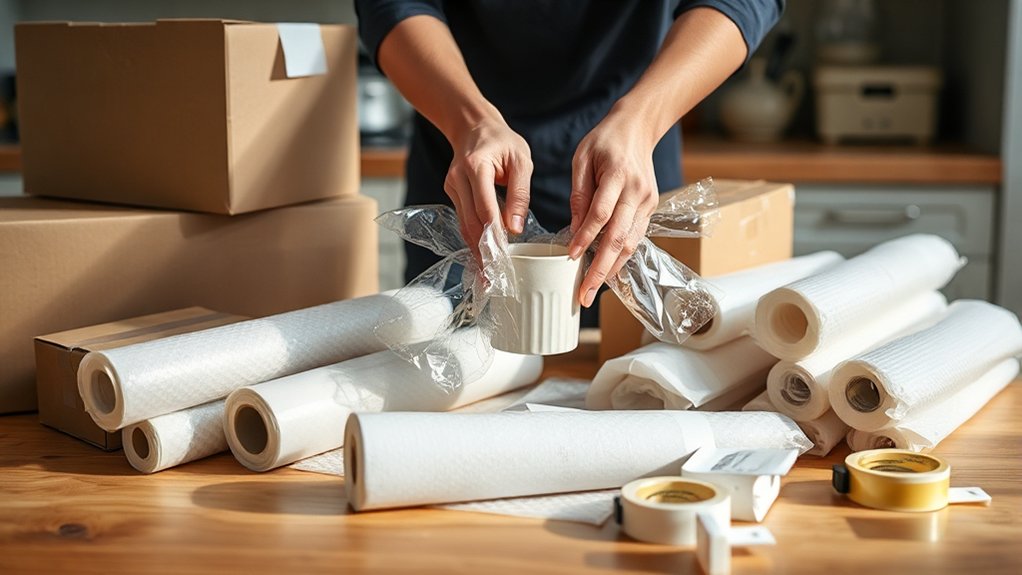
Before you pack a single plate, gather the supplies that will protect your kitchen items from chips, cracks, and spills. Start with sturdy boxes in several sizes, packing paper, bubble wrap, tape, markers, and dividers. Add dish towels, labels, and zip bags for small parts.
Gather sturdy boxes, packing paper, and bubble wrap first to protect kitchen items from chips and spills.
These organizing basics keep your move efficient and help you avoid last-minute runs to the store. Build a simple packing checklist so you can track what you’ve bought and what’s still missing.
Choose boxes that fit your space and won’t buckle under weight. Keep extra tape handy, since weak seams can fail fast. Mark each box clearly with its contents and destination room.
If you prep everything now, you’ll pack faster later and cut the risk of damage. Good supplies don’t just save time. They make every step smoother and less stressful.
Pack Dishes, Glassware, and Cookware Separately

Now that you’ve got your supplies ready, pack each kitchen category on its own to keep everything organized and protected. Start with dishes, and stack plates and bowls by size so they sit neatly together.
Use steady dishware handling when you lift and place each piece to reduce chips and cracks. Keep glassware in a separate box from heavier items, since cups and stems need a different level of care.
For cookware, nest pots and pans only when they fit securely, and keep lids with the matching pieces so you don’t waste time later. These packing strategies help you balance weight, prevent shifting, and make unpacking easier.
Avoid mixing delicate items with bulky cookware, because different shapes need different support. When you sort everything this way, you’ll protect your kitchen essentials and move them with far less stress.
Label Kitchen Boxes and Wrap Fragile Items

Label each kitchen box clearly so you can find what’s inside and where it belongs when you unpack. Use simple labeling methods: write the room, contents, and fragility level on two sides and the top. Add arrows for “This Side Up” and a quick note if the box needs extra care.
When you sort boxes now, you’ll save yourself a frustrating hunt later.
Wrap fragile items before they ever touch a box. Use strong wrapping techniques like paper, bubble wrap, or clean dish towels around glasses, mugs, and small appliances. Fill empty spaces so items don’t shift or rattle during the move.
- Feel relieved knowing your favorite mug is safe.
- Avoid the dread of opening a shattered box.
- Keep your kitchen organized from start to finish.
- Unpack faster and breathe easier on moving day.
Seal each box tightly, then double-check the label. That small step can protect your things and your peace of mind.
Frequently Asked Questions
How Do I Pack Pantry Food Safely for Moving?
You can pack pantry food safely by checking dates, sealing opened items in airtight containers, and grouping heavy goods together. Use sturdy boxes, line them with paper, and add padding to stop shifting.
For pantry safety, keep chemicals separate from food. Wrap jars and bottles well for spill prevention, then tape lids and label boxes as fragile. Pack canned goods low, and keep essential snacks handy for moving day.
What Kitchen Items Should I Transport Separately?
You should transport sharp knives, fragile glassware, cast iron, and small appliances separately. Use Two Item Separation for anything breakable or heavy, so you don’t overload one box.
Keep spices, cleaners, and liquids apart from food for safer Protected Transport. Pack these items in padded containers or original boxes, and carry valuables like heirloom dishes with you. That way, you’ll reduce breakage, spills, and stress during the move.
How Can I Prevent Knives From Damaging Other Items?
You can stop knives from turning your packed box into a battlefield by wrapping each blade in knife protection first. Use cardboard sheaths, blade guards, or thick towels, then secure them with tape.
Add padding methods like bubble wrap, crumpled paper, or dish towels between knives and other items. Pack them in a separate box, label it clearly, and keep the blades facing inward so you don’t risk cuts or scratches.
Should I Clean Appliances Before Packing Them?
Yes, you should clean appliances before packing them. You’ll avoid mold, odors, and sticky messes during the move, and you’ll make unpacking easier later. Wipe each appliance dry, remove loose parts, and let everything air out fully.
While you clean appliances, you can also pack pantry goods in sealed containers to keep spills down. Label cords and pieces so you can set everything back up fast.
How Do I Pack Spices Without Spilling Them?
You can keep spices safe by using airtight containers and a sturdy sealing lid, even when the box gets jostled. First, pour each spice into its own sealed jar, then apply the separation method so flavors and powders don’t mix. Next, add labeling spices clearly on every container. Pack the jars upright in a small box, fill gaps with paper, and you won’t spill a pinch.
Conclusion
With the right supplies, separate packing, and a label that says “fragile” with the confidence of a nervous diplomat, you’ve basically won the kitchen moving game. Pack your dishes, glassware, and cookware like they’re priceless heirlooms, because apparently every mug you own suddenly matters.
Do it well, and you’ll arrive with fewer chips, fewer spills, and maybe a tiny sense that order can survive chaos, if only in a cardboard box. Follow these kitchen packing tips, and you’ll be ready to unpack with less stress.