How to Sharpen Kitchen Knives With a Rod in 5 Easy Steps
A dull knife can make even simple prep work frustrating, and you’re not alone if sharpening feels tricky. The right sharpening rod can help you restore a clean-cutting edge with a few…

A dull knife can make even simple prep work frustrating, and you’re not alone if sharpening feels tricky. The right sharpening rod can help you restore a clean-cutting edge with a few careful strokes. Here’s how to sharpen kitchen knives with a rod in five easy steps.
A sharpening rod doesn’t grind away metal; it realigns your knife’s edge so it cuts cleanly again. First, choose a rod that matches your blade, like fine ceramic or smooth steel. Hold the knife at about a 15–20 degree angle, then draw each side down the rod in smooth, light strokes. Alternate sides evenly, check the edge under good light, and test it on paper or a tomato to fine-tune it. There’s more to master with each step.
Key Takeaways
- Use a honing rod to realign the knife’s edge, not to remove much metal.
- Choose a rod that suits your blade, such as fine ceramic, smooth steel, or diamond-coated.
- Hold the knife at its existing 15–20 degree bevel angle.
- Draw each side of the blade down the rod in smooth, light, alternating strokes.
- Check sharpness with paper or a tomato, then repeat a few gentle passes if needed.
What a Sharpening Rod Does
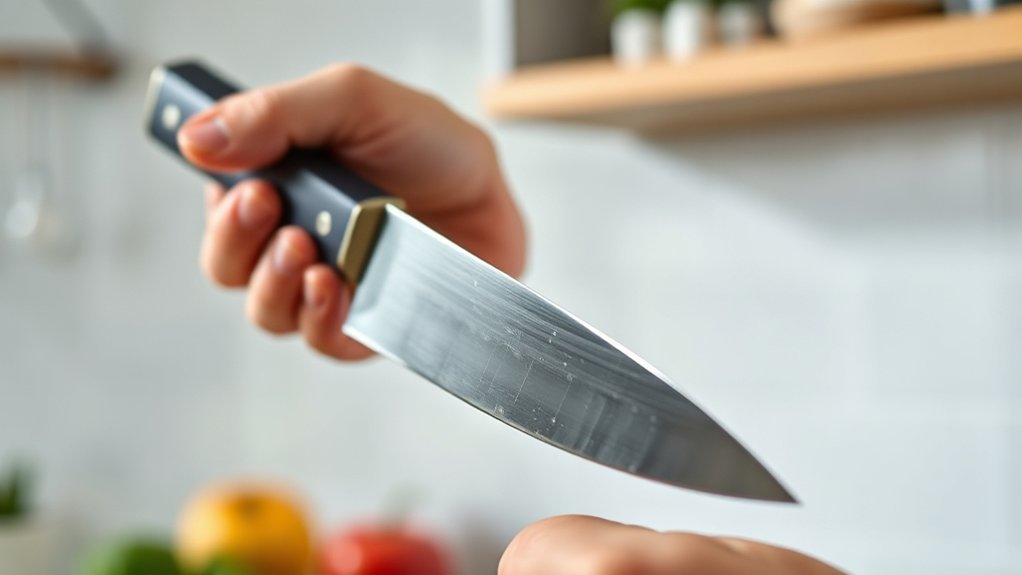
A sharpening rod doesn’t grind metal away like a whetstone; it realigns the edge of your knife so it cuts cleanly again. When you draw the blade along the rod, you push the bent edge back into alignment, restoring bite without removing much material.
This makes the tool ideal for quick touch-ups between full sharpenings. You’ll notice the difference most on Aging knives, which lose crispness from regular use but don’t always need heavy grinding.
The rod helps you maintain performance by correcting tiny folds and rolls at the edge. Steel composition also matters, because harder steels hold their alignment longer, while softer steels may need more frequent attention.
If you use the rod consistently, you can keep your knife cutting smoothly, reduce drag, and extend the time between more aggressive sharpening sessions.
Choose the Right Honing Rod
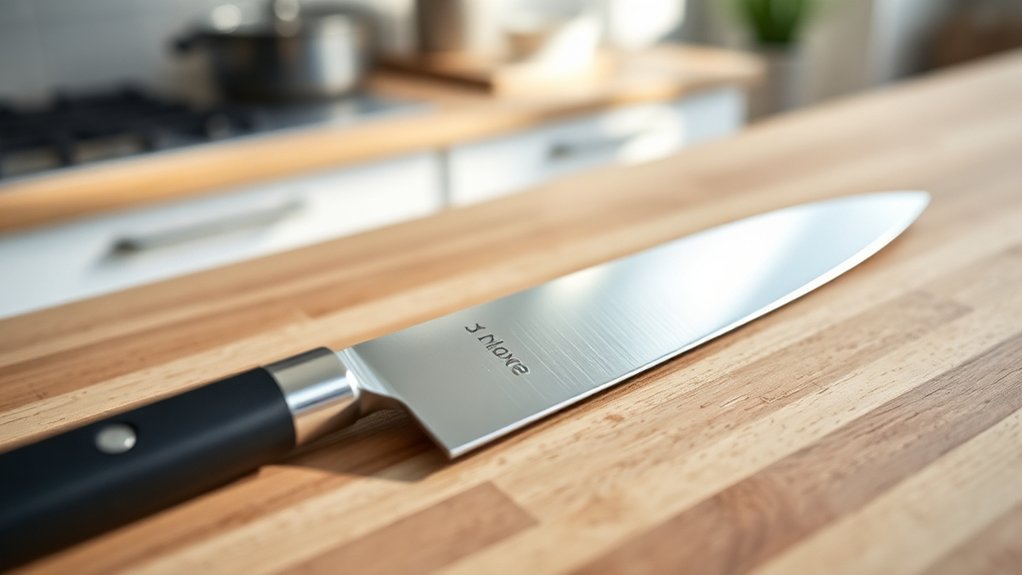
Before you start honing, make sure you’re using the right rod for your knife and your goals. Pick a rod that matches your blade’s steel compatibility so you don’t stress the edge or waste effort.
A fine ceramic rod works well for light edge wear and regular maintenance, while a smooth steel rod suits tougher knives that need quick touchups. Diamond-coated rods cut faster, but they can remove more metal, so use them carefully.
- Feel confident with a tool that fits your knives
- Protect your favorite blade from unnecessary wear
- Enjoy cleaner slicing without the frustration
- Keep dullness from turning cooking into a chore
- Trust a rod that respects your steel
Also, choose a length that feels comfortable in your hand and matches your largest knife. If you cook often, keep one reliable rod nearby so you can maintain sharpness before problems build up.
Set the Correct Knife Angle

Now set your knife at the correct angle to keep the edge consistent as you hone. Hold the blade so the sharpening angle matches the bevel already on the edge, usually about 15 to 20 degrees for most kitchen knives.
If you tilt too high, you’ll miss the edge; if you go too low, you’ll rub the side instead of refining the bevel. Keep your wrist steady and your elbow relaxed so you can guide the angle without wobbling.
The rod material can affect how easily the knife tracks, since smoother rods may feel different from coarse steel or ceramic. Use the angle that lets the knife touch the rod evenly from heel to tip.
If you’re unsure, start slightly lower and adjust until the edge meets the rod cleanly. Consistency matters more than speed here, because a stable angle helps preserve the blade and prepares it for the next honing pass.
Hone Each Side With Smooth Strokes
Sweep the knife down the rod in one smooth motion, then switch to the other side and repeat. Keep your wrist steady and let the blade glide from heel to tip with light pressure. You’re not forcing the edge; you’re coaxing it back into line. Alternate sides evenly so the knife stays balanced, and keep your rhythm calm.
- Feel the quiet focus build.
- Hear the soft metallic whisper.
- Trust your hands to stay steady.
- Notice the blade moving with ease.
- Ignore unrelated ideas and keep your attention on the motion.
Use the same gentle pace for every pass, and don’t rush to add extra force. If your strokes stay smooth, the knife responds quickly and cleanly. Save topic ideas for later, and stay with the simple back-and-forth flow. That steady repetition helps you hone efficiently and keeps your sharpening routine satisfying, controlled, and confident.
Check the Edge and Touch Up
After a few passes on the rod, inspect the edge under good light and see how it feels on a tomato or piece of paper. If it still drags, give it a few more light strokes, alternating sides so you keep the bevel even. Don’t chase perfection with force; you’re refining, not grinding.
| Check | What you want | Feeling |
|---|---|---|
| Paper test | Clean slice | Relief |
| Tomato test | Skin breaks fast | Confidence |
| Edge glare | No shiny spots | Calm |
| Hand feel | Smooth, not rough | Trust |
| Final glance | Straight line | Pride |
If the knife still hesitates, repeat the touch-up. You can also think about alternative materials for rods and review safety practices so your hands stay clear. A sharp edge should glide, not snag, and that small difference can make prep feel easier and safer.
Frequently Asked Questions
How Often Should I Sharpen Kitchen Knives With a Rod?
You should use a rod whenever your knife feels dull, usually every few uses, to maintain edge alignment. Your sharpening frequency depends on how often you cook and the steel’s quality.
If you prep food daily, you’ll probably need a quick touch-up once a week. Light home use may only need it every few weeks. Don’t overdo it; honing too often won’t replace proper sharpening when the blade truly dulls.
Can a Honing Rod Fix a Chipped Knife Edge?
No, you can’t truly fix a chipped edge with a honing rod. You’re trying to guide a bent fence back straight, but a chip is broken stone, not crooked wire.
A rod can improve alignment and lighten tiny burrs, yet it won’t replace missing metal. For two word discussion ideas and edgy questions, you’ll need sharpening or professional repair first, then use the rod to maintain the edge afterward.
What Type of Rod Works Best for Serrated Knives?
A ceramic type rod works best for serrated knives because it removes less metal and reaches the beveled edges cleanly. You should use a tapered rod that matches each serration, so you can work one notch at a time.
Avoid aggressive steel rods, since they can damage the teeth. If you’re careful, you’ll keep the blade sharp, preserve its shape, and extend the life of your serrated knife easily.
How Do I Store a Honing Rod Safely?
You can store your honing rod in a drawer tray or knife block, and that’s safer than leaving it loose. Contrary to the theory that any dry spot works, a rod can still bend or rust if it rattles around.
For better Store safety, keep it in a sheath, sleeve, or wall hook. Wipe it dry first, and use regular Rod maintenance to prevent damage and keep it ready.
When Should I Replace My Kitchen Knives Instead of Honing Them?
You should replace your kitchen knives when honing no longer restores a clean edge, the blade chips, bends, or feels unsafe, and sharpening won’t help.
If you’re wondering whether to invest in new cutlery, consider patent concerns and branding strategies too, especially if you’re comparing premium sets.
You’ll save time and effort when a knife can’t hold an edge, even after careful maintenance and regular honing.
Conclusion
With your honing rod in hand, you’ve now got the know-how to keep your kitchen knives keen and ready. Choose the right rod, set your angle, and use smooth strokes on each side until the edge feels crisp again. A quick check and a final touch-up can make all the difference.
Follow these steps for sharpening kitchen knives with a rod regularly, and you’ll slice with ease, as if you’ve brought a touch of old-world craft into your modern kitchen.