How to Get Rid of Cockroaches in Your Kitchen Fast
Cockroaches in your kitchen can make it hard to feel comfortable in your own home, and getting rid of them fast can be frustrating. You’re not alone—many people struggle to keep these…
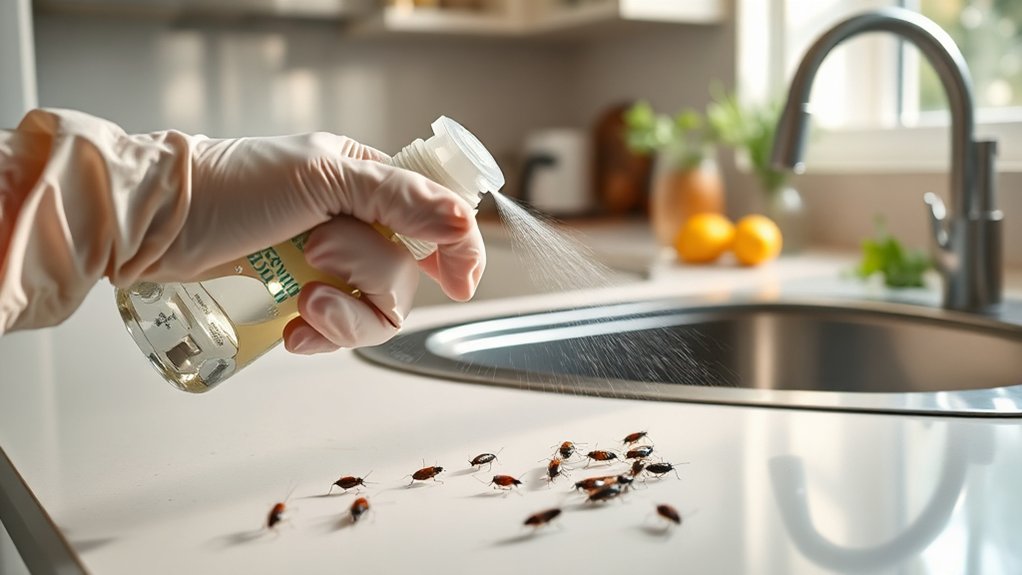
Cockroaches in your kitchen can make it hard to feel comfortable in your own home, and getting rid of them fast can be frustrating. You’re not alone—many people struggle to keep these persistent pests away.
Start with a fast kitchen cleanup: wipe counters, sweep crumbs, wash dishes, empty the sink, and seal dry goods in containers. Then find roach hideouts under sinks, behind appliances, and inside cabinet cracks. Place gel baits along travel paths, and use a narrow spray only on hotspots. Keep boric acid light and away from pets. If roaches still show up after a few days, call a pest pro; there’s more you can do next.
Key Takeaways
- Clean fast: wipe crumbs, wash dishes, empty the sink, and take out trash to remove food and water sources.
- Inspect under sinks, behind appliances, and inside cabinets for droppings, egg cases, and hiding spots.
- Seal cracks, pipe gaps, and baseboard openings; add door sweeps and repair screens to block entry.
- Place cockroach baits near sinks, cabinets, and appliances, and avoid spraying repellents around the bait.
- Use a light dusting of boric acid in hidden travel areas, keeping it away from pets and food-prep surfaces.
Start With a Fast Kitchen Cleanup
Before you do anything else, give your kitchen a fast, thorough cleanup. Clear crumbs from counters, sweep the floor, and wipe sticky spills off every surface. Wash dishes right away, empty the sink, and don’t leave food sitting out.
Clear crumbs, wipe spills, wash dishes promptly, and never leave food sitting out.
Put dry goods in sealed containers, toss expired items, and tidy pantry shelves so nothing invites pests back. You should also reset your cleaning routines now, because consistency matters more than one big effort.
Make quick daily passes through the room, focusing on meal prep areas, trash spots, and under appliances. Improve kitchen organization by storing utensils, bags, and ingredients where they belong, so clutter doesn’t create hiding places or attract attention.
When you remove food residue and reduce mess, you make your kitchen far less appealing to cockroaches and set up a cleaner space for the next steps.
Find Where Cockroaches Hide
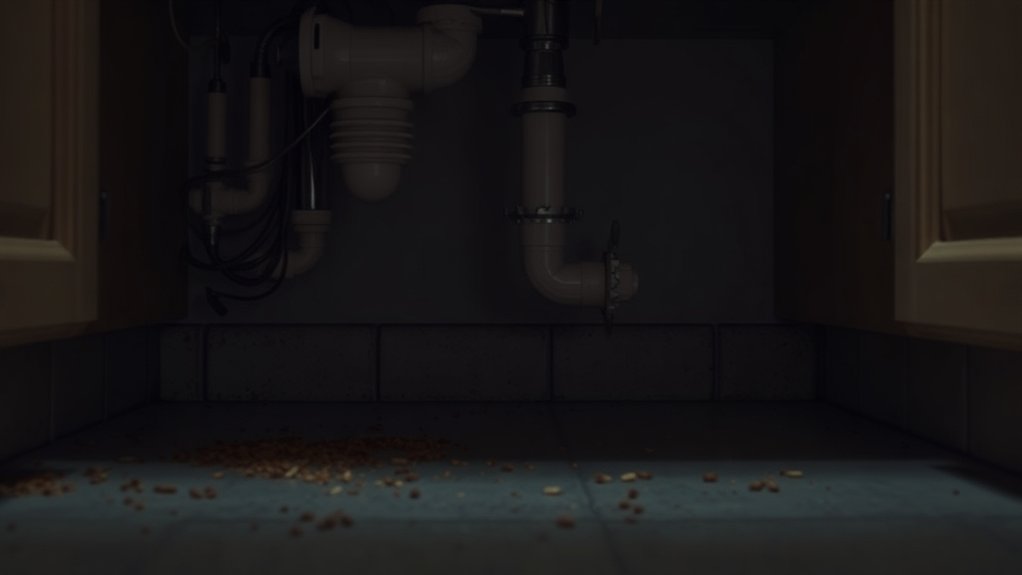
Next, find out where cockroaches are hiding so you can target them where they live. Check under sinks, behind appliances, and inside cabinets for droppings, egg cases, or live bugs. Once you find their hiding spots, you can focus your cleanup and treatment there.
Check Under Sinks
Open the cabinet under your sink and inspect it closely, because this damp, dark space is a favorite hiding spot for cockroaches. Pull out cleaners, bags, and bins so you can see every corner.
Look for droppings, shed skins, egg cases, and greasy smear marks along the baseboards and around pipe openings. If you spot moisture, dry it fast and fix leaks, since roaches thrive there.
Wipe crumbs, food residue, and spills with a quick cleanup, then seal gaps with caulk or foam. Keep a simple hideouts map of every problem area you find so you can target treatment later.
Place sticky traps near the back and check them daily. A clean, dry cabinet makes your kitchen less inviting and helps you spot new activity sooner.
Inspect Behind Appliances
If the cabinet under your sink looks clear, move on to the spaces behind your fridge, stove, and dishwasher, since cockroaches often hide where warmth, crumbs, and moisture collect.
Pull each unit out carefully so you can inspect appliances from top to bottom. Use a flashlight to check the floor, walls, cords, and drip pans for droppings, egg cases, or live roaches.
Don’t forget the narrow crawl space along baseboards and corners, where pests can travel unseen. Wipe up grease and food bits as you go, then vacuum debris and seal any gaps you spot.
If you find signs of activity, clean thoroughly and keep these hidden areas dry and uncluttered so roaches have fewer places to shelter and breed.
Look Inside Cabinets
Check every cabinet, especially the dark corners, gaps around pipes, and the spaces under shelves where cockroaches like to hide. Pull out dishes, dry goods, and small appliances so you can spot droppings, egg cases, and greasy trails. You should also open lazy Susans, under-sink storage, and toe-kick panels.
- Wipe shelves with hot, soapy water.
- Seal cracks with caulk.
- Toss expired food and cardboard.
- Improve cabinet organization to reduce clutter.
Make cabinet checks part of your regular cleaning routines, because cockroaches return fast when food and moisture stay available. If you find live insects, vacuum them up, then empty the vacuum outdoors. Keep crumbs, leaks, and pet food away from these spaces, and you’ll cut off their hiding spots quickly.
Use Baits to Kill Cockroaches

Use cockroach baits with a slow-acting insecticide. That gives the pests time to carry it back to the nest and spread it to others. Place baits near sinks, behind appliances, under cabinets, and along cracks where you’ve seen cockroach activity. Check them regularly, and replace them as needed to keep them working.
Choosing Effective Baits
Baits work best when you place them where cockroaches already travel, so pick slow-acting gel or station baits that let roaches carry poison back to the nest. You’ll get better bait effectiveness when you match the bait to the species and food sources in your kitchen.
Check labels for active ingredients, and choose products made for indoor use. Timing considerations matter too: apply fresh bait after cleaning, when competing crumbs and grease are gone.
- Use gel bait for cracks and crevices.
- Choose stations if you want cleaner handling.
- Replace dried-out bait promptly.
- Rotate products if activity stays high.
Keep pets and kids away from treated areas, and don’t spray repellents near bait, or you’ll reduce feeding.
Placing Baits Strategically
Place the bait where cockroaches actually hide and travel, not out in the open where they can ignore it. You’ll get better results by focusing on dark corners, under sinks, behind appliances, inside cabinet hinges, and along baseboards.
Use small dots or bait stations, and space them a few feet apart so roaches can find them easily. Don’t wipe bait away with cleaners, and don’t overcrowd the area with traps. Those strategies mistakes can reduce feeding and slow control.
Check bait placement every few days, then replace dry or eaten bait as needed. Keep food sealed and crumbs cleared so roaches choose the bait instead. When you place bait strategically, you target the nest, not just the bugs you see.
Spray Roach Hotspots
Where do cockroaches hide most often? You’ll usually find them along warm seams, under appliances, inside cabinet cracks, and behind the stove. To treat roach hotspots, aim a roach-safe spray directly into these sheltered edges, then leave the area undisturbed so it can work.
Keep your strokes light and focused; you don’t need to soak surfaces. Use a narrow nozzle to reach tight gaps where roaches travel and rest. After spraying, step back and monitor infestation signs, such as fresh droppings or new activity at night.
- Spray behind the refrigerator.
- Treat the toe kicks under cabinets.
- Target gaps around pipes and outlets.
- Hit the back edges of drawers and hinges.
Reapply only as directed on the label, and rotate your approach if you still see movement. Precision matters more than coverage, so concentrate on the spots roaches actually use.
Remove Food, Crumbs, and Water
What’s drawing roaches in isn’t just shelter—it’s the easy access to food and moisture. You need to remove food, crumbs and water every day, because even tiny leftovers can keep roaches active in your kitchen.
Wipe counters, stovetops, and table edges after each meal, and sweep or vacuum floors where crumbs collect. Don’t leave pet food out overnight, and store dry goods in sealed containers so roaches can’t reach them.
Rinse dishes quickly instead of letting them sit in the sink, and empty trash before it overflows. Fix dripping faucets, wipe puddles under the sink, and dry sponges and dishcloths so moisture doesn’t linger.
Good kitchen sanitation means making the space less inviting, not just cleaner. When you stay consistent, you cut off the basics roaches need to survive, and you make your kitchen far less attractive fast.
Seal Cracks and Entry Points
Roaches can squeeze through surprisingly tiny gaps, so you need to block their entry points fast. Inspect baseboards, walls, pipes, and around windows, then seal cracks with caulk, foam, or weatherstripping.
Roaches slip through tiny gaps, so inspect baseboards, pipes, and windows, then seal cracks fast.
Focus on the spots roaches use most: plumbing penetrations, loose trim, gaps under sinks, and spaces where flooring meets cabinets. If you leave even a hairline opening, they can keep slipping back in and undo your progress.
- Use silicone caulk for small cracks.
- Add expanding foam around larger holes.
- Install door sweeps to close bottom gaps.
- Patch torn screens and loose vents.
Check these areas at night with a flashlight, when roaches are more active and easy to spot. Revisit your repairs after a few days, because settling can reopen seams.
When you seal cracks thoroughly, you make your kitchen far less welcoming and cut off their entry points before they spread.
Clean Appliances and Cabinets
Now that you’ve blocked their entry points, turn to the places roaches hide and feed: your appliances and cabinets. Pull appliances away from the wall and vacuum crumbs, grease, and loose debris from underneath and behind them.
Wipe stovetops, toaster slots, microwave interiors, and fridge shelves with hot soapy water, then dry every surface. Clean spills right away, since even tiny sugar or oil residue can draw pests back fast.
Open cabinets, remove items, and inspect corners, hinges, and shelf edges for crumbs or sticky spots. Use a damp cloth or mild cleaner to reach seams and trim, then let surfaces dry completely.
Build these tasks into your regular cleaning routines so food waste doesn’t build up. Consistent appliance sanitation reduces hiding spots, limits odors, and makes your kitchen less inviting.
When you keep these areas spotless, you cut off easy meals and make it harder for roaches to settle in again.
Use Boric Acid Safely
When using boric acid, apply it only in places roaches travel, such as cracks, behind appliances, and under cabinets. Keep it away from pets and food-preparation areas to avoid creating a hazard in your kitchen. Use only a light dusting—a little goes a long way against cockroaches.
Safe Application Areas
Where should you place boric acid for the best results? Put a light dusting in hidden cracks, behind the stove, under the sink, and along cabinet edges where roaches travel. Keep it dry, and use only a thin layer so you don’t overapply.
For safer control, follow a simple cleaning schedule that wipes crumbs and grease without disturbing treated spots. Strong trash management also matters; empty bins often and seal food tightly so cockroaches don’t feed nearby.
- Apply in wall gaps and baseboard seams.
- Dust behind appliances, not on counters.
- Refresh only after cleaning removes residue.
- Check every few days for activity.
Focus on travel paths, not open surfaces, and you’ll target roaches where they hide most.
Keep Away From Pets
Keep boric acid well out of reach of pets, since curious dogs and cats can track it, lick it, or inhale loose powder. For pet safety, you should treat every application area like a hazard zone and keep pets out until you’ve cleaned up the space.
Use pet proofing tactics such as closing kitchen doors, blocking gaps, and storing the container in a locked cabinet. If you dust near appliances or baseboards, check that none has fallen where paws or noses can reach it.
Wipe stray powder promptly with a damp cloth or vacuum designed for fine debris. If your pet seems ill after exposure, call your vet right away. Careful handling protects your home while you target roaches without risking your animals.
Use Correct Amounts
Use only a light dusting of boric acid, because more won’t work better and can make cleanup harder. You want just enough to leave a fine film where roaches travel, not piles they’ll avoid. Keep it behind appliances, under cabinets, and along cracks, then reapply only after you’ve cleaned the area.
- Measure lightly, then stop.
- Target hidden entry points.
- Wipe up excess promptly.
- Store the product securely.
For safe use, treat this as a narrow, practical step, not a broad solution; it’s a Subtopic not relevant to the Other H2s listed above, and an unrelated topic can distract you from results. Focus on two word discussion ideas like placement control, dosage limits, and cleanup habits so you stay effective, careful, and consistent.
When to Call a Pest Control Pro
If you’re still spotting roaches after a few days of cleaning and baiting, it’s time to call a pest control pro. You’ve already tightened your cleanup routines and watched for entry points, so don’t keep guessing while the problem spreads.
A pro can identify the species, find hidden nests, and choose treatments that work in cracks, under appliances, and inside walls. Call sooner if you see daytime activity, egg cases, droppings, or roaches in more than one room.
You should also get help if children, pets, or health concerns make store-bought products risky. The right technician can assess the infestation and apply targeted solutions faster than repeated DIY attempts.
That saves you time, reduces frustration, and gives you a clearer plan. If roaches keep returning after you’ve treated the kitchen, professional service can stop the cycle and restore control.
Keep Cockroaches Out for Good
Once you’ve cleared the infestation, lock down the kitchen so roaches don’t come back. Keep your cleaning habits tight: wipe counters after every meal, sweep crumbs from corners, and take out trash before it overflows.
Seal food in airtight containers and never leave pet food out overnight. Fix leaks fast, because roaches thrive on moisture under sinks and behind appliances.
- Caulk gaps around pipes, baseboards, and cabinets.
- Install door sweeps and repair torn window screens.
- Store recyclables in sealed bins and rinse them first.
- Check under the fridge and stove weekly for spills.
For strong pest prevention, reduce clutter so roaches have fewer hiding spots, and vacuum regularly along walls and behind furniture. If you spot a roach, act immediately instead of waiting for more to show up.
Consistent habits matter more than one deep clean. Stay alert, stay dry, and you’ll make your kitchen far less inviting.
Frequently Asked Questions
How Quickly Can Cockroaches Disappear After Treatment?
You can see cockroaches disappear within hours to a few days after treatment, but how quickly that happens depends on the product and infestation size. In the post treatment period, you’ll often notice more activity at first as hidden roaches come out.
For better long term outcomes, keep cleaning, sealing food, and fixing leaks. You may need follow-up treatments, since eggs can hatch later and restart activity.
Are Roaches Dangerous to Food-Preparation Surfaces?
Yes, are roaches dangerous to food prep surfaces? Absolutely. They crawl over counters, sinks, and cutting boards, then leave bacteria, droppings, and allergens behind.
You shouldn’t let them near anything you use to cook. Clean and disinfect surfaces right away, store food in sealed containers, and fix leaks fast.
If you spot roaches, act quickly because they can contaminate your kitchen and make meals unsafe.
Can Cockroaches Come Back After One Treatment?
Yes, cockroaches can come back after one treatment if you don’t address hidden eggs, entry points, and food sources. You should expect possible infestation recurrence and keep up post-treatment monitoring to catch new activity early.
Seal cracks, store food tightly, clean spills fast, and keep surfaces dry. If you still see roaches after treatment, you may need a follow-up plan or professional help to finish the job.
Which Roach Species Are Most Common in Kitchens?
In common kitchens, you’ll usually find German roaches first; they’re the main roach species you’re likely to spot. You may also see American, Oriental, and brown-banded roaches, but German roaches are the wildfire in a pantry, spreading fast and hiding well.
When you time treatment right, you’ll often notice post treatment disappearance sooner. Still, you should watch for survivors, because these pests can rebound if you miss harborage sites.
Do Cockroaches Spread Bacteria in the Kitchen?
Yes, cockroaches can spread bacteria in your kitchen. They crawl through drains, trash, and dirty surfaces, then track germs onto counters, dishes, and food. You face a real contamination risk, so wipe spills fast, seal food, and clean hiding spots. Don’t trust disinfection myths that say a quick spray fixes everything; you need thorough cleaning and prevention to keep your kitchen safer.
Conclusion
If you want to get rid of cockroaches fast, start by cleaning up food, crumbs, and water, then hit their hiding spots with bait and spray. Keep your kitchen spotless, check appliances and cabinets, and use boric acid safely where needed.
Remember, an ounce of prevention is worth a pound of cure. If the infestation keeps growing, call a pest control pro to get rid of cockroaches in your kitchen and keep them out for good.