10 Easy Tips to Organize Your Kitchen
A cluttered kitchen can make even simple tasks feel frustrating, and you’re not alone—many people struggle to keep their space tidy. These 10 easy tips to organize your kitchen can help you…
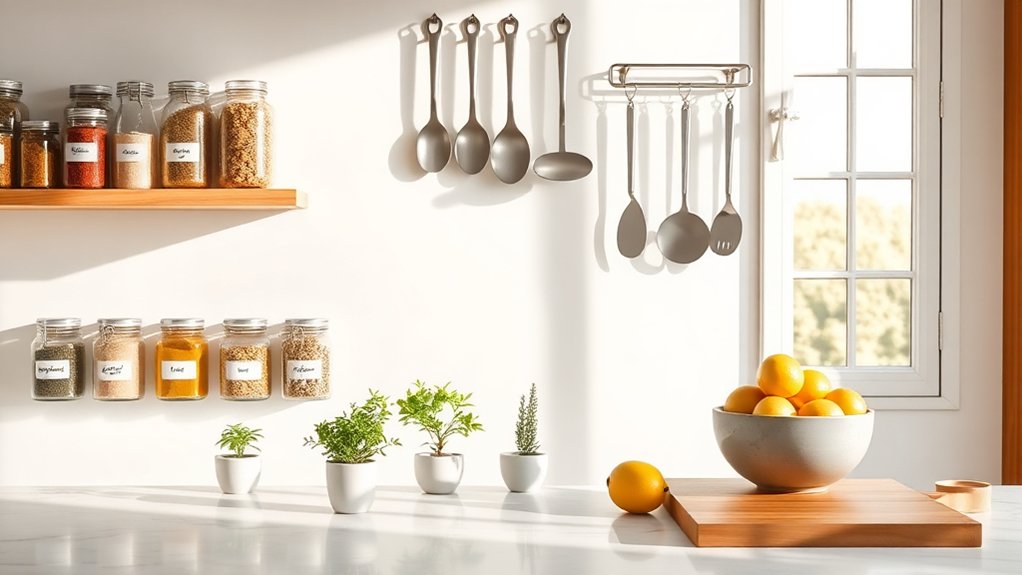
A cluttered kitchen can make even simple tasks feel frustrating, and you’re not alone—many people struggle to keep their space tidy. These 10 easy tips to organize your kitchen can help you create a setup that’s easier to use and maintain.
Start by decluttering your kitchen: set a timer, clear one cabinet or surface, and toss expired food, chipped dishes, and duplicates. Then group similar items together, like dishes, baking tools, and snacks, and store them in clear, labeled containers.
Use shelf risers, dividers, and pull-out organizers to save space. Keep counters clear, clean as you go, and reset nightly. With a few simple habits, your kitchen stays organized, and there’s more to make it even easier.
Key Takeaways
- Declutter first: remove expired food, duplicates, chipped dishes, and anything unused for a year.
- Group items by use, keeping dishes, tools, coffee supplies, and pantry staples in dedicated zones.
- Use clear, labeled containers and bins so food and supplies stay visible and easy to find.
- Maximize cabinet and drawer space with shelf risers, dividers, hooks, and pull-out organizers.
- Maintain order daily by wiping counters, washing dishes, putting items back, and doing a quick nightly reset.
Declutter the Kitchen First
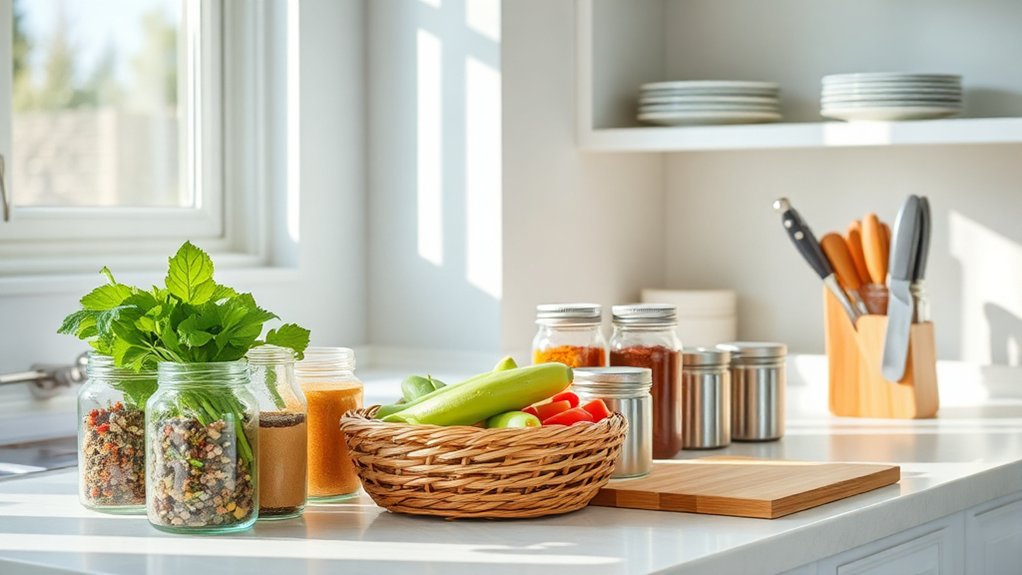
Before you organize anything else, start by decluttering your kitchen first. You’ll make every later step easier when you clear out what you don’t use, need, or love.
Set a timer, grab a trash bag, and work one surface or cabinet at a time. Toss expired food, chipped dishes, and duplicate gadgets that only crowd your space.
If you haven’t used an item in a year, let it go. Keep a declutter mindset so you focus on usefulness instead of habit.
Be honest about what deserves space in your kitchen and what doesn’t. Aim for minimal gear, especially if your counters feel packed and your drawers won’t close.
As you remove clutter, you’ll see what you actually own and how much room you’ve been wasting. That clear view helps you create a calmer kitchen and makes every future organization choice simpler and faster.
Group Kitchen Items by Use

Once you’ve cleared out the clutter, the next step is to group kitchen items by use so everything has a clear home. Start with category based sorting: place everyday dishes, glasses, and utensils together, then separate baking tools, cooking tools, and serving pieces.
Keep coffee supplies near the mug and brewer area, and gather food storage containers in one spot so you can grab them fast. Grouping by use helps you cook without hunting through mixed drawers or shelves, and it makes cleanup easier too.
Keep coffee supplies near your mug and brewer area, and store containers together for quick, easy access.
You’ll notice your kitchen feels calmer when similar items stay together. Put sharp tools with other prep items, and keep snacks, spices, and breakfast items in their own zones.
This simple system saves time, reduces mess, and makes it easier to find what you need when you’re cooking, serving, or packing leftovers.
Maximize Cabinet Space
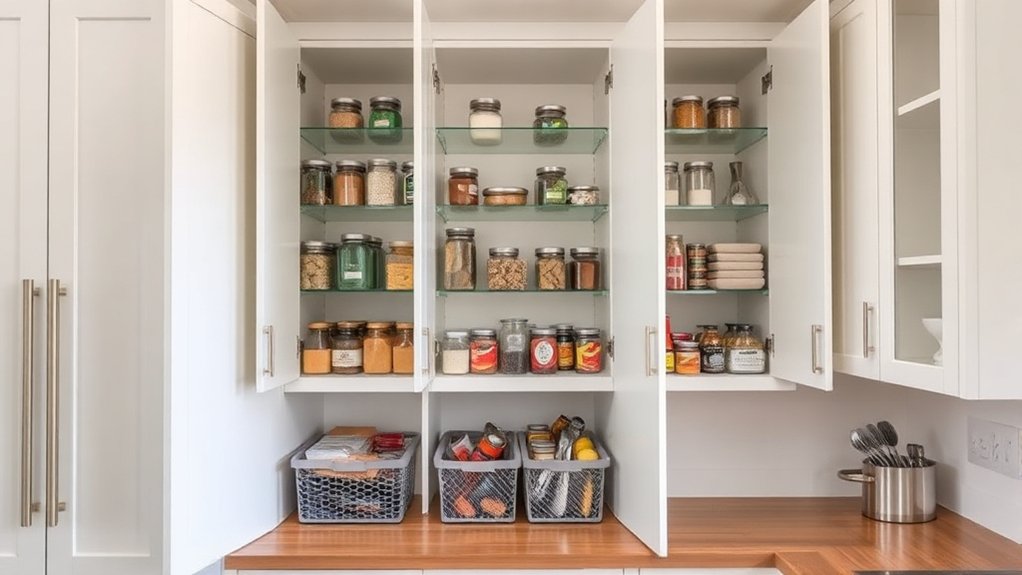
Make the most of every cabinet by using vertical space and smart storage tools. Add shelf risers, stackable bins, and tension dividers so you can fit more without creating clutter. Place everyday dishes at eye level, then store less-used items higher up or in back.
Use clear containers so you can spot ingredients fast, and label each one to keep everything in place. You can also mount hooks inside cabinet doors for lids or measuring cups, which frees up valuable shelf room. For deeper cabinets, try pull-out organizers that let you reach items without digging.
When you focus on Maximizing storage, you turn wasted gaps into useful zones. Cabinet optimization works best when each shelf has a clear purpose, so review your setup regularly and remove anything you don’t use.
Small changes like these help you save time, reduce mess, and keep your kitchen running smoothly every day.
Organize Kitchen Drawers for Easy Access
Add dividers to keep utensils, tools, and small items neatly separated. Then group the things you use most often in easy-to-reach spots. That way, you can find what you need quickly and keep your drawers from becoming cluttered.
Drawer Dividers
Ever open a kitchen drawer and waste time digging for a spatula or measuring spoons? Drawer dividers help you stop the clutter before it starts. You can group similar items together, so you always know where to reach.
Use adjustable drawer dividers for larger tools, and add utensil trays for forks, spoons, and knives. Measure your drawers first, then choose inserts that fit snugly and won’t slide around.
Keep one section for cooking tools, another for baking supplies, and a small area for gadgets you use often. When you sort items by shape and purpose, you’ll save time and avoid messy piles.
With a simple setup, your drawers stay neat, and you’ll grab what you need without digging.
Daily Access Zones
Keep your most-used kitchen tools in daily access zones so you’re not opening every drawer to find them. Put spatulas, measuring spoons, and peelers in the drawer nearest your prep area for quick retrieval.
Group items by task, then label each section so you can reset everything fast after cooking.
- Place prep tools close to the cutting board.
- Store cooking tools near the stove.
- Keep cleanup items by the sink.
This setup saves time, reduces clutter, and keeps your workflow smooth. When you build daily access habits, you’ll spend less time searching and more time cooking.
Review your drawers every few weeks, and move rarely used tools out of the prime spots so your system keeps working.
Keep Countertops Clear and Functional
How much easier does cooking feel when your counters aren’t buried under clutter? You can make prep faster by treating your counters as working space, not storage. Keep only the tools you use daily within reach, and return everything else to cabinets or drawers after each task.
Group items by purpose so you can grab what you need without digging. Clear counters help you chop, mix, and plate with less stress, while Functional surfaces give you room to move safely and efficiently.
Wipe spills right away and put away small appliances you don’t use every day. If one gadget stays out, choose the one that earns its spot through constant use.
You’ll also avoid visual chaos when you leave open areas around the sink and stove. A few open inches can make the whole kitchen feel calmer. When you protect your work zones, you create a kitchen that supports cooking instead of slowing it down.
Create Simple Pantry Zones
When you group pantry items by use, you make cooking faster and shopping easier. Start by dividing shelves into pantry zones that match how you cook. Put breakfast foods together, group baking supplies, and keep dinner staples near the front. This simple setup helps you grab what you need without digging through everything.
Group pantry items by use to make cooking faster, shopping easier, and everyday grabbing simpler.
Use labeled containers for loose items like pasta, rice, snacks, and grains. Clear bins keep foods visible, and they stop packages from spilling or getting lost. You’ll waste less time searching and more time preparing meals.
- Store daily items at eye level.
- Place bulk goods on lower shelves.
- Keep rarely used extras on top.
Revisit your pantry zones every few weeks and adjust them to fit your routine. If your family’s habits change, move items where they’re easiest to reach. A flexible system keeps your pantry neat, practical, and ready for busy days.
Label Kitchen Items Clearly
Label every pantry item clearly so it’s easy to find what you need. Match each label to its container, and you’ll know what’s inside at a glance. It’s a simple way to stay organized and avoid mix-ups.
Clear Pantry Labels
Clear pantry labels make it easy to find what you need and put things back where they belong. You’ll keep your kitchen calmer when you use clear pantry labels on jars, bins, and shelves.
Choose simple wording so every family member can scan and act fast. Use labeled containers for flour, snacks, and pasta, and update them when contents change.
- Read labels before you buy duplicates.
- Return items to the right spot.
- Spot missing staples at a glance.
When you label consistently, you cut waste and save time during meal prep. Your pantry stays orderly, and you won’t waste energy searching through mystery containers.
A few neat labels can turn daily cleanup into a quick habit.
Match Labels To Containers
How can you keep kitchen labels useful? Start by matching labels to containers so you can spot ingredients fast and avoid mix-ups. When you’re labeling containers, choose a style that fits each shape and size, then place it where you’ll see it quickly.
Use waterproof labels for jars, tape labels for bins, and clip-on tags for baskets. Keep the wording short and specific.
| Container | Best Label |
|---|---|
| Glass jar | Rice |
| Plastic bin | Snacks |
| Basket | Onions |
This simple system helps you keep shelves neat and makes restocking easier. If you switch foods, update the label right away.
Clear, consistent labels save time, reduce waste, and make your kitchen feel organized every day.
Organize Fridge and Freezer Storage
A tidy fridge starts with smart zones. Group dairy, produce, leftovers, and drinks where they fit best, so you can spot food fast and waste less. Clear bins boost decluttering efficiency, while good placement supports temperature maintenance by keeping cold air flowing around items.
In the freezer, stack similar foods together and keep older packages in front. Use shallow containers or freezer-safe bags to flatten bulky items and save space.
- Put ready-to-eat foods at eye level.
- Keep raw meat sealed on the lowest shelf.
- Store frozen meals in labeled stacks.
You’ll also benefit from checking shelf edges and door pockets for forgotten sauces or half-used condiments. Move items with soonest use dates forward, and keep small baskets for snacks or spreads.
When you organize this way, you cut search time, protect food quality, and make every inch of cold storage work harder for you.
Build a Daily Kitchen Cleanup Routine
Once your fridge and freezer are in order, keep the rest of the kitchen manageable with a simple daily cleanup routine.
Start with a quick reset after each meal: wipe counters, wash dishes, and put ingredients back where they belong. You’ll prevent clutter from piling up and make tomorrow’s work easier.
Set aside ten minutes at night for daily maintenance, so you can sweep crumbs, empty the sink strainer, and tidy high-use spots like the stove and prep area.
If you cook often, clean as you go by rinsing utensils and loading the dishwasher between steps. Keep a microfiber cloth handy for spills, and return small appliances to their spots when you’re done.
This habit doesn’t need to feel rigid; it just needs to happen every day. With a steady routine, your kitchen stays calm, functional, and ready for your next meal without extra effort.
Keep Your Kitchen Organized Long Term
Keeping your kitchen organized long term comes down to a few simple habits you can stick with every week. You don’t need a full overhaul; you need consistency. Use a maintenance mindset so small messes never turn into big projects.
Long-term kitchen organization starts with simple weekly habits and a maintenance mindset.
Build efficiency rituals that fit your routine, like resetting counters after dinner and checking pantry levels before grocery shopping.
- Put items back where they belong right away.
- Toss expired food and wipe shelves weekly.
- Review storage zones monthly and adjust what isn’t working.
When you protect your systems, your kitchen stays easier to use, cleaner, and calmer. You’ll waste less time searching for tools, and you’ll cook with less stress.
Keep your standards realistic, and don’t wait for clutter to pile up. A few steady habits will keep your space organized for the long run.
Frequently Asked Questions
How Do I Organize a Tiny Kitchen With No Extra Cabinets?
You can organize a tiny kitchen with no extra cabinets by using vertical space, hooks, and stackable bins. In your tiny apartment, mount shelves, hang mugs, and store pans on a wall rack.
Use budget hacks, like tension rods, over-the-door organizers, and jars for dry goods. Keep only what you use daily, and group items by task.
You’ll free up counters, find things faster, and make cooking feel easier.
What Are the Best Storage Tools for Awkward Kitchen Corners?
For awkward kitchen corners, you’ll get the best results from lazy Susans, corner pull-out shelves, and tiered racks. These storage corners help you reach items without digging, while unique organizers for alcoves, like angled spice inserts or custom corner drawers, make tight spaces useful. You can also add stackable bins, turntables, or swing-out trays to keep pans, jars, and small appliances organized and easy to grab.
How Often Should I Replace Worn-Out Kitchen Organizers?
You should replace worn-out kitchen organizers as soon as they crack, warp, rust, or stop holding items safely; that’s usually every 1 to 5 years, depending on use and quality. Don’t wait until they fail.
Check your shelves, bins, and dividers every few months, and schedule replacement when you notice wear. If you replace worn out organizers promptly, you’ll keep your kitchen safer, cleaner, and easier to use.
How Can I Organize Cookware for Frequent Baking Needs?
You can keep your baking cookware close, clear, and convenient by grouping pans, sheets, and tools together in one zone. Use vertical dividers for trays, deep drawers for mixing bowls, and labeled bins for measuring cups.
For organizing bakeware, place your most-used pieces at eye level, and try maximizing countertop storage with a small rack or caddy. This setup saves time, reduces clutter, and keeps your baking flow smooth.
What’s the Easiest Way to Store Rarely Used Holiday Dishes?
Store your rarely used holiday dishes in a labeled, sturdy bin on a high shelf or in a basement closet. You can wrap each piece in paper or cloth to prevent chips, then stack plates with separators.
Use clear storage ideas like dividers and inventory lists, so you’ll find everything fast. These organization tips keep your holiday dishes protected, accessible, and out of the way until you need them.
Conclusion
By now, you’ve got a simple system that can make your kitchen feel calmer and more workable every day. When you declutter, group, label, and keep surfaces tidy, you’re not just cleaning up—you’re giving every item a better place to live. A little daily upkeep helps prevent clutter from quietly creeping back in. Stay consistent, and your kitchen will keep running smoothly without any harsh overhauls or major headaches later. These easy tips to organize your kitchen can help you keep it that way.