How to Unclog a Double Kitchen Sink in 3 Easy Steps
A clogged double kitchen sink can bring meal prep and cleanup to a halt, and you’re not alone—many people struggle with slow drains and standing water. If you’re looking for the best…

A clogged double kitchen sink can bring meal prep and cleanup to a halt, and you’re not alone—many people struggle with slow drains and standing water. If you’re looking for the best way to unclog a double kitchen sink, these practical solutions can help you get things flowing again.
First, stop running water, turn off the faucet, and scoop out any standing water with a cup or sponge so both sides stay clear. Next, place a bucket under the P-trap, loosen the slip nuts, remove it, and clean out any gunk or trapped debris with a brush.
Reinstall it, then run water in both basins to test the flow and check for leaks. If it’s still slow, there’s more you can try.
Key Takeaways
- Stop running water, remove standing water, and clear both sink basins before starting.
- Place a bucket under the P-trap, then loosen the slip nuts and remove the trap carefully.
- Clean out food scraps, grease, and debris from the P-trap with a brush and hot water.
- Check washers and pipe alignment, then reinstall the P-trap securely to prevent leaks.
- Run water in both sides to test drainage and tighten any leaking connections if needed.
Stop the Water and Remove Standing Water

First, stop running water into the sink right away so the clog doesn’t get worse. Turn off the faucet, and don’t let anyone else use it until you finish.
If your double sink has a stopper or basket strainer, lift it out so water can move freely. Next, scoop out the standing water with a cup or small container and pour it into a bucket.
Wipe the basin with a towel so you can work without splashing. Check both sides of the sink, because a blockage on one side can back up the other.
If water lingers, use a wet-dry vacuum or a sponge to remove the rest. Keep the countertop dry, too, so you don’t lose your grip.
Once the sink is empty, you can clear drain access and prepare for the next step. Before moving on, make sure the area around the drain has a waterproof seal intact and dry.
Remove and Clean the P-Trap

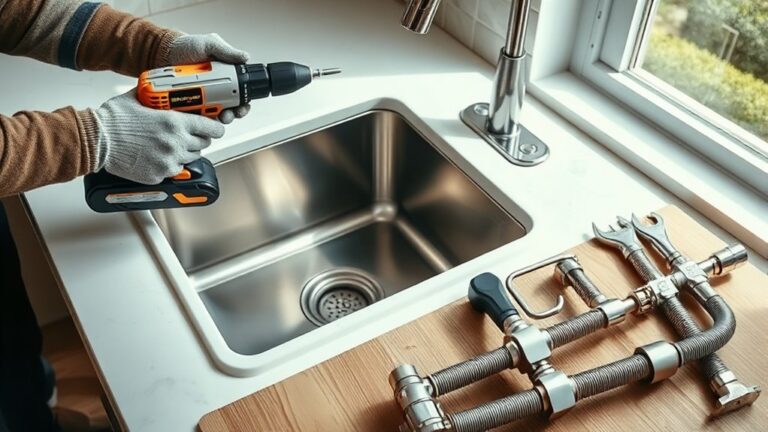
Now that the sink is empty, place a bucket under the P-trap to catch any water, then use a wrench or your hands to loosen the slip nuts and remove the curved pipe. Keep a rag nearby, because some water will still spill out.
Inspect the trap for food scraps, grease, soap buildup, or a lost item that may be blocking flow. Use a bottle brush, old toothbrush, or other unclog tools to scrub the inside thoroughly.
Check the trap for food scraps, grease, soap buildup, or a lost item blocking flow.
If the pipe feels coated, rinse it with hot water and wipe away residue before reinstalling it. Check the washers for wear, cracks, or misalignment, since damaged seals can cause leaks later.
This simple p trap maintenance step often clears stubborn clogs without extra effort and helps you spot trouble early. Once the trap is clean, set it aside on a towel so you can reconnect it neatly in the next step.
Test Your Double Kitchen Sink Drain
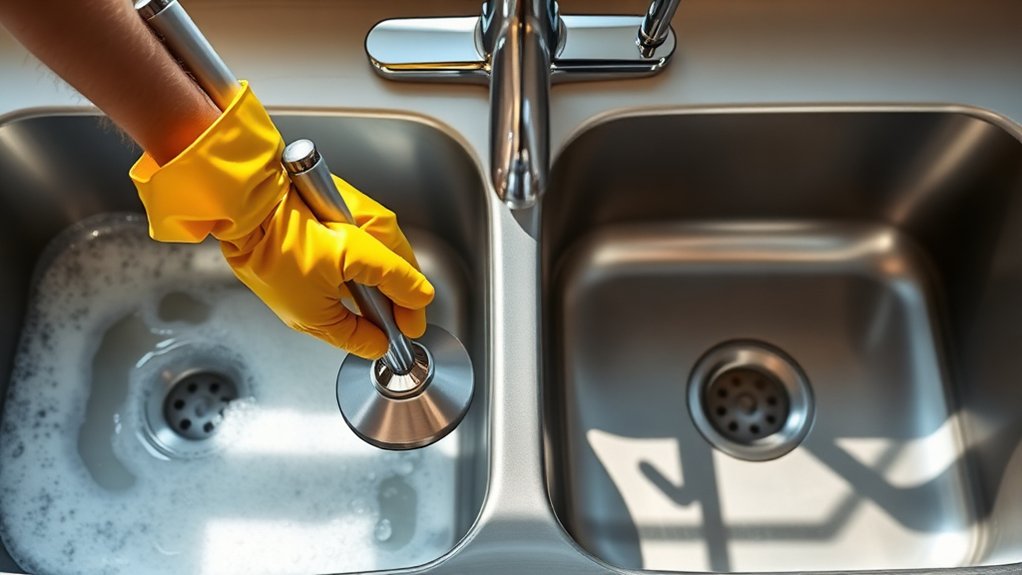
With the P-trap cleaned and reinstalled, run water in both sides of the sink to see how the drain responds. Start with a small stream, then increase to a normal flow and watch whether each basin empties at the same speed.
If the water backs up, drains slowly, or gurgles, you may still have a partial blockage in the branch line or vent. Check the pipes under the sink for leaks while the water runs. Tighten slip nuts if you spot drips, but don’t overtighten them.
Next, fill each basin halfway and release the stopper to test how the system handles a larger surge. Good flow means your fix worked. Poor flow means you should repeat the cleaning or call a plumber.
This quick test is a key part of drain maintenance and helps with clog prevention, so you can catch problems before they return.
Frequently Asked Questions
What Causes a Double Kitchen Sink to Clog so Often?
You usually deal with repeated clogs because food scraps, grease, and soap buildup collect in your sink anatomy and slow drainage. In a double sink, the shared drain and pipe layout can trap debris, and a weak disposal or bad venting can make it worse. If you rinse fibrous foods, coffee grounds, or oil down the drain, you’re adding clog causes that keep coming back unless you clean and maintain the lines.
Can Baking Soda and Vinegar Clear a Stubborn Sink Clog?
Sometimes your sink acts like a traffic jam at rush hour, and baking soda plus vinegar can help clear light buildup. You can try this classic non chemical remedy, but baking soda vinegar efficacy is limited on stubborn clogs caused by grease, food, or deep blockages.
Pour in baking soda, add vinegar, wait, then flush with hot water. If it’s still slow, you’ll need a plunger, snake, or professional help.
How Do I Prevent Food Scraps From Clogging My Sink?
You can prevent food scraps from clogging your sink by scraping plates into the trash or compost before washing. Use a sink strainer to catch leftovers, and empty it often.
Run plenty of water while you rinse dishes, and avoid pouring grease down the drain. Good sink maintenance means you should clean the stopper and drain regularly.
These simple habits make preventing scraps easier and help keep water flowing smoothly.
Should I Use a Plunger on a Double Kitchen Sink?
Yes, you can use a plunger on a double kitchen sink, but you’ll get better results with smart plunger usage and simple double sink strategies. Why let one stubborn clog sit there like a dam in your drain?
Seal one basin, block the other drain, and plunge firmly. If the clog doesn’t move, you may need to clear the trap instead. Keep the sink partly filled for stronger suction.
When Should I Call a Plumber for a Clogged Kitchen Sink?
You should call a plumber when your sink keeps clogging after DIY fixes, drains slowly from both basins, or backs up into other fixtures. Don’t wait if you smell sewage, hear gurgling, or spot leaks under the cabinet. These are signs of expensive clogs that need expert tools.
When to call a plumber? As soon as the problem spreads, worsens, or returns within days.
Conclusion
Now that you’ve cleared the clog, your double kitchen sink should drain like it never had a problem. Funny how the smallest bit of buildup can bring your whole kitchen to a halt, right?
By shutting off the water, cleaning the P-trap, and testing the drain, you handled it yourself in no time. Keep an eye on what goes down the sink, and you’ll likely avoid the same mess again. With these steps, you’ll know how to unclog a double kitchen sink if the problem comes back.