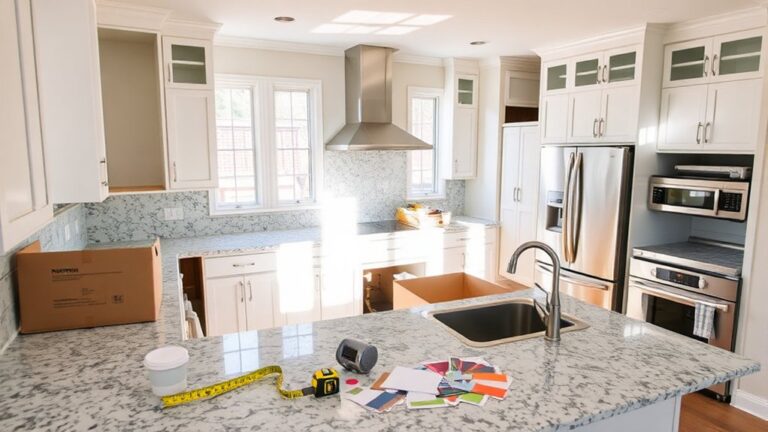
How to Organize Kitchen Cabinets in 3 Simple Steps
Cluttered cabinets can make even a simple meal feel like a scavenger hunt. You’re not alone—many people struggle to keep kitchen essentials organized and easy to find. These simple steps can help…
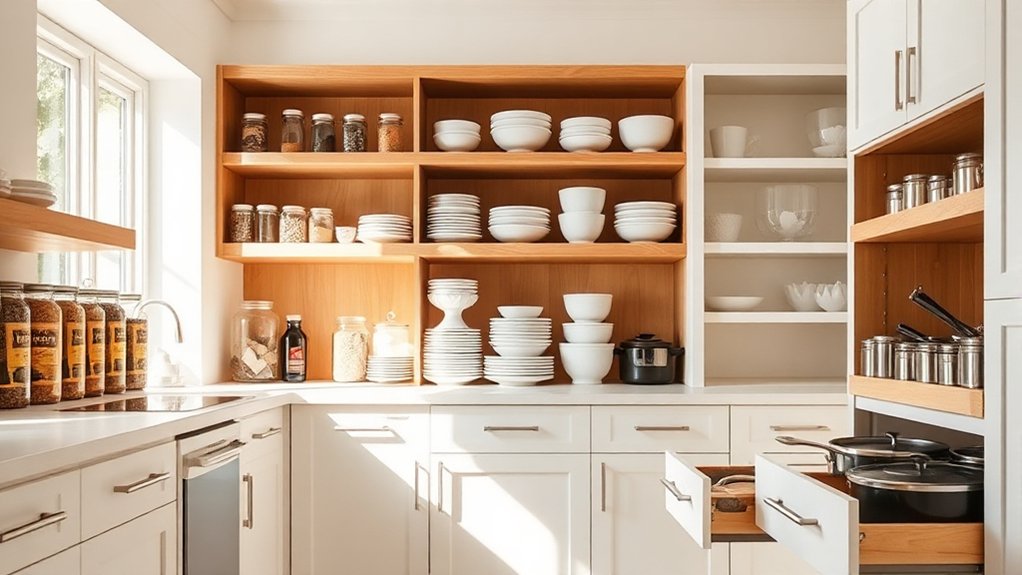
Cluttered cabinets can make even a simple meal feel like a scavenger hunt. You’re not alone—many people struggle to keep kitchen essentials organized and easy to find. These simple steps can help you organize kitchen cabinets and make the most of your space.
Start by emptying each cabinet so you can see everything, then wipe the shelves and sort items into groups like dishes, glassware, bakeware, food, and small appliances. Next, group similar items by how often you use them, keeping daily essentials within easy reach and moving occasional pieces higher or lower. Finally, create clear cabinet zones for breakfast, cooking, and baking items, and return everything to its assigned spot to keep things organized and easy to use.
Key Takeaways
- Empty each cabinet, wipe shelves, and sort items into groups like dishes, glassware, bakeware, food, and appliances.
- Remove damaged, expired, and duplicate items while deciding what you use daily versus occasionally.
- Group similar items together and place everyday essentials in easy-to-reach cabinet zones.
- Use clear bins, trays, and labels to keep small items organized and easy to find.
- Return items to their assigned spots and do quick weekly resets to keep cabinets tidy.
Empty and Sort Kitchen Cabinet Items

Start by emptying each cabinet so you can see exactly what you have. Set items on a counter, table, or clean floor, then wipe the empty shelves before you put anything back.
Empty each cabinet first, wipe the shelves, and see exactly what you have before putting anything back.
As you remove each piece, sort it into sorting bins for dishes, glassware, bakeware, food, and small appliances. Toss damaged items, expired food, and anything you don’t use.
This first pass helps you spot duplicates and decide what belongs in each cabinet zone. Keep similar items together so you can judge how much space each category needs.
Pay attention to frequency of use: daily essentials should stay easy to reach, while occasional items can move higher or lower. Don’t rush this step; a careful sort now makes the rest of the job easier.
Once you’ve finished, you’ll know exactly what should return to your cabinets and where it should go.
Group Similar Items by Frequency of Use
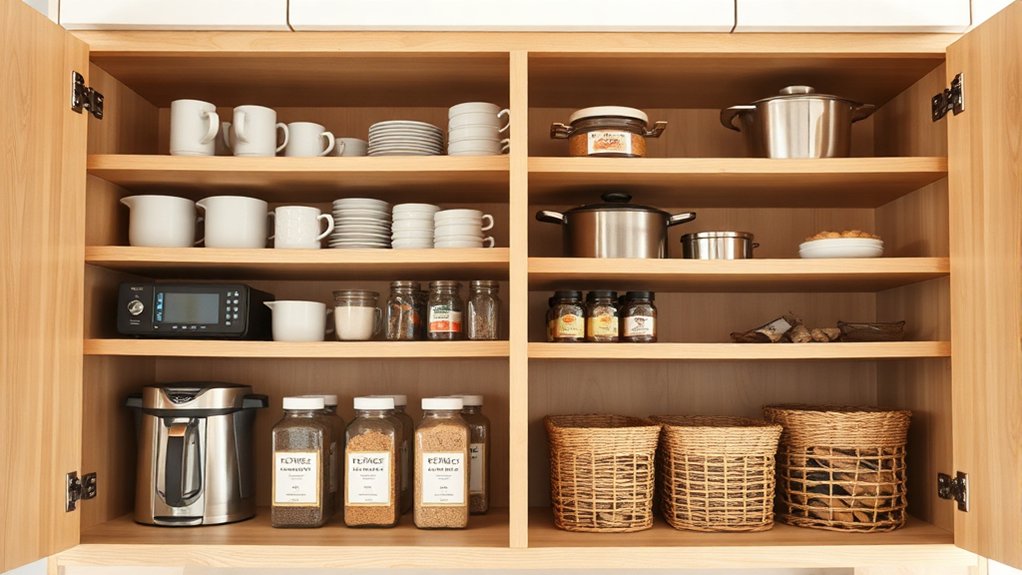
Now that you’ve sorted everything, group the same types of items together by how often you use them. Keep your daily essentials, like mugs, plates, and cooking oil, in one area so you can reach them fast. Place less-used items, such as holiday serving dishes or specialty gadgets, farther back.
When you organize spices, group them by type or by how often you cook with them, then set your favorites where you can grab them quickly. Stack baking supplies together, and keep snacks or breakfast items near each other if you use them often.
Use clear bins or trays to keep small items from spreading out, and label containers so you can spot what’s inside at a glance. This simple sorting method helps you avoid digging through crowded shelves, saves time during meal prep, and makes it easier to put things back where they belong. It also keeps your cabinets looking tidy and easy to manage.
Create Cabinet Zones That Stay Organized
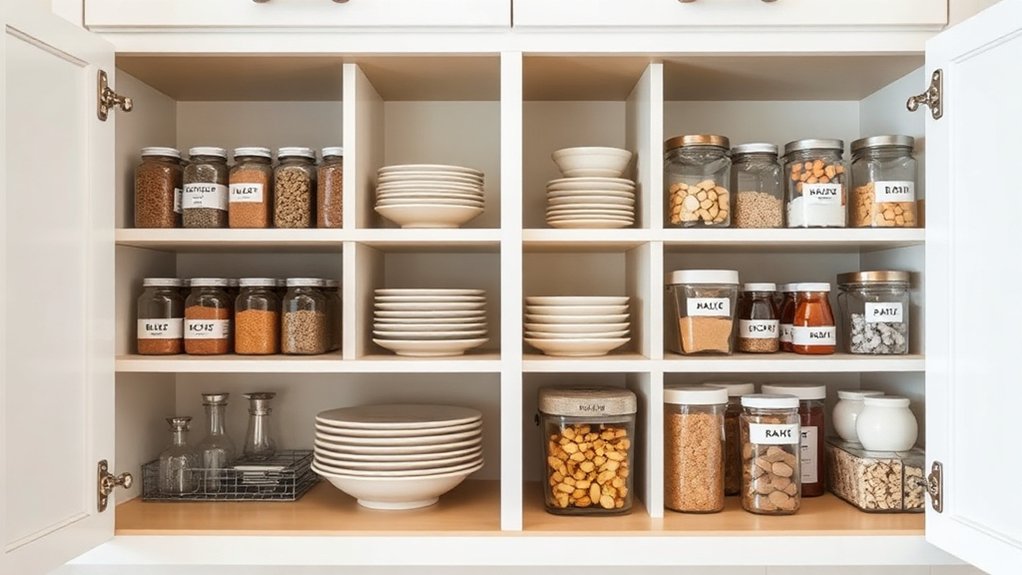
Once you know what you use most, divide your cabinets into clear zones that match your routine. Put breakfast items near the coffee maker, cooking tools beside the stove, and baking supplies close to your prep space. This kind of zone placement cuts down on extra steps and keeps everything within easy reach. Use one shelf for plates and bowls, another for mugs, and a lower cabinet for heavy pots so you don’t have to dig around.
Label each zone if you share the kitchen, and keep like items together inside bins or organizers. When you return something, put it back in its assigned spot instead of creating a new pile. That simple habit helps your system last.
Build quick maintenance rituals into your week, like resetting one cabinet after dinner or checking for stray items on Sunday. With clear zones and small upkeep, your cabinets stay tidy, functional, and easy to use every day.
Frequently Asked Questions
How Do I Choose the Best Cabinet Organizers?
Choose cabinet organizers that fit your items, cabinet size, and habits. Measure first, then pick stackable bins, pull-out trays, or shelf risers that make daily access easier.
If you store dry goods, add clear pantry containers so you can see what you’ve got and save space. Choose durable, easy-to-clean materials, and focus on organizers that simplify reaching, sorting, and storing the things you use often.
What Containers Work Best for Pantry Storage?
You’ll get the best pantry storage with clear bins, stackable plastic containers, and airtight glass jars. Use container types that fit your shelves and keep dry goods fresh, visible, and easy to grab.
Group snacks, grains, and baking items together, then add labeled shelving so you can find everything fast. If you’ve got deep cabinets, choose square containers to save space and reduce clutter.
How Often Should I Deep-Clean Kitchen Cabinets?
You should deep-clean kitchen cabinets every 3 to 6 months; if you spot crumbs, sticky spots, or odors sooner, that’s your cue. A cleaning cadence keeps buildup from sneaking up on you, and a simple deep clean checklist helps you stay consistent.
Wipe shelves, clean handles, and check for expired items each time. If you cook often or have kids, you’ll probably need to clean them more often.
How Can I Maximize Space in Corner Cabinets?
You can maximize space in corner cabinets by adding lazy Susans, tiered risers, and pull-out organizers, so you can reach items easily. Use corner storage for bulky pots, then rotate shelves to keep everyday dishes front and center.
Create small pantry vignettes with grouped ingredients, and label containers so you can quickly spot what’s inside. Measure your cabinet first, then choose fittings that fit snugly and prevent wasted dead space.
What Is the Best Way to Label Cabinet Shelves?
The best way to label cabinet shelves is to use simple, clear labeling systems that you can read at a glance. Start with shelf labeling on tape, cards, or adhesive tags, and place them where you’ll see them easily.
You’ll keep everything in its lane and avoid mix-ups. Choose durable labels, match them to categories, and update them when needs change. This keeps your cabinets tidy and easy to use.
Conclusion
With a few simple moves, you can turn cabinet chaos into calm. Empty, sort, and decide what truly deserves space. Group the things you reach for most, then set up clear zones so every mug, pan, and spice has a home.
Like Ariadne’s thread guiding you out of the labyrinth, these small steps can help you organize kitchen cabinets and create a space that feels easier, lighter, and ready for everyday life.