Where to Put Microwave in a Small Kitchen in 3 Space-Saving Tips
Finding a place for a microwave in a small kitchen can feel like a puzzle—you’re not alone if counter space is already at a premium. These space-saving microwave placement ideas can help…

Finding a place for a microwave in a small kitchen can feel like a puzzle—you’re not alone if counter space is already at a premium. These space-saving microwave placement ideas can help you make room without getting in the way of cooking.
In a small kitchen, you can save space by putting your microwave on a wall shelf, built into cabinets, or on the clearest stretch of counter. Keep it near your prep and cooking zone so you don’t cross the room, and choose a spot that’s easy to reach. Make sure there’s room for ventilation, and check the cord length before you commit. The best setup can also help you uncover a layout that feels even more efficient.
Key Takeaways
- Place the microwave near prep and cooking zones to avoid crossing the kitchen while cooking.
- Use counter space only if necessary; choose the clearest area and measure the microwave first.
- Mount it on a sturdy wall shelf anchored into studs for safe, space-saving placement.
- Build it into a cabinet or pantry cubby to free counters and keep it at a comfortable height.
- Leave ventilation space, secure outlet access, and keep nearby storage light for a tidy setup.
Where to Put a Microwave in a Small Kitchen
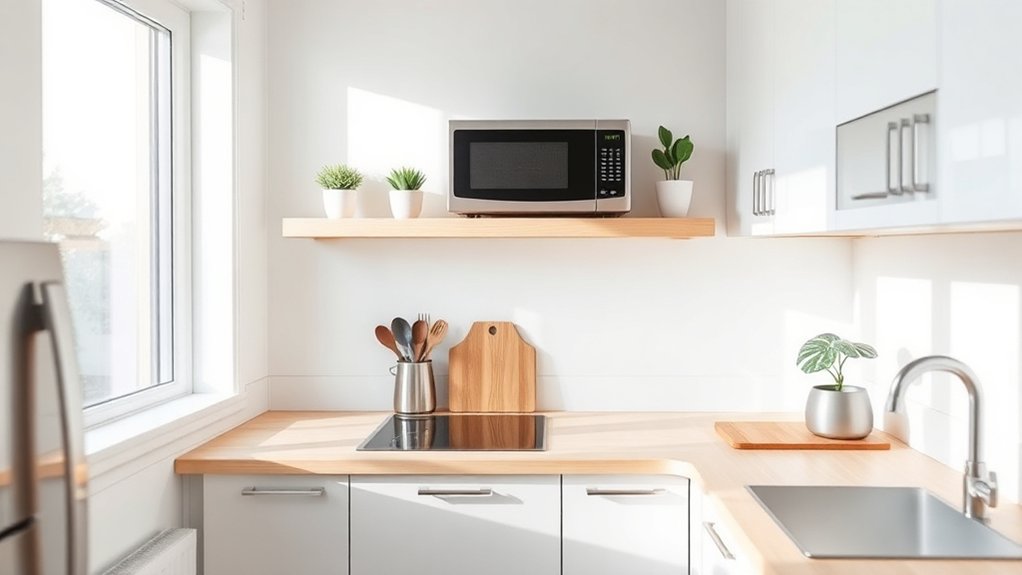
When you’re figuring out where to put a microwave in a small kitchen, focus on spots that keep it easy to reach without crowding your counters. You can place it on a dedicated shelf, inside a cabinet opening, or beside the fridge if the door swings clear.
Choose a location near prep and cooking zones so you’re not crossing the room every time you heat food. If you use the microwave often, keep it at a comfortable height and leave enough room around it for ventilation. A smart appliance should fit your routine, not interrupt it.
Protect your Counter space by moving bulky items elsewhere and reserving the clearest surface for chopping and serving. Wall mounting can help too, but only if it doesn’t block outlets, vents, or traffic flow.
Measure first, check the power cord length, and make sure the placement feels natural before you commit.
Mount the Microwave on a Wall Shelf

Mounting your microwave on a wall shelf frees up valuable counter space and keeps the appliance within easy reach. Choose a sturdy shelf rated for the microwave’s weight, and anchor it into wall studs for safe compact mounting.
You’ll want enough electrical clearance so the cord doesn’t bend sharply or crowd the outlet. Position the shelf at a height that lets you lift hot dishes comfortably without stretching too high.
Keep the unit slightly away from corners so steam can escape and airflow stays open; this supports a vented placement and helps the appliance run efficiently. If your kitchen already uses upper wall space well, a shelf can blend with nearby storage and offer simple cabinet integration without a full remodel.
Measure carefully before drilling, and leave room for the door to open fully. With the right setup, you’ll gain convenience, safety, and a cleaner-looking kitchen layout.
Build the Microwave Into Cabinets
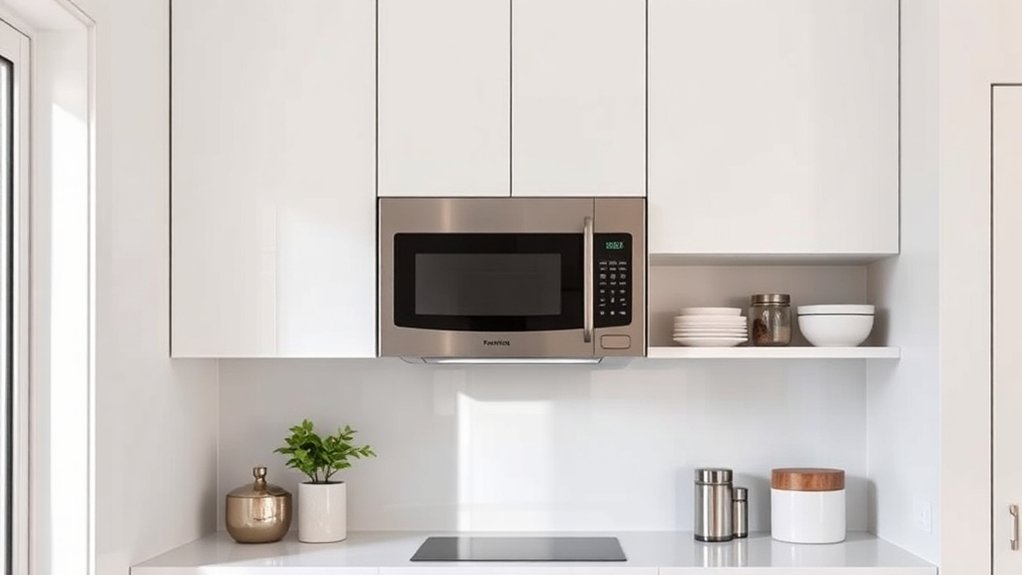
Built-in microwave cabinets can make a small kitchen feel streamlined while freeing up counter space. You can tuck the unit into a base cabinet, pantry tower, or custom cubby so it blends with your layout instead of crowding it.
Choose a spot at a comfortable height, so you can load hot dishes safely without stretching. Make sure the cabinet provides compact ventilation, because the microwave still needs airflow to run efficiently and avoid overheating.
You should also check electrical safety before installation: use the right outlet, avoid overloaded circuits, and confirm the cord reaches without strain. If you’re planning a remodel, ask a cabinetmaker to size the opening to the manufacturer’s specs.
Add trim or a built-in frame for a finished look, and keep nearby storage limited to lightweight items. This setup gives you a tidy, integrated solution that saves space and feels intentional.
Frequently Asked Questions
How Much Clearance Does a Microwave Need for Proper Ventilation?
You’ll usually need at least 3 inches of clearance on the sides and top, plus space at the back, for proper ventilation. Check your microwave’s manual, because requirements vary by model.
Good clearance ventilation helps prevent overheating and keeps your appliance working safely. When planning microwave placement, make sure air can flow freely around the vents, and don’t block them with cabinets, walls, or other kitchen items.
What Size Microwave Works Best in a Tiny Kitchen?
A 0.7 to 0.9 cubic foot microwave usually works best in your tiny kitchen. You get enough room for reheating, defrosting, and simple cooking, without crowding your counters.
In a compact layout, you’ll want smart appliance placement, slim dimensions, and easy access. If you cook larger dishes often, you can choose a slightly bigger model, but keep it under 1.1 cubic feet so you don’t lose valuable space.
Can a Microwave Sit on Top of a Refrigerator Safely?
Yes, you can microwave on top of a fridge, but you should check top fridge safety first. You need stable placement, enough ventilation clearance, and a microwave that fits your tiny kitchen size. Don’t block vents, and hide cords so they won’t snag or overheat. If space is tight, consider over the range storage instead. You’ll save room and keep your setup safer and easier to use.
How Do I Hide Microwave Cords Neatly in a Small Kitchen?
You can hide microwave cords neatly by routing them behind the appliance and along the wall with adhesive cord clips. You’ll keep neat cords by tucking extra length into a cable box or cord cover.
If you’ve got an outlet nearby, shorten visible hidden cables with a power strip mounted under a shelf. Choose matching covers, and don’t pinch the cord, so you keep things safe and tidy in your small kitchen.
Are Over-The-Range Microwaves Good for Saving Counter Space?
Yes, an over the range microwave can feel like a magic trick for your kitchen, lifting bulky appliances off the counter and freeing up valuable counter space. You’ll get extra room for prep, cooking, and storage, which helps in tight layouts.
Just make sure you can reach it comfortably, and check whether the ventilation works well enough for your cooking habits. If you don’t mind the height, it’s a smart space-saving choice.
Conclusion
So, where should you put a microwave in a small kitchen? You’ve got smart options: mount it on a wall shelf, tuck it into a cabinet, or claim another overlooked nook. When space is tight, every inch counts, and your kitchen should work for you, not against you.
Choose the spot that fits your flow, frees your counters, and keeps cooking simple. Small kitchen, big ideas. That’s a recipe worth following when deciding where to put a microwave in a small kitchen.