7 Tips to Organize Kitchen Drawers Efficiently
A cluttered kitchen drawer can make even simple cooking tasks frustrating. If you’re constantly digging for the right utensil, you’re not alone. These 7 tips to organize kitchen drawers efficiently can help…

A cluttered kitchen drawer can make even simple cooking tasks frustrating. If you’re constantly digging for the right utensil, you’re not alone. These 7 tips to organize kitchen drawers efficiently can help you make the most of your space and find what you need faster.
You can organize kitchen drawers efficiently by sorting items into clear categories, like utensils, prep tools, and specialty gadgets, then grouping similar tools together. Measure each drawer first so organizers fit well, and use adjustable dividers to create easy-to-see sections.
Keep small items in labeled trays, reserve the top drawer for daily-use tools, and put rarely used extras elsewhere. With a quick weekly tidy, you’ll keep everything in place and learn a few smarter ways to make it even easier.
Key Takeaways
- Sort drawer contents into clear categories like utensils, cooking tools, baking items, and small extras.
- Keep daily-use tools in the top drawer for fast access and smoother meal prep.
- Measure each drawer first, then choose organizers or adjustable dividers that fit properly.
- Use labeled trays and dividers for small items such as measuring spoons, clips, and twist ties.
- Tidy drawers weekly by returning misplaced items, removing clutter, and wiping crumbs clean.
Sort Kitchen Drawer Items by Category
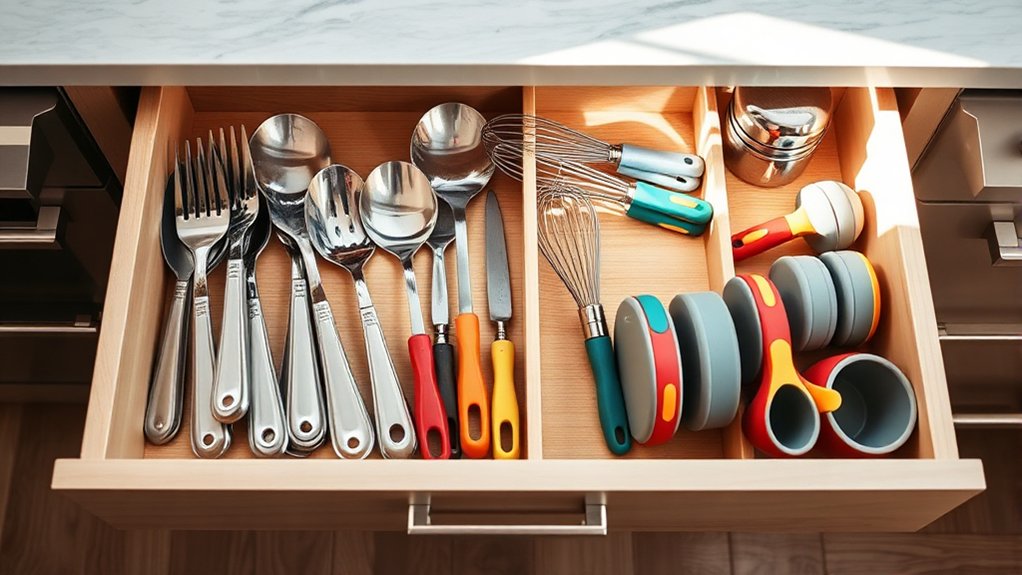
Start by grouping your kitchen drawer items into clear categories so everything has a natural place. You can separate utensils, cooking tools, food prep gadgets, and odd extras into distinct piles.
Group kitchen drawer items into clear categories so everything has a natural, easy-to-find place.
This category grouping helps you spot duplicates, toss broken pieces, and decide what truly belongs in each drawer. Keep frequently used items together, such as spatulas, whisks, and measuring spoons, so you don’t waste time searching when you’re cooking.
Place specialty tools in a separate section, and move rarely used items out of the way. A simple labeling strategy can also help if you share the kitchen or want to keep everyone on track.
Label each section by purpose, not by item name, so you’ll remember where things go even after a busy week. When you sort this way, you create a system that feels intuitive, stays tidy longer, and makes every drawer easier to use every day.
Measure Kitchen Drawers Before Buying Organizers
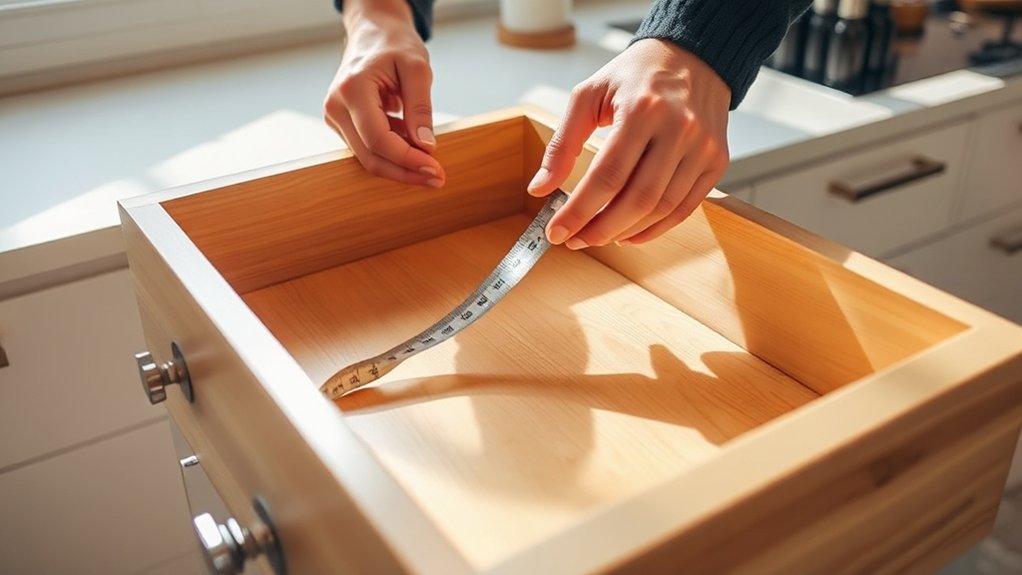
Before you buy any organizers, measure each kitchen drawer so you know exactly what will fit. Use a tape measure to record the width, depth, and height of each drawer, then note any obstructions like hinges or support rails.
These measurements matter because even a small mismatch can waste space or keep a tray from opening smoothly. Write down the numbers for every drawer, since sizes often vary throughout the kitchen.
When you shop, compare your notes with product dimensions instead of guessing from photos. Check drawer compatibility with lids, utensil sets, and cookware handles so the organizer won’t crowd the contents.
If you have shallow drawers, choose low-profile inserts; if the drawer is deep, make sure the organizer still leaves room for easy access. Careful measuring helps you buy once, avoid returns, and create a layout that feels tailored to your kitchen.
Use Adjustable Drawer Dividers

Adjustable drawer dividers let you create compartments that fit your utensils, gadgets, and tools. They make it easier to separate everything, so items stay visible and within reach. And when your needs change, you can quickly adjust the layout without starting over.
Customizable Compartment Sizes
How do you make one drawer work for everything? You shape it with adjustable drawer dividers, creating customizable compartments that fit your routine. Start by measuring the drawer, then slide modular dividers into place so each section matches what you store. Keep larger zones for bulky items and narrower ones for small essentials.
| Item Type | Space Width | Benefit |
|---|---|---|
| Spatulas | Medium | Stays upright |
| Measuring spoons | Narrow | Easy to grab |
| Liners | Wide | Lays flat |
You can change the layout anytime, so the drawer adapts as your needs shift. This flexibility keeps contents visible, reduces clutter, and helps you return everything to its spot fast. With a few quick adjustments, you’ll turn wasted space into a tidy system.
Easy Tool Separation
Once you’ve set your compartment sizes, the next step is separating tools so each one has a clear home. Adjustable drawer dividers make tool separation simple because you can create narrow slots for spatulas, whisks, peelers, and tongs without wasting space.
In your drawer organization, group similar items together so you can grab what you need fast and put it back without thinking. Choose dividers that lock firmly in place, so utensils don’t slide around when you open the drawer.
Keep everyday tools near the front and specialty pieces farther back. This setup cuts clutter, protects handles, and helps you see exactly what’s available at a glance. With a little planning, your drawer stays neat, functional, and easy to use every day.
Flexible Layout Changes
When your kitchen tools change with the seasons or your cooking habits shift, adjustable drawer dividers let you rework the layout without starting over. You can create a flexible layout that fits whisks, peelers, and measuring spoons today, then expand for holiday gadgets tomorrow. In adjustable drawers, these dividers keep items from sliding, so you waste less time searching and more time cooking.
- Slide dividers to match new tools.
- Separate small items from bulky ones.
- Reclaim space without buying new bins.
- Refresh your setup in minutes.
With a quick adjustment, your drawers stay neat, practical, and ready for whatever you cook next.
Group Similar Kitchen Tools Together
Grouping similar kitchen tools together makes every drawer easier to scan and use. You’ll save time when you keep spatulas with turners, whisks with ladles, and measuring spoons with cups.
This approach works best when you start by grouping like tools, then prioritizing frequently used items near the front or top of the drawer. That way, you won’t dig past rarely used gadgets every time you cook.
As you sort, think about how you move through prep tasks. Keep baking tools in one section, cooking utensils in another, and cutting tools where you can grab them fast.
Matching tools by purpose helps you notice duplicates, so you can remove extras and avoid crowding.
Once each category has a home, return items there after washing and drying. You’ll keep your drawers orderly with less effort, and you’ll always know exactly where to reach for the tool you need.
Store Small Items in Labeled Trays
Use labeled tray dividers to keep small kitchen items neatly separated in each drawer. Sort tiny essentials like measuring spoons, clips, and twist ties so they’re easy to spot and grab. That way, every little item has its place.
Labeled Tray Dividers
A few labeled tray dividers can turn a cluttered kitchen drawer into a neat, easy-to-navigate space. You’ll see every item fast, and you won’t waste time digging around. Use a labeled tray for each category, then keep your divider organization simple and consistent.
- Spoon rest tools
- Measuring gear
- Prep gadgets
- Openers and peelers
Place each tray where it fits best, and label it clearly so you always return items to the right spot. Choose dividers that stay in place, even when you open and close the drawer often. This setup helps you keep small essentials visible, separated, and ready to grab. With a little planning, your drawer stays tidy and works better every day.
Sort Tiny Essentials
Once your tray dividers are in place, sort the tiniest kitchen essentials into separate labeled trays so they don’t disappear into drawer clutter. Group twist ties, measuring spoons, chip clips, and pens by use, then assign each tray a clear label.
You’ll save time because you can reach for what you need without digging through a messy pile. Keep the trays shallow so you can see every item at a glance, and empty duplicates you never use.
For better drawer organization, place the most-used tiny essentials near the front and reserve the back for backups. If an item doesn’t fit a category, move it out of the drawer.
This simple system keeps your kitchen efficient, tidy, and easy to maintain day after day.
Reserve the Top Drawer for Daily Tools
Keep the top drawer for the tools you reach for every day, like measuring spoons, a favorite spatula, a peeler, and kitchen scissors. You’ll speed up your daily workflow when these basics sit within easy reach, and tool accessibility stays high while you cook.
Keep the top drawer for daily tools so your essentials stay within easy reach while you cook.
Group items by task so you can grab and return them without thinking.
- Place measuring tools near prep space.
- Store one go-to spatula beside the whisk.
- Keep cutting tools safely separated from clutter.
- Use a simple tray to prevent sliding.
Reserve this drawer for the essentials you use most, not backup gadgets. When you limit the contents, you avoid digging through piles and keep your motions smooth.
You’ll save seconds on every recipe, and those seconds add up fast. Make the top drawer your fast-access zone, and the rest of your kitchen will feel easier to use every day.
Do a Quick Weekly Drawer Tidy
Set aside a few minutes each week to reset your kitchen drawers before clutter piles up. Start with the top drawer, then move through each one and remove items that don’t belong.
Wipe crumbs, sticky spots, and dust so everything stays clean and easy to use. This quick weekly tidy helps you spot duplicates, missing tools, and items you rarely touch.
If you notice a gadget drifting into the wrong drawer, put it back where it belongs right away. Check dividers, bins, and labels to make sure they still work for your routine.
You can also do a quick drawer reset by grouping similar tools together and turning handles the same way for faster access. Keep the process short so you’ll actually stick with it.
A steady habit like this keeps your drawers organized, saves time during meal prep, and prevents chaos from building up again.
Frequently Asked Questions
How Often Should Kitchen Drawer Organizers Be Replaced?
You should replace kitchen drawer organizers every 3 to 5 years, or sooner if they crack, warp, stain, or stop fitting well. Your replacement cycle depends on how hard you use the drawers and the material you chose.
Check them yearly for wear, and don’t wait if they wobble or trap crumbs. If you’re wondering how often to replace, let condition, cleanliness, and fit guide your decision for best results.
What Materials Are Best for Durable Drawer Inserts?
For durable inserts, you should choose like a carpenter picking sturdy lumber: bamboo, hardwood, and high-quality plastic work best. Your material choices should match how much wear the drawer gets. Bamboo resists moisture, hardwood feels solid, and thick ABS plastic handles daily use without cracking.
You can also try silicone-lined or metal-trimmed options for extra strength. Pick durable inserts that fit well, clean easily, and last through heavy kitchen traffic.
Can Kitchen Drawer Organization Improve Cooking Efficiency?
Yes, your kitchen drawer organization can boost cooking efficiency a lot. You’ll save time when you can grab tools fast, keep clutter down, and follow smoother Tips for kitchen workflow.
It also reduces mistakes and keeps you focused during busy cooking sessions. The Impact on meal prep is big: you’ll prep ingredients faster, work cleaner, and feel less frustrated.
With simple drawer systems, you’ll cook more confidently every day.
How Do I Organize Awkwardly Shaped Kitchen Tools?
You can organize awkwardly shaped kitchen tools by sorting them by function and size, then giving each group a dedicated zone. Use dividers, small bins, and adjustable inserts to keep handles aligned and prevent tangling. For How to group oddly shaped tools, pair similar tasks together.
Try Strategies for nesting irregular utensils by stacking nesting cups, spoons, or gadgets inside larger items so you save space and grab things fast.
What’s the Best Way to Clean Drawer Organizers?
You’ll get the best results by washing drawer organizers with warm water, mild soap, and a soft cloth, then drying them right away. For sticky spots, use a gentle scrubber so you don’t scratch surfaces.
Think of cleaning like polishing a mirror—it keeps everything bright and ready. For cleaning organizer maintenance, check seams and corners often. A durable materials comparison helps you choose plastic, bamboo, or silicone that won’t trap grime.
Conclusion
When you organize your kitchen drawers, you’re really clearing space for calmer mornings and smoother cooking. Each divider becomes a small fence, guiding your tools back home.
Keep your daily essentials in the top drawer, and let labeled trays hold the little things that usually slip away. With a quick weekly tidy, you’ll protect that order.
In the end, your drawers don’t just hold utensils. They reflect a kitchen that feels ready, steady, and yours. These tips to organize kitchen drawers can help keep it that way.