10 Facts About How Much Kitchen Cabinets Cost
Choosing kitchen cabinets can feel overwhelming when prices range from a few hundred dollars to tens of thousands. You’re not alone—many homeowners struggle to balance style, quality, and budget. These 10 facts…

Choosing kitchen cabinets can feel overwhelming when prices range from a few hundred dollars to tens of thousands. You’re not alone—many homeowners struggle to balance style, quality, and budget. These 10 facts about how much kitchen cabinets cost can help you compare your options and plan with confidence.
Kitchen cabinets can cost a few hundred dollars for stock units or tens of thousands for custom designs. Your total depends on size, layout, materials, finishes, hardware, and installation.
Stock, semi-custom, and custom cabinets rise in price as customization increases. Larger kitchens and complex layouts cost more.
Refacing can save money if boxes are solid, and ready-made options usually cost less. Compare quotes, choose simple styles, and you’ll uncover smarter ways to budget.
Key Takeaways
- Kitchen cabinet costs range from a few hundred dollars for stock units to tens of thousands for custom designs.
- Stock cabinets cost less than semi-custom or custom options, but offer fewer size and style choices.
- Larger kitchens and complex layouts increase material, hardware, and labor costs significantly.
- Materials like plywood and MDF are cheaper, while solid wood and premium finishes raise the price.
- Installation, delivery, removal, and upgrades like soft-close hardware can add a substantial amount to the total cost.
How Much Do Kitchen Cabinets Cost?

Kitchen cabinets can cost anywhere from a few hundred dollars for basic stock options to tens of thousands for custom designs, depending on the size of your kitchen, the materials you choose, and the level of craftsmanship you want. You’ll usually see stock cabinets at the low end, semi-custom options in the middle, and fully custom sets at the top.
If you’re planning kitchen organization, think about drawer layouts, pull-out shelves, and pantry cabinets, since those choices can change what you pay. You’ll also notice that color trends affect pricing when special finishes, painted coatings, or rare stains are involved.
A small kitchen may stay affordable, while a larger space can quickly raise your total. You should compare quotes from several sellers, then match your budget to the style and storage you actually need. That way, you’ll choose cabinets that fit your home without overspending.
What Affects Kitchen Cabinet Prices?

Kitchen cabinet prices vary depending on the materials you choose, from budget-friendly options to premium woods and finishes. Custom features, such as made-to-fit sizes, storage upgrades, and decorative details, can add to the cost. Installation also plays a part: more complex projects typically take more time and labor.
Cabinet Material Choices
What drives cabinet prices more than almost anything else? You’ll see it in the cabinet materials you choose. Stock cabinets in particleboard or MDF usually cost less, while plywood and hardwood raise the price but often boost durability.
If you want a budget-friendly two word discussion idea, compare cabinet materials by look, strength, and lifespan before you buy. Veneers can give you a wood appearance for less, while solid wood brings a premium feel and higher cost.
You’ll also pay more for moisture-resistant cores and better finishes. When you pick material, you’re not just choosing style; you’re deciding how long your cabinets hold up and how much you spend upfront. Smart choices here can keep your kitchen project on budget.
Customization And Labor
Custom work can push cabinet prices up fast because every extra change adds time, skill, and materials. If you alter cabinet dimensions, ask for unusual storage, or need panels matched to existing trim, you’ll pay more for design time and skilled labor.
A cabinet maker may also charge extra for intricate doors, soft-close hardware, and hand-finished details. Installation costs rise when your walls, floors, or plumbing need adjustments before the cabinets fit correctly.
Finish durability can also affect labor if you want more coats, sanding, or protective sealing. The more precise your specs, the more time your project takes.
When you compare quotes, check whether they include measuring, delivery, fitting, and cleanup, because those services can shift the final price a lot.
Stock, Semi-Custom, or Custom Cabinets?
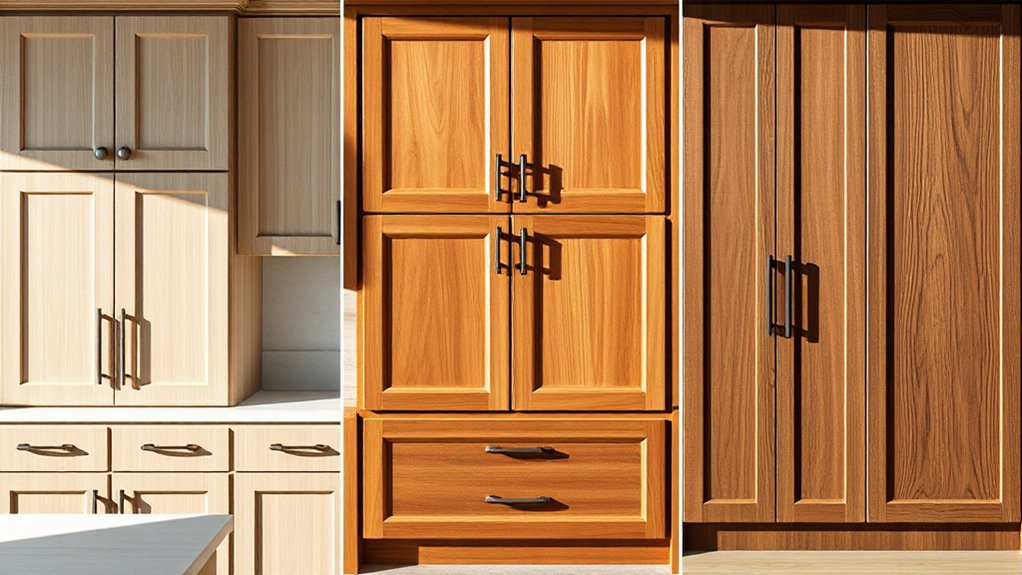
When you’re comparing cabinet prices, the biggest cost jump usually comes from the type you choose: stock, semi-custom, or custom. Stock cabinets cost the least because you pick from preset sizes and limited styles, so they’re fast to buy and install.
If you want better cabinet aesthetics without paying full custom prices, semi-custom gives you more finish, size, and storage options. Custom cabinets sit at the top because every detail is built for your kitchen, from layout to finish, and that raises both fabrication and labor costs.
You’ll also spend more when your project needs unusual dimensions or a specific look that matches your home. Beyond price, think about material sourcing, because easier-to-order lines often arrive faster and keep budgets steadier.
The right choice depends on how closely you want the cabinets to fit your space, style, and timeline.
How Kitchen Cabinet Materials Affect Cost?
Material choice has a big impact on cabinet cost because different woods, composites, and finishes vary widely in price and durability. When you choose solid hardwood, you usually pay more for strength, grain, and a premium look.
Material choice strongly affects cabinet cost, with solid hardwood offering premium durability and a classic look.
Engineered plywood or MDF can lower your total while still giving you a clean, reliable result. Veneers often sit between those options, giving you the look of wood without the same expense.
Your finish also matters: painted surfaces and modern finishes can add cost, especially when you want smooth edges or specialty sheen. If you want a greener option, recycled materials may raise or lower price depending on sourcing and processing.
- Solid wood: highest cost, classic appearance
- Plywood or MDF: budget-friendly and versatile
- Veneers and specialty finishes: midrange with style
You’ll get the best value by balancing appearance, performance, and how long you expect the cabinets to last.
How Much Does Cabinet Installation Cost?
Even after you choose the right cabinet material, installation can add a significant chunk to your total project cost. You’ll usually pay for labor, delivery, removal of old cabinets, leveling, fastening, and final adjustments.
A straightforward job costs less, while custom trim, tricky corners, and uneven walls can raise the price fast. If you’re planning a budget kitchen, ask for a detailed quote so you can compare what’s included and avoid surprise fees.
You can also save money by handling demolition or finishing work yourself, if your installer allows it. For small space layouts, precise fitting matters even more, because every inch counts and mistakes waste time.
Always check whether your contractor charges by the linear foot, by the hour, or as a flat project fee. Clear communication helps you control costs and keep your cabinet installation on budget from start to finish.
How Kitchen Size Changes Cabinet Costs?
A bigger kitchen almost always means higher cabinet costs, because you need more linear feet of cabinetry, more hardware, and more labor to install it. Your kitchen layout also matters, since extra corners, islands, and odd wall lengths can increase the amount of cabinet material you need.
If you’re working with a small galley, you may spend less overall, but every inch counts, so even minor changes can shift the total.
- More wall space usually means more cabinets.
- A complex kitchen layout can waste material and raise labor.
- A compact room may cost less, but careful planning still helps you avoid surprises.
When you compare estimates, ask how size affects both upper and lower runs. That way, you can plan with low energy and keep your budget focused on the cabinets you actually need.
Which Cabinet Features Raise the Price?
Custom door styles usually raise the price because they require more design work and labor. Premium hardware can add to the total, too—especially higher-end hinges, pulls, or soft-close mechanisms. These upgrades enhance both style and function, but they come at a cost.
Custom Door Styles
Custom door styles can quickly push your cabinet budget higher because they require more design work, more labor, and often more material. You pay for the extra craftsmanship that turns a standard box into a look that fits your kitchen. When you choose raised panels, inset doors, or curved profiles, you’re also paying for stronger Customization aesthetics and better Material durability.
- Simple flat doors usually cost less.
- Decorative profiles add cutting and finishing time.
- Inset and specialty doors need tighter tolerances.
These choices can change both the price and the overall feel of your cabinets. If you want a custom look without overspending, focus on door shape first, then compare finish options. That way, you get style without unnecessary cost.
Premium Hardware Upgrades
Premium hardware upgrades can raise cabinet prices faster than you might expect because you’re paying for smoother function, better materials, and a more refined look. You may choose soft-close hinges, full-extension drawers, and heavy-duty slides, and each upgrade adds cost.
Brushed brass pulls, hidden hinges, and touch-latch systems also push the total higher. If you want a sleek kitchen, premium hardware can make daily use feel easier and quieter.
You might also pair these upgrades with creative lighting inside cabinets to highlight display areas, or select sustainable finishes that support a cleaner material choice. These features don’t just improve style; they change how your cabinets perform.
When you compare quotes, ask which hardware is standard and which items count as upgrades.
How Much to Budget for Cabinet Hardware?
How much should you set aside for cabinet hardware? A good rule is to budget 5% to 10% of your cabinet project for pulls, knobs, hinges, and slides. You’ll spend more if you want soft-close parts or designer finishes, but you can still control costs with smart budget shortcuts and by ignoring material myths about what “cheap” hardware looks like.
- Knobs and pulls: Choose simple styles for lower prices and a clean look.
- Hinges and slides: Pay extra for smooth operation and durability.
- Finishes and extras: Reserve money for matching finishes, mounting screws, and any specialty pieces.
You should also count the number of doors and drawers before you shop, since each opening adds to the total. Buying in sets, comparing brands, and keeping your style consistent can stretch your budget without making the kitchen feel plain.
When Does Refacing Cost Less Than Replacing?
Refacing can cost less than replacing when your cabinet boxes are still in solid shape and you mainly want a new look. You keep the layout, swap doors and drawer fronts, and update the visible surfaces. That usually cuts labor and materials, especially if your cabinets don’t need major structural repairs.
| Condition | Refacing | Replacing |
|---|---|---|
| Solid cabinet boxes | Usually cheaper | Often unnecessary |
| Damaged frames | Limited value | Better long-term |
| Layout unchanged | Strong savings | Higher cost |
If your project only needs new finishes, refacing often wins. When you need new dimensions, extra storage, or better framing techniques, replacement can make more sense.
You should also consider whether plywood subcontracting will raise replacement bids. In many cases, refacing gives you a cleaner result without the expense of tearing out the whole system.
How to Save Money on Kitchen Cabinets?
You can save money on kitchen cabinets by choosing ready-made options, which usually cost less than custom cabinets. If your existing cabinets are still in good shape, consider refinishing them instead of replacing them. You can also keep costs down by shopping during seasonal sales and looking out for discounts.
Choose Ready-Made Cabinets
Ready-made cabinets can trim your kitchen remodel costs fast because they’re mass-produced, widely available, and don’t require the extra labor that custom options do. You can shop standard sizes at home centers or online, then compare finishes, door styles, and hardware to find a look that fits your budget.
- Pick stock sizes to avoid pricier modifications.
- Choose simple door designs for lower upfront costs.
- Pair them with budget paint or eco friendly finishes to refresh the look without overspending.
When you plan carefully, you’ll still get a clean, updated kitchen without paying for custom craftsmanship. Focus on durability, finish quality, and efficient installation so your savings last beyond the first checkout.
Refinish Existing Cabinets
Instead of replacing cabinets outright, refinishing gives you a cheaper way to refresh a tired kitchen while keeping the boxes you already have. You can save a lot by sanding, repairing, and painting what’s already there. But you should plan for refinishing challenges like grease, chipped veneer, and uneven surfaces.
| Step | What You Do |
|---|---|
| Clean | Remove buildup so paint sticks |
| Sand | Smooth scratches and old coating |
| Repair | Fill dents and loose joints |
| Prime | Seal wood and improve adhesion |
| Finish | Choose from durable paint finish options |
If your cabinet layout still works, refinishing lets you update style without paying for new boxes, hardware, or installation. Use careful prep, quality products, and patience to get a result that looks fresh and lasts.
Shop Seasonal Discounts
If refinishing still leaves your kitchen short of the look you want, seasonal discounts can help you stretch your budget further on new cabinets. You can save by timing your purchase around holiday sales, end-of-year clearances, and manufacturer promotions.
With smart budget planning, you’ll spot deals before they disappear and avoid paying full price. Ask local dealers when they rotate inventory, and check online retailers for markdowns on overstock or discontinued styles.
- Compare prices during peak sale months.
- Sign up for store alerts and coupons.
- Bundle cabinets with hardware or installation for extra savings.
When you shop strategically, seasonal discounts can trim hundreds off your total and still give you a fresh, polished kitchen.
Frequently Asked Questions
Do Cabinet Prices Include Delivery Fees?
Not always. You’ll often see cabinet prices listed separately from delivery pricing, so you should check the quote carefully. Some sellers bundle delivery into the total, but many charge extra based on distance, order size, or special handling. Installation charges are usually separate too. If you want the full cost, ask whether delivery, unloading, and setup are included before you buy, so you won’t face surprise fees later.
Are Kitchen Cabinet Warranties Usually Transferable?
Usually, you can’t assume kitchen cabinet warranties transfer. For example, if you buy a home and inherit custom cabinets, you might find the original warranty ends with the first owner unless the maker allows transfer. You should check the fine print for warranty transferability, since some brands require registration or charge a fee. If you’re budgeting for replacements, ask about financing options too, because coverage details can affect your long-term costs.
Can I Finance New Kitchen Cabinets Through the Retailer?
Yes, you can usually finance new kitchen cabinets through the retailer. You’ll often find financing options like monthly payment plans, store credit, or promotional no-interest offers.
Read the terms carefully, because fees, interest, and approval rules vary. You should also ask whether delivery costs are included or billed separately, since that can change your total amount.
Comparing offers helps you choose the plan that fits your budget and timeline.
How Long Do Custom Cabinets Typically Take to Build?
Custom cabinets typically take 6 to 12 weeks to build, but you might wait longer if your project has complex designs or special finish options. You’ll usually spend a few days finalizing measurements, then the shop builds, sands, and finishes each piece before delivery.
If you want custom timelines, ask your maker early, because material availability and approval changes can stretch production. Planning ahead helps you avoid surprises and keep installation on schedule.
Should I Replace Cabinets Before Installing New Countertops?
Yes, you should usually replace your cabinets before installing new countertops. You’ll avoid damage, ensure a proper fit, and keep the project moving smoothly.
Schedule cabinet delivery first, then measure for the countertops. If you’re changing cabinets, ask about warranty coverage so you don’t lose it.
Doing it in this order saves you headaches and keeps everything aligned.
Conclusion
So, how much should you really budget for kitchen cabinets? It depends on the style, material, size, and labor you choose, but the total can vary a lot.
If you want to save money, compare stock, semi-custom, and custom options, and think about whether refacing could work instead of replacing. By planning ahead and choosing features carefully, you can find kitchen cabinets you love without blowing your budget.