7 Factors That Determine How Much a Typical Kitchen Remodel Costs
Planning a kitchen remodel can feel overwhelming when you’re trying to estimate the cost and decide where to spend. You’re not alone—many homeowners struggle to balance their wish list with their budget….
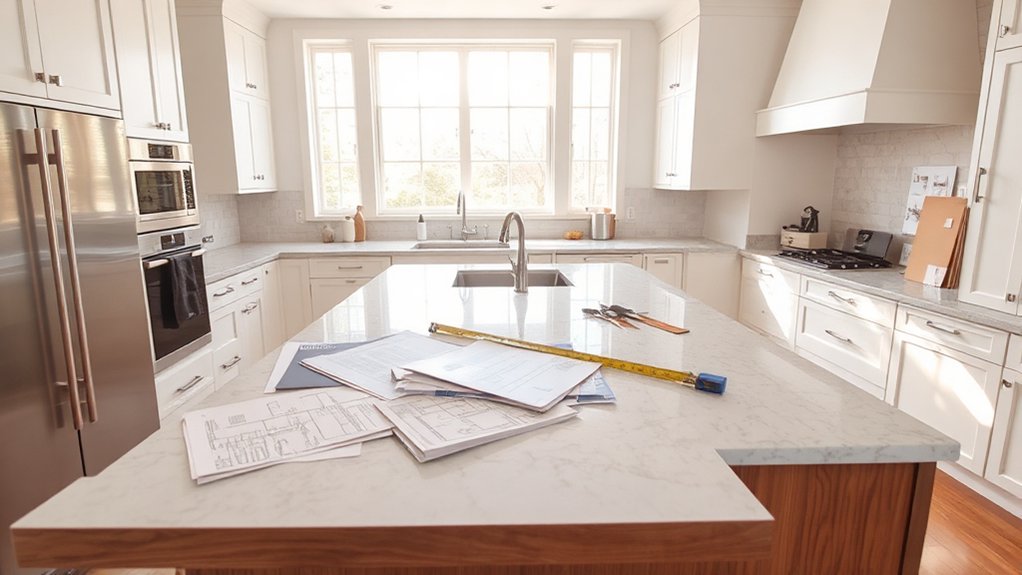
Planning a kitchen remodel can feel overwhelming when you’re trying to estimate the cost and decide where to spend. You’re not alone—many homeowners struggle to balance their wish list with their budget. These seven factors can help you understand what determines how much a typical kitchen remodel costs.
Your kitchen remodel cost depends on seven main factors: kitchen size and layout, cabinets and countertops, appliance upgrades, labor rates, permits, plumbing or electrical changes, and material quality. You’ll usually pay less if you keep the same layout, reuse existing systems, and choose stock finishes. Costs rise with custom cabinets, premium surfaces, and smart appliances. Labor and permits also vary by location, so compare bids and plan ahead to see what drives your budget.
Key Takeaways
- Kitchen size and layout changes strongly affect costs, with larger spaces and relocated plumbing, wiring, or walls increasing labor.
- Cabinet choice drives a major share of the budget, especially when using solid wood, custom construction, or premium hardware.
- Countertop and fixture selections vary widely in price, with thicker slabs, custom edges, and coordinated finishes raising costs.
- Appliance upgrades can significantly increase spending, especially for built-in, panel-ready, quiet, or smart models.
- Labor, permits, and material quality all influence total cost, with premium materials offering better durability and higher upfront prices.
How Much Does a Kitchen Remodel Cost?

How much does a kitchen remodel cost? You can expect a wide range, because your choices drive the price more than anything else. A modest refresh may stay near the low end if you keep the existing footprint, reuse some materials, and avoid premium finishes.
A midrange remodel usually costs more when you replace cabinets, countertops, flooring, and appliances together. If you want custom details, high-end fixtures, and major upgrades, your total can rise quickly.
To keep cost control, decide early what matters most: appearance, durability, or function. Then make budget tradeoffs that match your priorities. For example, you might splurge on countertops and save on hardware, or choose standard cabinets and invest in better lighting.
Labor also affects the total, so compare bids carefully and keep scope changes to a minimum. When you plan with clear priorities, you’ll make smarter choices and avoid surprises.
How Kitchen Size and Layout Affect Cost
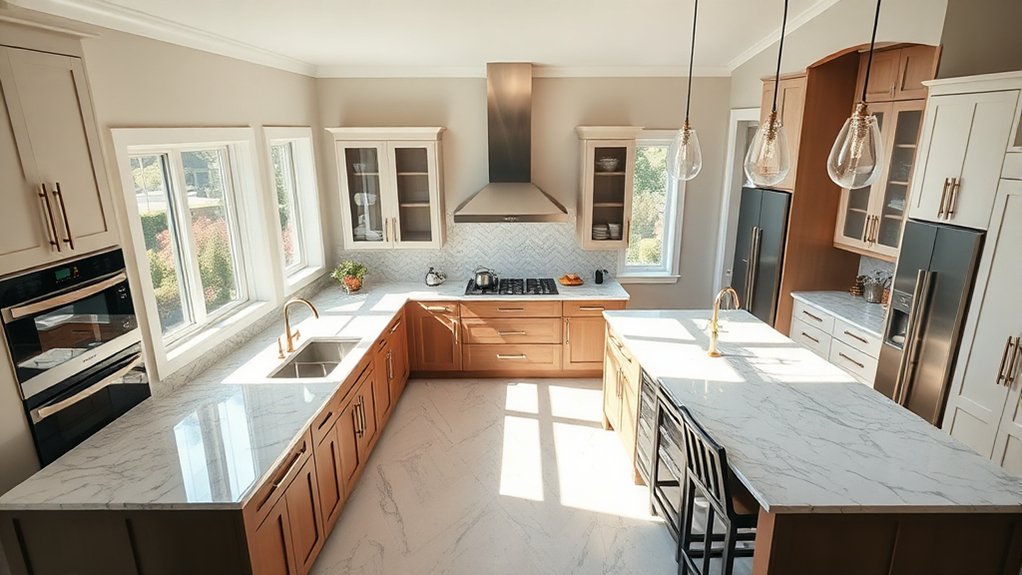
Kitchen size has a big impact on remodeling costs. Smaller kitchens usually cost less, and keeping the same layout can save you money on plumbing, wiring, and labor. But if you change the layout, costs can rise quickly.
Small Kitchens, Lower Costs
Smaller kitchens usually cost less to remodel because there’s less square footage to demo, tile, paint, and fit with cabinets and appliances. When you work with small kitchens, your material needs drop quickly, which can lead to lower costs without sacrificing style.
You can choose affordable layouts that use every inch wisely, especially if you keep plumbing and wiring in place. Compact storage solutions, like pull-out shelves, narrow cabinets, and wall-mounted racks, help you save space while keeping the room functional.
Because the footprint is tighter, you may also spend less on labor and finishing materials. With smart planning, you can create a kitchen that feels efficient, looks polished, and stays within budget.
Layout Changes Add Expense
Even a compact kitchen can become more expensive when you change the layout, since moving sinks, appliances, or gas lines usually adds labor and permits. You’ll pay more when walls move, plumbing shifts, or wiring needs rerouting. Before choosing layout options, compare how each one affects workflow and price.
- Keep the sink in place to save money
- Reuse existing electrical circuits when possible
- Open walls only if storage or flow improves
- Watch cabinet changes, since corners and fillers add cost
- Weigh budget tradeoffs before you commit
A smart redesign can still fit your goals, but the bigger the structural change, the higher the bill. If you want a fresh look without overspending, protect the existing footprint and make selective upgrades.
Cabinets, Countertops, and Fixtures

Cabinets can quickly move your remodel budget up or down, depending on the materials and finish you choose. Countertops also vary widely in price, so whether you choose stone, quartz, laminate, or butcher block can make a big difference to your total cost. And don’t forget fixtures like faucets, sinks, and hardware—your style preferences can affect the final price, too.
Cabinet Material Choices
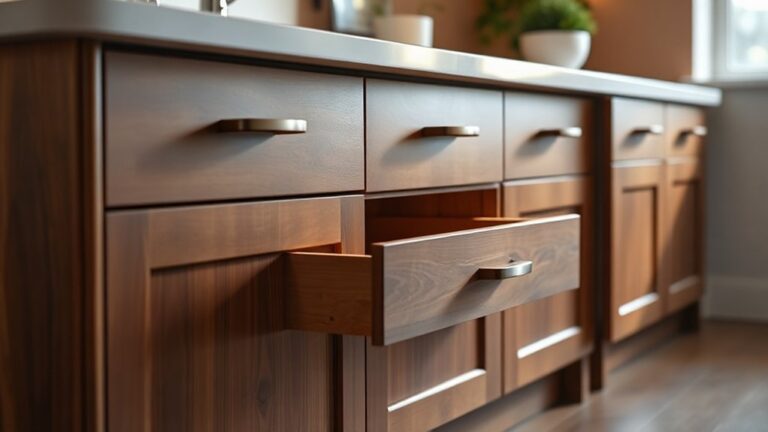
What you choose for cabinets, countertops, and fixtures can quickly swing a kitchen remodel budget up or down. For cabinets, your material choice matters most when you balance looks, durability, and price.
Solid wood usually costs more, while cabinet veneer and laminate can lower your spend without sacrificing style. You’ll also pay differently for joinery, drawer boxes, and hardware finishes, since premium details add up fast.
- Solid wood: classic, strong, pricier
- Plywood boxes: stable and reliable
- MDF doors: smooth, budget-friendly
- Veneer fronts: stylish, cost-conscious
- Basic hardware: cheaper, simpler look
If you want to save, choose sturdy midrange materials and upgrade only the parts you touch every day.
Countertop Surface Options
Countertop choices can move your kitchen budget just as much as cabinet materials, since the surface you pick affects both cost and daily wear. You’ll usually pay less for laminate and more for quartz, granite, or solid surface, and each option changes how often you’ll need countertop maintenance.
If you cook a lot, think about heat resistance, stain protection, and how easily you can clean spills. Thicker slabs and custom edge profiles usually raise labor and material costs, while simpler edges keep spending down.
You can also save by matching the countertop to your layout, since fewer seams and cuts reduce waste. When you compare options, balance appearance, durability, and upkeep so you don’t overspend now or later.
Fixture Style Selection
When you choose fixtures, the style you pick can shift your remodel cost as much as the materials themselves. You’ll pay more when you favor custom looks, premium brands, or intricate details, and you can save by keeping choices simple.
Your cabinets, countertops, and hardware should work together, because a busy mix can raise costs without improving function. Focus on what you actually use daily, then match your budget to the finish level you want.
- Sleek cabinet doors often cost less
- Decorative pulls add up fast
- Quartz can outprice laminate
- Matching fixture style helps simplify shopping
- Coordinated faucet finishes create a polished look
If you want a balanced remodel, choose durable pieces first, then add personality where it matters most.
What Appliance Upgrades Add to Your Budget
Appliance upgrades can quickly push your kitchen remodel budget higher, especially if you’re replacing standard models with higher-end, built-in, or smart options. You’ll often pay more for professional-grade ranges, panel-ready refrigerators, and dishwashers with quiet cycles.
The good news is that appliance upgrades can also improve energy efficiency, which may lower utility bills over time. If you choose induction cooking, counter-depth refrigeration, or a convection oven, you’ll usually add both style and function.
| Upgrade type | Budget impact |
|---|---|
| Basic replacement | Low |
| Midrange package | Moderate |
| Premium smart set | High |
That spread can feel overwhelming, but it helps you decide where to spend and where to save. You might keep one reliable appliance and splurge on the piece you use most, like the range or fridge.
When you plan carefully, you can balance performance, comfort, and long-term value without blowing your remodel budget.
How Labor Costs Vary by Location
Labor costs can swing a lot depending on where you live, because local wage rates, permit rules, and contractor demand all affect what you’ll pay. In high-cost cities, you’ll usually face greater wage variability than in smaller markets, and that changes your remodel total fast. These locational differences matter whether you hire a designer, a carpenter, or a tile setter.
- Big metros often charge more per hour.
- Rural areas may offer lower bids.
- Busy seasons can push rates up.
- Specialized crews may cost extra anywhere.
- Fast timelines can raise your labor total.
You can save by comparing several quotes and asking exactly what each crew includes. If you’re flexible on timing, you may find better availability and lower rates. When you understand local pricing, you can budget more accurately and avoid surprises.
Permit, Plumbing, and Electrical Costs
Permits, plumbing, and electrical work can add a meaningful chunk to your kitchen remodel budget, especially if you’re moving walls, relocating fixtures, or upgrading old systems. You’ll usually pay permit costs for inspections and approvals, and those fees can climb when your project needs several sign-offs.
Plumbing changes matter too, since rerouting sinks, gas lines, or drains takes time and skilled labor. Electrical costs rise when you add outlets, lighting, or a stronger circuit for new appliances.
| Item | Typical Trigger | Budget Impact |
|---|---|---|
| Permit costs | Layout changes | Stress and delays |
| Plumbing | Fixture relocation | Surprise bills |
| Electrical costs | New circuits | Safety, but pricier |
You can soften the blow by planning early and confirming code requirements before work starts. When you know what’s required, you avoid last-minute changes that can strain your finances and your patience.
How Material Quality Changes Your Budget
Material choices can swing your kitchen remodel budget just as much as permits or utility work. When you pick higher-end surfaces, you pay for better material durability, longer warranties, and more consistent finish aesthetics. That can raise costs fast, but it often cuts repairs and replacements later. You’ll also notice big jumps between stock and custom options.
- Laminate costs less, but it chips sooner.
- Quartz costs more, yet resists stains and scratches.
- Solid wood looks rich, but needs care.
- Luxury tile boosts style and labor costs.
- Premium hardware improves feel and longevity.
If you want to stay on budget, balance your splurges. Spend more on items you touch daily, like countertops and cabinets, and save on accents you can swap later. Compare samples in your lighting, because cheap materials can look better on paper than in your kitchen.
Frequently Asked Questions
How Long Does a Typical Kitchen Remodel Take?
You can expect a typical kitchen remodel to take about 6 to 12 weeks, depending on your scope and any surprises. You’ll move faster when you set clear timing milestones, order materials early, and keep decisions locked in. You should also plan for risk mitigation, because permit delays, hidden damage, and backordered items can stretch the schedule. If you’re changing plumbing or layout, expect extra time.
Can I Remodel My Kitchen in Phases?
Yes, you can remodel your kitchen in phases, and many homeowners do. About 60% of remodels stretch over time, so you’re not alone.
You can start with Phase planning for cabinets, then tackle counters, flooring, and appliances later. This approach helps you spread out cost breakdowns and reduce disruption. Just make sure each stage fits the next, so you don’t redo work or pay twice.
Which Upgrades Increase Home Resale Value Most?
You’ll usually get the biggest resale boost from kitchen upgrades that improve appearance and function at once. Start with fresh cabinets, durable countertops, and a modern backsplash. Add upscale finishes like quality hardware, lighting, and flooring, then consider smart appliances for convenience and appeal. You should also keep the layout practical and neutral, since buyers often pay more for a kitchen that feels updated, efficient, and move-in ready.
How Do I Choose a Reliable Kitchen Contractor?
You can choose a reliable contractor by starting with sourcing referrals from friends, neighbors, and local pros who’ve had smooth remodels. Then you should check licenses, insurance, and recent reviews, and ask to see finished kitchens. A reliable contractor won’t shy away from clear bids, timelines, or questions. Trust the one who speaks plainly, arrives on time, and leaves you feeling calm, not cornered, when the dust starts to swirl.
What Should I Budget for Unexpected Remodel Surprises?
You should budget an extra 15% to 20% for surprises, and you’ll feel better when unexpected delays or hidden permits pop up. Start with kickstart budgeting by setting aside a separate contingency fund before work begins.
You can also ask your contractor to flag risks early, so you won’t get caught off guard by structural issues, delivery problems, or code changes that can quickly raise your total costs.
Conclusion
So, if you’re wondering why your kitchen remodel budget keeps growing, congratulations—you’ve uncovered the world’s least surprising surprise. A “simple” update can turn into a pricey puzzle once you factor in size, layout, cabinets, appliances, labor, permits, and materials.
You may start with a dream kitchen and end up negotiating with your wallet. Still, if you plan carefully, you can keep the cost of a typical kitchen remodel in check and avoid letting your renovation feast on your savings.