How to Remodel a Kitchen in 3 Simple Steps
A kitchen remodel can feel overwhelming when you’re trying to balance your wish list, budget, and everyday needs—you’re not alone. The good news is that remodeling a kitchen can be easier when…

A kitchen remodel can feel overwhelming when you’re trying to balance your wish list, budget, and everyday needs—you’re not alone.
The good news is that remodeling a kitchen can be easier when you break it into three simple steps.
First, set your goals and budget by ranking what matters most, choosing a spending ceiling, and leaving a small reserve.
Next, plan the layout, zones, finishes, and lighting so the space works better for cooking, storage, and daily life.
Finally, handle demolition, installation, and touch-ups carefully, starting with safety and ending with trim, caulk, and hardware.
Keep going, and you’ll see how each step comes together.
Key Takeaways
- Set goals, rank priorities, and establish a realistic budget with a small reserve before starting.
- Plan the kitchen layout and work zones to improve movement, storage, and daily efficiency.
- Choose cabinets, counters, flooring, paint, lighting, and hardware that fit your style and budget.
- Prepare safely by clearing the room, shutting off utilities, and checking for hidden wiring, plumbing, or mold.
- Install in order, then finish with caulk, trim, paint touch-ups, and final hardware adjustments.
Set Your Kitchen Remodel Goals and Budget

Before you start choosing cabinets or countertops, set clear goals for your kitchen remodel and decide how much you can spend. List what isn’t working now, then rank your wants by importance. This goal prioritization helps you focus on changes that will truly improve daily life, whether you need better storage, easier cleaning, or a brighter space.
Next, define your budget ceiling and add a small reserve for surprises. Break that total into categories so you can see where your money should go. Use budget tracking from the start to compare estimates, record every purchase, and stay aware of what’s left.
If you find your budget tightening, adjust lower-priority items before you commit. When you know your goals and spending limit, you’ll make faster decisions and avoid costly detours. That preparation gives your remodel a clear direction and keeps the project grounded in what matters most to you.
Plan Your Layout, Finishes, and Schedule
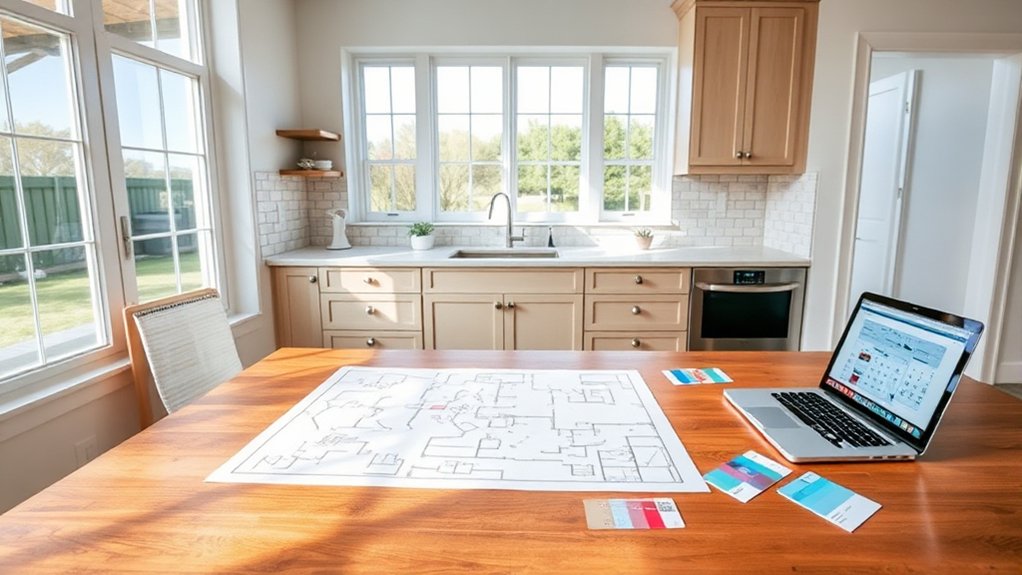
Next, turn your goals and budget into a workable plan by mapping out the kitchen layout, choosing finishes, and setting a realistic schedule.
Start with how you move through the space: place prep, cooking, and storage zones where they feel natural. Then choose cabinets, counters, flooring, and paint that match your style and stay within budget.
Make sure your lighting choices support both task work and a warm, welcoming mood. Pick decorative hardware that ties the whole room together without crowding the design.
Break the project into clear phases, set target dates, and build in buffer time for delays. A thoughtful plan helps you feel in control and keeps stress low.
- You’ll avoid costly second guesses.
- You’ll see your vision take shape.
- You’ll keep daily life less chaotic.
- You’ll make better design decisions.
- You’ll feel excited, not overwhelmed.
Handle Demolition, Installation, and Final Touches
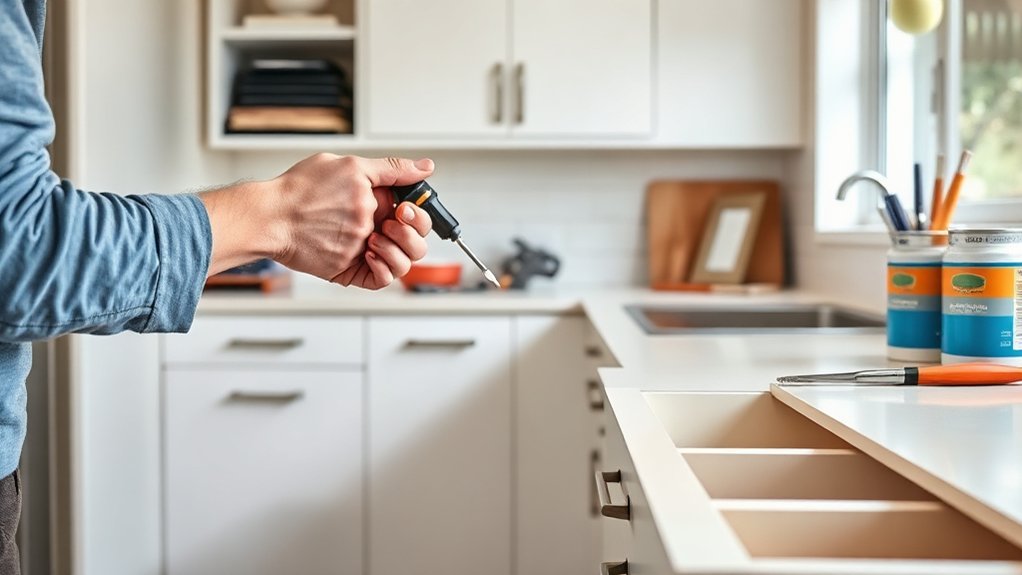
Now comes the part where your kitchen plan starts becoming real. You’ll start by clearing the room, shutting off utilities, and protecting nearby spaces before demolition begins. Keep demolition safety front and center: wear gloves, eye protection, and a mask, and check for hidden wiring, plumbing, or mold before you swing a tool. Remove old cabinets, counters, and flooring in the right order so you don’t damage what stays.
Next, install your new layout. Set cabinets first, then counters, appliances, and fixtures, confirming each piece is level and secure. As you go, test outlets, faucets, and lights so you can catch problems early.
After the main work wraps up, handle the final touches: caulk gaps, add trim, paint touch-ups, and hang hardware. Keep track of final touches costs so small extras don’t derail your budget. When everything’s clean and working, step back and enjoy a kitchen that finally matches your plan.
Frequently Asked Questions
Do I Need a Permit for a Kitchen Remodel?
Yes, you’ll usually need a permit for your kitchen remodel if you’re changing electrical, plumbing, gas, or structural elements. Permit requirements vary by city, so check with your local building department before you start.
You should also consider safety concerns, since permits help guarantee your work meets code and protects your home. If you’re only repainting or replacing cabinets, you might not need one, but always verify first.
How Do I Choose a Good Contractor?
Choose a contractor by comparing sharp promises with solid proof. You should interview several, ask for recent references, and inspect past kitchen work. To verify contractor licenses, check your state’s website and confirm insurance, bonding, and complaint history. To estimate remodeling budget, get itemized bids and compare material allowances, labor, and timeline. Pick the pro who communicates clearly, answers fast, and respects your budget without pressure.
What Should I Do With Meals During Remodeling?
You should plan simple, no-cook meals before work starts, and you’ll save stress by stocking your fridge, freezer, and pantry with easy options. Use meal planning to map out breakfasts, lunches, and dinners, then set up a temporary prep area with a microwave, toaster, or grill.
Don’t forget sleep scheduling, because remodeling can disrupt routines and leave you too tired to cook, shop, or clean up properly each day.
How Long Does a Kitchen Remodel Usually Take?
A kitchen remodel usually takes 6 to 12 weeks for a straightforward project, but you can see 3 to 6 months if you’re changing layouts or waiting on custom materials. One useful stat: remodels often run 10% to 20% over schedule.
Your kitchen timeline depends on design choices, permits, and surprises behind the walls. Plan early, stay flexible, and you’ll keep the process moving with fewer delays.
Should I Stay Home During the Renovation?
You don’t have to stay home during the renovation, but it can help if you want to monitor progress and answer questions quickly. Consider your staying options based on noise, dust, and access to water and power.
Also weigh safety considerations, especially if contractors leave tools, open floors, or exposed wiring. If you’ve got kids, pets, or allergies, you might feel better staying elsewhere until the mess settles.
Conclusion
Remodeling your kitchen doesn’t have to feel overwhelming. When you set clear goals, plan your layout and finishes, and stay organized during demolition and installation, you’ll keep the project moving smoothly.
In fact, kitchens are one of the most valuable home upgrades, with many remodels recouping over 50% of their cost at resale. That means you’re not just creating a space you’ll love; you’re making a smart investment in your home, too. A well-planned kitchen remodel can help you enjoy your home now and add value for the future.