3 Simple Tips to Organize Your Kitchen Cabinets
Cluttered cabinets can make even simple cooking feel frustrating, and you’re not alone—many people struggle to keep kitchen essentials organized. These simple tips to organize your kitchen cabinets can help you make…

Cluttered cabinets can make even simple cooking feel frustrating, and you’re not alone—many people struggle to keep kitchen essentials organized. These simple tips to organize your kitchen cabinets can help you make better use of your space and keep everyday items easy to find.
Start by emptying one cabinet at a time so you can sort every plate, mug, and gadget. Wipe shelves clean, then keep only the items you actually use and donate the extras, duplicates, or expired food.
Next, group what’s left by how often you use it, putting daily essentials in easy reach and seasonal pieces higher up.
Finish with shelf risers, bins, and dividers to save space and keep everything tidy, and there’s more to uncover.
Key Takeaways
- Empty each cabinet, wipe shelves clean, and inspect items for damage, duplicates, and expired food.
- Donate, recycle, or trash unused items so only useful kitchenware goes back.
- Group items by type, then place everyday dishes, mugs, and tools in easy-to-reach spots.
- Store holiday dishes and rarely used gadgets in higher or less convenient cabinets.
- Use shelf risers, bins, and dividers to maximize space and keep cabinets organized.
Empty and Sort Your Kitchen Cabinets

Start by emptying each cabinet one at a time so you can see exactly what you have. Lay every item on the counter and check for chipped dishes, duplicate tools, and expired food.
Empty each cabinet, inspect every item, and sort what stays before putting anything back.
As you clear each shelf, wipe away crumbs and sticky spots so you get a fresh surface to work with. Then begin to sort cabinets by type: plates with plates, bowls with bowls, baking items together, and small gadgets in their own group.
This makes it easier to notice what belongs in your kitchen and what doesn’t. If you spot items you never use, set them aside for donation, recycling, or trash.
Keeping empty cabinets in order now saves you time later because you won’t have to shuffle everything around again. When you finish, you’ll know exactly what’s worth putting back and what should stay out.
Group Items by How Often You Use Them
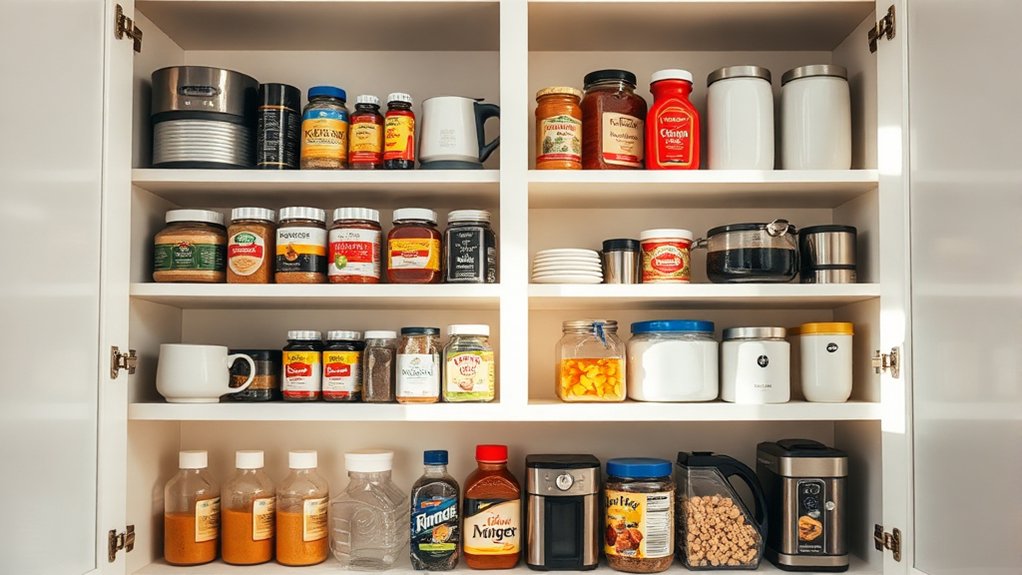
Once you’ve sorted everything by type, group your kitchen items by how often you use them so the things you reach for daily stay easy to grab. Put plates, glasses, mugs, cooking oils, and your favorite tools where you can see and reach them fast.
Move holiday dishes, specialty bakeware, and rarely used gadgets to less convenient spots. This simple system supports efficient storage because you’re matching cabinet space to real habits, not just item categories.
As you set everything back, think about your routine: breakfast, lunch, dinner, and cleanup. Keep duplicates together only if you truly use them regularly.
You can also add a labeling strategy for shelves or cabinet zones so everyone in your home knows what belongs where. When you assign a clear place for each frequency level, you’ll cut search time, reduce clutter, and make putting things away much easier every day.
Use Shelf Risers, Bins, and Dividers
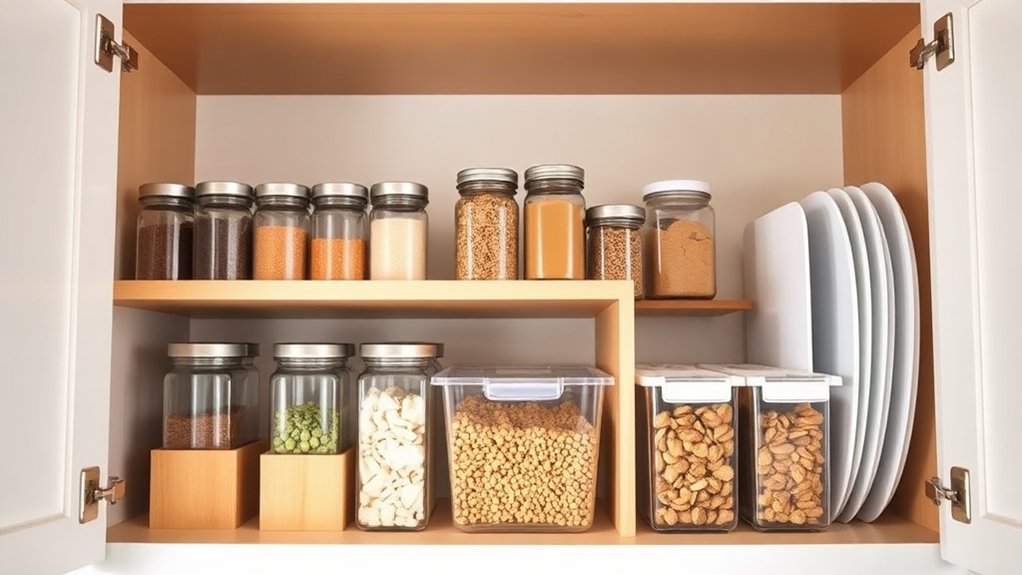
Shelf risers, bins, and dividers can make even awkward cabinets work harder for you. You can turn wasted vertical space into neat, visible layers, so you stop stacking dishes into unstable piles.
Shelf risers, bins, and dividers turn wasted cabinet space into neat, visible layers.
Use clear bins for snacks, baking supplies, or seasonal storage, and slide labels on the front so you know what’s inside at a glance. Dividers keep cutting boards, lids, and trays upright, while risers let you park mugs or bowls above plates without crowding them.
- Place risers under plates to double shelf space.
- Group small appliances in sturdy bins.
- Use dividers for lids and bakeware.
- Reserve one bin for seasonal storage.
When you sort this way, you’ll reach items faster and keep cabinets looking clean. You’ll also make room for the things you use most, instead of letting clutter spread.
Frequently Asked Questions
How Do I Label Kitchen Cabinets Effectively?
You label kitchen cabinets effectively by picking clear categories, then using labeling systems that match how you cook and store items. Use large, easy-to-read text and place labels at eye level on each door or shelf edge.
Add color-coded labels to separate baking, snacks, and dinnerware fast. Keep the style consistent, and update labels whenever you move items. That way, you’ll find everything quickly and keep cabinets neat.
What’s the Best Way to Organize Under-Sink Storage?
You’ll organize under-sink storage best by grouping items by use, then placing cleaning sprays, sponges, and backups in clear bins you can slide out easily. Use stackable organizers to maximize vertical space and keep plumbing clear.
Add Cabinet labeling to each bin so you grab what you need fast. For better Under sink organization, toss expired products, store heavy items low, and leave one small space open for essentials.
How Can I Keep Cabinet Items From Getting Dusty?
You can keep cabinet items from getting dusty by wiping shelves weekly and storing items in sealed bins or containers. Add shelf liners to catch debris and make cleanup easier.
Keep cabinet doors closed, and don’t overcrowd spaces so air flows less dust around. For dust prevention, vacuum nearby floors and vents often. If you store food or fabrics, use airtight containers for scent control, too.
Which Cabinet Organizers Work for Corner Cabinets?
You’ll find corner cabinet pull outs and lazy susan alternatives work best for awkward corners. Pull-out shelves let you reach items without crawling inside, while swing-out trays maximize deep space.
If you think installation sounds hard, don’t worry. You can choose adjustable systems that fit standard cabinets and need only basic tools. Use stacked bins or angled racks for lids, spices, and small appliances, and you’ll make every inch easy to access.
How Often Should I Deep-Clean Kitchen Cabinets?
You should deep-clean your kitchen cabinets every 3 to 6 months, depending on how much you cook and spill. A regular cleaning cadence helps you catch grease, crumbs, and sticky spots before they build up.
Set maintenance scheduling around seasonal changes or holidays, and wipe problem areas monthly. If you’ve got kids or pets, you may need to clean more often to keep your cabinets fresh and sanitary.
Conclusion
So, if your kitchen cabinets are staging a chaotic coup, you can absolutely win back control. Empty them out, sort the survivors, and stop letting the random salad spinner dominate prime real estate.
Put the daily heroes where you can grab them, and let shelf risers, bins, and dividers do the boring work for you. These simple tips to organize your kitchen cabinets won’t make them Pinterest-perfect overnight, but they’ll at least stop them from looking like they lost a fight with a tornado.