How to Degrease Kitchen Cabinets in 3 Simple Steps
Greasy kitchen cabinets can make even a clean kitchen feel grimy, and stubborn buildup can be frustrating to tackle. You’re not alone—many people struggle to find a cleaner that cuts through grease…
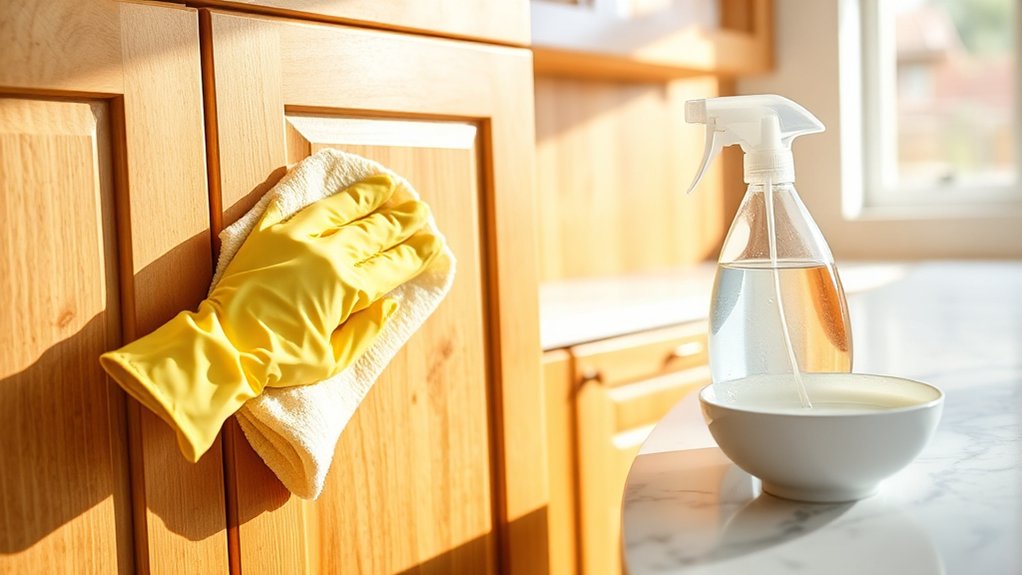
Greasy kitchen cabinets can make even a clean kitchen feel grimy, and stubborn buildup can be frustrating to tackle. You’re not alone—many people struggle to find a cleaner that cuts through grease without damaging cabinet finishes. This roundup will help you discover how to degrease kitchen cabinets in 3 simple steps and choose the right products for the job.
To degrease kitchen cabinets in 3 simple steps, first gather a gentle degreaser, warm water, microfiber cloths, a soft sponge, and a dry towel, then test your cleaner on a hidden spot.
Next, wipe the cabinets gently with the grain, using light pressure and drying each section right away.
Finally, treat stubborn grease with a mild soap mix or degreaser for 1–2 minutes, then wipe clean and dry. Keep going for more tips and safer techniques.
Key Takeaways
- Gather mild degreaser, warm water, microfiber cloths, a soft sponge, and a dry towel before starting.
- Test the cleaner on a hidden spot first, especially on painted or sealed cabinets.
- Wipe cabinets gently with a damp microfiber cloth, following the grain and rinsing frequently.
- For stubborn grease, let the solution sit briefly, then scrub corners with a soft toothbrush or cotton swab.
- Dry each section immediately to prevent moisture damage and preserve the cabinet finish.
Gather Your Degreasing Supplies
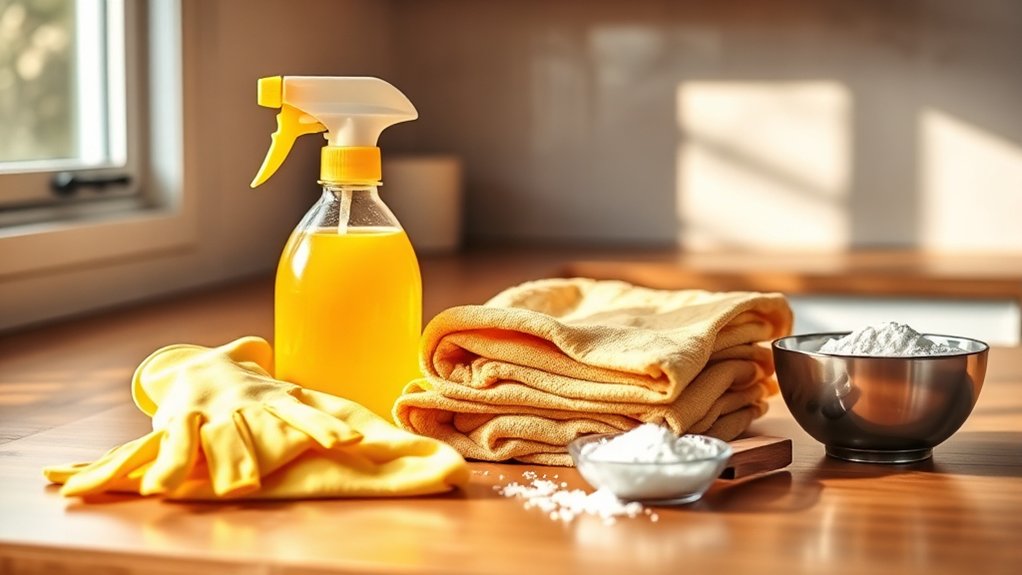
Before you start scrubbing, gather a few basic degreasing supplies so the job goes smoothly. You’ll need a gentle degreaser, warm water, two microfiber cloths, a soft sponge, and a small bowl or spray bottle.
Gather a gentle degreaser, warm water, microfiber cloths, and a soft sponge before you begin scrubbing.
If you like a homemade option, mix a little dish soap with water for a simple cleaner. Keep a dry towel nearby so you can wipe surfaces quickly after cleaning. It also helps to wear gloves, especially if your cleaner is strong or your hands are sensitive.
Set everything within reach before you begin, because this saves time and keeps you focused. Your first idea should be choosing a cleaner that matches your cabinet finish.
Your second idea should be checking labels so you avoid harsh ingredients you don’t want on painted or sealed surfaces. Once you’ve got the right supplies ready, you can move through the task faster and with less mess.
Clean Kitchen Cabinets Without Damaging Them

Now that your supplies are ready, start by testing your cleaner on a small hidden spot to make sure it won’t dull or damage the finish. If the surface looks unchanged after a few minutes, dampen a soft microfiber cloth with your chosen solution and wring it out well.
Wipe the cabinets gently in the direction of the grain, using light pressure and smooth strokes. Rinse the cloth often so you don’t spread grime around, and switch to a fresh cloth if it gets dirty.
For cabinet care, dry each section right away with a clean towel to prevent moisture from seeping into seams or joints. Keep your grease removal routine simple and controlled, since too much scrubbing can wear down paint, stain, or sealant.
If your cabinets are painted or laminated, use only mild cleaners and avoid abrasive pads. Careful cleaning keeps your cabinets looking fresh without sacrificing their finish.
Tackle Stubborn Grease and Sticky Spots

When grease has baked on or sticky spots won’t budge, let a mild degreasing solution sit on the area for a minute or two to soften the buildup. Then wipe with a soft cloth, using gentle pressure so you don’t scratch the finish.
If the grime stays put, repeat the application and focus on one small section at a time. For tight corners and cabinet edges, use a soft toothbrush or cotton swab to lift trapped grease without spreading it around.
You can also mix a little warm water with a drop of dish soap for extra grease removal on especially stubborn areas. After the surface loosens, wipe again with a clean damp cloth to remove any sticky residue.
Dry the cabinet right away so moisture doesn’t settle into seams. By working patiently and spotting trouble areas early, you’ll break down buildup faster and keep your cabinets smooth, clean, and ready for the next step.
Frequently Asked Questions
What Ingredients Work Best for Homemade Degreaser?
You’ll get the best homemade degreaser from warm water, white vinegar, dish soap, and baking soda. These eco friendly cleaners cut grease fast and help with odor control. Add a little lemon juice if you want extra shine.
Check your cabinet materials and test first, especially on dishwasher safe finishes. For steady maintenance, mix a gentle spray and wipe cabinets often to support grease prevention without damaging the surface.
How Often Should Kitchen Cabinets Be Degreased?
You should degrease your kitchen cabinets every 1 to 3 months, depending on how much cooking you do. If you fry often or notice sticky buildup, clean them more frequently. For lighter use, every few months usually works fine.
You can wipe them weekly to prevent grease from settling. Staying consistent helps your kitchen cabinets look fresh, protects the finish, and makes deep cleaning much easier later on.
Can I Use a Steam Cleaner on Cabinet Surfaces?
Yes, you can, but you should test carefully first. Steam cleaning viability depends on your cabinet finish and seal.
If you’ve got painted, laminated, or solid wood cabinets, use low steam and keep the nozzle moving so you don’t warp or loosen adhesive. Think of it like a knight’s trusty torch: powerful, but risky.
For eco friendly solutions, you can pair steam with a soft cloth and mild soap for safer results.
How Do I Clean Cabinet Hardware and Handles?
You clean cabinet hardware and handles by removing loose grime first, then wiping each piece with warm soapy water and a soft cloth. For stubborn buildup, use a gentle degreaser or a vinegar solution, focusing on cleaning handles and degreasing hardware without soaking the finish.
Dry everything thoroughly right away, then buff with a microfiber cloth. If screws loosen, tighten them after cleaning so your hardware stays secure and looking fresh.
What Should I Do if Grease Stains Keep Returning?
If grease stains keep returning, you’re fighting a cycle, like waves washing back onto shore. You should wipe cabinets with a stronger cleaner, then dry them fully and improve kitchen ventilation.
Use salon grade degreasing on stubborn spots, and don’t forget handles and edges. Recheck for grease rebound after cooking, then clean spills right away. You can also switch to a microfiber cloth and repeat light maintenance weekly.
Conclusion
Now you know how to degrease kitchen cabinets in 3 simple steps, you can get rid of buildup without harming the finish. Grab your supplies, clean gently, and spot-treat the sticky areas so your cabinets look fresh again.
If you’re worried it’ll take too long, don’t be—this quick routine fits easily into a busy day. Stick with it, and you’ll keep grease from building up in the first place.