10 Tips on How Much to Budget to Replace Kitchen Countertops
Replacing kitchen countertops can quickly become more expensive than expected, and figuring out how much to budget can feel overwhelming. You’re not alone: many homeowners struggle to compare materials and account for…

Replacing kitchen countertops can quickly become more expensive than expected, and figuring out how much to budget can feel overwhelming. You’re not alone: many homeowners struggle to compare materials and account for installation costs. These 10 tips on how much to budget to replace kitchen countertops can help you plan with confidence.
To budget for new kitchen countertops, start with a realistic range based on your kitchen size, layout, and finish, then add 10% to 20% for labor, waste, and surprises. Compare material prices side by side, since laminate costs less than granite or quartzite, and don’t forget installation, edge profiles, cutouts, and disposal. Measure carefully, get at least three quotes, and set aside a contingency fund. The details below can help you plan smarter and spend better.
Key Takeaways
- Start with a realistic budget range based on kitchen size, layout complexity, and finish quality, then compare material prices side by side.
- Add 10% to 20% for labor, installation, waste, surprises, and hidden repairs, especially in older kitchens.
- Measure carefully and account for islands, cutouts, edges, sinks, and backsplashes to avoid underestimated square footage.
- Request at least three itemized quotes that separate demolition, fabrication, delivery, installation, and edge profiles.
- Consider long-term value, local labor rates, and possible plumbing or electrical changes before choosing the final material.
How Much to Budget for Countertops

How much should you budget for countertops? Start by setting a realistic range based on your kitchen size, layout, and the finish you want. You’ll usually spend more when your project needs custom cuts, sink openings, or edge details, so build in a cushion for labor and installation.
A smart price comparison helps you see where your money goes and keeps you from overpaying for features you don’t need. You should also weigh material durability, because a lower upfront cost can turn into higher repair or replacement costs later.
If you cook often, choose a surface that handles heat, stains, and scratches without constant upkeep. Add 10% to 15% to your budget for waste, surprises, and last-minute changes.
When you plan with both short-term cost and long-term value in mind, you’ll budget more accurately and avoid costly stress during the remodel.
Compare Countertop Material Prices
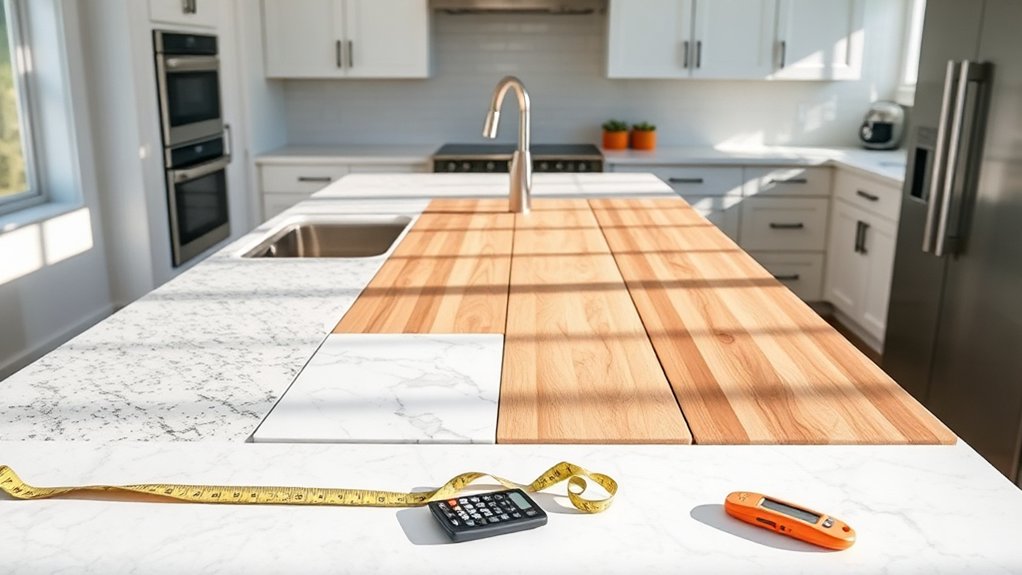
Start by comparing material prices side by side, since countertop costs can vary a lot from one option to another. You’ll usually see laminate at the low end, butcher block and tile in the middle, and granite, quartz, or solid surface higher up. Exotic stone, concrete, and premium quartzite can push your budget much farther.
Don’t just look at the sticker price; check installation, finishing, and edge profiles too, because those add up fast.
You should also watch pricing trends in your area. Seasonal demand, supply chain changes, and local labor rates can shift quotes more than you’d expect. When you weigh options, balance upfront cost with material durability.
A cheaper surface may need repairs or replacement sooner, while a pricier one can last longer and save you money over time. Compare multiple samples and get detailed estimates so you can choose a countertop that fits both your style and your budget.
Measure Your Kitchen for Accurate Estimates

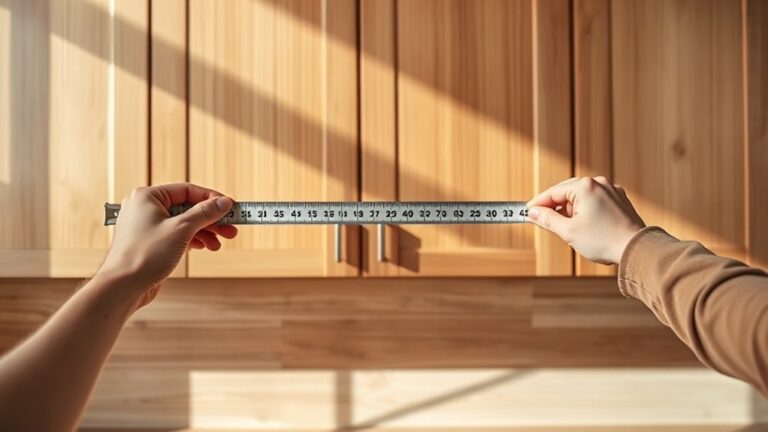
Before you set your budget, measure each countertop run from end to end to find the total length you’ll need. Be sure to account for sinks, cooktops, and other cutouts, too, since they can affect the total square footage. With accurate measurements, you’ll get a more reliable estimate and avoid surprises.
Measure Countertop Length
To get an accurate countertop budget, measure the full length of each section that needs replacing, including islands, peninsulas, and any cutouts around sinks or appliances. Use a tape measure and record each run in inches, then convert to feet if your contractor prefers that format.
For better measurement accuracy, measure twice and write everything down right away. If your kitchen has angled corners or unusual shapes, break the surface into smaller sections and add them together.
Template usage can help here too, especially when walls aren’t perfectly straight or cabinets vary in depth. Keep your notes organized by wall, island, and other surface areas so you can compare quotes easily and avoid surprises when you plan your countertop replacement budget.
Include Cutout Areas
Don’t forget the cutouts, since sinks, cooktops, faucets, and other openings can change your countertop estimate a lot. When you measure, mark every opening’s width, depth, and placement so you don’t underbudget.
Fabricators often charge extra for precise templates, edge finishing, and reinforcing fragile areas, especially with stone or engineered surfaces. If you’re comparing materials, factor in how each one handles cutouts; some options offer better material durability, while others protect budget aesthetics with lower installation costs.
You should also note whether your backsplash, faucet, or soap dispenser needs extra space, because those details affect labor and waste. Accurate cutout measurements help you avoid surprises, choose the right slab size, and keep your project aligned with both your design goals and your spending plan.
Add Installation Costs to Your Budget
Installation can take a big bite out of your countertop budget, so make room for labor, removal, plumbing disconnects, and any trim or backsplash adjustments. You’ll get better budget precision when you ask installers for an itemized quote instead of a single lump sum.
That way, you can see what’s driving the total and compare bids fairly. Installation timing also matters because rushed scheduling can lead to premium rates, while flexible dates may help you save.
If your old counters need extra labor to lift, haul away, or prep the base cabinets, those charges can add up fast. You should also confirm whether the crew includes cleanup and disposal in the estimate.
Factor in Sink and Backsplash Cutouts
Factor in sink and backsplash cutouts, too. Many countertop materials require precise sink openings, which can add to the total. And if your backsplash needs cutouts for outlets or other fixtures, you may face extra fees. These details can add up, so include them in your budget early.
Sink Cutout Costs
Sink cutout costs can add more to your countertop budget than many homeowners expect, especially if your sink style or backsplash layout calls for extra fabrication. You should ask your fabricator whether the sink cutout is included in base countertop pricing or billed separately.
Undermount, farmhouse, and apron-front sinks often need precise shaping, polishing, and support, which can raise labor charges. If you’re replacing an old countertop, removing an existing opening may also affect the final price.
You can save money by choosing standard sink dimensions and confirming measurements before fabrication starts. Always review the quote for template work, edge finishing, and reinforcement around the opening. Small details like these can shift your total enough to change your overall kitchen budget.
Backsplash Cutout Fees
Backsplash cutout fees can quietly raise your countertop total, especially when your layout needs openings for outlets, windows, or a sink that meets a tiled backsplash. You should ask your fabricator whether cutout pricing is bundled into the slab quote or billed separately.
Custom notches around corners, uneven walls, or finished tile edges often take extra labor, and that can add up fast. If your backsplash installation is already in place, the crew may need to protect it or make precision cuts to avoid damage, which can increase charges.
Get a written estimate that lists each opening, edge detail, and any on-site adjustments. That way, you can compare bids fairly and budget for the real final price before work begins.
Budget for Removal and Disposal Costs
Budget for removal and disposal costs, because tearing out old countertops can add a surprising amount to your project total. If you’re replacing laminate, stone, or tile, you’ll likely pay for labor, hauling, and landfill fees.
Ask your contractor whether the estimate includes demo and haul-away, or whether you need to arrange those separately. When you compare bids, look closely at disposal line items so you don’t miss hidden charges.
Heavy materials can require extra crew time, special tools, or a dumpster rental, and those costs can rise quickly. Plan your removal logistics early by checking access to your kitchen, parking for a truck, and any building rules for waste removal.
If you can reuse portions of the old surface or donate them, you may lower disposal fees. Set aside a cushion in your budget so surprises during demo won’t derail the rest of your countertop project.
Plan for Plumbing and Electrical Changes
If your new countertops affect the sink, faucet, dishwasher, or outlets, plan for plumbing and electrical changes before work starts. You’ll save time and avoid surprise charges by reviewing every connection under the old top.
If the sink moves, you may need new supply lines, a drain adjustment, or a plumber to reconnect the disposal. When your backsplash height changes, outlets and switches might need to shift too, which can require electrical upgrades from a licensed electrician.
Ask your contractor to inspect these systems early and include labor, permits, and parts in your estimate. Planning plumbing this way helps you compare bids accurately and prevents delays once demolition begins.
You should also check whether shutoff valves, cords, or junction boxes need replacement to meet code. Build a little extra into your budget for unexpected repairs behind the cabinets or wall, since hidden issues often appear after removal starts and can push the final total higher than expected.
How Edges and Finishes Affect Costs?
Once you’ve accounted for plumbing and electrical work, look closely at the countertop profile and finish, since both can raise the price faster than you might expect. A simple square edge usually costs less than a decorative edge profile, and a polished edge finish can add labor and fabrication time.
If you want a sleek modern look, you’ll often pay more for cleaner lines and tighter detailing.
- Choose a basic edge profile to keep costs down.
- Ask whether the edge finish is included in the quote.
- Compare eased, bevel, and bullnose options.
- Reserve premium detailing for visible areas only.
You can also save by matching the finish to your material instead of requesting extra treatments. In many cases, small design upgrades look great, but they’ll push your budget higher.
When you compare samples, ask how each edge changes the total installed price.
Set Aside a Contingency Fund
Unexpected costs can pop up during a kitchen countertop replacement, so you’ll want to set aside a contingency fund before the work begins. Aim to reserve an extra 10% to 20% of your total budget, especially if your kitchen has older cabinets, uneven walls, or hidden damage. This buffer gives you room to handle repairs without derailing the project or dipping into savings you need elsewhere.
Contingency planning also helps with budgeting psychology: when you expect surprises, you’ll feel less stressed and make calmer decisions. Instead of treating the reserve as money you hope won’t get used, think of it as part of a realistic plan. That mindset keeps you from overspending on upgrades too early and leaves flexibility for issues you can’t predict. A solid contingency fund won’t raise your overall cost by itself, but it can protect your budget from turning into a financial headache.
Get Multiple Countertop Quotes Before You Decide
After you’ve set aside a contingency fund, the next smart move is to compare several countertop quotes before you commit. When you get multiple quotes, you can spot pricing gaps, material differences, and hidden fees that affect budget planning.
Ask each contractor to break out demolition, fabrication, edge profiles, cutouts, delivery, and installation so you’re comparing apples to apples. Then use the details to judge value, not just the lowest number.
- Request at least three written estimates.
- Check whether templating and removal are included.
- Ask about warranties, lead times, and payment terms.
- Confirm the exact material grade and square footage.
A clear quote helps you avoid surprise add-ons and negotiate with confidence. If one bid looks unusually low, dig deeper before you sign.
With a careful comparison, you’ll choose a countertop that fits your style, timeline, and budget without overspending.
Frequently Asked Questions
How Long Does Countertop Replacement Usually Take?
Countertop replacement usually takes one to three days, but installation can take longer if you need templating, custom fabrication, or plumbing adjustments. Plan for material availability, old countertop removal, and any surprise repairs beneath the surface.
If you have a simple layout and stock material, the job might finish faster. For stone or quartz, you’ll often wait a week or more for fabrication.
Can I Install New Countertops Over Existing Ones?
Yes, you can sometimes place new countertops over existing ones, if the old surface is sound and level. With careful countertop installation, you’ll avoid a full tear-out and keep disruption to a hush.
Still, you should check material durability, cabinet strength, and added height before you commit. Laminate, stone, and solid-surface options each behave differently, so you’ll want a pro to inspect your kitchen and confirm it’s a safe fit.
Which Countertop Material Is Easiest to Maintain?
Quartz is the easiest countertop material for you to maintain. You just wipe it with mild soap and water, and it resists stains, scratches, and bacteria. Don’t fall for material maintenance myths that claim natural stone always needs less care. If you want easy care surfaces, quartz, solid surface, and laminate all make cleanup simple. You’ll spend less time sealing, scrubbing, and worrying about everyday kitchen messes.
Do Countertops Increase Home Resale Value?
Yes, countertops can boost your home value, especially if yours look outdated or worn. Remodeling Magazine reports minor kitchen upgrades often recoup about 70% to 80% of their cost, and buyers notice surfaces fast.
You’ll see the best return when you choose durable, attractive materials that balance style with material costs. If your countertops look clean, modern, and well installed, you’ll likely make your kitchen more appealing and easier to sell.
When Is the Best Time to Buy Countertops?
The best time to buy countertops is usually during seasonal sales, end-of-year clearances, or when suppliers need to move inventory. You can save more if you plan your budget timing around holidays and contractor slow periods.
Compare quotes early, because material durability affects long-term value and replacement costs. If you’re flexible on colors or edge styles, you’ll often get a better deal without sacrificing quality or performance.
Conclusion
Budgeting for new kitchen countertops gets easier when you break the project into parts. On average, countertops can account for about 10% to 15% of a kitchen remodel, so it pays to plan ahead. Measure carefully, compare materials, and don’t forget installation, cutouts, and any plumbing or electrical work. Add a little extra for surprises, and get a few quotes before you decide. That way, you’ll feel confident about how much to budget to replace kitchen countertops.