How to Dispose of Old Kitchen Knives Safely
Getting rid of old kitchen knives can feel tricky when you’re worried about someone getting hurt or unsure what belongs in the trash. You’re not alone—many people struggle to find a safe,…

Getting rid of old kitchen knives can feel tricky when you’re worried about someone getting hurt or unsure what belongs in the trash. You’re not alone—many people struggle to find a safe, simple way to handle them. Here’s how to dispose of old kitchen knives safely.
You can dispose of old kitchen knives safely by cleaning and drying them first, then checking for damage or loose handles. Wrap each blade in thick cardboard or use a blade guard, tape it securely, and place it in a rigid container or double bag. Mark it sharp and keep it away from children and pets. Put it in household trash unless local rules allow recycling or donation. Keep going to learn the safest options.
Key Takeaways
- Clean and dry knives, then inspect for damage before disposal.
- Wrap each blade in thick cardboard or a blade guard and tape it securely.
- Place the wrapped knife in a rigid container or double bag it for extra protection.
- Mark the package “sharp” and keep knives away from children and pets.
- Follow local trash rules, and use approved recycling or donation options if available.
How to Prepare Kitchen Knives for Disposal

Before you toss old kitchen knives, make them safe to handle by cleaning them, drying them, and wrapping each blade securely in cardboard, thick paper, or several layers of tape. Wash away grease, food residue, and rust so you can inspect each knife clearly. Check for chips, loose handles, or bent blades, and separate any damaged pieces that need extra care.
If a knife still has a sheath, leave it on and secure it. When you plan how to dispose of them, keep safe handling in mind at every step, especially if you’re moving several knives at once. Use a sturdy box or container that won’t shift open, and label it if local rules ask you to.
Keep knives away from children, pets, and clutter until you’re ready to take them to the proper disposal point. Preparing them well reduces the risk of cuts and helps you handle the final step with confidence.
Wrap Knives So No One Gets Cut

If you have a blade guard, place each knife inside it. Otherwise, wrap the blade in thick cardboard, making sure to cover every sharp edge. Then tape the cardboard securely so it won’t slip off during handling or trash pickup. This extra step helps protect you and anyone else who might come into contact with the knife.
Use Blade Guards
How can you keep old knives from causing accidental cuts during disposal? You can use blade guards to cover each edge before you move or toss the knife. Slide the guard on snugly so the blade stays fully protected and can’t slip free.
If you don’t have a guard, choose one that fits the knife length and shape well. This simple step supports knife safety by keeping the sharp edge from touching your hands, trash bag, or anyone who handles the item later.
Check that the guard is secure, then store the knife in a labeled container or disposal bag until you’re ready to discard it. Using blade guards is quick, practical, and helps you handle worn-out knives with confidence and care.
Wrap In Thick Cardboard
If you don’t have blade guards, thick cardboard works well to keep old knives from cutting through bags or pricking your hands. Cut a sturdy piece of cardboard packaging, fold it around the blade, and press it snugly so the edge stays covered.
This safety wrapping gives you a simple barrier while you move the knife to disposal. You can also sandwich the blade between two pieces of cardboard for extra protection, especially if the knife is long or chipped.
| Risk | Feeling |
|---|---|
| Exposed blade | Fear |
| Loose wrapping | Worry |
| Covered edge | Relief |
| Safe handling | Confidence |
When you wrap each knife carefully, you protect yourself, anyone helping you, and the trash collector.
Tape Securely Closed
Once the blade is wrapped in cardboard, tape it closed so it can’t slip out or unfold during disposal. Use strong packing tape and cover every open edge, seam, and corner.
You want the cardboard to stay fixed, even if it shifts in the trash. When you wrap knives, press the tape down firmly and overlap each strip for extra hold.
Don’t leave gaps where a tip or edge could break through. If the knife feels loose, add another layer of cardboard and tape securely again.
Label the package as sharp so anyone handling it knows to stay careful. Before you throw it away, shake the bundle lightly to make sure nothing moves.
A tight wrap protects you, sanitation workers, and anyone else who might touch it.
Put Wrapped Knives in the Trash
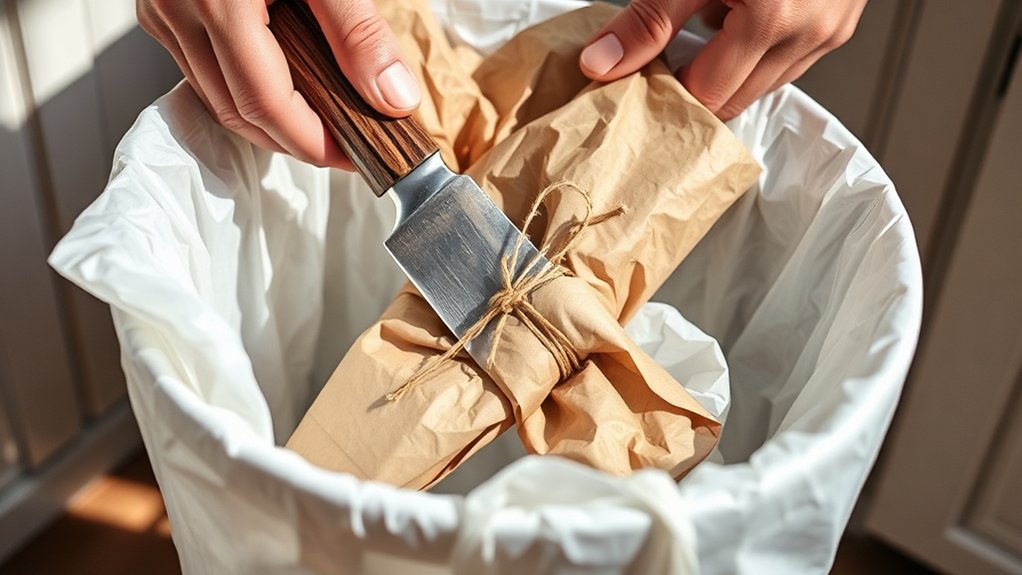
Once you’ve wrapped the knife securely, place it in the trash with the blade covered. Seal the bag well so the knife can’t slip out or poke through. This helps prevent cuts and keeps anyone handling the garbage safe.
Secure Blade Wrapping
Before you toss an old kitchen knife, wrap the blade so it can’t cut through the trash bag or injure anyone handling it. Use secure wrapping with several layers of cardboard, thick paper, or newspaper, then tape them tightly around the edge.
If the knife has a pointed tip, cover that too, since blade handling gets risky even with dull edges. You can also slide the wrapped blade into a sturdy sheath or a folded piece of heavy material for extra protection.
Make sure the wrap stays snug and won’t shift when you move the knife. Once the blade is fully covered, place the knife where it won’t poke through other items in the trash.
This simple step helps protect you, sanitation workers, and anyone who might sort the garbage later.
Seal in Trash
After wrapping the blade securely, place the knife deep inside a trash bag so it won’t shift or poke through. Then tie the bag tightly and, if possible, nest it inside a second bag for added containment.
Set it in your household trash, not loose in a curbside bin. You’re disposing knives in landfills when no local reuse option applies, so keep the wrapped blade separated from other waste as much as possible.
If the knife is stainless or another recyclable metal, check whether your area accepts recycling steel cutlery through a scrap or metal program. If not, trash disposal remains the practical choice.
Labeling isn’t necessary, but a secure seal helps keep the item buried within the bag and out of easy reach until pickup day arrives.
Prevent Injury Risks
When you put wrapped knives in the trash, keep the blade covered and the bag sealed so no one gets cut while taking out the garbage. Use thick cardboard, several layers of newspaper, or a knife sheath to block the edge, then tape it tightly.
Don’t leave loose knives on top of the trash or near recycling, where they can shift and cause injury. You should label the bundle “sharp” if local rules allow, which improves disposal safety for anyone handling the bag.
If you must store the wrapped knives before pickup, place them in a secure bin away from children and pets to avoid storage hazards. Check the trash can before it leaves your kitchen, and make sure nothing pokes through the bag or lid.
Can You Recycle Kitchen Knives?
Yes, you can sometimes recycle kitchen knives, but not usually in your curbside bin. You’ll need to check local recycling programs, because many accept scrap metal only through special drop-off sites or household hazardous waste events.
Since knives mix steel with plastic, wood, or riveted handles, some facilities may reject them unless you separate the parts first.
If your area offers metal recovery, that’s often the best route. Wrap the blade securely before transport, then place the knife with other accepted metal items if the program allows it.
Never toss it loose into recycling, because it can injure workers and damage equipment.
If no program takes it, don’t force it into the wrong stream. Your safest option is to secure the knife, mark it clearly, and follow local trash rules.
That way, you protect sanitation crews and keep your disposal process responsible.
Where to Donate Usable Knives
If your knives are still sharp, rust-free, and safe to handle, donation may be a better option than disposal. You can start with local charity kitchens, culinary schools, shelter programs, and community centers that accept cooking tools.
Before you give anything away, check each organization’s knife eligibility rules, since some only take certain blade types, sizes, or brands. You should also ask donation partners whether they need sets, single knives, or storage sheaths.
Check each organization’s knife eligibility rules, and ask whether they need sets, singles, or storage sheaths.
Clean each knife thoroughly, dry it well, and wrap the blade for safe transport. If a group can’t accept knives directly, ask whether a drop-off event or approved collection site is available.
Many food programs welcome sturdy tools that still perform well, and your donation can help someone cook safely and efficiently. A quick call or email saves time and ensures your knives go to a place that can actually use them.
Dispose of Broken Knife Handles Safely
Broken knife handles should never be tossed loose in the trash, because the exposed blade can still injure someone during handling or pickup. First, wrap the blade in thick cardboard, then tape it firmly so it can’t shift. Next, place the wrapped knife in a rigid container before you set it out. These safety considerations protect you and sanitation workers.
| Step | Action |
|---|---|
| 1 | Cover the blade with cardboard |
| 2 | Tape all edges securely |
| 3 | Seal it in a sturdy box |
Check local disposal logistics before you leave it curbside, since some areas require labeled sharps or special drop-off rules. If the handle has splintered, wear gloves and avoid forcing pieces apart. You can also mark the package “sharp” to alert handlers. Don’t hide it in regular loose waste; you want clear, controlled disposal. Once secured, place it where nobody can easily reach it.
How to Dispose of Knives in Bulk
When you’re disposing of a stack of old knives, sort them first by condition and size so you can package them safely and efficiently. Lay each blade flat, then wrap it in thick cardboard, newspaper, or heavy tape so it won’t cut through during knife disposal.
Sort knives by size and condition first, then wrap each blade securely before disposal.
For bulk handling, group similar sizes together and place the bundles in a rigid box or bucket that won’t collapse. Keep handles separated from exposed tips, and fill empty space so the knives can’t shift.
- Count each knife before packing.
- Wrap blades individually.
- Seal bundles with strong tape.
- Label the container clearly.
If you’re handling many knives at once, work slowly and use gloves with good grip. Don’t overload one container; split the load into smaller batches instead.
This keeps the process organized, reduces accidental cuts, and makes disposal easier from start to finish.
Check Local Rules for Sharp Waste
Before you toss old knives, check your local rules for sharp waste, because disposal requirements can vary by city or county. You might need to wrap blades, label containers, or use a special drop-off site.
Some areas treat kitchen knives as regular trash, while others classify them as sharp waste and ban loose disposal. If you live in an apartment, ask your building manager whether they have a designated collection method.
You can usually find the rules on your city’s sanitation website or by calling your waste department. Don’t assume what worked in another town will work for yours.
When you check local rules first, you avoid fines, protect sanitation workers, and keep your disposal plan legal. Save the instructions you find, then follow them exactly when you’re ready to discard the knives.
If the guidance seems unclear, ask for written clarification so you can dispose of the blades safely and correctly without second-guessing yourself later.
Safer Ways to Repurpose Old Knives
If you want to repurpose an old knife, cover or wrap the blade securely to prevent cuts. Then you can use it for simple tasks, such as scraping labels, opening boxes, or marking garden rows. Just label it clearly and store it safely so no one mistakes it for a food knife.
Blade Edge Protection
How can you repurpose an old kitchen knife without risking a cut? You can protect the edge first, then handle it with confidence. Clean and dry the blade, then wrap it before storing or moving it.
Good blade maintenance keeps rust from spreading and helps you avoid surprises when you touch the knife later. Don’t believe safety myths that say a dull knife is harmless; dull edges can still slash skin.
- Slide on a fitted blade guard.
- Cover the edge with cardboard and tape.
- Use thick cloth, then secure it tightly.
- Mark the wrapped knife clearly.
Keep your fingers away from the edge at every step. If the handle cracks or the blade chips, stop using it and dispose of it safely.
Creative Utility Uses
Once the blade is safely wrapped and labeled, you can think about giving an old kitchen knife a second life in low-risk tasks. Use it as a butter spreader, a box opener, or a garden weeding tool if the handle stays secure.
You can also keep it for scraping labels, cutting twine, or separating frozen foods on a dedicated board. Before you repurpose it, inspect the grip, tip, and edge for damage that could cause slips.
If the knife still works well enough, check local recycling options and donation guidelines, since some charities accept serviceable tools for training kitchens or community programs. If it’s too worn for reuse, don’t force a creative fix. Safer disposal always beats a clever shortcut that could lead to injury.
When to Replace Kitchen Knives
You’ll know it’s time to replace a kitchen knife when it no longer cuts cleanly, even after sharpening, or when the blade has chips, deep rust, or a bent edge. If you notice the handle loosening, the grip cracking, or the knife slipping in your hand, replace it before it causes an injury.
A dull, damaged blade forces you to press harder, which undermines kitchen safety and makes prep work less precise.
- Test the edge on a tomato or onion.
- Inspect the blade for pitting, warping, or corrosion.
- Check whether the handle feels stable and secure.
- Replace any knife that can’t be restored safely.
Once a knife reaches this point, don’t keep using it out of habit. Retiring it protects your fingers, supports better cutting, and helps you decide whether a safe disposal method, donation, or repurposing makes sense.
Keeping only reliable tools also simplifies kitchen safety and routine rug care near prep areas.
Frequently Asked Questions
Can I Throw Kitchen Knives in Regular Recycling Bins?
No, you shouldn’t put kitchen knives in regular recycling bins. You’ll need to check your local recycling guidelines first, since most programs reject sharp metal items for disposal safety reasons. Wrap the blade securely, label it clearly, and place it in household trash only if your area allows it. If your city accepts scrap metal, take the knives to a proper drop-off site or hazardous waste collection event instead.
What Should I Do With Rusty Knife Blades?
You should treat rusty blades as sharp waste, not regular trash. Cover each blade with cardboard, tape, or thick newspaper, then bag it securely before you handle disposal options. You can drop them at a local household hazardous waste site, knife buyback program, or scrap-metal recycler if they accept them. If the knife still works, you might donate it after cleaning it. Always keep rusty blades out of loose bins.
How Do I Safely Transport Knives to a Donation Center?
Wrap, wedge, and whisk those knives away carefully. You should sheath each blade in cardboard or thick paper, then tape it shut so it can’t slip free. Pack them in a sturdy box, label it clearly, and keep the blades pointed down.
Check the donation center’s donation eligibility first, since some won’t accept rusty or damaged knives. For safe transport, carry the box separately and never leave it loose.
Are Ceramic Kitchen Knives Disposed of the Same Way as Metal Ones?
Not exactly; you should treat ceramic kitchen knives a bit differently from metal ones. You can wrap them securely, label the package, and use careful safety disposal to prevent breakage or cuts. Because ceramic blades shatter, you shouldn’t toss them loose in the trash.
For two word discussion ideas, think “blade wrapping” and “waste sorting.” If your area accepts sharps, follow those local rules before you dispose of them.
Can I Mail Old Knives for Recycling or Disposal?
Yes, you can mail old knives for recycling or disposal if the service allows it. I once wrapped a cracked mug so well it survived a cross-country move; treat knives the same way.
Check mailing options and follow disposal guidelines from the recycler or postal carrier first. You’ll usually need to sheath each blade, box it tightly, label it clearly, and avoid loose packing so nobody gets hurt.
Conclusion
When you wrap your knives securely, you protect your hands; when you toss them properly, you protect your family; when you check local rules, you protect your community. You can recycle them if your area allows, donate them if they still work, or dispose of them carefully if they don’t.
And when your old knives are dull, bent, or cracked, replace them so you can cook safely, confidently, and without worry. Knowing how to dispose of old kitchen knives safely helps protect everyone.