5 Key Factors That Affect How Much Kitchen Cabinets Cost
Kitchen cabinet costs can be hard to pin down when prices vary so much from one option to the next. You’re not alone—many homeowners struggle to balance their budget with the look…
Kitchen cabinet costs can be hard to pin down when prices vary so much from one option to the next. You’re not alone—many homeowners struggle to balance their budget with the look and storage they want. These five key factors can help you compare your options and understand what affects how much kitchen cabinets cost.
Materials, cabinet style, size and layout, finishes and hardware, and installation all shape the final price. Hardwood and custom woodwork cost more, while plywood or particleboard can lower prices.
Stock cabinets are usually the cheapest option. Semi-custom cabinets offer more flexibility, while custom cabinets typically raise the bill.
Bigger or unusual layouts require more cabinetry and labor. Paint, glaze, premium pulls, and tricky installations can also increase costs. Keep reading to compare the factors that affect your budget.
Key Takeaways
- Material choice drives cost: hardwoods, plywood, and veneer cost more than particleboard or softer woods.
- Cabinet style matters: stock is cheapest, semi-custom offers value, and custom cabinets cost the most.
- Kitchen size and layout increase price by requiring more cabinets, special units, and extra labor.
- Finish complexity affects cost, with simple stains cheaper than painted, glazed, or custom finishes.
- Hardware and installation add expense, especially with soft-close features, repairs, plumbing, or electrical work.
How Materials Affect Cabinet Cost

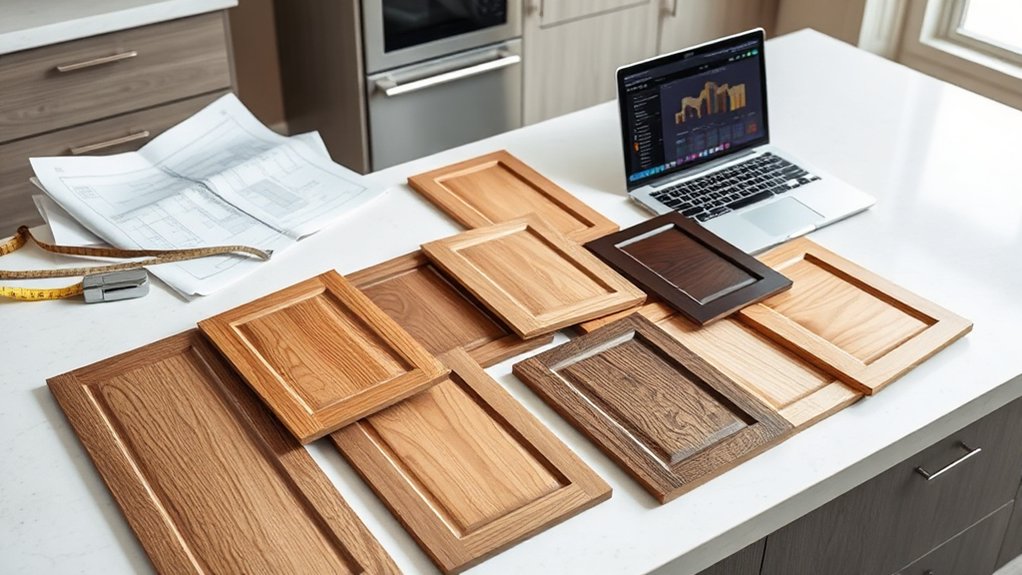
When you choose materials for kitchen cabinets, you directly shape the final price. You’ll pay more for hardwoods like maple, cherry, or oak because they’re dense, attractive, and last longer. Softer woods and engineered options usually cost less, but they can show wear sooner.
Plywood often gives you a strong balance of price and performance, while particleboard lowers upfront spending but may reduce cabinet durability in wet or high-use areas.
Material sourcing also matters. If suppliers must import rare wood or process specialty finishes, your costs rise. Local or abundant materials can help you save money without sacrificing function.
You should also factor in veneer, laminate, and finish choices, since these change both appearance and price. In short, the cabinet material you pick affects not only your budget today, but also how well your cabinets stand up over time.
Stock, Semi-Custom, or Custom Cabinets?

Cabinet style level has a big impact on price, too. If you want the lowest entry point, stock cabinets usually offer the best stock pricing because they’re made in standard sizes and finishes. They’re fast to buy and install, but you’ll have fewer design options.
Semi-custom cabinets sit in the middle and follow current semi custom trends by giving you more door styles, colors, and modest modifications without a full custom bill. Custom cabinets cost the most because you’re paying for tailored materials, finishes, and craftsmanship.
- Stock: cheapest, quickest, and most limited.
- Semi-custom: flexible, popular, and moderately priced.
- Custom: highest cost, maximum choice, and made for you.
You should compare how much flexibility you need against your budget. If you’re happy with standard choices, stock can save you money. If you want more personality without going all in, semi-custom often gives you the best value.
How Cabinet Size and Layout Affect Price

Beyond cabinet style, size and layout also play a major role in what you’ll pay. Bigger kitchens need more material, so your total rises as cabinet dimensions increase. Tall pantry units, wide base cabinets, and extra uppers all add to the bill because they take more lumber, shelving, and labor to build and install.
If your kitchen has an unusual footprint, you may also pay more for fillers, corner units, or custom sizing to make everything fit cleanly.
Your layout matters just as much. A simple straight run usually costs less than an L-shape or U-shape because it uses fewer pieces and less installation time. When you improve layout efficiency, you can often reduce wasted space and avoid paying for unnecessary cabinets.
Careful planning can help you get the storage you need without overspending. Measuring accurately and simplifying your design can keep your project on budget while still giving you a functional kitchen.
How Finishes and Hardware Affect Price
Finishes and hardware can change your cabinet price more than you might expect. When you compare finish options, you’ll see that paint, stain, glaze, and specialty coatings all affect labor and material costs.
A simple stain usually costs less than a multi-step painted finish, while a custom color or distressed look can push the price up. Hardware styles matter too: basic pulls and knobs keep costs down, but soft-close hinges, hidden slides, and premium handles add more.
Your layout efficiency also plays a role, because a straightforward cabinet run uses fewer finished edges and less hardware than a complex design.
- Choose simpler finish options to save money.
- Pick standard hardware styles for everyday function.
- Balance upgrades with your budget and design goals.
What Installation Really Costs
Installation can add a big chunk to your cabinet budget, and the final price often depends on how complex the job is. You’ll usually pay more if your layout needs wall repairs, plumbing adjustments, electrical moves, or custom trim work.
A simple replacement in an existing space costs less than a full remodel, where installers must level floors, fit uneven walls, and modify boxes on site.
You should also factor in removal and disposal of old cabinets, which can raise labor charges. If your project needs permits, permitting costs may apply and can vary by city or county.
Tight installation timelines can increase expenses too, especially if you need weekend work, rush scheduling, or coordinated trades.
Ask for a detailed estimate that separates labor, materials, and extras. That way, you can compare bids fairly and avoid surprises once the work starts.
Frequently Asked Questions
How Long Do Kitchen Cabinets Typically Last?
You can expect kitchen cabinets to last 15 to 50 years, depending on materials, care, and use. Solid wood cabinets often offer better how long lasting performance, while cheaper options may wear out sooner.
You’ll improve cabinet longevity by cleaning spills quickly, tightening hardware, and avoiding excess moisture. If you maintain them well, your cabinets can stay sturdy and attractive for decades, even in a busy kitchen.
Can I Install Kitchen Cabinets Myself?
Yes, you can install kitchen cabinets yourself if you’ve got solid measuring, leveling, and carpentry skills. DIY installation pitfalls include uneven walls, misaligned doors, and cabinets that won’t stay square.
You’ll also need to think about warranty considerations, since some manufacturers won’t cover damage from self-installation. If you’re unsure, hire a pro for the tricky parts, like hanging uppers and securing heavy base cabinets.
Do Cabinet Prices Include Countertop Costs?
Usually, no. Cabinet prices don’t include countertop costs unless the quote says so. Ask for confirmation before you sign anything.
Pricing varies by dealer, installer, and material. Cabinets, countertops, hardware, and labor may be listed separately. For a true total, request a detailed estimate that breaks out each item and shows exactly what you’re paying for.
What Cabinet Styles Are Most Popular Right Now?
You’re likely to see Shaker cabinets leading the pack, and that theory holds up in most remodels. You’ll also find flat-panel styles surging if you want a sleek, modern look. Two word idea 1 and two word idea 2 both point to what’s trending: clean lines, simple hardware, and warm finishes. If you want a timeless update, you can’t go wrong with these popular choices for your kitchen.
How Do I Choose a Cabinet Contractor?
You should choose a cabinet contractor by checking their qualifications, reviewing recent projects, and asking for references. Compare bids, confirm licenses and insurance, and make sure they communicate clearly.
Before work starts, discuss timelines, materials, and change orders. Use project budgeting strategies to set a realistic limit, then choose the contractor who fits your style, budget, and schedule and inspires confidence throughout the process.
Conclusion
When you plan your kitchen cabinet budget, you’ll see that materials, cabinet type, size, finishes, and installation all push the final price in different ways. If you want a simple benchmark, the National Kitchen & Bath Association reports that cabinetry can account for about 30% of a kitchen remodel budget.
That means your choices here really matter. By comparing options carefully, you can keep your project stylish, functional, and cost-effective without sacrificing quality when considering how much kitchen cabinets cost.