What Are the Benefits of Can Lighting in the Kitchen?
A dim, cluttered kitchen can make meal prep harder and leave your space feeling cramped. You’re not alone—many people struggle to find lighting that’s both practical and stylish. Can lighting in the…

A dim, cluttered kitchen can make meal prep harder and leave your space feeling cramped. You’re not alone—many people struggle to find lighting that’s both practical and stylish. Can lighting in the kitchen can brighten work areas without taking over the ceiling.
Can lighting gives your kitchen bright, focused light without crowding the ceiling, so the room feels open and clean. You get better task lighting over counters, sinks, and islands, which makes prep, cooking, and cleanup easier. Recessed fixtures also reduce glare and shadows, helping you see surfaces more clearly. With dimmers and the right placement, you can create a flexible, modern look that works well day or night, and there’s more to investigate.
Key Takeaways
- Can lighting provides clean, recessed illumination that keeps the kitchen ceiling open and uncluttered.
- It reduces shadows and glare, improving visibility on counters, sinks, and prep areas.
- Focused placement creates effective task lighting for safer, easier cooking and cleanup.
- Recessed lights can make kitchens feel brighter, larger, and more visually open.
- LED can lights offer energy-efficient lighting with flexible dimming for ambient or task use.
Why Kitchen Can Lights Work Well

Kitchen can lights work well because they give you clean, focused illumination without crowding the ceiling. You keep your kitchen looking open, since the fixtures sit flush and don’t interrupt your view.
Kitchen can lights deliver focused illumination while keeping your ceiling open, clean, and uncluttered.
That streamlined profile helps you highlight Kitchen colors, from warm wood tones to bright white cabinets, without adding visual clutter. You can also choose the right Lighting bulbs to match your style, whether you want a softer glow or a crisp, modern feel.
Because the lights are tucked into the ceiling, they blend into the room and let other design details stand out. They also work nicely in kitchens with low ceilings or tight layouts, where hanging fixtures might feel heavy.
When you want a simple, polished look, can lights give you flexibility without stealing attention from the rest of the space.
Can Lights for Task Lighting
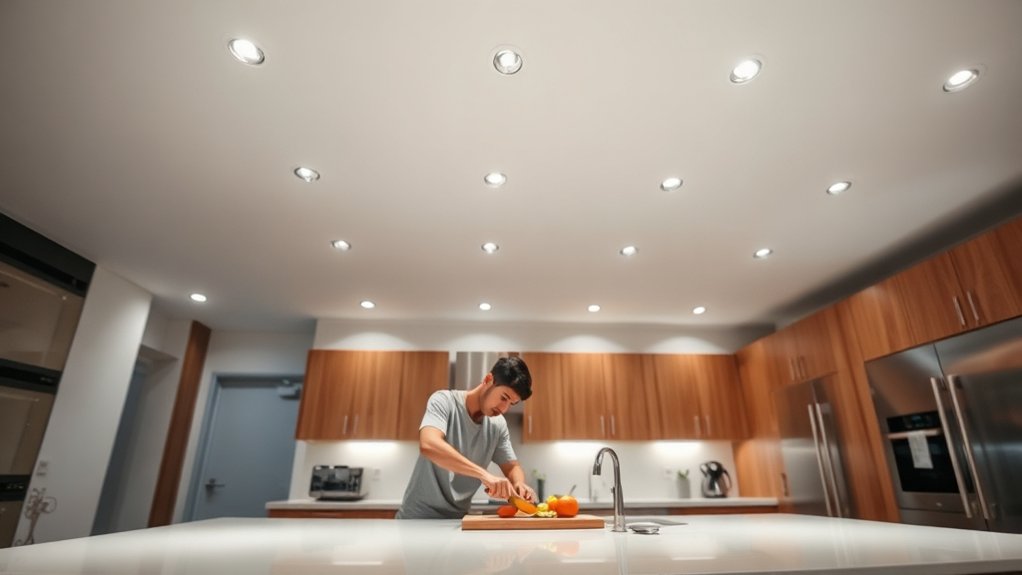
Can lights can help create focused work zones right where you need them. They spread light evenly across your counters, making it easier to chop, cook, and clean without harsh shadows. With better visibility, you can work more safely and efficiently.
Focused Work Zones
Where do can lights make the biggest difference? In your kitchen’s focused workzones, can lights let you direct light exactly where you need it most. You can place them above the prep counter, sink, or island to boost kitchen brightness without lighting every corner of the room.
That targeted setup helps you chop, measure, and mix with more confidence because your work area feels clear and easy to use. You also control the layout, so your lighting supports each task instead of competing with it.
When you choose the right spacing and trim, can lights create clean, practical zones that fit your cooking routine. This makes your kitchen feel more organized, efficient, and ready for everyday meals or bigger cooking projects.
Shadow-Free Illumination
Shadow-free illumination makes a big difference when you need your kitchen to work as hard as you do. You can place can lights where you need steady task lighting, and they’ll wash the room evenly without dark patches blocking your view.
Because the beam comes from above, you get a shadow free effect that helps you move through prep, cooking, and cleanup with less strain. You also benefit from better glare reduction, since recessed fixtures can aim light downward without bouncing harshly off surrounding surfaces.
That means you won’t have to squint or constantly shift your position to see clearly. With the right spacing and trim, can lights give you a balanced, comfortable glow that supports efficient kitchen work every day, even during late-night cooking sessions.
Countertop Visibility
Good lighting doesn’t just reduce shadows in the room—it also helps you see exactly what you’re doing on the countertop. With can lights aimed at your prep areas, you slice, measure, and mix with more confidence.
You’ll spot crumbs, spills, and knife marks faster, which supports countertop ecology by keeping your workspace cleaner and more efficient. Better visibility also reduces eye strain when you cook at night or early in the morning.
| Benefit | Result |
|---|---|
| Focused task light | Clearer prep space |
| Bright, even coverage | Fewer mistakes |
| Clean fixture placement | Better lighting aesthetics |
You get practical illumination without cluttering the ceiling, so your kitchen stays open and polished.
How Recessed Lights Make Kitchens Look Bigger

Recessed lights can make your ceiling look higher, helping your kitchen feel more open. Since the fixtures sit flush with the ceiling, they also keep the space looking uncluttered.
Plus, their even glow brightens the room from corner to corner, making your kitchen feel larger and more inviting.
Visual Ceiling Lift
How do you make a kitchen feel more open without changing its footprint? You use recessed can lights to create a visual ceiling that seems higher and cleaner. By tucking light into the ceiling plane, you draw the eye upward and give the room a subtle ceiling lift. The effect feels airy, modern, and less boxed in.
- You reduce bulky fixtures overhead.
- You spread light evenly across the room.
- You highlight upper walls and cabinetry.
- You make the ceiling line fade back visually.
This simple lighting choice helps your kitchen read as larger, even when the layout stays the same. It’s an easy way to add depth, brighten the space, and improve the overall sense of openness without adding clutter.
Clearer Floor Space
By moving light into the ceiling, you keep the floor free of visual clutter and make the kitchen feel more open at a glance. You won’t need bulky floor lamps, hanging fixtures, or extra stands that crowd walkways and shrink the room visually.
Recessed cans help you keep sightlines clean, so your cabinets, island, and flooring stand out instead of competing with oversized hardware. That cleaner look can also help when you’re budget planning, since you can focus spending on the fixtures and trim you actually want.
During install timing, you can coordinate placement with other upgrades to avoid rework and keep the space streamlined. When you reduce visual obstacles, your kitchen naturally feels larger, easier to move through, and less cramped every day.
Seamless Light Spread
Evenly placed can lights wash the kitchen in light without breaking up the ceiling, which helps the room feel wider and more open. You get seamless light that reaches corners, backsplashes, and work zones without creating visual clutter.
That uninterrupted glow reduces shadows, so cabinets, counters, and floors blend into one balanced view, making the room seem larger. Good color rendering also matters because it keeps whites bright, woods warm, and finishes true, which supports a clean, airy feel.
- Fewer dark pockets
- Smoother ceiling lines
- Better sightlines
- A room that feels bigger
Can Light Placement for Counters and Islands
When you plan can light placement over counters and islands, you want each fixture to work with the task below it, not just brighten the room. For counter placement, center lights over the areas where you chop, mix, and read recipes so shadows don’t fall across your work.
Keep the spacing even, and adjust for cabinets, sinks, or appliances that may block light. Over an island, use island spacing that matches the length of the surface and the size of the cans, so the whole top feels balanced and useful.
If you have seating, place lights so they illuminate the prep zone without glaring into eyes. Test the layout by standing where you cook and looking for dark spots. You’ll get better visibility, safer prep, and a kitchen that feels intentional every day.
Why Recessed Lights Keep Ceilings Clear
Recessed lights keep your ceiling line clean because the fixtures sit inside the surface instead of hanging down into the room. You get a sleek look with recessed lighting, and that matters when you want your kitchen to feel open and uncluttered.
Recessed lights keep your ceiling line clean, giving your kitchen a sleek, open, uncluttered feel.
Because the trim stays flush, you won’t bump your head on pendants or block sightlines above an island. That extra ceiling clearance also helps tall cabinets, shelving, and open layouts feel more balanced.
- You preserve visual space.
- You avoid dangling hardware.
- You keep traffic paths clear.
- You make the room feel taller.
When you choose recessed lighting, you can highlight work areas without adding visual weight. That keeps your ceiling simple and lets other design choices stand out.
If you value a clean kitchen profile, this setup gives you function without crowding the room.
How Can Lights Save Energy
Can lights can help you save energy because you can use lower-wattage bulbs without sacrificing useful light. Plus, placing them where you need the most brightness means you don’t have to light the whole kitchen. That way, your kitchen stays well lit while using less electricity.
Lower Wattage Usage
One of the biggest energy-saving advantages of can lighting is its lower wattage use. You can light your kitchen well with low wattage bulbs, and that boosts energy efficiency without making the room feel dim. Because each fixture draws less power, you use less electricity every time you cook, clean, or gather with family.
- You cut monthly energy costs.
- You reduce strain on your electrical load.
- You can choose LEDs for even greater savings.
- You keep your lighting practical and efficient.
With can lights, you don’t need oversized bulbs to get the brightness you want. Instead, you get focused illumination that meets daily needs while using fewer watts. That makes this option a smart fit for an energy-conscious kitchen.
Efficient Light Placement
With can lighting, you place brightness exactly where you need it, so you’re not wasting energy lighting areas that don’t need it. You can aim fixtures at countertops, sinks, and prep zones, which lets you skip over dark corners and unused spaces.
That targeted approach means fewer bulbs running at full strength all the time, and you still get plenty of visibility for cooking tasks. If you’re planning contrast, you can use focused light to define work areas without flooding the whole room.
Better color rendering also helps you see food and ingredients accurately, so you won’t need extra fixtures just to improve clarity. By matching light to function, you cut waste, boost comfort, and keep your kitchen efficient every day.
Can Light Styles for Modern Kitchens
Style sets the tone in a modern kitchen, and the right can lights help you shape it with precision. You can choose trim and housing styles that match your cabinets, counters, and finishes while keeping the room clean and uncluttered.
When you compare lighting color vs brightness, focus on how each choice affects prep zones and the overall mood, since both matter in a sleek layout. Ceiling material considerations also guide your selection, because drywall, wood, and concrete each need different mounting approaches and thermal ratings.
- Recessed trims keep lines minimal.
- Adjustable eyeball cans aim light where you cook.
- Baffle trims cut glare over shiny surfaces.
- Shallow housings suit slim ceiling spaces.
You’ll get a modern look that feels intentional, balanced, and easy to maintain.
Dimming Options for Kitchen Lighting
How much control do you want over your kitchen lighting? With can lights, you can fine-tune brightness for cooking, cleaning, and relaxing. A dimmer lets you shift from bright task lighting to a softer glow without changing fixtures.
Before you buy, check dimming compatibility between your bulbs, dimmer switch, and trim style. Not every LED works the same way, so matching components helps you avoid flicker or uneven output.
You can also add smart controls for more flexibility. Use an app, voice command, or preset scenes to brighten the room when you prep meals and soften it when guests arrive.
If you want a simple setup, choose a traditional wall dimmer. If you want convenience, smart systems give you scheduling and remote access. Either way, dimming gives you more comfort, better ambiance, and lighting that adapts to your routine.
Common Can Light Mistakes to Avoid
Even a well-designed kitchen can fall flat if you place can lights poorly or choose the wrong layout. With can lighting, you can brighten counters and traffic paths, but a few kitchen mistakes can leave shadows, glare, or wasted energy. Avoid these common errors:
- Spacing cans too far apart, which creates dark zones.
- Mounting them directly over your head, causing harsh glare.
- Using too many fixtures, making the room feel busy and flat.
- Ignoring task areas, so prep spaces stay dim.
You should also choose beam spread and trim carefully, because the wrong combo can make cabinets look uneven. Keep your layout balanced, and test how the light lands on your work surfaces before you commit. Small placement tweaks often deliver better results than adding more fixtures, and they help your kitchen feel polished, practical, and inviting.
How to Plan Kitchen Lighting
To plan kitchen lighting, start by mapping how you actually use the room, then layer light where each job happens. Note prep zones, the sink, the stove, and any island, because each area needs its own brightness.
Map how you use the kitchen, then place light where each task happens for the right brightness.
Use recessed cans for general light, undercabinet fixtures for counters, and pendants or a focused can over seating. Check ceiling height, cabinet depth, and window placement so you avoid shadows and glare.
When you sketch the layout, account for planning setbacks like ductwork, joists, and existing wiring, since they can shift fixture locations. Then set priorities around budget constraints: spend first on task lighting, then add accent layers if funds allow.
Choose dimmers so you can soften the room for meals or increase output for cooking. Finally, test spacing on paper before you cut holes, and you’ll get a kitchen that feels balanced, efficient, and easy to live in every day.
Frequently Asked Questions
What Bulb Type Works Best in Kitchen Can Lights?
LED bulbs usually work best in your kitchen can lights because they give bright, focused light, last a long time, and improve energy efficiency. You can choose warm or cool color temperatures to match your kitchen lighting needs.
When you compare bulb type options, check installation considerations like dimmer compatibility and trim size. If you want crisp task lighting over counters, go with LED recessed bulbs for reliable, efficient performance.
Are Can Lights Safe Over Kitchen Sinks?
Yes, you can place can lights over a kitchen sink if you choose fixtures rated for damp or wet locations. Like a lantern above a stream, they should stand up to splashes and steam.
You’ll want proper safe placement and strong moisture resistance so water won’t threaten the wiring. Keep spacing, sealing, and installation code-compliant, and you’ll enjoy bright, practical light without worrying about safety.
How Many Can Lights Does a Small Kitchen Need?
You’ll usually need four to six can lights in a small kitchen, depending on the room’s layout, ceiling height, and how bright you want it. You should space them evenly and avoid dark corners.
If you’ve got a galley or compact square kitchen, four often works. For a bit more even coverage, add a fifth or sixth. Good light placement and light balance help you cook, clean, and move safely.
Can Kitchen Can Lights Be Installed in Existing Ceilings?
Yes, you can install kitchen can lights in existing ceilings, and you’ll usually cut openings, run wiring, and set the fixtures in place. You should plan the install placement carefully so the lights cover prep areas evenly and avoid shadows. If you choose LED cans, you’ll boost energy efficiency and lower utility costs. A licensed electrician can help you check joists, insulation, and circuit capacity before you start.
Do Can Lights Work With Smart Home Controls?
Yes, your can lights can work with smart home controls, like lanterns obeying a friendly captain’s commands. You’ll need compatible dimmable LED bulbs, smart switches, or a hub-connected system. Then you can tap your phone, voice assistant, or app to brighten, dim, or schedule them. If you choose the right hardware, your smart home setup makes lighting feel effortless, modern, and responsive to your daily routine.
Conclusion
Can lighting helps your kitchen work like a well-oiled machine. You get focused task light for chopping, cooking, and cleaning, while recessed fixtures keep your ceiling open and your space feeling bigger.
Can lights also pair easily with modern styles and dimming options, so you can set the mood when needed. Plan your layout carefully, avoid common placement mistakes, and enjoy the benefits of can lighting in the kitchen.