10 Tips to Accessorize a Kitchen Counter
A cluttered kitchen counter can make even a well-loved kitchen feel chaotic, and you’re not alone if you struggle to keep yours both stylish and practical. These kitchen counter accessorizing ideas can…

A cluttered kitchen counter can make even a well-loved kitchen feel chaotic, and you’re not alone if you struggle to keep yours both stylish and practical. These kitchen counter accessorizing ideas can help you create a polished look without sacrificing the space you need for everyday tasks.
Choose one main color and one accent, then repeat them in towels, jars, and small decor for a cohesive look. Add functional storage you actually use, like canisters or trays, and keep everyday items in matching vessels.
Mix tall and low pieces for height, use a tray to anchor the group, and leave some space between items. Bring in natural textures, refresh seasonally, and finish with a clean, polished counter that feels effortless and ready for more ideas.
Key Takeaways
- Choose one main color and one accent, then repeat them across everyday items for a cohesive look.
- Mix functional storage pieces like canisters, utensil crocks, and trays to keep the counter organized and useful.
- Use a tray to group accessories and leave space between items for a clean, balanced layout.
- Vary heights with tall and low pieces to create visual interest without crowding the counter.
- Limit bold contrasts, match finishes, and update textures seasonally to keep the counter polished and current.
Choose a Kitchen Counter Color Palette

How do you want your kitchen counter to feel? Start by deciding whether you want calm, energy, or warmth, then choose color harmony that supports that mood.
Choose a mood first—calm, energy, or warmth—then let your counter colors work together to support it.
If your cabinets and backsplash already stand out, let your counter accents stay quiet and use soft whites, warm grays, or natural wood tones. If your kitchen feels too plain, add bolder bowls, trays, or canisters in deep blue, green, or terracotta.
You can also contrast with neutrals to make one color pop without overwhelming the space. Repeat one main hue in two or three places so the eye moves smoothly across the counter.
Keep metal finishes and textiles in the same family, too, so nothing clashes. When you build a palette with intention, every accessory feels connected, and your counter looks styled rather than random.
Add Functional Kitchen Counter Storage
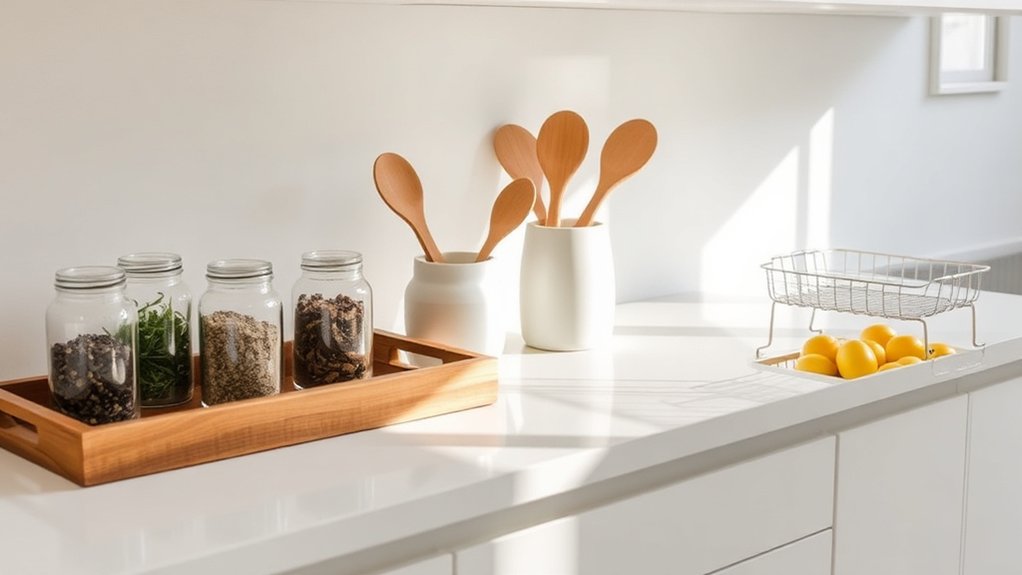
Start with storage that earns its spot on the counter, like a canister for utensils, a covered jar for coffee pods, or a tray that corrals everyday essentials. You’ll keep clutter down and make your routine smoother with Functional organization. Place the items you reach for most near the sink or prep zone, so you don’t waste steps. Good Countertop ergonomics means keeping containers low, stable, and easy to grab without stretching.
| Storage item | Best use | Benefit |
|---|---|---|
| Canister | Utensils | Quick access |
| Jar | Coffee pods | Tidy containment |
| Tray | Small essentials | Easy cleanup |
Choose pieces that match what you actually use, then remove anything extra. When you limit duplicates, you free space for chopping, mixing, and serving. A few well-chosen containers can make your counter feel organized, useful, and calm every single day.
Style Kitchen Counter Layers With Height

Mixing heights keeps your counter from feeling flat and makes even simple pieces look intentional. You can build layered height by pairing tall items, medium objects, and low accents in one small zone.
Start with a vertical anchor, like a vase, pepper mill, or candleholder, then add a shorter bowl or dish nearby. Keep shapes varied so your display feels relaxed, not staged.
If you want more sculptural balance, repeat a material or color across the group so each piece relates to the others. Leave a little breathing room between objects; crowding kills the effect.
You don’t need many pieces—just enough contrast to create rhythm and guide the eye upward and downward. This approach helps your counter feel styled without looking cluttered, and it works especially well beside appliances, windows, or open wall space.
Anchor the Space With a Tray
A tray gives your counter a clear boundary, so even a few everyday items feel gathered and deliberate. You can use one to corral soap, salt, and a candle, or group a coffee setup in a single spot.
This simple move adds order without making your counter look staged. For effective tray styling, choose a shape that fits the surface and leaves breathing room around it.
A round tray softens sharp corners, while a rectangular one works well along a backsplash. Keep the contents edited to three to five pieces, and vary heights so the arrangement feels balanced.
If you want fresh decor ideas, try mixing textures like wood, metal, or ceramic to add interest. A tray also makes cleaning easier because you can lift everything at once.
With one well-placed tray, you turn scattered essentials into a polished focal point that feels intentional every day.
Bring in Plants and Natural Materials
Potted herbs can freshen up your counter, add a pop of color, and keep ingredients close at hand. You can also bring in wooden serving pieces for warmth, while stone and clay details add texture and an earthy feel. Together, these natural touches make the space feel relaxed and lived-in.
Potted Herb Accents
Potted herbs instantly bring life to a kitchen counter, adding fresh color, texture, and a practical touch you can use every day. With potted herb accents, you soften hard surfaces and make the space feel more inviting.
Choose herb container design that matches your style, whether you like clean ceramics, matte finishes, or simple terracotta. Keep the arrangement tidy so you can snip leaves easily while cooking.
- Place basil near sunlight.
- Group rosemary and thyme for balance.
- Rotate pots weekly for even growth.
You’ll get a counter display that feels natural without looking crowded. Pick containers with drainage, and use trays to catch spills. That way, your herbs stay healthy, and your kitchen stays organized.
Wooden Serving Pieces
Wooden serving pieces add warmth and an organic touch to your kitchen counter, especially when you pair them with small plants and other natural materials. You can lean a cutting board, tray, or bowl against the backsplash to create a relaxed kitchenware display that feels curated, not crowded.
Choose wooden servingpieces with varied grain and tone so the setup looks layered and lived in. A simple fern, basil plant, or eucalyptus sprig softens the wood’s edges and brings fresh color nearby.
Keep the arrangement functional by placing items you use often within easy reach. Rotate pieces seasonally to keep the counter feeling fresh while preserving the natural, inviting mood you want every day.
Stone And Clay Details
Stone and clay details add grounded texture to a kitchen counter, bringing in plants and natural materials without making the space feel busy. You can layer a small stone bowl with herbs, a clay vase with eucalyptus, or a ceramic tray for daily essentials. These pieces soften hard surfaces and echo the calm of nature.
- Choose stone textures that feel cool and weighty.
- Mix matte clay glazes with woven planters for contrast.
- Keep colors earthy so each item blends easily.
A few well-chosen accents do more than decorate; they create balance, warmth, and a lived-in look. Add one trailing plant, then let the materials do the rest.
Add One Standout Decor Piece
Why settle for a counter that feels purely functional? You can give it instant personality by adding one standout decor piece that draws the eye without crowding the surface. Choose a sculptural vase, a bold bowl, or a striking lamp that reflects your style and acts as a focal piece.
Add one standout piece—a sculptural vase, bold bowl, or striking lamp—to give your counter instant personality.
Let the item bring color, texture, or shape contrast, so the counter feels intentional, not busy. Place it where natural light can catch it, and give it enough breathing room to shine.
When you pick standout decor, think scale first. A large object can anchor a wide counter, while a smaller piece works best near a sink or corner. Keep the rest of the surface open so the feature feels special.
If your kitchen leans minimal, one artful object adds warmth. If it already has character, choose something simple but memorable. Either way, you’ll create a polished look that feels personal.
Keep Everyday Items Looking Cohesive
Keep your counter looking polished with a unified color palette, so even everyday items feel intentional. Choose matching containers for utensils, coffee supplies, or dry goods to create a tidy, connected look. Then carry those colors through to your counter accents, and your essentials will blend in without feeling cluttered.
Unified Color Palette
A unified color palette keeps your everyday kitchen items looking intentional instead of cluttered. You can create a cohesive palette by repeating two or three tones across tools, towels, and small accents. Focus on color coordination so each item supports the whole look without demanding attention. When you choose finishes, keep them related and simple.
- Pick one main color and one accent.
- Repeat that color in frequently used items.
- Limit bold contrasts to one focal piece.
You’ll make the counter feel calmer and more polished when your eye moves easily from one object to the next. Small changes, like matching hues in brushes, trays, and linens, can transform the space without adding extra effort or cost.
Matching Storage Vessels
Matching storage vessels carry that cohesive look one step further by giving daily items a consistent home. You can line up soap dispensers, canisters, and utensil crocks in matching vessels so your counter feels intentional instead of crowded.
Choose finishes that echo your color palettes, whether you prefer matte ceramic, clear glass, or brushed metal. When labels, lids, and shapes all relate, your essentials look organized even when they’re out in the open.
Keep the forms simple if you want a calm, polished effect, or pick subtle texture for a bit of interest. By repeating the same materials and tones, you’ll make everyday items blend in neatly while still staying easy to reach and use.
Coordinated Counter Accents
Coordinated counter accents tie the whole surface together by repeating small details across everyday items. You can make your counter accents feel intentional by choosing finishes, shapes, and tones that echo one another. Stick to a restrained color palette, then let each object support the same look without matching exactly. Use pieces you handle daily, so style feels natural, not staged.
- Pick one metal finish for utensils, canisters, and trays.
- Repeat one accent color in towels, jars, or a small bowl.
- Balance textures, like wood, glass, and ceramic, to add depth.
When you edit with care, your kitchen feels organized and polished. Even simple items look curated when their colors and materials work together.
Leave Room Between Accessories
How much breathing room should your countertop accessories have? You’ll want enough space between each piece so the surface feels open, not crowded. When you leave room, each item gets noticed, and your kitchen looks calmer.
Group a few accessories, then step back and check the counter balance. If one area feels heavy, remove an object or shift it elsewhere. Keep taller pieces apart from shorter ones so they don’t fight for attention.
You can place a tray, a canister, and a small bowl with gaps that let the counter show through. That negative space makes the arrangement feel intentional instead of stuffed. Avoid lining everything up edge to edge, because that creates visual tension.
Instead, let each accessory breathe and relate to the others. With a little spacing, your counter feels styled, practical, and easy to use every day without losing function.
Switch Accessories by Season
Refresh your kitchen counter with seasonal colors that suit the time of year. Swap out small bowls, candles, or vases to keep the space feeling current without a full redesign. You can also update the textures each year with woven trays, linen runners, or ceramic pieces for a fresh, balanced look.
Seasonal Color Swaps
Why keep the same look all year when a few small swaps can refresh your kitchen counter in minutes? Use seasonal color swaps to match the mood outside and support countertop color psychology.
In spring, choose pale greens and soft yellows; in summer, lean into crisp whites and ocean blues; in fall, bring in rust, amber, and deep olive. These shades can make your counter feel brighter, calmer, or cozier without a full redesign.
- Swap towels or mats.
- Add a colored tray.
- Change canisters or bowls.
Keep finishes simple so the colors stand out. You’ll create a fresh look that feels intentional, easy, and tied to the season.
Rotate Decorative Accents
Seasonal color swaps work best when you also rotate a few decorative accents, not just the basics. On your kitchen counter, keep a small set of pieces ready, then switch them as the months change.
You’ll keep the space fresh without buying everything again. Try this simple plan:
| Season | Accent idea |
|---|---|
| Spring | Light ceramic vase |
| Summer | Bright fruit bowl |
| Fall | Small amber jar |
| Winter | Metallic candle holder |
| Year-round | Neutral tray |
When you rotate decorative items, you can match holidays, weather, and your mood. Group two or three objects, leave open space, and let one focal piece stand out.
That way, your kitchen counter feels styled, intentional, and easy to update.
Update Textures Yearly
Once you’ve rotated your decorative accents, refresh the feel of the counter by swapping in different textures through the year. Seasonal textures can keep the space lively and match the weather and mood. In spring, choose woven trays or ceramic jars; in summer, try light glass and linen. In fall, bring in wood, stone, and matte finishes. Winter feels warmer with boucle, marble, or metal details. These yearly refreshes keep your kitchen from feeling static without demanding a full redesign.
- Replace one surface material each season.
- Balance soft and hard finishes.
- Repeat favorite textures in small doses.
Finish With a Clean, Polished Counter
A polished counter ties the whole look together, so clear away clutter and keep only the pieces that earn their place. You’ll notice how a simple wipe-down can sharpen your color palette and make your accessories feel intentional.
Use smart storage ideas for utensils, spices, and paper goods so surfaces stay open and calm. When you choose a few well-made items, they stand out more and your kitchen feels easier to use.
| Item | Best Use | Result |
|---|---|---|
| Tray | Group soap, oil, and lotion | Looks organized |
| Canister | Store dry goods | Reduces visual noise |
| Small bowl | Hold keys or fruit | Adds a finished touch |
| Microfiber cloth | Quick daily wipe | Keeps shine fresh |
Finish by checking edges, faucet bases, and corners for crumbs or smudges. A clean counter doesn’t just look better; it makes your kitchen feel lighter, more inviting, and ready for everyday life.
Frequently Asked Questions
How Do I Accessorize a Small Kitchen Counter Without Clutter?
You can accessorize a small kitchen counter by choosing a few functional pieces that earn their place. Use minimalist storage like a slim tray, a utensil crock, or a compact canister set to keep essentials tidy.
Stick to color coordination so everything feels intentional, not crowded. Leave negative space between items, and add just one decorative touch, like a plant or bowl, to keep your counter open and calm.
What Materials Work Best for Kitchen Counter Accessories?
You’ll get the best results with durable, easy-clean materials like wood, stone, ceramic, glass, and stainless steel. These choices balance beauty and function, like instruments in a quiet orchestra.
Aim for material harmony by mixing warm wood with cool stone or glazed ceramic. For shine, pair metals like brass with black iron, or stainless steel with matte finishes.
Avoid fragile or porous pieces that stain, chip, or clutter quickly.
How Can I Mix Metals on My Kitchen Counter?
You can mix metals on your kitchen counter by choosing one dominant finish and one or two accents, so everything feels intentional. Try a matte black tray with brass canisters and a stainless steel utensil holder for balanced mixed metals.
Use countertop pairing to echo your cabinets, faucet, or appliances, and repeat each finish twice. Keep shapes simple, and you’ll create a layered look that feels stylish, not busy.
What’s the Best Lighting for Highlighting Counter Decor?
The best lighting for highlighting counter decor is layered, focused illumination. You’ll want lighting placement that puts soft under-cabinet or puck lights directly above your display, so shadows don’t hide details.
Choose a warm color temperature, around 2700K to 3000K, to make wood, ceramics, and metals feel inviting. If you can, add dimmers so you can adjust brightness and let your counter accents shine without overpowering the kitchen.
How Often Should I Update Kitchen Counter Accessories?
You should update your kitchen counter accessories every 3 to 6 months. One study found that 60% of people feel more energized after refreshing their home decor, so don’t let your counter grow stale.
Build an updating cadence around seasonal refreshes, swapping pieces when colors, textures, or practical needs change. You’ll keep your space feeling current, personal, and functional without overdoing it.
Conclusion
A well-styled kitchen counter does more than look good. It makes your whole kitchen feel calmer, warmer, and more inviting. When you choose a cohesive palette, add thoughtful layers, and leave a little breathing room, you create balance instead of clutter.
So edit with care, refresh with the seasons, and let every piece earn its place. With thoughtful kitchen counter accessories, your counter feels polished and personal, and your kitchen feels like home.