How to Unclog a Kitchen Sink Drain in 3 Easy Steps
A clogged kitchen sink can bring meal prep and cleanup to a frustrating standstill. If you’re dealing with a slow drain, you’re not alone—many people struggle with this common problem. These simple…
A clogged kitchen sink can bring meal prep and cleanup to a frustrating standstill. If you’re dealing with a slow drain, you’re not alone—many people struggle with this common problem. These simple tips for how to unclog a kitchen sink drain can help you get things flowing again.
First, pull out any visible food scraps, grease, or gunk around the drain opening, and clean the strainer or stopper on both sides. Next, place a plunger over the drain, seal it tightly, and pump for 20 to 30 seconds to loosen the clog. If it’s still slow, pour in baking soda, then vinegar, let it fizz, and flush with hot water. A few more tips can make the fix even easier.
Key Takeaways
- Remove visible food scraps, grease, and gunk from the drain opening, then clean the rim and strainer.
- Check the strainer, stopper, and drain edges for hair, rice, pasta, or hardened grease, and clean thoroughly.
- Prepare the sink for plunging by sealing any second drain and adding enough water to cover the plunger.
- Plunge the drain with firm, steady strokes for 20 to 30 seconds, keeping a tight seal throughout.
- If it remains slow, pour baking soda and vinegar down the drain, wait 10 to 15 minutes, then flush with hot water.
Remove Visible Debris From the Drain

Start with the obvious stuff: pull out any food scraps, grease clumps, or gunk you can see near the drain opening. Use a paper towel, gloved hand, or small tool to lift out whatever’s sitting there, then toss it in the trash instead of pushing it deeper.
If the strainer or stopper comes loose, remove it and clean both sides thoroughly. You’ll often find hair, rice, pasta, or hardened grease hiding around the edges, so check carefully. Wipe the rim and inside lip of the drain with a damp cloth to clear residue that can catch more debris.
Keep your focus on the sink itself; an unrelated topic or anything off topic won’t help you get the drain flowing again. When you’ve cleared everything you can see, run a little water to confirm the opening looks clean and unobstructed. That simple reset gives you a better shot at fixing the clog without making the mess worse.
Plunge the Kitchen Sink Drain

With the drain opening cleared, place a plunger over the sink drain and add enough water to cover the cup if needed. Position it so the cup seals tightly around the opening, then push down and pull up with firm, steady strokes. Keep the motion controlled, and don’t break the seal between pumps. This pressure can loosen a stubborn blockage and move it through the pipe.
If you have a double sink, plug the second drain with a wet cloth or stopper so you get better suction. Work the plunger for 20 to 30 seconds, then stop and check whether the water starts draining. Repeat the process if needed, but don’t force it.
This simple step is one of the most useful unclogging techniques in DIY plumbing because it’s quick, safe, and often effective without tools or chemicals. If the sink still drains slowly, you can move on to the next method.
Try Baking Soda and Vinegar

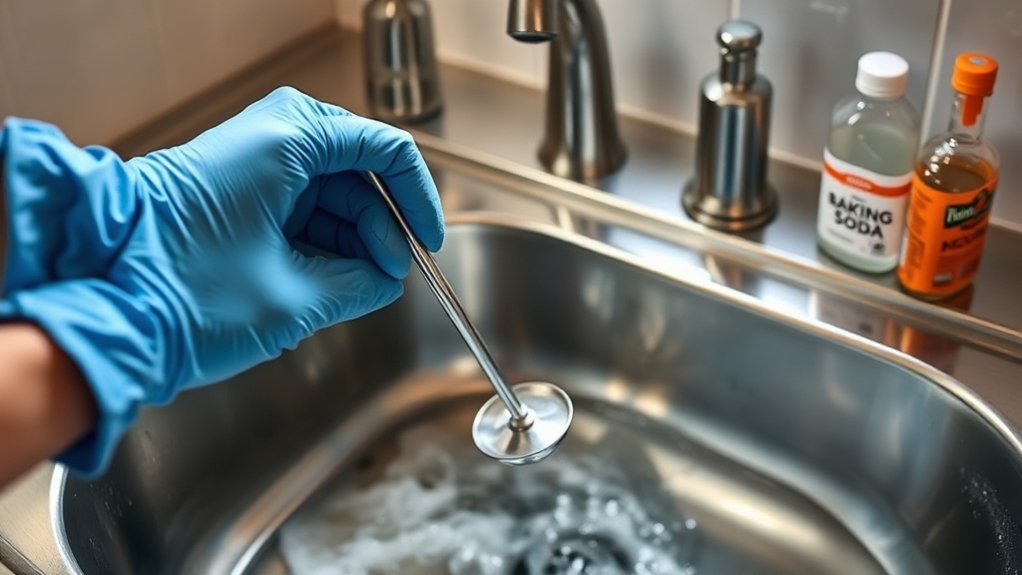
Pour about 1/2 cup of baking soda down the drain, followed by 1 cup of vinegar. You’ll hear fizzing as the baking soda and vinegar react, loosening grease and grime stuck in the pipe.
Let the mixture work for 10 to 15 minutes, then flush the drain with a kettle of hot water to push the soft debris through.
- See white foam rise inside the drain.
- Hear the sharp fizz as bubbles break apart buildup.
- Watch the sink water begin to swirl faster.
- Notice the pipe smell fade as residue clears.
If the water still drains slowly, repeat the process once more. This method works best for mild clogs and regular maintenance, especially when you want a simple, low-cost fix before reaching for stronger tools or chemicals.
Frequently Asked Questions
What Causes Recurring Kitchen Sink Clogs?
Recurring kitchen sink clogs usually come from grease, food scraps, soap scum, and coffee grounds that build up inside your pipes. You may also have a partially blocked drain, damaged piping, or poor disposal habits that keep causing trouble. If you ignore the problem, it can become an irreversible clog and create kitchen hazards like slow drainage, odors, and leaks. You’ll prevent repeat clogs by changing what goes down the sink.
Can a Garbage Disposal Affect Drain Clogs?
Yes—your garbage disposal can affect drain clogs, especially if it’s undersized, dull, or paired with poor drain compatibility. You may grind scraps, but you can also push grease, fibers, and starches deeper into the line. You can listen for slow draining, you can watch for backups, and you can adjust what you send down. When you use it correctly, it helps; when you don’t, it can hurt.
How Often Should I Clean My Sink Drain?
You should clean your sink drain weekly to prevent buildup and keep water flowing smoothly. If you cook often or use a garbage disposal, give it a quick rinse and scrub more often.
For extra protection, follow a simple drain care maintenance routine and watch for slow draining or odors. You’ll cut down on clogs, avoid bad smells, and keep your kitchen sink working better every day.
When Should I Call a Plumber for a Clog?
You should call a plumber the moment that clog turns into a stubborn monster you can’t beat. If water backs up fast, drains gurgle, odors linger, or plungers and cleaners fail, it’s time to call a plumber. You should also know when to call if multiple drains clog, leaks appear, or the sink keeps clogging again. Acting early can save you from bigger damage and expensive repairs later.
Are Chemical Drain Cleaners Safe for Kitchen Sinks?
Chemical drain cleaners aren’t usually safe for kitchen sinks, especially if you’ve got older pipes or a garbage disposal. You risk burns, fumes, and pipe damage, so check chemical safety first. Don’t trust disposal myths that say more cleaner fixes everything; it can make clogs worse.
You’re better off using a plunger, baking soda and vinegar, or calling a plumber if the clog stays put and you smell sewage.
Conclusion
Now that you’ve cleared the debris, plunged the drain, and tried the baking soda and vinegar, your kitchen sink should be flowing again. If the clog’s still hanging on, don’t panic. Repeat the steps or call a plumber.
To help prevent future clogs, keep your drain clean regularly. A healthy kitchen sink drain works like a busy highway, letting water move smoothly without getting stuck.